February 28, 2026
How Page Speed and UX Impact SEO and Sales
Milaaj Editorial / Research Insights
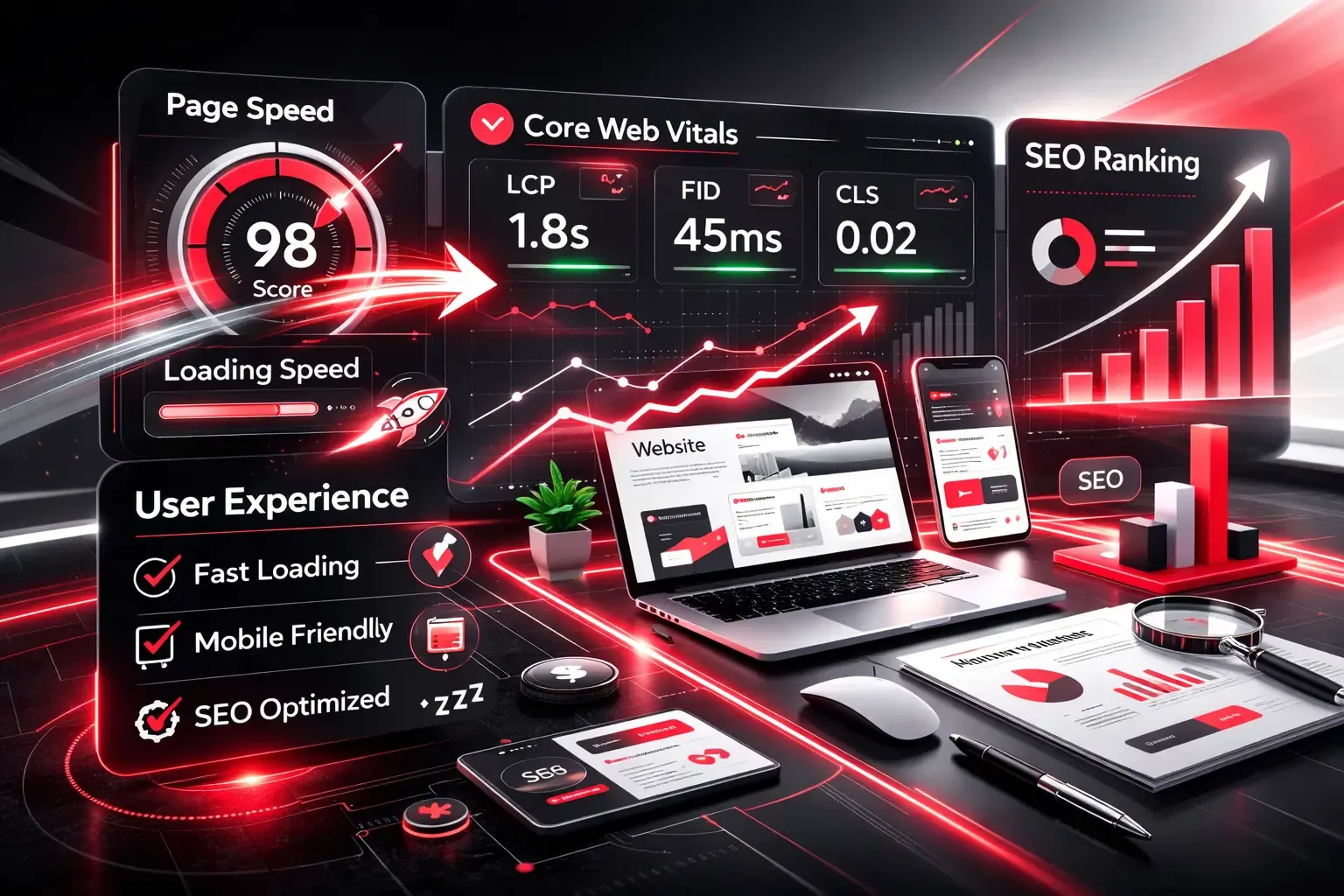
Website performance is no longer just a technical concern. It directly affects search rankings, user engagement, and revenue. Businesses that ignore speed and usability often lose both traffic and customers.
Page speed and UX impact SEO and sales more than most companies realize. Search engines evaluate how fast your website loads, how easy it is to use, and how users interact with it. At the same time, visitors expect instant loading and smooth navigation. If your site is slow or confusing, they leave.
Understanding the connection between speed, user experience, and SEO helps businesses improve visibility while increasing conversions.
Why Page Speed Matters for SEO
Search engines want to show users the best possible results. A slow website creates frustration, so it receives lower ranking priority.
Google officially includes speed as a ranking factor through Core Web Vitals.
These metrics measure:
- Loading performance
- Interactivity
- Visual stability
If your site fails these tests, rankings may drop even if your content is strong.
Fast websites provide better user satisfaction, which signals quality to search engines.
What Are Core Web Vitals
Core Web Vitals are performance metrics used to evaluate user experience.
They include:
Largest Contentful Paint (LCP)
Measures how fast the main content loads.
First Input Delay (FID)
Measures how quickly users can interact.
Cumulative Layout Shift (CLS)
Measures visual stability while loading.
Improving these metrics helps both SEO and usability.
How UX Affects Search Rankings
User experience includes everything visitors feel while using your website.
Important UX factors:
- Navigation clarity
- Mobile responsiveness
- Readability
- Page structure
- Design consistency
- Call-to-action placement
Search engines track user behavior such as:
- Bounce rate
- Time on page
- Click-through rate
- Pages per session
Poor experience leads to quick exits, which signals low relevance.
Good UX increases engagement, helping rankings improve.
The Connection Between UX and Sales
User experience is not only about SEO. It also affects revenue.
A slow or confusing website can cause:
- Abandoned carts
- Fewer inquiries
- Lower trust
- Reduced conversions
Fast, easy-to-use websites encourage users to stay longer and take action.
Simple improvements like faster loading and better layout can increase sales without increasing traffic.
This is why page speed and UX impact SEO and sales at the same time.
Mobile Speed Is More Important Than Desktop
Most users browse on mobile devices.
Search engines now use mobile-first indexing, meaning your mobile site is the primary version used for ranking.
Common mobile issues:
- Large images
- Unoptimized scripts
- Poor responsive design
- Buttons too small
- Slow server response
Optimizing mobile performance improves both visibility and user satisfaction.
How Slow Websites Hurt Conversion Rates
Studies show that even a one-second delay can reduce conversions.
Slow pages cause:
- Frustration
- Loss of trust
- Higher bounce rates
- Lower engagement
Users expect websites to load in under three seconds.
If your competitor is faster, they win the customer.
Improving performance is one of the easiest ways to increase sales without extra advertising.
Design and Structure Influence SEO
Good design helps search engines understand your content.
Clear structure should include:
- Proper heading hierarchy
- Internal linking
- Easy navigation
- Logical page flow
- Clean layout
Well-structured websites allow both users and crawlers to find information quickly.
This improves indexing and ranking.
Businesses investing in professional UI UX design often see improvements in both search visibility and conversion rates.
Technical Optimization for Better Speed
To improve performance:
- Compress images
- Use caching
- Minimize scripts
- Enable lazy loading
- Use fast hosting
- Optimize fonts
- Reduce redirects
Technical improvements make a big difference in loading time.
Combining speed optimization with strong web development practices ensures long-term performance stability.
Why Speed and UX Should Be Part of SEO Strategy
Many companies focus only on keywords and backlinks.
But technical performance is equally important.
A complete strategy should include:
- Technical SEO
- UX design
- Performance optimization
- Content quality
- Internal linking
- Mobile usability
When all factors work together, rankings become more stable.
A structured search engine optimization strategy ensures that performance, usability, and content support the same goal.
Signs Your Website Needs Speed and UX Improvement
You may need optimization if:
- Pages load slowly
- Users leave quickly
- Rankings dropped suddenly
- Mobile traffic is low
- Conversions are poor
- Navigation feels confusing
Fixing these issues often produces fast results.
Future of SEO: Performance First
Search engines continue to prioritize experience.
Future ranking factors will likely focus more on:
- Interaction speed
- Accessibility
- Visual stability
- Mobile usability
- Engagement signals
Websites that feel smooth and fast will have an advantage.
Page speed and UX impact SEO and sales today, and their importance will continue to grow.
Conclusion
Page speed and user experience are no longer optional improvements. They are essential parts of modern SEO and digital growth.
Fast, well-designed websites rank higher, keep visitors longer, and convert better. Businesses that optimize performance gain both traffic and revenue.
If your goal is long-term growth, combining technical improvements with a strong search engine optimization strategy and professional UI UX optimization approach ensures your website performs well for both users and search engines.
Better experience leads to better rankings, and better rankings lead to more sales.
FAQs
1. Does page speed affect SEO rankings?
Yes. Search engines use speed as a ranking factor through Core Web Vitals.
2. How does UX influence SEO?
Good UX improves engagement, which signals quality to search engines.
3. What is a good page load time?
Ideally under three seconds for best performance.
4. Do slow websites reduce sales?
Yes. Slow loading often leads to higher bounce rates and fewer conversions.
5. Is mobile speed important for SEO?
Yes. Mobile-first indexing makes mobile performance critical.
6. What are Core Web Vitals?
They are metrics measuring loading speed, interactivity, and visual stability.
7. Should UX design be part of SEO strategy?
Yes. UX directly affects rankings and user behavior.
8. Can improving speed increase conversions?
Yes. Faster websites usually generate more leads and sales.


Ready to Elevate Your Brand?
Start Your Project Today