March 9, 2026
SEO Meets ERP: Why Your Website Should Talk Directly to Your Inventory
Milaaj Editorial / Research Insights
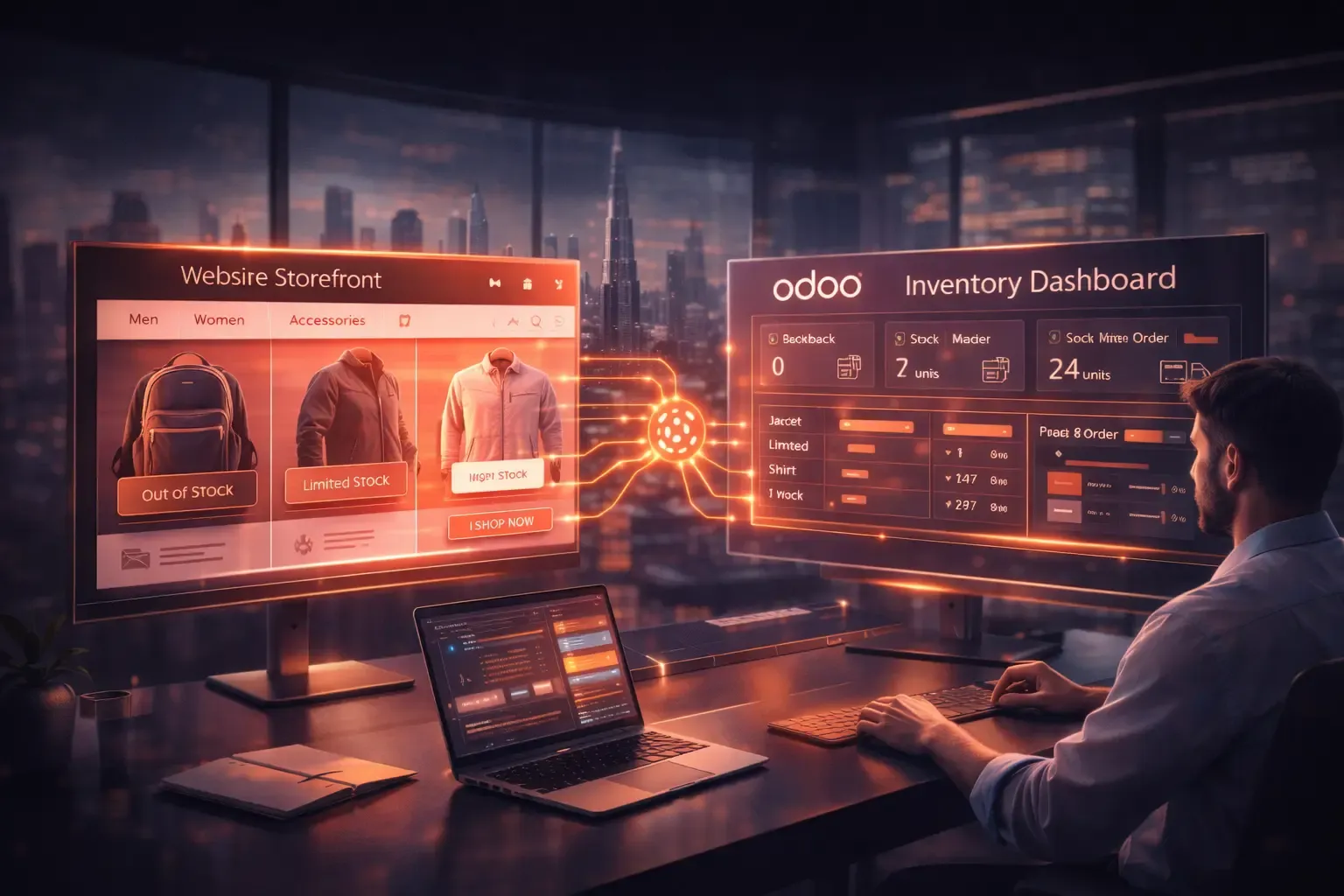
In today’s digital economy, a website is no longer just a marketing tool. It has evolved into a core operational platform that connects customers, sales teams, and internal business systems.
Yet many companies still operate websites that function independently from their backend systems. Product listings are updated manually, inventory levels are tracked separately, and sales data lives in multiple disconnected tools.
This outdated approach creates inefficiencies that affect both search engine optimization (SEO) and operational performance.
By implementing website inventory integration with Odoo, businesses can connect their website directly to an ERP system. This integration enables real-time inventory updates, automated workflows, and improved SEO performance.
In this guide, we explore how ERP integration transforms websites from static marketing assets into powerful business engines.
The Problem with Traditional Ecommerce Websites
Many websites today still rely on manual inventory management processes.
For example:
• Product stock levels are updated manually on the website
• Warehouse teams maintain separate inventory software
• Orders are exported into spreadsheets or accounting tools
• Product availability may not reflect real-time stock
These disconnected systems lead to several operational and SEO problems.
Outdated Product Listings
Search engines prioritize accurate, fresh content. When inventory levels are not synchronized with the website, customers may encounter products that appear available but are actually out of stock.
This creates a poor user experience and increases bounce rates.
Manual Data Entry
Staff must manually update stock levels and product information across systems. This consumes time and increases the likelihood of errors.
Slow Order Processing
When orders are not connected directly to inventory systems, staff must manually verify stock availability before confirming sales.
Fragmented Data
Sales data, customer behavior insights, and inventory reports are scattered across different platforms.
This makes it difficult for businesses to analyze performance and optimize their strategies.
What is Website Inventory Integration?
Website inventory integration connects your website directly to an ERP platform such as Odoo.
This means that your website communicates with the backend system in real time.
When a customer interacts with the website, the ERP system instantly processes the information.
For example:
• When a product is purchased, inventory is automatically reduced
• When stock is replenished, the website updates immediately
• Customer orders are recorded in the ERP system automatically
• Sales reports update in real time
This synchronization ensures that the website always reflects accurate product information.
How Odoo Enables Real-Time Inventory Integration
Odoo is a modular ERP platform that integrates multiple business functions into one system.
Key modules include:
• Inventory management
• Sales and order processing
• Accounting and invoicing
• CRM and customer data
• Ecommerce management
• Warehouse operations
When businesses implement website inventory integration with Odoo, these modules communicate directly with the website.
The result is a unified digital ecosystem where website activity automatically triggers backend workflows.
Why Website Inventory Integration Improves SEO
Many businesses focus on content and backlinks when improving SEO. While those elements are important, technical and operational factors also influence search rankings.
Inventory integration improves SEO in several ways.
Real-Time Product Availability
Search engines prioritize websites that deliver accurate information to users.
When inventory is synchronized with your website:
• Out-of-stock products can be hidden automatically
• Product availability remains accurate
• Customers receive reliable information
This improves user trust and reduces bounce rates.
Better User Experience
A website that displays incorrect inventory information creates frustration for visitors.
Imagine a customer who finds a product through Google search, adds it to the cart, and then discovers it is unavailable.
This negative experience affects both SEO metrics and brand reputation.
ERP integration prevents these situations by ensuring that stock levels are always accurate.
Faster Page Updates
Search engines prefer websites that update frequently.
When inventory and product information are connected to an ERP system, updates happen automatically whenever stock changes.
This constant activity signals to search engines that the website is active and maintained.
Improved Structured Product Data
ERP systems like Odoo store detailed product information including:
• SKUs
• pricing
• product attributes
• stock levels
• product categories
When this data feeds directly into your website, it enhances structured data used by search engines.
Better structured data increases the likelihood of appearing in rich search results.
Operational Benefits of ERP-Powered Websites
While SEO improvements are important, the operational advantages of website inventory integration are equally significant.
Automated Order Processing
When customers place orders through the website:
• Orders are automatically recorded in the ERP system
• Inventory levels update instantly
• Invoices are generated automatically
• Warehouse teams receive fulfillment instructions
This automation eliminates manual data entry.
Centralized Inventory Management
Businesses that sell across multiple channels often struggle with inventory coordination.
ERP integration allows companies to manage inventory across:
• online stores
• physical retail locations
• marketplaces
• warehouses
All inventory data flows through a single system.
Improved Reporting and Analytics
ERP platforms provide powerful dashboards that track:
• product performance
• inventory turnover
• sales trends
• customer behavior
Because the website and ERP share the same data, reports become more accurate and actionable.
Ecommerce Workflows Powered by Odoo
Integrating your website with Odoo unlocks several automated workflows.
Order-to-Inventory Synchronization
Every purchase triggers an automatic inventory update, preventing overselling.
Automated Product Updates
When inventory changes in the warehouse system, the website reflects those changes immediately.
Customer Data Integration
Customer interactions on the website automatically create CRM profiles.
Sales teams gain valuable insights into customer preferences and purchasing behavior.
Industries That Benefit Most from Inventory Integration
Many sectors benefit from connecting their websites directly to ERP systems.
Ecommerce Retail
Retailers managing hundreds of products need real-time stock updates to avoid overselling.
Wholesale Distribution
Companies selling to retailers require synchronized inventory across warehouses and online catalogs.
Manufacturing
Manufacturers benefit from integrating production schedules with online product availability.
Real Estate and Property Platforms
Real estate companies can connect property listings and availability directly to backend management systems.
The Future of SEO and ERP Integration
Search engines increasingly reward websites that deliver accurate information and seamless user experiences.
As ecommerce competition grows, businesses will need more than strong content strategies.
They will need intelligent systems that connect marketing, operations, and customer data.
ERP platforms like Odoo provide the infrastructure needed to support this evolution.
Companies that integrate their websites with ERP systems will gain advantages in:
• operational efficiency
• customer experience
• search engine visibility
• data-driven decision making
Conclusion
Modern websites must do more than attract visitors. They must connect seamlessly with the systems that power business operations.
By implementing website inventory integration with Odoo, businesses can synchronize product availability, automate workflows, and improve both operational efficiency and SEO performance.
For organizations planning this transformation, working with specialists who provide Odoo implementation services in Dubai can help ensure smooth integration between the website and backend systems. Milaaj Brandset supports businesses in building ERP-powered digital platforms that connect ecommerce, inventory, and operational workflows into one scalable ecosystem.


Ready to Elevate Your Brand?
Start Your Project Today