March 14, 2026
Why Your Website Needs a Speed Score of 90+ to Rank in Dubai
Milaaj Editorial / Research Insights
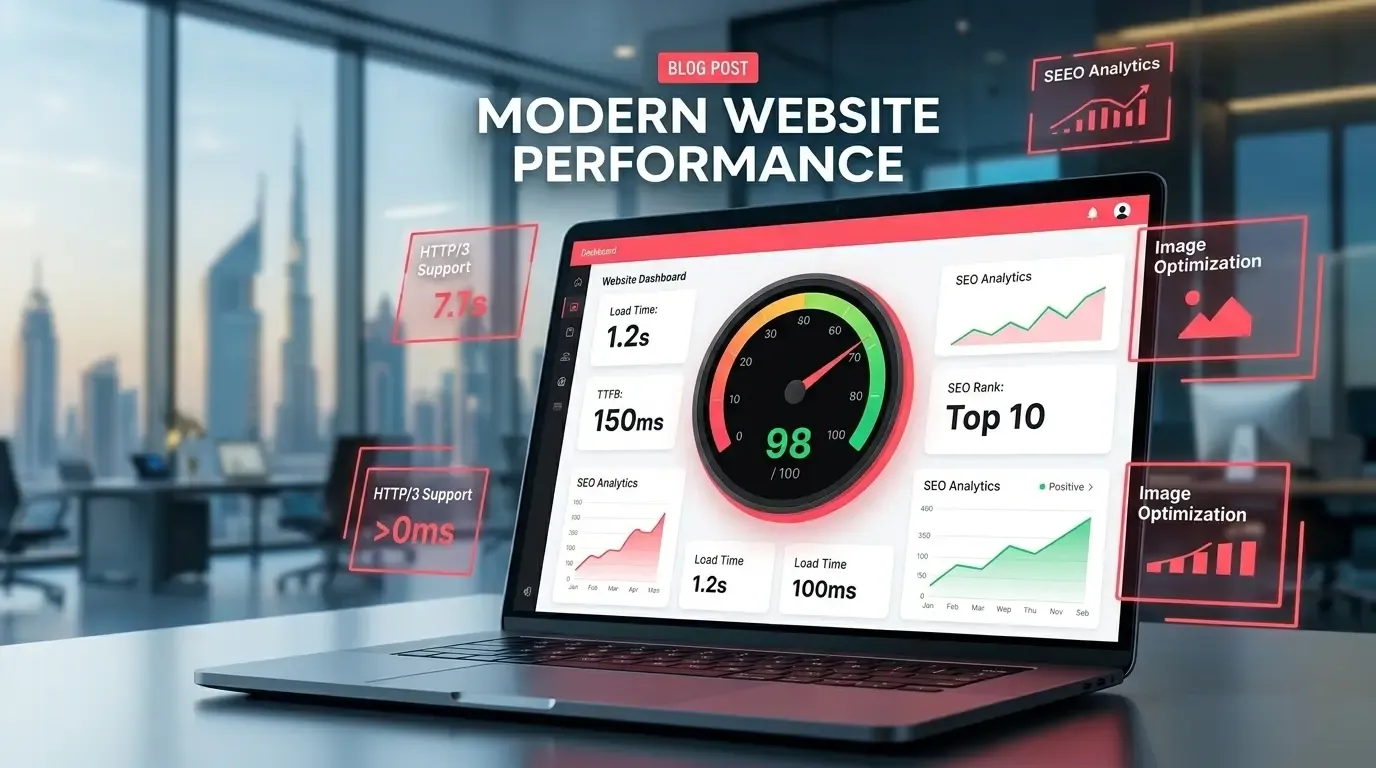
Website speed has become one of the most important ranking factors in modern SEO. Businesses competing in Dubai’s digital market must ensure their websites load quickly and perform smoothly across devices. A website speed score for SEO above 90 is often considered the benchmark for strong performance, especially in competitive industries where user experience and search rankings are closely connected.
Google evaluates website speed through Core Web Vitals and other performance metrics that measure loading time, responsiveness, and visual stability. Websites that perform well on these metrics not only rank better in search results but also provide a smoother experience for visitors.
This guide explains why achieving a 90+ speed score matters for Dubai businesses and how website performance directly impacts SEO rankings and conversions.
How Website Speed Influences SEO Rankings
Search engines prioritize websites that deliver fast and efficient experiences to users. Slow-loading websites frustrate visitors and increase bounce rates, which signals poor user satisfaction to search engines.
Google uses several performance indicators to evaluate speed:
- Largest Contentful Paint (LCP) measuring how quickly the main content loads
- First Input Delay (FID) measuring how fast users can interact with the page
- Cumulative Layout Shift (CLS) measuring visual stability during loading
Together, these metrics form the foundation of Google’s Core Web Vitals system.
A high performance score indicates that a website meets Google’s expectations for user experience, making it more likely to rank higher in search results.
Why Dubai’s Digital Market Requires Faster Websites
Dubai’s online business environment is extremely competitive. Companies across industries invest heavily in SEO, digital advertising, and user experience optimization to capture online customers.
In such a competitive environment, even small technical advantages can influence rankings.
Websites with strong performance benefit from:
- faster search engine crawling and indexing
- improved user engagement metrics
- lower bounce rates
- higher conversion potential
Businesses targeting customers in the UAE must ensure their websites load quickly on both mobile and desktop devices.
The Connection Between Website Speed and User Experience
Website performance is closely tied to user satisfaction. Visitors expect pages to load almost instantly, especially on mobile devices.
Studies consistently show that users abandon websites if loading times exceed just a few seconds.
A fast website improves the user experience in several ways:
- quicker navigation between pages
- smoother interactions and animations
- faster access to information
- reduced frustration during browsing
When users spend more time on a site and interact with content, search engines interpret these signals as indicators of quality.
How a 90+ Speed Score Improves Conversion Rates
Beyond search rankings, website speed also influences sales and lead generation. Slow websites can cause potential customers to leave before completing an action.
High-performing websites improve conversion rates by:
- reducing friction in the user journey
- allowing faster checkout or form submission
- creating a more professional brand impression
For e-commerce businesses and service providers, faster websites often translate directly into higher revenue.
Mobile Speed Is Even More Important
Most internet users in Dubai access websites through smartphones. Because mobile networks can vary in speed, optimizing websites for mobile performance is essential.
Mobile speed optimization includes:
- reducing large images and media files
- minimizing heavy scripts
- enabling responsive design
- optimizing server response times
Google’s mobile-first indexing approach means that mobile performance is often the primary factor influencing search rankings.
Key Factors That Affect Website Speed
Many technical elements influence how quickly a website loads. Understanding these factors helps businesses identify performance bottlenecks.
Common causes of slow websites include:
- large uncompressed images
- excessive JavaScript and CSS files
- poor hosting infrastructure
- lack of caching mechanisms
- heavy third-party integrations
Optimizing these elements can significantly improve overall performance.
Practical Ways to Achieve a 90+ Speed Score
Improving website performance requires a combination of technical optimization and good development practices.
Important strategies include:
Optimize Images and Media
Images often represent the largest files on a webpage. Compressing and resizing images helps reduce loading times.
Best practices include:
- using modern formats such as WebP
- implementing responsive image sizes
- enabling lazy loading
Minimize Code and Scripts
Large scripts and unused code slow down website performance.
Developers should:
- remove unnecessary plugins
- minimize CSS and JavaScript files
- reduce third-party tracking scripts
Use Content Delivery Networks (CDNs)
A CDN distributes website content across multiple global servers. This allows users to access data from the nearest location, reducing loading times.
For businesses targeting UAE audiences, CDNs can significantly improve performance for regional visitors.
Improve Hosting Infrastructure
Server performance has a direct impact on page speed. Reliable hosting providers ensure faster response times and better uptime.
High-quality infrastructure helps support high-traffic websites and complex applications.
Measuring Website Performance
Businesses can evaluate their website speed using tools such as:
- Google PageSpeed Insights
- Lighthouse performance audits
- GTmetrix performance reports
- WebPageTest analysis tools
These tools identify performance issues and provide recommendations for improving loading speed.
Monitoring website performance regularly ensures that optimization efforts remain effective as websites evolve.
Why Speed Optimization Supports Long-Term SEO Growth
Search engine algorithms increasingly prioritize user experience signals. Fast-loading websites align with these priorities by delivering smoother browsing experiences.
Speed optimization also benefits other areas of SEO, including:
- improved crawl efficiency
- better mobile usability
- higher engagement metrics
- stronger technical site health
Businesses that treat website speed as a long-term optimization strategy gain a competitive advantage in search rankings.
Conclusion
Website speed is no longer just a technical consideration. It is a critical factor influencing SEO performance, user experience, and online conversions. In a competitive market like Dubai, businesses aiming to rank in search results must ensure their websites achieve strong performance scores.
A speed score above 90 demonstrates that a website loads quickly, responds smoothly, and meets modern usability expectations. Achieving this level of performance requires careful optimization of images, code, hosting infrastructure, and mobile responsiveness.
Organizations looking to improve website performance often combine technical optimization with expert search engine optimization strategies and professional custom web development to build fast, scalable digital platforms that rank well and deliver better user experiences.
FAQs
What is a good website speed score for SEO?
A score above 90 on tools like Google PageSpeed Insights is generally considered excellent and indicates strong website performance.
Does website speed affect Google rankings?
Yes, page speed is a confirmed ranking factor and part of Google’s Core Web Vitals evaluation.
Why is website speed important for businesses in Dubai?
Dubai has a highly competitive digital market where fast websites improve search rankings and user engagement.
How can I test my website speed?
You can use tools such as Google PageSpeed Insights, GTmetrix, and Lighthouse to measure website performance.
What is Core Web Vitals?
Core Web Vitals are Google metrics that measure page loading speed, interactivity, and visual stability.
Do slow websites affect conversion rates?
Yes, slow-loading pages often lead to higher bounce rates and lower conversions.
Is mobile speed more important than desktop speed?
Mobile speed is extremely important because most users browse websites through smartphones.
How can businesses improve website speed?
Optimizing images, reducing code, improving hosting, and using CDNs are effective ways to increase website performance.



Ready to Elevate Your Brand?
Start Your Project Today