February 24, 2026
The Future of Content Marketing: A 2026 Guide
Milaaj Editorial / Research Insights
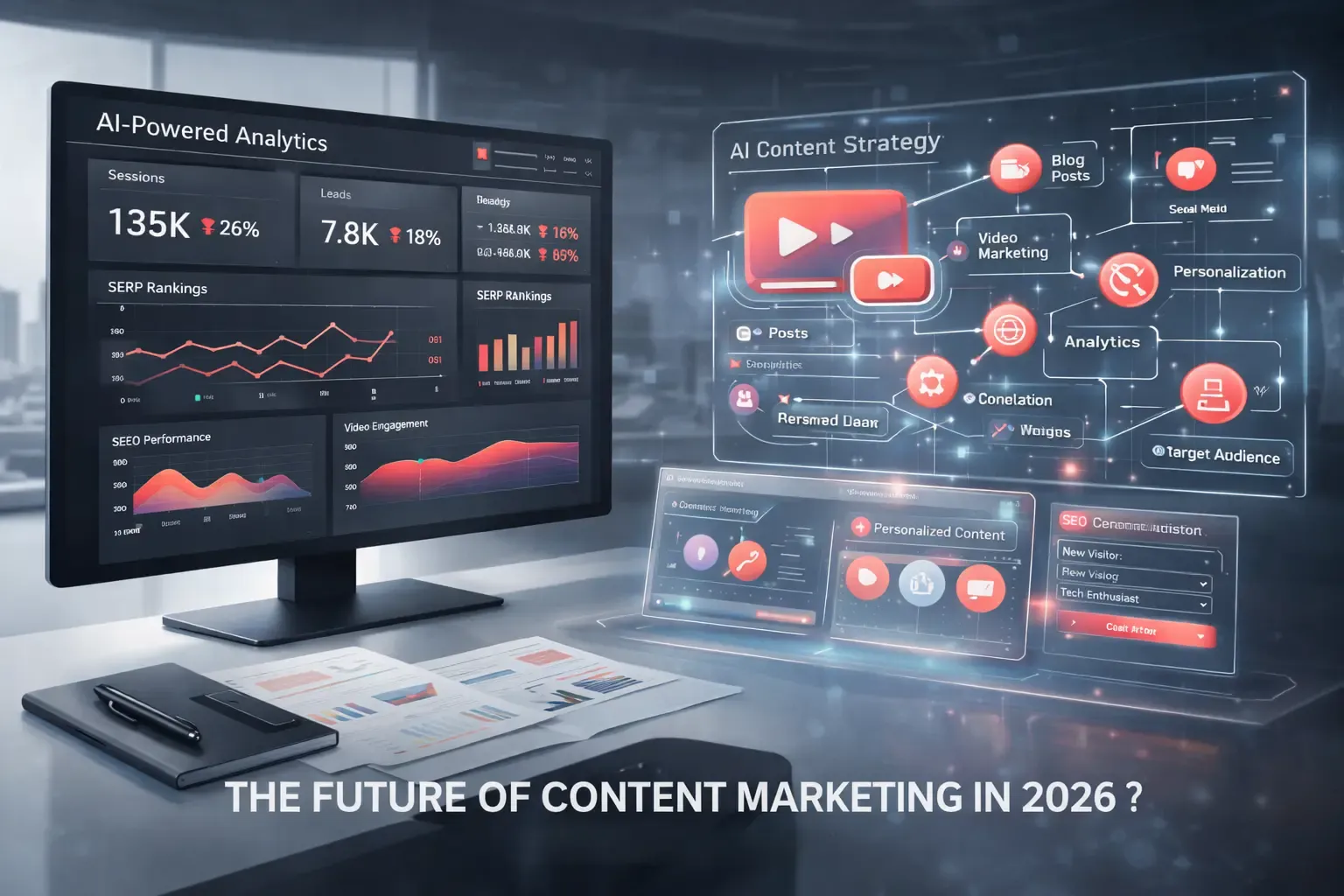
Content marketing is evolving faster than ever. What worked two years ago no longer guarantees rankings, traffic, or conversions. In 2026, brands must rethink how they create, distribute, and optimize content to stay competitive.
The future of content marketing in 2026 is not just about publishing blog posts. It is about building authority, aligning with search intent, leveraging AI strategically, and creating meaningful brand experiences across platforms.
If your business wants sustainable digital growth, this guide explains exactly what is changing and how to prepare.
Why Content Marketing Is Entering a New Era
Search engines are smarter. Users are more selective. AI tools are everywhere. Competition is global.
Google’s algorithm updates now prioritize:
- Experience and expertise
- Helpful, people-first content
- Topical authority
- First-hand insights
- Search intent alignment
At the same time, AI-generated content is flooding the internet. This means generic articles will struggle to rank.
In 2026, content must demonstrate value, clarity, and originality.
AI Will Support Strategy, Not Replace It
AI tools are transforming workflows. They help with:
- Keyword clustering
- Content briefs
- Topic research
- Draft generation
- Content repurposing
However, the future of content marketing in 2026 depends on human direction.
Search engines are improving at detecting thin, unedited AI content. Businesses that rely purely on automation risk losing credibility and visibility.
The winning formula is hybrid:
AI for efficiency.
Human expertise for authority.
Brands that combine both will scale faster while maintaining trust.
Search Intent Is Now the Foundation
Ranking is no longer about keywords alone. It is about intent.
In 2026, content must clearly answer:
- What problem is the user trying to solve?
- Are they researching, comparing, or ready to buy?
- What depth of information do they expect?
Search engines evaluate whether your content satisfies the query fully. If users return to results quickly, rankings drop.
This means future-focused content strategies must:
- Address informational intent clearly
- Provide structured, easy-to-scan answers
- Include contextual NLP entities
- Offer practical examples
The brands that master search intent will dominate visibility.
E-E-A-T Is Becoming a Competitive Advantage
Experience, Expertise, Authoritativeness, and Trustworthiness are no longer optional.
To align with modern ranking standards:
- Include real-world examples
- Add expert opinions
- Showcase case studies
- Display author credentials
- Cite reliable sources
In 2026, anonymous, generic content will struggle.
If your company wants long-term organic growth, investing in a structured search engine optimization strategy ensures your content aligns with E-E-A-T principles and evolving algorithm standards.
Zero-Click Search Is Changing Traffic Strategy
Featured snippets, AI overviews, and instant answers reduce traditional clicks.
This does not mean content marketing is dying. It means strategy must evolve.
To adapt:
- Optimize for featured snippets
- Use structured headings
- Provide concise definitions
- Create FAQ-driven sections
- Build topical clusters
Content must now capture visibility even if it does not immediately generate a click.
The future of content marketing in 2026 includes visibility-first optimization.
Personalization Will Define Engagement
Generic messaging no longer converts.
Modern consumers expect:
- Personalized recommendations
- Dynamic content
- Behavior-based messaging
- Contextual offers
With first-party data becoming more important due to privacy regulations, brands must build direct relationships with audiences.
Content strategies will increasingly integrate:
- Email marketing automation
- Retargeting sequences
- Segmented landing pages
- Industry-specific messaging
Personalization increases engagement, retention, and conversion rates.
Video and Short-Form Content Will Dominate
Video continues to outperform static formats.
In 2026, brands will rely heavily on:
- Short educational reels
- Explainer videos
- Product walkthroughs
- Micro-content series
- Webinar clips
Video improves dwell time and engagement signals, which indirectly support SEO.
Businesses investing in structured video marketing and ad production strategies can repurpose long-form blog content into high-performing multimedia assets.
The future is not text versus video. It is integrated storytelling.
Topical Authority Beats Isolated Articles
Publishing random blog posts is no longer effective.
Search engines now reward topic depth.
Instead of writing one article about content marketing, brands should build:
- Pillar pages
- Supporting cluster articles
- Internal linking networks
- Structured navigation
For example, if your niche is digital growth, your website should cover:
- SEO
- Paid media
- Social media
- Conversion optimization
- Analytics
A comprehensive digital marketing framework ensures all content pieces support broader growth objectives.
When content works together, authority increases.
Omnichannel Distribution Is Mandatory
Creating content is only half the job.
In 2026, brands must distribute strategically across:
- Search engines
- LinkedIn
- Instagram
- YouTube
- Email
- Paid ads
Repurposing content multiplies reach.
One blog article can become:
- A LinkedIn carousel
- A short video
- A podcast segment
- An email newsletter
- A downloadable guide
The future of content marketing in 2026 belongs to brands that distribute intelligently, not just publish consistently.
Data-Driven Decisions Will Replace Guesswork
Content marketing is becoming performance-driven.
Metrics that matter:
- Organic traffic growth
- Engagement rate
- Time on page
- Conversion rate
- Lead quality
- Assisted conversions
Analytics tools help identify what topics drive revenue.
Instead of creating content randomly, businesses should build strategies around data insights.
This approach increases ROI and reduces wasted effort.
Human Brand Voice Will Matter More Than Ever
As AI content increases online, authentic brand voice becomes a differentiator.
In 2026, successful brands will:
- Share opinions
- Publish thought leadership
- Showcase real stories
- Address industry challenges
- Speak directly to their audience
Personality builds trust.
Trust builds loyalty.
Loyalty drives long-term growth.
The future of content marketing in 2026 is not robotic. It is human-centered.
How Businesses Should Prepare for 2026
To stay competitive, brands should:
- Audit existing content for quality and relevance
- Update outdated articles
- Build topic clusters
- Invest in AI tools responsibly
- Strengthen SEO foundations
- Develop omnichannel distribution systems
- Focus on value-driven storytelling
Companies that align content strategy with measurable goals will see stronger results.
Those that publish without strategy will fall behind.
Final Thoughts: Strategy Over Volume
The future of content marketing in 2026 is strategic, data-driven, and human-focused.
It is not about producing more content. It is about producing better content.
AI will accelerate workflows. SEO will demand higher standards. Audiences will expect personalization.
Brands that integrate structured SEO, intelligent distribution, and authentic storytelling will build sustainable authority.
If your business wants to future-proof growth, combining content creation with a strong search engine optimization strategy and a unified digital marketing approach ensures every piece of content supports measurable outcomes.
Content marketing in 2026 is not a trend. It is a long-term business asset when executed correctly.
FAQs
1. What is the future of content marketing in 2026?
It will be AI-assisted, data-driven, personalized, and focused on search intent and authority.
2. Will AI replace content marketers?
No. AI supports efficiency, but human expertise builds trust and originality.
3. Is SEO still important for content marketing?
Yes. SEO ensures visibility, ranking, and long-term organic traffic.
4. How can brands prepare for content marketing changes?
By investing in quality content, topical authority, analytics, and omnichannel distribution.
5. Does video impact SEO performance?
Yes. Video increases engagement and supports overall digital visibility.
6. What is topical authority?
It is when a website deeply covers a subject through interconnected content.
7. How important is personalization in 2026?
Very important. Personalized content improves engagement and conversion rates.
8. Should businesses update old content?
Yes. Updating content improves rankings, relevance, and credibility.



Ready to Elevate Your Brand?
Start Your Project Today