March 2, 2026
Odoo UAE Corporate Tax Setup in 7 Days: A Compliance Guide for Dubai Businesses
Milaaj Editorial / Research Insights

With the introduction of UAE Corporate Tax, businesses across Dubai must now ensure their financial systems are compliant with regulatory requirements set by the Federal Tax Authority. For many SMEs and mid-market companies, this shift introduces new reporting responsibilities, documentation standards, and audit-readiness expectations.
Manual accounting systems, spreadsheets, or disconnected finance software often struggle to meet these compliance needs efficiently.
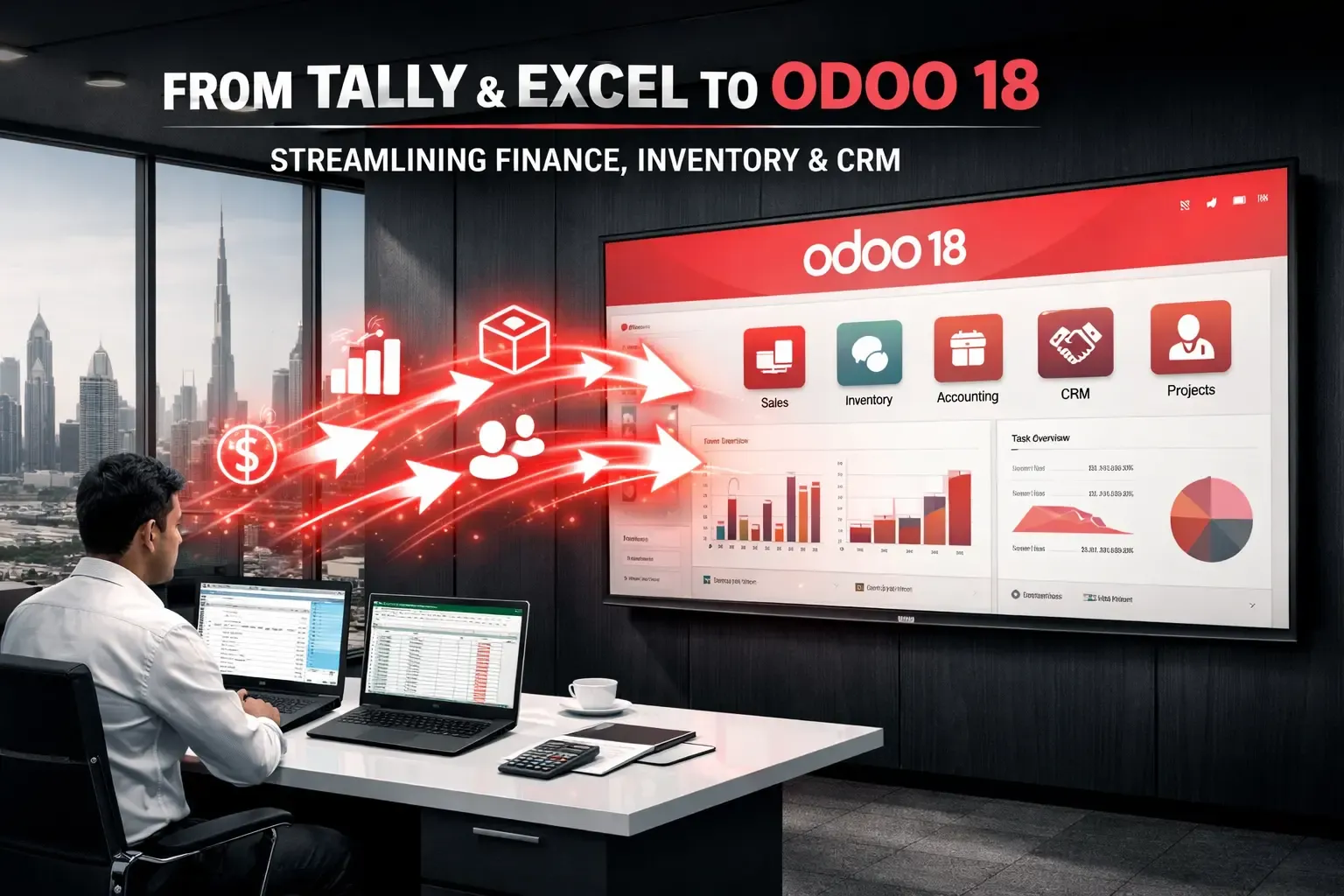
Odoo ERP offers an integrated solution that enables companies to configure accounting workflows, automate tax calculations, and generate audit-ready reports quickly. With the right implementation approach, Dubai businesses can achieve UAE corporate tax compliance in under 7 days.
This guide explains how.
Why UAE Corporate Tax Compliance Requires System-Level Changes
Corporate tax introduces new financial reporting obligations that go beyond VAT submissions.
Businesses must now:
- Track taxable income accurately
- Maintain compliant financial statements
- Classify expenses correctly
- Prepare audit-ready documentation
- Generate standardized tax reports
- Monitor profit and loss across departments
- Align accounting policies with UAE regulations
Relying on Excel or legacy accounting software increases the risk of:
- Reporting errors
- Delayed filings
- Inconsistent financial data
- Compliance penalties
- Audit complications
An ERP-based finance system ensures accuracy, transparency, and consistency across all financial processes.
How Odoo Supports UAE Corporate Tax Compliance
Odoo’s Accounting and Finance modules provide:
- Automated journal entries
- Real-time financial reporting
- Multi-company accounting
- Expense categorization
- Tax rule configuration
- Profitability analysis
- Audit trail tracking
These features allow businesses to:
- Align financial records with corporate tax regulations
- Generate accurate income statements
- Track deductible expenses
- Calculate tax liabilities
- Produce compliance-ready reports
Instead of manually consolidating data, Odoo maintains a unified financial database for streamlined reporting.
Step 1: Configure Your Chart of Accounts
The first step toward compliance is ensuring your Chart of Accounts aligns with UAE Corporate Tax reporting requirements.
This includes:
- Categorizing taxable vs non-taxable income
- Separating operational and capital expenses
- Identifying deductible costs
- Mapping revenue streams
Odoo allows businesses to customize account structures quickly, enabling tax-compliant financial classification without extensive development.
Step 2: Define Corporate Tax Rules
Next, tax rules must be configured within the system.
This involves:
- Setting applicable corporate tax rates
- Defining thresholds and exemptions
- Mapping tax categories to transactions
- Applying automated calculations
Odoo’s flexible tax engine enables companies to apply these rules across invoices, bills, and expense entries automatically.
This minimizes manual intervention and ensures consistent tax treatment.
Step 3: Automate Expense and Revenue Tracking
Corporate tax calculations depend on accurate income and expense tracking.
With Odoo, businesses can:
- Tag expenses based on deductibility
- Track departmental profitability
- Categorize capital expenditures
- Monitor revenue sources
Automation ensures every transaction is recorded in real-time, reducing reconciliation efforts during tax filing.
Step 4: Generate Compliance-Ready Financial Reports
Odoo’s reporting tools enable:
- Profit and Loss statements
- Balance Sheets
- General Ledger reports
- Tax summaries
- Departmental financial analysis
Managers and finance teams can access dashboards instantly, ensuring visibility into tax liabilities and financial performance.
Real-time reporting reduces the need for manual consolidation during filing periods.
Step 5: Maintain an Audit Trail
Audit readiness is critical under UAE Corporate Tax regulations.
Odoo maintains:
- Transaction histories
- Approval workflows
- Document attachments
- Timestamped changes
- User activity logs
These audit trails provide transparency and simplify external audits or regulatory reviews.
Step 6: Integrate VAT and Corporate Tax Workflows
Many Dubai businesses already use ERP systems for VAT compliance.
Odoo allows:
- Unified VAT and corporate tax reporting
- Automated tax calculations
- Consolidated financial statements
- Integrated compliance dashboards
Combining these workflows eliminates duplicate data entry and improves accuracy across submissions.
Step 7: Monitor Tax Performance with Dashboards
Odoo’s real-time dashboards help businesses:
- Track taxable income
- Monitor tax liabilities
- Identify expense trends
- Compare financial periods
- Prepare forecasts
Decision-makers can use these insights to optimize profitability while maintaining compliance.
Benefits of Fast-Track Odoo Tax Setup
Implementing Odoo for corporate tax compliance in under 7 days offers:
- Reduced compliance risk
- Automated tax calculations
- Faster reporting cycles
- Improved financial accuracy
- Audit-ready documentation
- Lower administrative overhead
- Enhanced visibility into financial performance
For Dubai SMEs and mid-market firms, this rapid deployment minimizes disruption while ensuring regulatory readiness.
Who Should Consider Immediate ERP Compliance Setup?
Businesses should prioritize ERP-based compliance if they:
- Manage multiple revenue streams
- Operate across different emirates
- Maintain complex expense structures
- Require real-time financial reporting
- Anticipate regulatory audits
- Plan for business expansion
ERP automation ensures scalability as corporate tax obligations evolve.
Final Thoughts: Achieving Instant Compliance
Corporate tax compliance is no longer optional for UAE businesses. As reporting requirements become more stringent, companies must adopt systems capable of handling financial data accurately and transparently.
With a structured implementation approach, Odoo enables Dubai businesses to configure tax workflows, automate reporting, and maintain audit readiness in under a week.
Organizations exploring streamlined compliance often begin by reviewing professional Odoo implementation services in Dubai from Milaaj Brandset, ensuring their accounting workflows align with UAE corporate tax regulations from day one.
For companies aiming to reduce compliance risk while improving financial visibility, Odoo provides a scalable and future-ready ERP solution.

Ready to Elevate Your Brand?
Start Your Project Today