October 14, 2025
From Data to Creativity: How AI Is Shaping the Next Generation of Brand Design
Milaaj Editorial / Research Insights
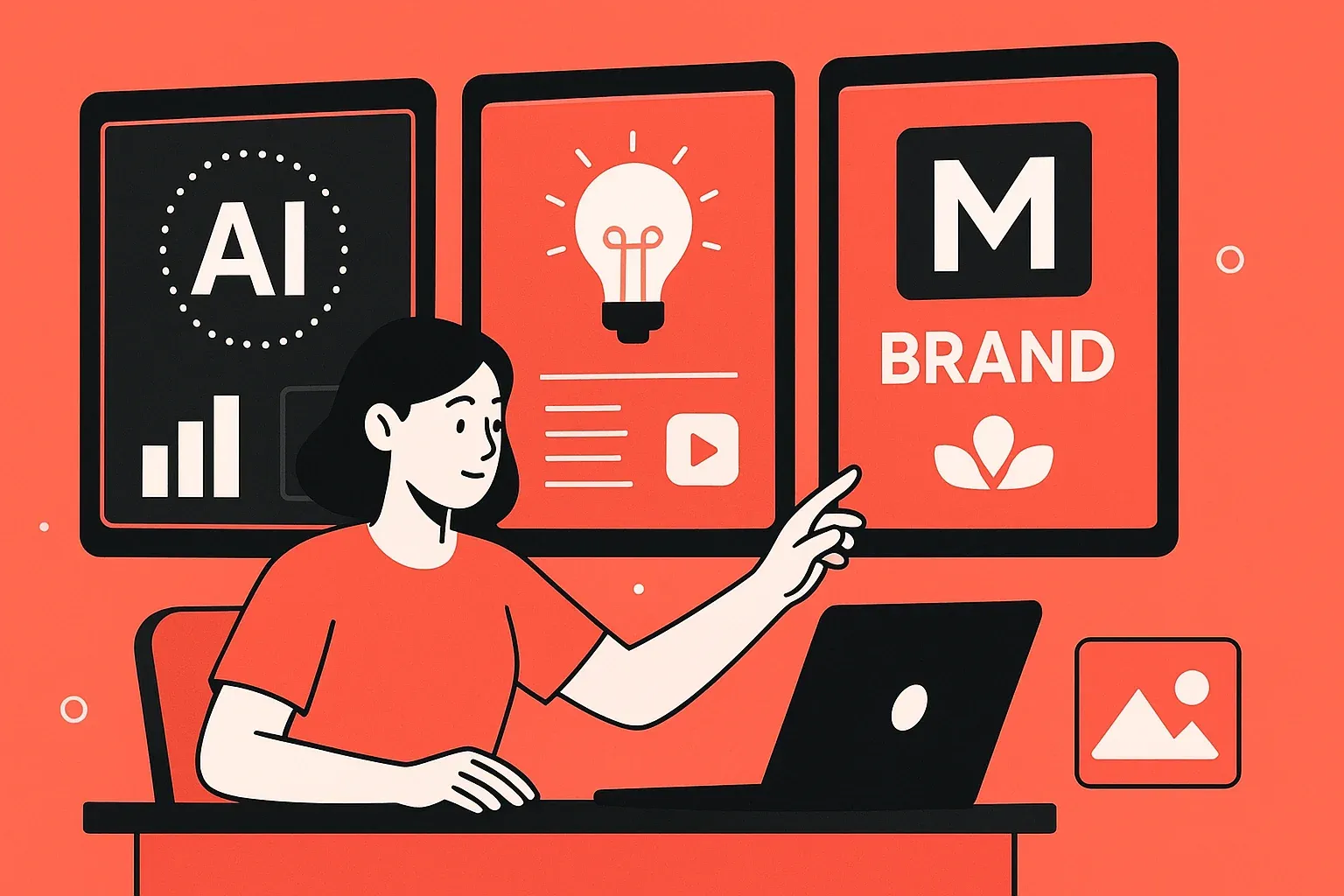
In the ever-evolving world of branding, creativity has long been seen as a purely human trait — a product of intuition, culture, and imagination. Yet, in 2025, a new creative partner has taken center stage: Artificial Intelligence (AI).
AI has transformed from a technical tool into a creative collaborator, reshaping how designers think, create, and deliver brand identities. The next generation of brand design isn’t about choosing between art and data — it’s about merging both.
From automated design tools that predict visual appeal to AI systems that analyze color psychology and consumer sentiment, we’re entering an era where data fuels creativity like never before.
The Intersection of Data and Creativity
For decades, designers relied on instinct and artistic vision. But today, data acts as the invisible brushstroke guiding design choices. Every color, shape, font, and tone can now be optimized based on real user behavior, emotions, and cultural preferences.
AI systems collect insights from millions of touchpoints — social media reactions, ad performance, and engagement metrics — and transform them into actionable design intelligence.
How Data Enhances Design Decisions:
- Color prediction models analyze emotional responses across demographics.
- Typeface analytics reveal which fonts improve trust and readability.
- Eye-tracking AI studies attention flow to optimize composition.
- A/B visual testing helps designers understand which designs perform better in real-time.
Instead of limiting creativity, this integration of data empowers designers to create with more precision and empathy.
AI as the Designer’s Creative Partner
AI doesn’t replace human creativity — it amplifies it. By automating repetitive tasks and suggesting design variations, AI frees up designers to focus on concept, storytelling, and brand strategy.
1. Generative Design Tools
Platforms like Adobe Firefly, Runway, and Figma AI are redefining workflows. Designers can input prompts like “modern minimalistic logo with bold typography and friendly tone”, and the system generates multiple visual directions in seconds.
This doesn’t eliminate the designer — instead, it provides a creative launchpad, allowing professionals to refine and humanize the AI’s output.
2. AI-Powered Brand Guidelines
AI systems now help maintain brand consistency by automatically checking whether visuals, colors, and tone align with identity standards. Imagine uploading a new social post, and the AI instantly verifies if it matches your brand’s voice and palette — that’s intelligent branding.
3. Predictive Design Analysis
Machine learning models analyze how audiences might respond to a new visual identity before it’s even launched. This means brands can predict emotional impact, recognition rates, and cultural reception — saving both time and creative energy.
The Emotional Intelligence of AI in Design
One of the most fascinating shifts in 2025 is AI’s growing ability to understand emotion. Through sentiment analysis and psychological modeling, AI systems decode how users feel about visuals, enabling designers to create emotionally resonant brand experiences.
For instance:
- AI can determine which color palettes evoke trust or excitement.
- It can assess whether a campaign feels inclusive or aspirational.
- It can even analyze facial expressions from focus groups to gauge response intensity.
This data doesn’t strip away human intuition — it complements it. Designers still craft emotion; AI simply ensures that emotion reaches the right audience with impact.
AI-Driven Branding Trends Dominating 2025
1. Hyper-Personalized Visuals
AI systems now adapt brand visuals dynamically based on viewer profiles. A retail website may subtly change product imagery, color temperature, or even tagline phrasing to resonate with each user segment — all powered by predictive AI.
2. Responsive Logos
Brands are adopting AI-generated logos that adapt across contexts — simplifying for app icons, expanding for print, or changing tone based on cultural relevance. The result? A living, breathing identity that evolves with the user.
3. Ethical and Transparent Branding
AI-driven data has also pushed brands toward ethical storytelling. Consumers today expect transparency — not just in products, but in the algorithms shaping brand messages. Designers must ensure their AI tools uphold fairness, accessibility, and inclusivity.
4. Voice and Visual Synergy
With voice assistants and AR interfaces on the rise, brand design now extends beyond visuals. AI helps unify sound identity, motion graphics, and 3D interfaces into one cohesive brand experience.
The Data Behind Aesthetics: Quantifying Beauty
Beauty has always been subjective — until now. AI is beginning to quantify visual harmony by studying millions of data points on shape balance, symmetry, and emotional appeal.
This quantification doesn’t make design robotic; it helps brands understand what truly resonates. For example:
- A symmetric, high-contrast layout tends to increase trust.
- Rounded corners and pastel hues often signal friendliness.
- High-motion visuals drive engagement for younger audiences.
These insights guide creative direction while still leaving room for human artistry. The best designs emerge when intuition meets insight.
Balancing Automation with Authenticity
The biggest challenge in AI-driven branding is maintaining authenticity. While automation accelerates creativity, over-reliance on data can lead to generic, soulless outcomes.
True innovation happens when designers use AI not as a crutch, but as a creative co-pilot. The brand still needs a story, a purpose, and a heartbeat — elements only humans can provide.
Successful brands in 2025 achieve this balance by:
- Using AI for exploration, not imitation.
- Letting humans make final creative calls.
- Building emotional narratives around data insights.
When creativity and computation coexist, brands achieve experiences that are both meaningful and measurable.
AI in Action: Real Brand Examples
Several global brands have already integrated AI into their creative ecosystems:
- Coca-Cola’s “Create Real Magic” campaign allowed fans to use generative AI to design branded artwork, merging user creativity with data-driven engagement.
- Spotify’s AI playlists analyze listener data to create personalized album covers and visual themes that reflect user mood.
- Nike’s adaptive visual identity system uses machine learning to create localized colorways and logo treatments for global campaigns.
These examples illustrate how brands now co-create with audiences and AI — transforming brand identity into an evolving, participatory experience.
The Designer’s Role in the Age of AI
In this new landscape, designers are not losing control — they’re gaining creative leverage.
Instead of manually resizing assets or guessing audience preferences, designers now orchestrate entire ecosystems of AI tools to deliver scalable, emotionally resonant designs.
The key skill of the future is AI literacy — understanding how algorithms interpret data, how biases arise, and how to maintain human creativity at the center.
Designers must evolve from being creators of visuals to architects of experiences.
Looking Ahead: The Future of AI-Creative Symbiosis
By 2030, AI will become a core part of every creative process — not as a machine replacement, but as a strategic collaborator.
Future brand systems will:
- Auto-adapt color and tone for user emotion in real time.
- Generate localized branding instantly for new markets.
- Create personalized visual storytelling using behavioral analytics.
- Maintain emotional coherence across all digital touchpoints.
The era of guesswork is over. The era of data-empowered creativity has begun.
Conclusion
In the new world of brand design, creativity and data are not opposites — they are partners in innovation. AI has unlocked a universe where imagination meets intelligence, and where design is no longer static but ever-evolving.
As we move into 2025 and beyond, brands that embrace AI creatively — without losing their human essence — will set the standards for visual excellence and emotional resonance.
To explore how your brand can merge creativity with intelligent design, visit Milaaj BrandSet’s Brand Identity Development Services. Create experiences that don’t just look good — they feel right.



Ready to Elevate Your Brand?
Start Your Project Today