November 7, 2025
Content Marketing vs. Traditional Marketing: Which Drives More ROI?
Milaaj Editorial / Research Insights
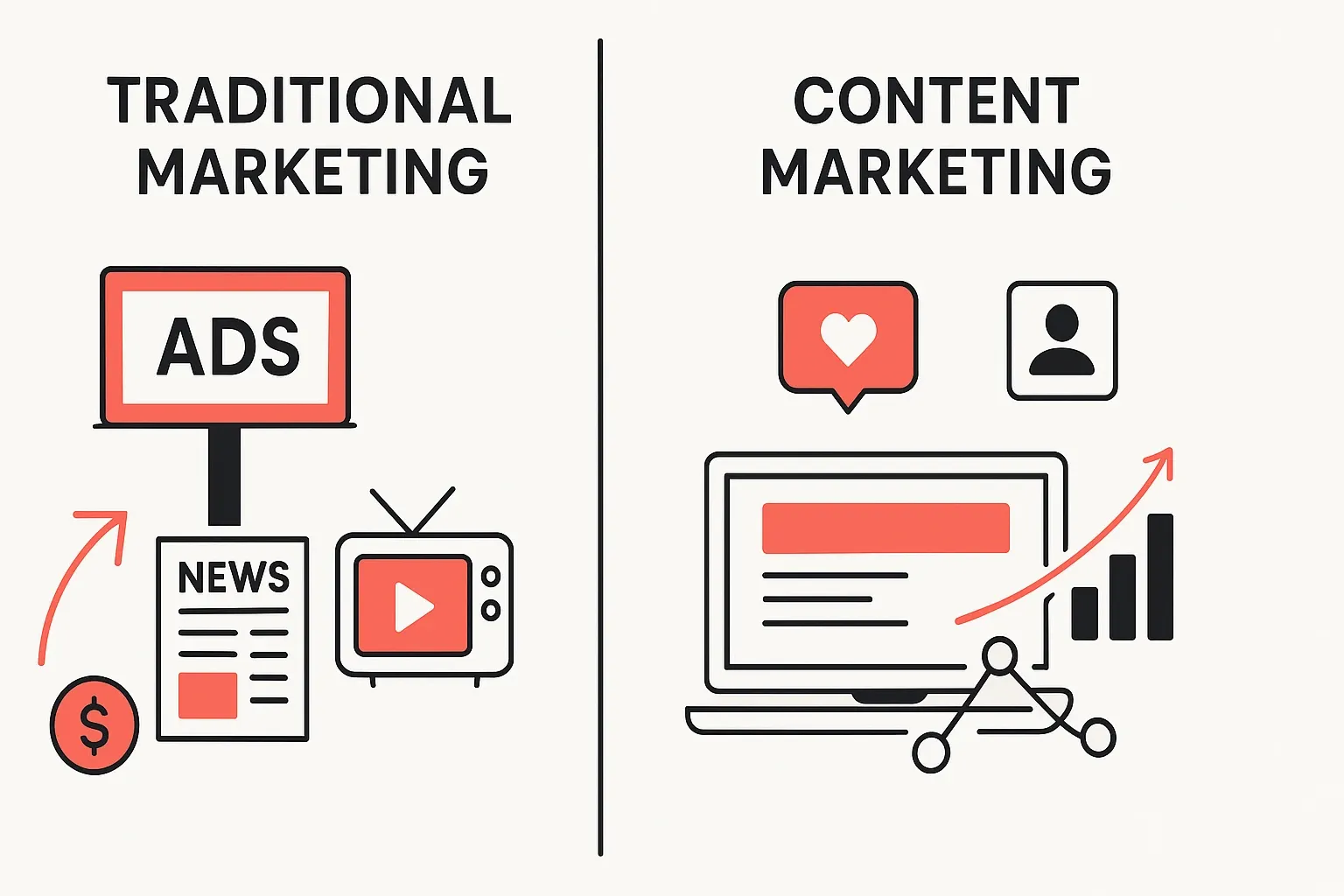
In a world where attention is the most valuable currency, marketing has evolved from billboards and TV ads to blogs, videos, and social media posts. Yet, the core question remains the same: Which type of marketing truly drives better ROI — content marketing or traditional marketing?
The answer isn’t always straightforward. While traditional methods still hold power for certain audiences, content marketing has redefined how brands connect, convert, and retain customers.
Let’s dive into the psychology, performance, and numbers behind both — and discover why the future of ROI belongs to content-led storytelling.
What Is Traditional Marketing?
Traditional marketing refers to offline methods that have been around for decades — such as:
- TV and radio commercials
- Newspaper and magazine ads
- Billboards, flyers, and direct mail
- Event sponsorships and telemarketing
These approaches aim to reach a large audience through interruption-based tactics, hoping that the right person notices at the right time.
While traditional marketing builds brand awareness effectively, it’s often expensive, hard to track, and limited in personalization.
What Is Content Marketing?
Content marketing, on the other hand, focuses on attracting and engaging an audience organically through valuable, informative, and entertaining content.
This can include:
- Blog posts and articles
- Videos, podcasts, and infographics
- Case studies and eBooks
- Social media content and newsletters
Instead of pushing messages, content marketing pulls audiences in by offering useful insights — helping brands build trust before selling.
It’s not about selling to your audience; it’s about educating them until they naturally want to buy.
The Core Difference: Push vs. Pull Marketing
Traditional marketing “pushes” products onto consumers through paid placements and one-way communication.
Content marketing “pulls” people in by solving their problems, answering questions, and providing real value — often before a sales pitch is even made.
That’s why content marketing aligns better with modern buyer behavior. Today’s consumers research, compare, and review online before making decisions — and they prefer brands that educate rather than advertise.
ROI Breakdown: Content Marketing vs. Traditional Marketing
1. Cost Efficiency
According to the Content Marketing Institute, content marketing costs 62% less than traditional marketing while generating 3x more leads.
Traditional campaigns often involve printing, airtime, or placement costs — whereas content marketing primarily invests in creative production and digital distribution.
A well-optimized blog or video continues to drive traffic and leads months (or even years) after it’s published, making it a long-term ROI engine.
2. Tracking and Analytics
One major advantage of digital content is measurability.
You can track every impression, click, scroll, and conversion in real time.
Traditional marketing?
You can’t measure how many people saw your billboard and took action — you can only estimate reach, not engagement.
3. Engagement and Retention
Content marketing builds relationships.
Blogs, videos, and social media posts open two-way communication between brands and customers.
Traditional marketing is one-sided. It’s a broadcast — not a conversation.
In today’s interactive digital environment, people expect personalized engagement.
4. Longevity and Evergreen Value
A TV ad runs for 30 seconds. A billboard stays up for a month.
But a valuable article or YouTube tutorial can rank on Google and generate leads for years.
This is why many businesses now prefer evergreen content strategies — content that continues delivering results without constant reinvestment.
5. Brand Authority and Trust
People trust brands that teach, not just talk.
Content marketing positions your business as an expert, improving authority and brand recall.
Traditional advertising focuses on product promotion, not education — which can feel less genuine in comparison.
When Traditional Marketing Still Works
That said, traditional marketing isn’t dead. It’s still powerful in certain contexts, especially when combined with digital strategies.
For example:
- Luxury brands use print magazines to maintain exclusivity.
- Local businesses use radio or outdoor ads for quick reach.
- Event-based promotions still rely on banners and physical flyers.
The key is integration — using traditional media to raise awareness, and content marketing to nurture and convert that interest.
The Synergy of Both Worlds
The smartest brands don’t choose one over the other — they blend both.
This is called Omnichannel Marketing — where traditional and digital strategies work hand-in-hand.
Example:
- A billboard promotes a campaign.
- The customer scans a QR code leading to an in-depth blog or video.
- That digital content nurtures the lead into a purchase.
Here, traditional marketing captures attention, while content marketing converts it into measurable ROI.
The Role of SEO in Content ROI
Content marketing’s biggest weapon is SEO (Search Engine Optimization).
By optimizing for user intent and search behavior, you can turn a single blog into a lead magnet.
High-ranking content:
- Brings in organic traffic
- Builds backlinks
- Improves domain authority
- Increases brand visibility
Unlike paid ads that stop when the budget runs out, SEO-backed content continues to drive growth organically.
Audience Behavior: Why Content Wins
Today’s audiences:
- Research before buying
- Trust reviews over ads
- Follow brands on social media
- Prefer helpful over pushy messaging
That’s why content marketing feels more human — it meets people where they are in the buyer journey instead of interrupting them.
Challenges in Both Approaches
Traditional Marketing Challenges:
- Expensive to produce and maintain
- Difficult to measure results
- Short lifespan
- Limited personalization
Content Marketing Challenges:
- Requires consistent effort
- Needs SEO knowledge and creativity
- Takes time to see results
But once content starts compounding, the payoff is exponential — it becomes a self-sustaining growth system.
Why Businesses Are Shifting Toward Content Marketing
- Better ROI: More conversions per dollar spent.
- Better Engagement: Direct interaction with the audience.
- Better Data: Real-time metrics and analytics.
- Better Sustainability: Long-term organic growth.
It’s not just marketing — it’s relationship building at scale.
Conclusion: The Smart ROI Comes from Storytelling
The future of ROI belongs to brands that don’t just advertise — they connect.
While traditional marketing builds visibility, content marketing builds loyalty, trust, and conversions.
Businesses that master storytelling and provide value will see higher engagement and sustained growth — without relying on expensive ad placements.
If you’re looking to create high-performing digital campaigns that blend creativity, storytelling, and measurable ROI, explore Digital Marketing Solutions in Dubai or Content Marketing & Brand Identity Development.
Smart storytelling drives smart returns — and that’s where true ROI begins.

Ready to Elevate Your Brand?
Start Your Project Today