November 28, 2025
Designing Websites for Search, Voice, and Visual Discovery
Milaaj Editorial / Research Insights
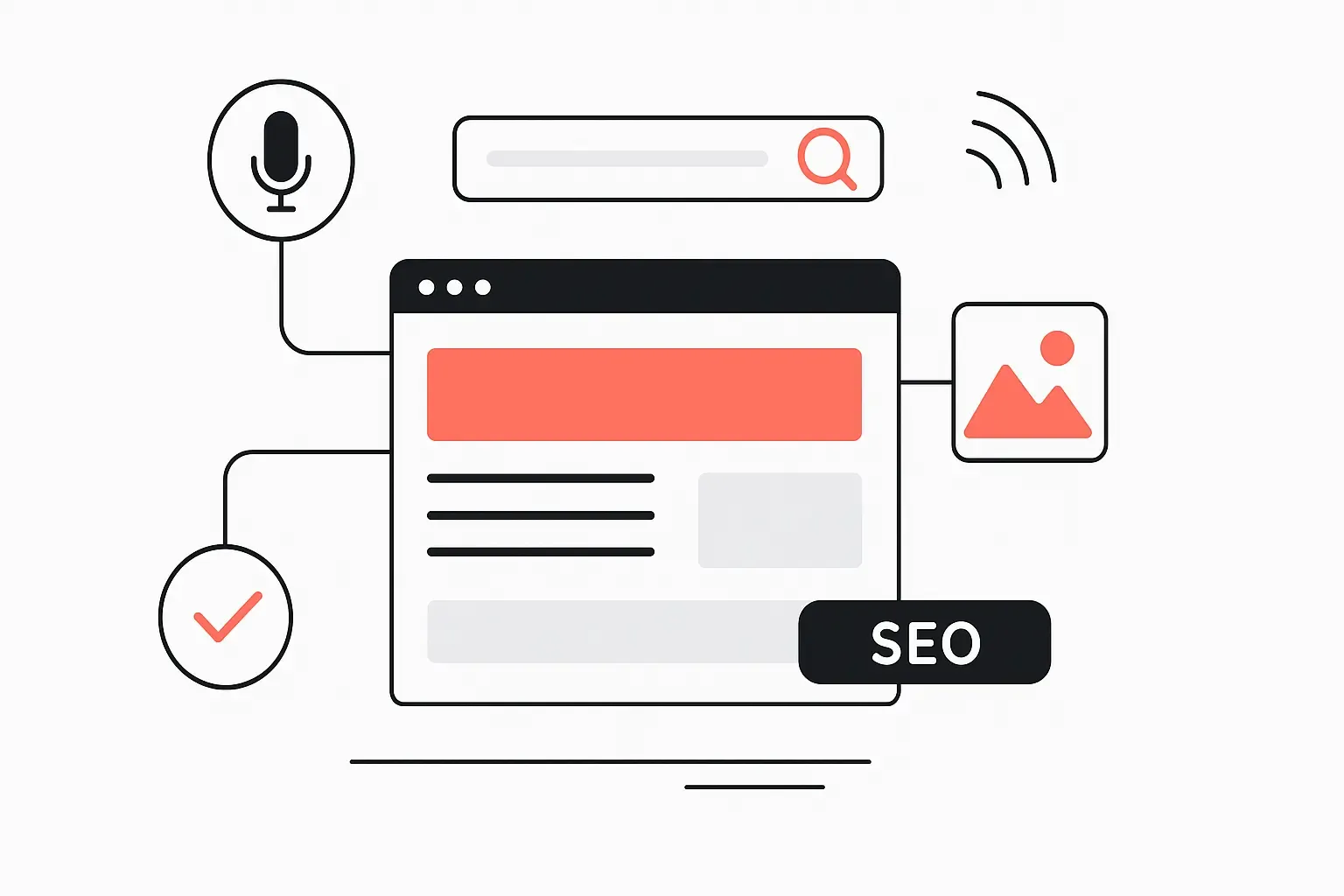
The way users discover information online is changing faster than ever. It’s no longer just about typing a query into Google. People now search through voice assistants, visual tools like Google Lens, and multimodal AI systems that understand text, images, and speech together.
This shift means one thing:
If your website is not designed for search, voice, and visual discovery, you risk becoming invisible in the next wave of digital evolution.
In today’s environment, brands that thrive are the ones that build websites aligned with how users naturally interact with technology—whether they’re speaking, scanning, or searching visually. This blog explores how to design a modern website that performs across every discovery channel.
Why Discovery Design Matters More Than Ever
The internet used to be simple:
Search engines ranked websites by keywords and links.
Today, digital discovery is a multi-layered experience driven by:
- Voice search (Siri, Alexa, Google Assistant)
- Visual search (Pinterest Lens, Google Lens)
- AI results (Google SGE, ChatGPT browsing, Bing Copilot)
- Multimodal search (text + image + voice combined)
Users no longer rely on one method. They shift between channels fluidly.
If your website doesn’t adapt to this reality, your content won’t reach your audience—even if it’s high quality.
Designing for multi-modal discovery means designing for how real people think, speak, and search.
Optimizing Website Design for Traditional Search (SEO)
Search is still the foundation of online discovery. But modern SEO requires more than keyword stuffing or link building.
1. Build a Clear Structure Google Can Understand
Your website architecture should feel like a well-organized library.
- Logical navigation menus
- Clear categories and subcategories
- Breadcrumb navigation
- Fast-loading pages
- Consistent internal linking
This helps search engines crawl and index your pages while giving users a frictionless experience.
2. Write Content That Matches User Intent
Google ranks websites that answer real questions.
Your content must clearly respond to:
- “What is…”
- “How to…”
- “Why does…”
- “Best tools for…”
- “Where to find…”
Intent-driven writing improves both ranking and engagement.
3. Use Semantic SEO, Not Just Keywords
Search engines now understand context, not just words.
Use supporting contextual terms, for example:
If your keyword is website design, related terms include:
- UX strategy
- page speed
- responsive layout
- accessibility
- structured data
This improves relevance and strengthens topical authority.
4. Focus on Mobile-First Design
Over 70% of discovery begins on mobile.
Your website should load fast, scroll smoothly, and adapt to all screen sizes.
Designing for Voice Search
Voice search is conversational. People speak differently than they type.
Text query:
“best website design for SEO”
Voice query:
“Siri, how do I design a website that shows up on Google?”
To optimize for voice, your website must feel human and conversational.
1. Use Natural Language in Content
Write like you talk.
Short, clear, direct sentences perform best.
2. Answer Questions Directly (Featured Snippets Style)
Voice assistants often read featured snippets aloud.
Structure answers in:
- 1–2 sentence summaries
- Bulleted lists
- Q&A sections
3. Add FAQ Sections to Key Pages
FAQs are a goldmine for voice search.
Each question is a potential voice query.
4. Use Structured Data (Schema)
Schema tells voice assistants exactly what your content means.
Add schema for:
- FAQ
- How-To
- Products
- Organization
- Reviews
This gives your website a higher chance of being selected as the answer.
Designing for Visual Search
Visual search is rapidly growing as shoppers increasingly point their camera at objects to find matches online.
If your website uses high-quality product photos, infographics, and visual cues, it becomes more discoverable.
1. Use High-Quality, Original Images
Avoid stock images where possible.
Google ranks authentic visuals higher.
2. Add Descriptive Alt Text
Alt text isn’t just for accessibility—it helps AI recognize images.
Example:
Instead of “Image 1,” use:
“Modern website layout displaying UI/UX design elements in Fiery Rose color”
3. Optimize Filenames
Use descriptive names:
“responsive-web-design-layout.jpg”
not “IMG00023.jpg”
4. Add Image Schema
This boosts visibility across Google Images, Lens, and Pinterest.
5. Use Visual Cues in Website Layout
Icons, labeled buttons, and interactive visuals help users and search engines understand content structure.
Designing for Multimodal AI Discovery
The future of discovery is multimodal.
Tools like Google Gemini, ChatGPT, Pinterest, and Bing Copilot analyze text, voice, images, video, and layout together.
Your website needs to be:
- Readable (clean typography, good contrast)
- Scannable (short paragraphs, subheadings)
- Visually meaningful (graphics that support context)
- Machine-friendly (structured data, clear hierarchy)
AI prefers websites with clarity and intent.
Website UX Principles That Boost Discovery Across All Channels
1. Clear Messaging
Visitors should understand who you are within 3 seconds.
2. Predictable Navigation
Menus should be simple, intuitive, and minimal.
3. Fast, Lightweight Design
Page speed is critical for SEO, voice, and mobile discovery.
4. Clean Layouts With Hierarchy
Use spacing, bolding, and contrast to guide the user’s eye.
5. Accessibility
ALT text, readable fonts, proper color contrast, and ARIA labels make discovery easier for humans and algorithms.
How Branding Supports Search, Voice, and Visual Discovery
Your brand identity impacts your discoverability more than you may think.
Consistent visuals, colors, and typography help AI systems identify your brand across platforms.
When users see your website, ads, and social content all using the same color palette and style, it strengthens recognition and improves trust signals.
Putting It All Together: The Modern Discovery-Optimized Website
A future-ready website should be:
Search-Optimized
Structured, fast, mobile-friendly, and semantically rich.
Voice-Optimized
Conversational, answer-driven, and supported by FAQ + schema.
Visual-Optimized
Image-rich, properly tagged, and branded consistently.
AI-Optimized
Designed for clarity, meaning, and multimodal understanding.
When all these elements come together, your website becomes discoverable everywhere—Google, voice assistants, AI tools, social platforms, and visual search engines.
Conclusion: The Future of Visibility Belongs to Multi-Modal Websites
Discovery is no longer dominated by one channel.
Your audience might find you through Google search, a voice assistant, a screenshot, or a visual scanning tool.
Designing a website for search, voice, and visual discovery ensures your brand stays visible in every format the modern user prefers.
If you want expert help building a website that performs across all discovery channels, explore:
These pages offer solutions aligned with modern digital discovery trends.



Ready to Elevate Your Brand?
Start Your Project Today