February 2, 2026
Stop Paying Twice: Why Your Digital Marketing and ERP Should Live Under One Roof
Milaaj Editorial / Research Insights
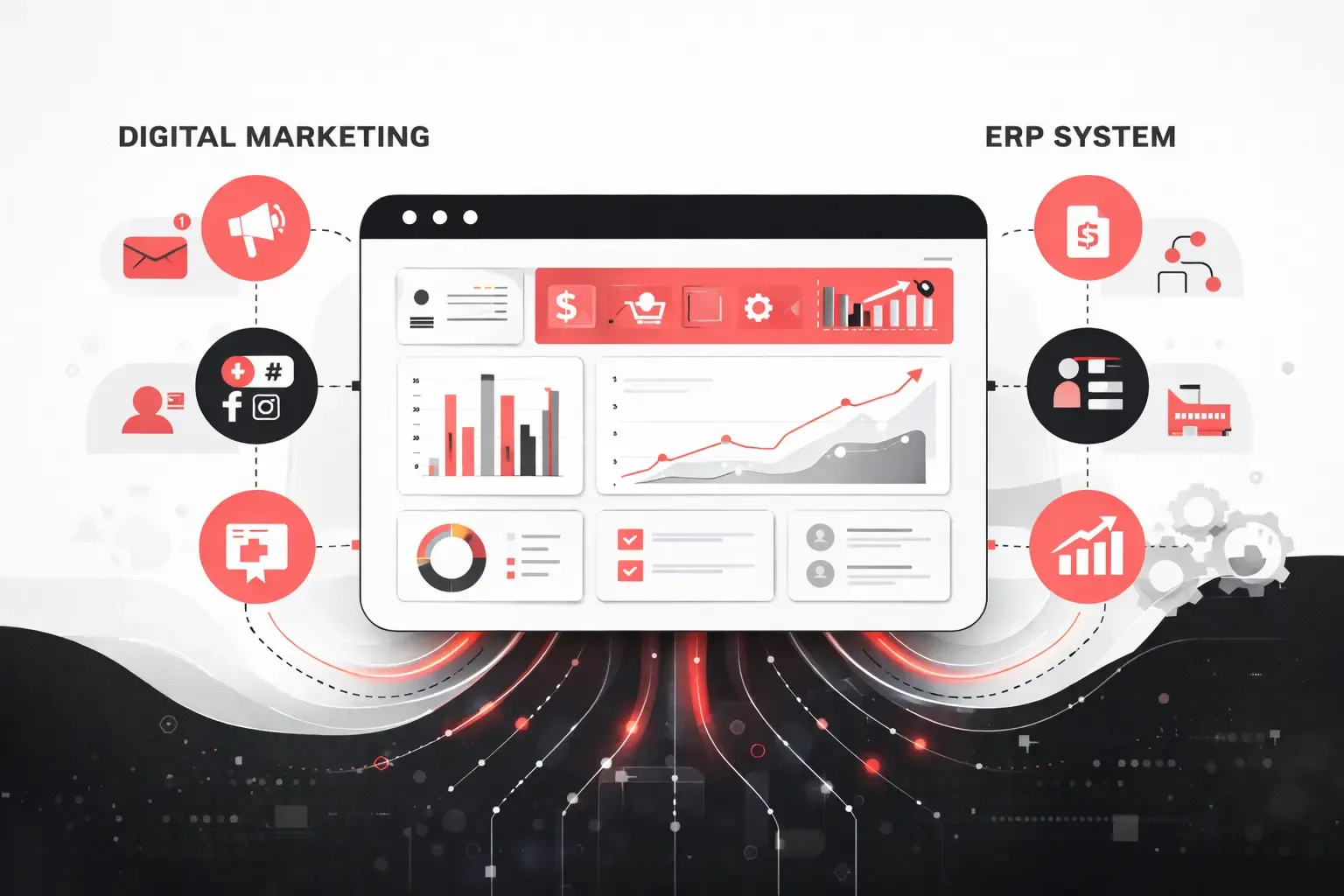
Dubai businesses are investing heavily in growth. Digital advertising platforms, social media tools, CRM systems, accounting software, inventory trackers, and reporting dashboards all promise efficiency. Yet when these systems live in isolation, companies end up paying twice. Once for marketing technology and again for enterprise software that barely talks to it.
That is why many organizations now ask a smarter question: why not unify everything inside one platform?
Forward thinking firms are discovering that combining marketing operations with ERP software allows them to reduce subscriptions, improve data accuracy, and make faster decisions. This guide explains why consolidating systems is becoming a strategic move and how businesses in the UAE can benefit from a single, integrated environment.
Why Dubai Companies Are Overspending on Software
Most companies did not plan to build a fragmented software stack. It usually grows gradually.
A marketing team subscribes to an email automation tool. Sales adopts a CRM. Finance adds accounting software. Operations introduces inventory management. HR chooses its own platform. Each department solves its own problem, yet leadership later faces five dashboards that never agree.
Common results include:
- Duplicate monthly subscriptions
- Disconnected customer data
- Manual exports between systems
- Delayed reporting
- Conflicting performance metrics
- Rising IT overhead
When marketing and ERP operate separately, campaign insights never fully translate into revenue forecasting, stock planning, or financial strategy. That gap is expensive.
What Does “One Roof” Really Mean in Business Software
Putting everything under one roof does not mean forcing every team into a rigid system. It means using a platform where marketing, sales, finance, and operations share the same database and workflows.
In practice, this includes:
- Leads flowing directly from campaigns into CRM
- Sales orders updating inventory automatically
- Invoices generated from closed deals
- Marketing spend reflected in profitability reports
- Customer history visible to every department
This is where ERP platforms with built in marketing modules deliver real value.
Why ERP and Digital Marketing Belong Together
Marketing no longer stops at lead generation. Teams want to know which campaign produced profitable customers, repeat buyers, and long term contracts. That level of insight requires access to operational and financial data.
When digital marketing tools connect natively to ERP systems, businesses gain:
End to End Customer Visibility
From first ad click to final invoice, every interaction stays linked to one record. Teams see the full customer journey rather than isolated snapshots.
Accurate ROI Tracking
Marketing managers can compare campaign costs with real revenue, margins, and lifetime value without manual spreadsheets.
Faster Sales Cycles
Qualified leads move straight into CRM pipelines, where sales teams respond quickly with quotations and follow ups.
Better Stock and Delivery Planning
Promotions automatically trigger demand forecasts, helping operations prepare inventory in advance.
These benefits explain why many companies in the UAE are researching digital marketing ERP Dubai strategies instead of continuing with disconnected platforms.
The Hidden Cost of Separate Marketing and ERP Systems
The biggest expense is not licensing. It is inefficiency.
When platforms stay separate, teams spend hours:
- Exporting CSV files
- Reconciling customer lists
- Matching invoices to campaigns
- Creating duplicate reports
- Chasing missing data
Errors creep in. Decisions slow down. Leadership waits days for performance updates that should appear instantly.
Over time, this friction reduces agility in one of the world’s most competitive business environments.
How Integrated ERP Platforms Support Marketing Teams
Modern ERP systems no longer focus only on accounting or inventory. They now include powerful marketing automation features that replace multiple standalone tools.
Email and Campaign Automation
Create segmented mailing lists, schedule newsletters, and track engagement directly inside the same platform that stores customer orders.
Lead Scoring and Nurturing
Automatically prioritize prospects based on interactions, purchases, or inquiries.
Event and Promotion Tracking
Run trade show campaigns, seasonal offers, and loyalty programs while linking results to real sales data.
Website and E Commerce Integration
Landing pages, forms, and online stores sync instantly with CRM and accounting modules.
This structure lets businesses operate one ecosystem instead of juggling five dashboards.
Why This Matters for Dubai and UAE Businesses
Dubai based companies scale quickly, expand into new markets, and open multiple branches. That growth demands systems that keep pace.
Unified ERP and marketing platforms help UAE firms by offering:
- VAT compliant accounting
- Multi currency support
- Arabic and English interfaces
- Multi company operations
- Branch level reporting
- Regulatory friendly financial controls
Retailers, logistics providers, real estate firms, agencies, and manufacturers all benefit from visibility across departments.
Signs You Are Paying Twice for Technology
Not sure whether your company needs consolidation yet? These warning signs usually appear first:
- Marketing reports do not match sales numbers
- Finance cannot trace campaign spending
- Customer data lives in multiple systems
- Operations struggles to forecast demand
- IT manages too many integrations
- Subscription costs increase every year
If several of these apply, it may be time to rethink your digital stack.
How One Platform Replaces Multiple Subscriptions
Companies that adopt integrated ERP systems often eliminate:
- Standalone email marketing tools
- Separate CRM subscriptions
- Reporting and BI platforms
- Inventory management software
- Invoicing applications
Instead, they rely on one licensed ecosystem where departments collaborate in real time.
This approach reduces vendor contracts, simplifies training, strengthens security, and improves long term ROI.
Migration Strategy: Moving Marketing and ERP Together
Switching systems does not need to disrupt operations. Successful projects usually follow a phased roadmap.
1. Audit Current Tools
List every marketing and business system your teams use and identify overlaps.
2. Redesign Workflows
Map how leads convert into orders and how invoices flow into accounting.
3. Select Core Modules
Start with CRM, marketing automation, and finance, then expand into inventory or manufacturing later.
4. Migrate Clean Data
Transfer customer records, campaigns, and transaction history carefully.
5. Train Teams
Department specific training ensures adoption remains high.
6. Optimize After Launch
Once live, fine tune dashboards and automation rules to maximize efficiency.
This method keeps daily operations stable while unlocking new analytical power.
Industry Examples from Dubai
Retail Groups
Unified campaigns, POS systems, inventory planning, and accounting across multiple outlets.
Logistics Firms
Marketing inquiries, quotations, fleet operations, and invoicing all managed in one environment.
Professional Services
Lead generation, project billing, HR records, and financial reporting under a single dashboard.
Manufacturing Companies
Promotions drive forecasts that feed production planning and procurement.
Each scenario highlights how merging marketing and ERP changes decision making at every level.
Final Thoughts: One Platform Beats Five Subscriptions
Running marketing software separately from ERP systems creates blind spots that cost money. Dubai businesses need speed, accuracy, and strategic insight, not spreadsheets and disconnected reports.
Bringing digital campaigns, CRM, finance, and operations together under one roof delivers clearer ROI, faster growth, and better control across the organization.
For companies researching unified systems in the UAE, learning more about Odoo implementation services in Dubai from Milaaj Brandset can provide a practical starting point when planning long term digital transformation.
Reducing complexity today often becomes the foundation for smarter, more scalable operations tomorrow.
Ready to Elevate Your Brand?
Start Your Project Today