July 29, 2026
Email Marketing Strategies That Increase Conversions
Milaaj Editorial / Research Insights
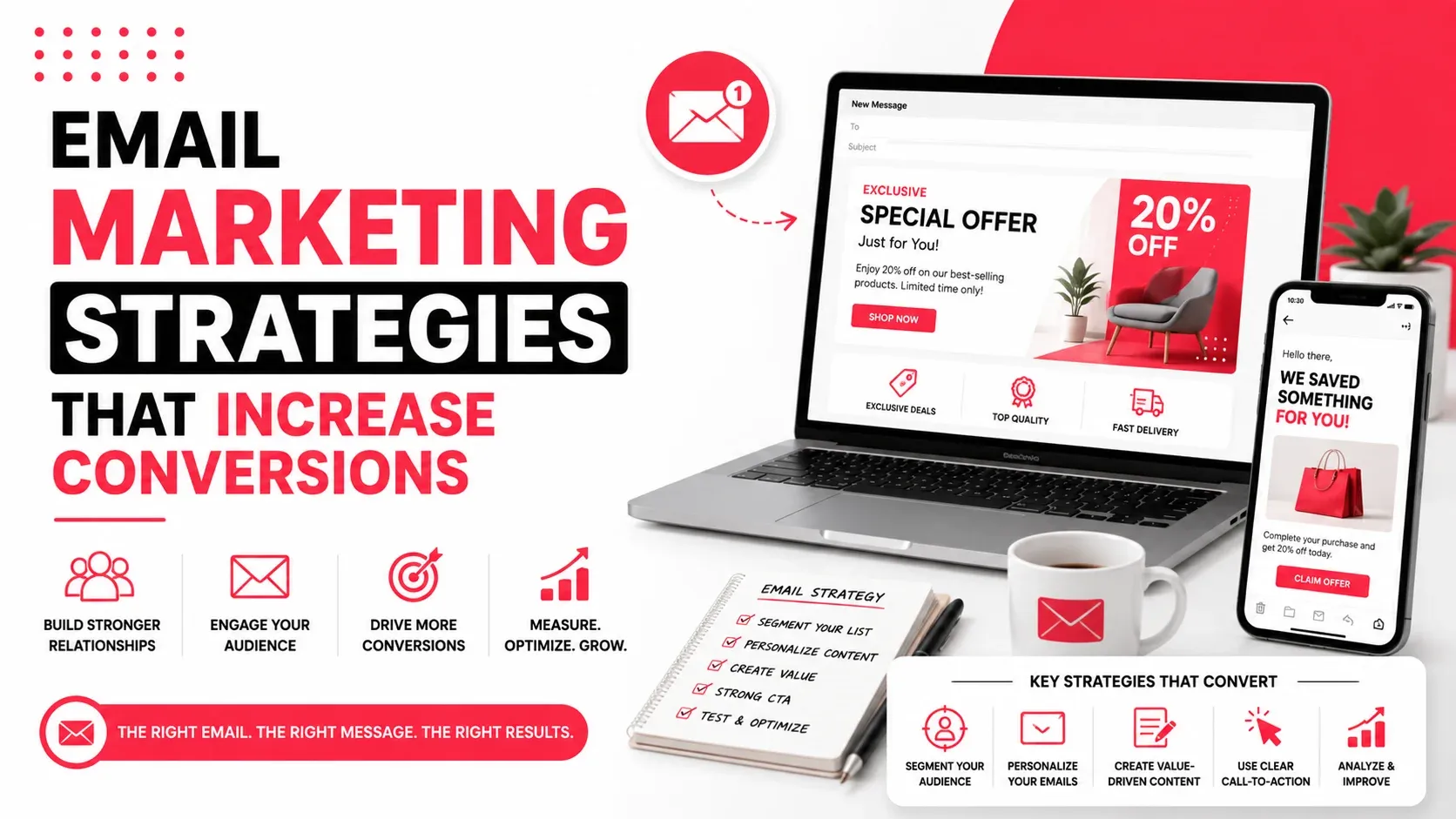
Email marketing remains one of the most effective digital marketing channels for building customer relationships, nurturing leads, and driving consistent conversions. While new platforms continue to emerge, email offers businesses a direct and permission-based way to communicate with their audience without relying solely on search engines or social media algorithms.
However, sending frequent promotional emails is no longer enough. Modern consumers expect relevant, personalized, and valuable content that matches their interests and stage in the buying journey. Businesses that focus on audience segmentation, automation, compelling messaging, and continuous optimization often achieve stronger engagement and higher conversion rates.
This guide explores practical email marketing strategies that help businesses create campaigns that encourage subscribers to take meaningful action while building long-term customer loyalty.
Quick Answer
Email marketing increases conversions when businesses send personalized, relevant, and well-timed emails to segmented audiences. Combining valuable content, automation, compelling subject lines, and clear calls to action helps improve engagement while encouraging subscribers to become customers.
Why Email Marketing Still Delivers Strong Results
Despite the growth of social media and messaging platforms, email continues to play a vital role throughout the customer journey.
Email marketing helps businesses:
- Generate qualified leads
- Build customer relationships
- Nurture prospects
- Recover abandoned opportunities
- Encourage repeat purchases
- Increase customer retention
- Promote products and services
Unlike many advertising channels, email allows businesses to communicate directly with subscribers who have chosen to hear from them, making it a valuable long-term marketing asset.
Build a High-Quality Email List
Successful email marketing starts with attracting subscribers who are genuinely interested in your business.
Focus on growing your list through permission-based methods such as:
- Newsletter sign-ups
- Downloadable guides
- Free resources
- Webinar registrations
- Product updates
- Customer account registrations
- Event registrations
Avoid purchasing email lists, as they often result in low engagement, poor deliverability, and potential compliance issues.
A smaller list of engaged subscribers is generally more valuable than a large list of inactive contacts.
Segment Your Audience
Sending the same email to every subscriber rarely produces the best results.
Audience segmentation allows businesses to deliver more relevant content based on subscriber characteristics and behaviour.
Common segmentation criteria include:
- Purchase history
- Website activity
- Geographic location
- Industry
- Customer lifecycle stage
- Products viewed
- Engagement history
Audience Segment | Email Strategy |
|---|---|
New subscribers | Welcome sequence |
Prospective customers | Educational content |
Existing customers | Product updates and loyalty offers |
Repeat buyers | Cross-selling and upselling |
Inactive subscribers | Re-engagement campaigns |
Segmentation improves relevance, leading to higher open rates, click-through rates, and conversions.
Create an Effective Welcome Email Series
The first few emails often shape a subscriber's perception of your brand.
Instead of sending a single welcome message, consider creating a sequence.
For example:
Email One
Welcome the subscriber and introduce your business.
Email Two
Share your most valuable resources or popular products.
Email Three
Build trust using customer success stories or testimonials.
Email Four
Encourage the subscriber to take a meaningful next step.
A structured welcome sequence helps establish credibility while gradually moving subscribers toward conversion.
Personalize Beyond the First Name
Modern personalization goes beyond inserting a subscriber's name into the greeting.
Businesses can personalize emails using:
- Previous purchases
- Browsing behaviour
- Product interests
- Customer location
- Purchase frequency
- Lifecycle stage
For example, recommending products related to a customer's previous purchase often feels more relevant than sending the same promotional email to every subscriber.
Personalization increases engagement because recipients receive content that better matches their interests.
Write Subject Lines That Encourage Opens
The subject line determines whether many subscribers open your email.
Strong subject lines should:
- Create curiosity naturally
- Clearly communicate value
- Stay concise
- Reflect the email content accurately
- Avoid misleading language
Examples include:
- New Resources to Help Your Business Grow
- Discover Our Latest Product Collection
- Tips to Improve Your Marketing Results
- Your Guide Is Ready to Download
Rather than relying on clickbait, focus on setting accurate expectations.
Deliver Value Before Selling
Subscribers are more likely to engage when every email offers genuine value.
Instead of sending constant promotional messages, balance your campaigns with helpful content.
Examples include:
- Industry insights
- Practical guides
- Educational articles
- Product tutorials
- Customer success stories
- Expert tips
- Frequently asked questions
Providing useful information builds trust and encourages long-term engagement.
Use Email Automation
Automation allows businesses to deliver relevant messages based on customer actions rather than sending every campaign manually.
Popular automated workflows include:
- Welcome emails
- Lead nurturing
- Abandoned cart reminders
- Product recommendations
- Post-purchase follow-ups
- Customer feedback requests
- Re-engagement campaigns
Automation improves consistency while ensuring subscribers receive timely communication.
Businesses offering digital marketing services often integrate email automation with CRM platforms to create personalized customer journeys that scale efficiently without sacrificing relevance.
Nurture Leads Gradually
Not every subscriber is ready to make an immediate purchase.
Lead nurturing helps educate prospects while building confidence over time.
An effective nurture sequence may include:
- Educational resources
- Industry trends
- Customer success stories
- Product demonstrations
- Frequently asked questions
- Comparison guides
Rather than pushing for an immediate sale, focus on helping subscribers make informed decisions.
Balance Promotional and Educational Emails
A successful email marketing strategy does not rely entirely on promotions.
While promotional campaigns help generate sales, educational emails build trust and keep subscribers engaged between purchases.
A balanced email strategy may include:
- Educational newsletters
- Product announcements
- Industry updates
- Case studies
- Customer success stories
- Seasonal campaigns
- Exclusive offers
Providing consistent value encourages subscribers to remain engaged with your brand over the long term.
Optimize Calls to Action
Every marketing email should guide readers toward one clear next step.
Effective calls to action (CTAs):
- Use action-oriented language.
- Stand out visually.
- Clearly communicate the benefit.
- Link directly to the relevant landing page.
- Avoid presenting too many competing options.
Examples include:
- Download the Guide
- Schedule a Consultation
- Explore Our Services
- Start Your Free Trial
- Shop the Collection
Keeping each email focused on a single objective helps improve click-through and conversion rates.
Recover Lost Opportunities With Automated Emails
Automated emails can help recover conversions that might otherwise be lost.
Examples include:
Abandoned Cart Emails
Remind shoppers about products they left behind while highlighting product benefits, availability, or shipping information.
Browse Abandonment Emails
Reconnect with visitors who viewed products but did not add them to their cart.
Re-Engagement Campaigns
Encourage inactive subscribers to reconnect with your business using valuable content or updated offers.
Timely automation keeps your business visible without overwhelming subscribers.
Improve Email Deliverability
Even well-designed campaigns cannot perform if emails fail to reach subscribers' inboxes.
To improve deliverability:
- Use verified sending domains.
- Authenticate email with SPF, DKIM, and DMARC.
- Remove inactive subscribers regularly.
- Avoid misleading subject lines.
- Maintain consistent sending schedules.
- Monitor spam complaints.
- Use permission-based email lists.
A healthy sender reputation increases the likelihood that future campaigns reach the inbox rather than spam folders.
Test and Optimize Campaigns
Email marketing improves through continuous testing.
Consider A/B testing:
- Subject lines
- Preview text
- Email layouts
- Images
- CTA buttons
- Send times
- Personalization techniques
- Email length
Testing one element at a time provides clearer insights into subscriber preferences and campaign performance.
Monitor the Right Metrics
Successful email marketing focuses on meaningful business outcomes rather than opens alone.
Important metrics include:
Metric | Why It Matters |
|---|---|
Open Rate | Indicates subject line effectiveness |
Click-Through Rate (CTR) | Measures engagement with email content |
Conversion Rate | Shows how many subscribers completed the desired action |
Bounce Rate | Identifies delivery issues |
Unsubscribe Rate | Indicates subscriber satisfaction |
Revenue Per Email | Measures business impact |
List Growth Rate | Tracks audience expansion |
Reviewing these metrics regularly helps identify opportunities for improvement.
Common Email Marketing Mistakes
Many businesses reduce campaign performance by making avoidable mistakes.
Mistake | Better Approach |
|---|---|
Sending identical emails to every subscriber | Segment audiences based on interests and behaviour |
Focusing only on promotions | Balance promotional and educational content |
Using weak subject lines | Write clear, benefit-driven subject lines |
Ignoring automation | Create workflows based on customer actions |
Overloading emails with multiple CTAs | Focus on one primary action |
Never cleaning the email list | Remove inactive or invalid subscribers regularly |
Ignoring analytics | Continuously optimize campaigns using performance data |
Avoiding these mistakes helps improve engagement while strengthening long-term subscriber relationships.
Integrate Email With Your Overall Marketing Strategy
Email marketing delivers stronger results when integrated with your wider digital marketing efforts.
For example:
- SEO attracts long-term organic traffic.
- Content marketing educates potential customers.
- Social media expands brand visibility.
- Paid advertising generates new leads.
- Email marketing nurtures those leads until they are ready to convert.
When these channels work together, businesses create a consistent customer experience across every stage of the buying journey.
If you're looking to create more engaging content that encourages subscribers to open, read, and share your emails, explore our blog on How to Create Viral Social Media Content for ideas that can inspire stronger messaging across multiple marketing channels.
Key Takeaways
- Email marketing remains one of the highest-performing digital marketing channels for nurturing leads and increasing conversions.
- Permission-based list building creates higher-quality subscriber audiences.
- Audience segmentation improves relevance and engagement.
- Personalization should extend beyond using a subscriber's name.
- Automation helps deliver timely and relevant communications.
- Educational content builds trust alongside promotional campaigns.
- Regular testing and performance analysis support continuous improvement.
Build Lasting Customer Relationships Through Email
Email marketing is most effective when it focuses on delivering value rather than simply sending promotions. By combining audience segmentation, automation, personalization, educational content, and continuous optimization, businesses can create campaigns that strengthen customer relationships while driving measurable business results.
As customer expectations continue to evolve, brands that deliver timely, relevant, and helpful email experiences will be better positioned to improve engagement, increase conversions, and encourage long-term loyalty.
Milaaj Brandset helps businesses develop data-driven email marketing strategies that combine compelling content, intelligent automation, and performance optimization to build stronger customer relationships and achieve sustainable business growth.
FAQs
Why is email marketing still effective?
Email marketing provides direct communication with subscribers who have chosen to receive updates, making it highly effective for nurturing leads, building relationships, and increasing conversions.
How often should businesses send marketing emails?
The ideal frequency depends on your audience and industry. Consistency is generally more important than sending a high volume of emails, and every message should provide genuine value.
What is email segmentation?
Email segmentation involves dividing subscribers into groups based on characteristics such as behaviour, purchase history, location, or interests so businesses can send more relevant content.
What types of automated emails should businesses use?
Common automated emails include welcome sequences, lead nurturing campaigns, abandoned cart reminders, post-purchase follow-ups, customer feedback requests, and re-engagement campaigns.
Which email marketing metrics matter most?
Businesses should monitor open rate, click-through rate, conversion rate, bounce rate, unsubscribe rate, revenue per email, and list growth rate to evaluate campaign performance.
How can businesses improve email conversions?
Businesses can improve conversions by personalizing emails, segmenting audiences, writing compelling subject lines, using clear calls to action, automating customer journeys, and continuously testing campaign elements.
Ready to Elevate Your Brand?
Start Your Project Today