July 11, 2026
How to Improve Website Engagement Metrics: Strategies to Keep Visitors Active
Milaaj Editorial / Research Insights
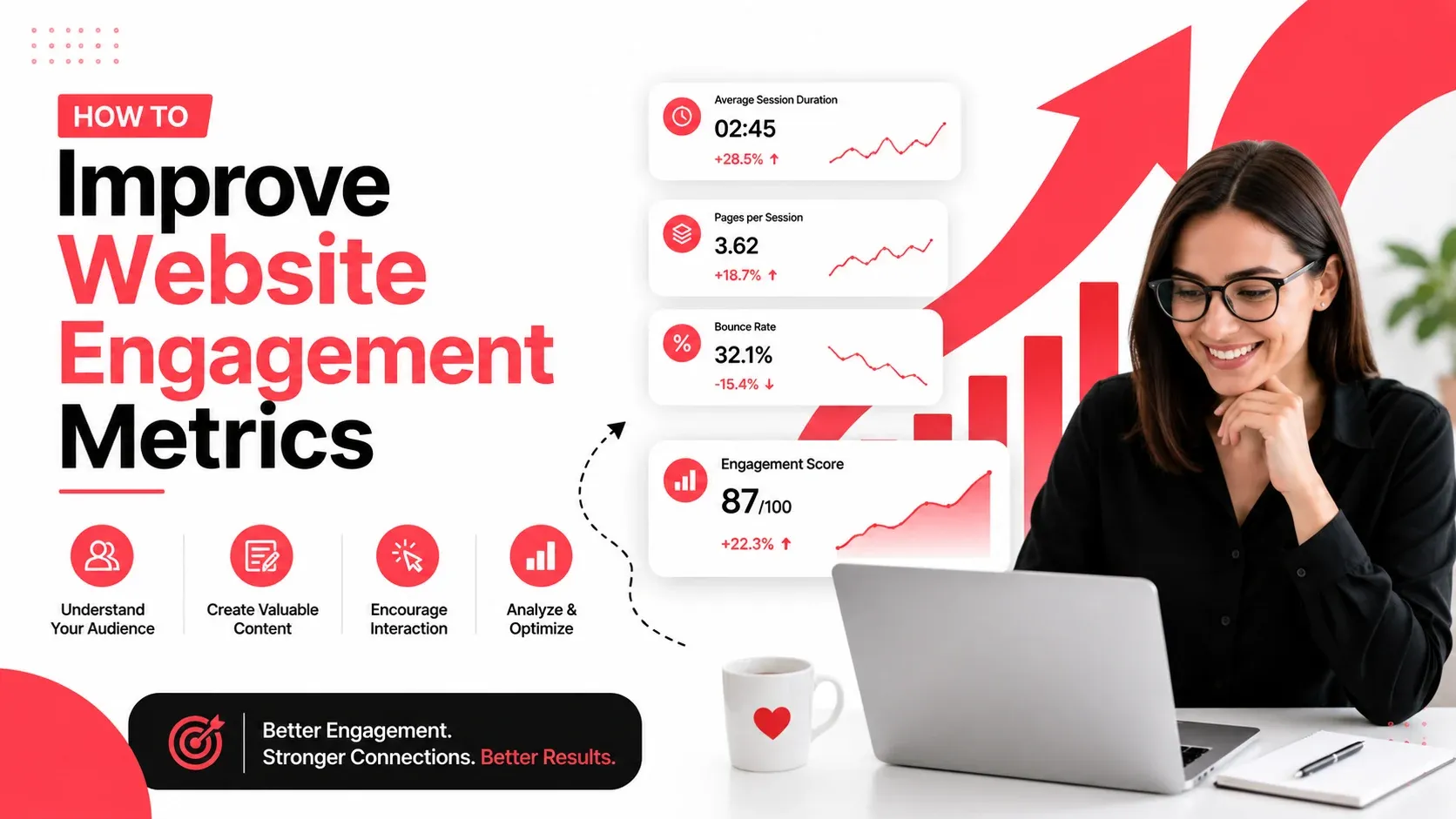
Driving traffic to your website is only part of the equation. If visitors leave within a few seconds or fail to interact with your content, your marketing efforts won't deliver the results you expect. Strong website engagement indicates that users find your content useful, your navigation intuitive, and your overall experience valuable.
While engagement metrics aren't direct Google ranking factors, they often reflect the quality of your website and user experience. Visitors who spend more time exploring your pages, reading content, and taking meaningful actions are more likely to become customers.
For businesses in Dubai and across the UAE, improving website engagement can increase lead generation, support conversion optimization, and maximize the return on SEO and digital marketing investments.
This guide explains the most important engagement metrics and practical strategies to improve them.
Quick Answer
To improve website engagement metrics, create helpful content, improve page speed, simplify navigation, strengthen internal linking, optimize for mobile devices, use engaging visuals, and include clear calls-to-action. Monitoring engagement data through analytics tools also helps identify pages that need improvement.
What Are Website Engagement Metrics?
Website engagement metrics measure how actively visitors interact with your website.
Instead of simply counting traffic, they help answer questions such as:
- Are visitors reading the content?
- Do they explore multiple pages?
- Are they completing important actions?
- Which pages encourage longer visits?
- Where do users lose interest?
These insights help businesses improve both user experience and conversion performance.
Why Website Engagement Matters
Higher engagement usually indicates that your website is meeting visitors' expectations.
Benefits include:
- Better user experience
- Increased trust
- Higher conversion rates
- More qualified leads
- Stronger customer relationships
- Improved long-term SEO performance
For UAE businesses, engagement also helps maximize the value of paid advertising and organic search traffic by encouraging visitors to stay longer and interact with the website.
Key Engagement Metrics You Should Monitor
Different metrics reveal different aspects of user behavior.
Metric | What It Measures | Why It Matters |
|---|---|---|
Average Engagement Time | Active time spent on your website | Indicates content quality |
Engaged Sessions | Meaningful visits with interaction | Measures user interest |
Pages Per Session | Number of pages viewed | Reflects navigation and internal linking |
Scroll Depth | How far users read | Shows content engagement |
Conversion Rate | Completed goals | Measures business performance |
Returning Visitors | Repeat visits | Indicates customer loyalty |
Reviewing these metrics together provides a more complete picture than focusing on a single number.
Create Content That Matches Search Intent
Visitors engage with content that answers their questions quickly and clearly.
Before creating or updating a page, identify what users expect to find.
For example:
Someone searching for:
- Website design pricing
- SEO services in Dubai
- Ecommerce marketing strategies
expects practical information that helps them make a decision.
Content that closely matches search intent encourages visitors to continue reading rather than returning to search results.
Businesses investing in SEO content writing often see stronger engagement because their content is designed around user intent instead of keywords alone.
Improve Content Readability
Even valuable information can lose readers if it's difficult to consume.
Improve readability by:
- Writing short paragraphs
- Using descriptive headings
- Including bullet lists where appropriate
- Explaining technical concepts clearly
- Avoiding unnecessary jargon
- Highlighting key points naturally
A clean structure allows visitors to scan the page before deciding what to read in detail.
Improve Page Speed
Slow websites are one of the most common causes of poor engagement.
Visitors expect pages to load quickly, especially on mobile devices.
Ways to improve loading speed include:
- Compressing images
- Using modern image formats
- Reducing unnecessary JavaScript
- Enabling browser caching
- Minimizing redirects
- Optimizing server response times
For businesses competing in Dubai's highly competitive online market, even small improvements in page speed can lead to better user engagement.
Strengthen Internal Linking
Internal links encourage visitors to continue exploring your website.
Instead of ending the user journey on a single page, guide visitors toward related resources.
For example, a blog about SEO could naturally link to:
- Related educational articles
- Relevant service pages
- Helpful guides
- Case studies
Use descriptive, keyword-focused anchor text so visitors understand what they'll find after clicking.
Strong internal linking also helps search engines understand the relationship between your pages.
Simplify Website Navigation
Visitors should never struggle to find important information.
Good navigation includes:
- Clear menu labels
- Logical page organization
- Easy-to-find contact information
- Visible search functionality (when appropriate)
- Consistent navigation across devices
Businesses with responsive web design generally create smoother user journeys because navigation remains intuitive on desktops, tablets, and smartphones.
Use High-Quality Visual Content
Images, diagrams, videos, and illustrations make content easier to understand and more engaging.
Useful visuals can:
- Explain complex topics
- Break up long sections of text
- Highlight important information
- Keep visitors interested for longer
However, visuals should always support the content rather than distract from it.
Optimized images also contribute to faster loading speeds and a better overall user experience.
Write Clear Calls-to-Action
Engagement isn't only about reading content, it's also about encouraging meaningful action.
Effective CTAs guide visitors toward the next logical step.
Examples include:
- Request a consultation
- Download a guide
- Contact our team
- Explore related services
- Read another article
Position CTAs naturally throughout the page instead of relying solely on one at the end.
Optimize for Mobile Users
Most website traffic now comes from mobile devices, making mobile optimization essential for improving engagement.
A mobile-friendly website should offer:
- Responsive layouts
- Readable font sizes
- Easy-to-tap buttons
- Fast loading pages
- Simple navigation
- Minimal intrusive pop-ups
For businesses targeting customers in Dubai and across the UAE, a smooth mobile experience can significantly improve both engagement and lead generation.
Personalize the User Experience
Personalization helps visitors find content that's relevant to their interests.
Examples include:
- Displaying related articles
- Recommending relevant services
- Showing location-specific content
- Personalizing product suggestions
- Remembering user preferences
Even simple personalization can encourage visitors to spend more time exploring your website.
Reduce Friction Throughout the User Journey
Every unnecessary step increases the chance that visitors will leave.
Look for opportunities to simplify actions such as:
- Filling out contact forms
- Booking appointments
- Requesting quotations
- Downloading resources
- Completing purchases
Reducing friction makes it easier for users to achieve their goals while improving overall engagement.
Use Analytics to Identify Problem Pages
Not every page performs equally well.
Regularly review analytics data to identify pages with:
- Low engagement time
- High exit rates
- Low conversion rates
- Poor scroll depth
- Declining organic traffic
Once identified, improve these pages by updating content, refining page layouts, improving internal links, or strengthening calls-to-action.
Businesses using technical SEO services alongside analytics can often uncover usability issues that negatively affect both engagement and search performance.
Common Mistakes That Reduce Engagement
Many engagement problems result from avoidable website issues.
Some of the most common include:
- Slow-loading pages
- Walls of text without headings
- Weak or missing internal links
- Confusing navigation
- Generic calls-to-action
- Outdated content
- Poor mobile experience
- Low-quality visuals
- Pop-ups that interrupt the user experience
Addressing these issues often produces noticeable improvements without requiring a complete website redesign.
Best Practices for Long-Term Engagement
Improving engagement isn't a one-time task. Regular optimization keeps your website useful and relevant.
Follow these best practices:
- Publish content that matches search intent.
- Review engagement metrics every month.
- Update older pages with fresh information.
- Test different CTA placements.
- Improve page speed whenever possible.
- Strengthen internal links as new content is published.
- Monitor mobile usability after website updates.
Small, consistent improvements usually deliver better long-term results than major one-time changes.
Key Takeaways
- Website engagement measures how visitors interact with your content and pages.
- Helpful, well-structured content keeps users on your website longer.
- Fast loading speeds and responsive design improve user experience.
- Strong internal linking encourages visitors to explore additional pages.
- Clear calls-to-action guide users toward meaningful actions.
- Analytics helps identify pages that require optimization.
- Regular updates and continuous improvements support long-term engagement and business growth.
Create a Website Visitors Want to Explore
Improving website engagement isn't about keeping visitors on your site for as long as possible—it's about helping them quickly find valuable information and confidently take the next step. When your content matches user intent, your website is easy to navigate, and pages load quickly, visitors are naturally more likely to stay engaged.
Businesses that regularly review user behavior, refine their content, and optimize the overall experience are better positioned to generate qualified leads and build stronger customer relationships over time.
Milaaj Brandset helps businesses create SEO-friendly websites, engaging content, and digital marketing strategies that improve user experience, increase engagement, and support sustainable business growth.
FAQs
What are website engagement metrics?
Website engagement metrics measure how users interact with your website. Common metrics include average engagement time, engaged sessions, pages per session, scroll depth, and conversion rate.
Do engagement metrics affect SEO?
Engagement metrics are not direct Google ranking factors, but they often reflect content quality and user experience. Websites that provide valuable experiences are more likely to perform well over time.
Which engagement metric is the most important?
There isn't a single most important metric. Reviewing engagement time, conversions, pages per session, and returning visitors together provides a more complete understanding of website performance.
How can I increase engagement on my website?
Improve content quality, simplify navigation, strengthen internal linking, optimize page speed, enhance the mobile experience, and include clear calls-to-action that encourage users to continue their journey.
How often should I review engagement metrics?
For most business websites, reviewing analytics monthly is sufficient. High-traffic websites or active marketing campaigns may benefit from weekly reviews.
Which tools can I use to measure website engagement?
Popular tools include Google Analytics 4, Google Search Console, Microsoft Clarity, and heatmap software that tracks user behavior and interactions.
Can website engagement improve conversions?
Yes. Visitors who spend more time interacting with relevant content and navigating your website are generally more likely to complete enquiries, purchases, or other business goals.
Ready to Elevate Your Brand?
Start Your Project Today