August 5, 2026
How to Reduce Ecommerce Cart Abandonment
Milaaj Editorial / Research Insights
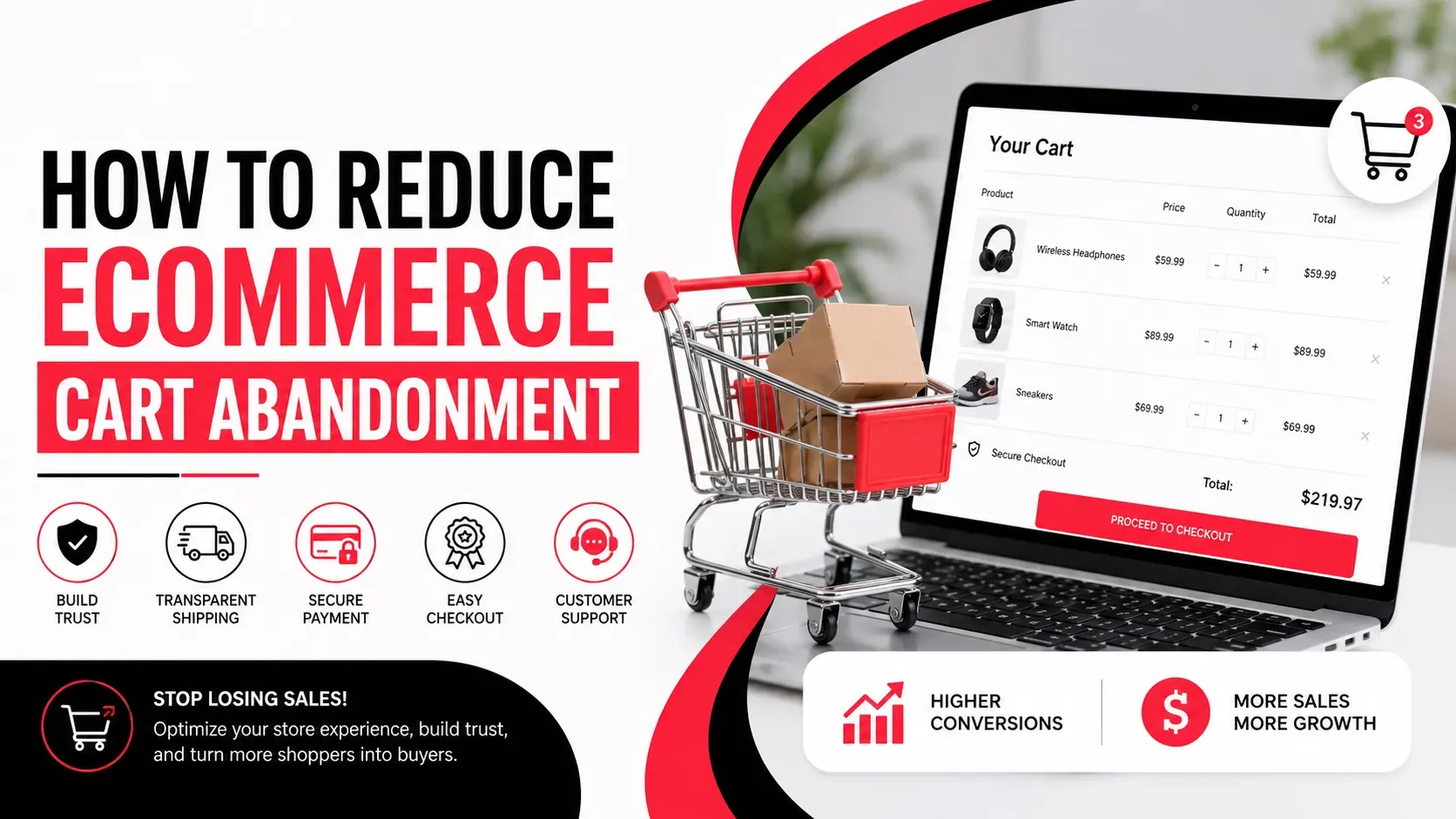
A customer adds products to their shopping cart, proceeds to checkout, enters some details—and then leaves without completing the purchase. This scenario plays out thousands of times every day across ecommerce websites, representing one of the biggest challenges for online retailers.
Cart abandonment doesn't always mean customers have lost interest. In many cases, the buying journey is interrupted by avoidable obstacles such as unexpected costs, complicated checkout forms, limited payment options, or concerns about security. Every unnecessary step creates another opportunity for potential buyers to leave before placing an order.
While no ecommerce business can eliminate cart abandonment entirely, reducing it can have a significant impact on revenue without increasing advertising spend. Improving the checkout experience, strengthening customer confidence, and removing friction throughout the purchase process often leads to measurable improvements in conversion rates.
This guide explores practical strategies that help ecommerce businesses reduce cart abandonment and recover more completed sales.
Quick Answer
To reduce ecommerce cart abandonment, simplify the checkout process, provide transparent pricing, offer multiple payment methods, enable guest checkout, optimize mobile usability, build trust with security signals, and use cart recovery campaigns to re-engage shoppers who leave before completing their purchases.
Why Customers Abandon Their Shopping Carts
Customers rarely abandon their carts for a single reason. Instead, several small points of friction combine to make completing the purchase feel less convenient than postponing it.
Common causes include:
- Unexpected shipping costs
- Complicated checkout processes
- Mandatory account creation
- Slow-loading checkout pages
- Limited payment options
- Security concerns
- Long delivery times
- Technical issues
- Mobile usability problems
Understanding where customers leave the buying journey is the first step toward improving conversions.
Simplify the Checkout Process
Every additional checkout step introduces another opportunity for customers to leave.
A streamlined checkout should include:
- Minimal form fields
- Clear progress indicators
- Logical information flow
- Automatic address validation
- Browser autofill support
- Easy error correction
- Fast page loading
Reducing unnecessary complexity helps shoppers complete purchases with less effort.
Businesses investing in UI/UX Design Services often redesign checkout experiences by simplifying navigation, improving form usability, and reducing friction throughout the purchase journey.
Offer Guest Checkout
Forcing customers to create an account before purchasing remains one of the most common reasons for abandoned carts.
Guest checkout provides several advantages:
- Faster purchases
- Less frustration
- Lower commitment
- Improved mobile experience
- Better first-time customer conversions
After completing the purchase, customers can still be invited to create an account without interrupting the checkout flow.
Display All Costs Upfront
Unexpected fees frequently discourage customers at the final stage of checkout.
Always communicate:
- Product pricing
- Shipping costs
- Taxes where applicable
- Delivery charges
- Estimated delivery dates
Transparent pricing builds trust and prevents unpleasant surprises before payment.
Support Multiple Payment Methods
Different customers prefer different ways to pay.
Providing flexible payment options improves accessibility and increases purchase completion.
Consider offering:
- Credit and debit cards
- Apple Pay
- Google Pay
- PayPal
- Local payment methods
- Buy Now, Pay Later (BNPL) options where appropriate
The easier customers can pay using their preferred method, the lower the likelihood of abandonment.
Build Trust Before Payment
Customers often hesitate if they are unsure whether a website is secure.
Reassure shoppers with visible trust signals such as:
- SSL certificates
- Secure payment badges
- Customer reviews
- Money-back guarantees
- Clear return policies
- Contact information
- Privacy policy links
These elements reduce perceived risk and increase confidence before payment.
Optimize Checkout for Mobile Devices
Mobile users are particularly sensitive to checkout friction.
Improve mobile checkout by:
- Using responsive layouts
- Enlarging touch targets
- Supporting mobile autofill
- Minimizing typing
- Displaying large payment buttons
- Keeping checkout pages lightweight
A seamless mobile experience is essential as an increasing share of ecommerce purchases now take place on smartphones.
Businesses developing modern E-commerce solutions frequently prioritize responsive checkout experiences, mobile payment integration, and streamlined purchase flows to maximize conversions across every device.
Improve Checkout Speed
Performance influences purchasing behaviour throughout the checkout process.
Reduce loading times by:
- Compressing images
- Removing unnecessary scripts
- Optimizing server response times
- Minimizing third-party requests
- Using browser caching
- Loading only essential checkout resources
Fast checkout pages help maintain customer momentum until the purchase is complete.
Reduce Distractions During Checkout
The checkout page should focus on one objective: completing the purchase.
Avoid unnecessary distractions such as:
- Excessive promotional banners
- Pop-ups
- Complex navigation menus
- Irrelevant product suggestions
- External links
Keeping the checkout experience clean helps customers stay focused on finishing their order.
For a deeper look at designing friction-free payment experiences, read our guide on Smart Checkout Experiences, where we explore practical ways to simplify checkout flows and improve ecommerce conversions.
Use Cart Recovery Emails Strategically
Not every abandoned cart represents a lost customer. Many shoppers simply become distracted, compare prices elsewhere, or postpone their purchase.
A well-planned cart recovery sequence can encourage them to return.
Effective abandoned cart emails should include:
- A reminder of the products left behind
- Product images
- A clear call-to-action
- Limited-time offers where appropriate
- Trust signals
- Easy access back to the checkout page
Rather than sending multiple emails within a short period, space recovery messages thoughtfully to remain helpful instead of intrusive.
Use Exit-Intent Offers Carefully
Exit-intent pop-ups can recover some abandoning visitors when used strategically.
Examples include:
- Free shipping offers
- First-purchase discounts
- Limited-time coupon codes
- Reminder messages
- Wishlist or save-for-later options
These offers should add value rather than interrupt the shopping experience or train customers to expect discounts every time they leave.
Create Confidence With Flexible Return Policies
Customers are more willing to complete purchases when they know returns are straightforward.
Communicate your policies clearly by highlighting:
- Return eligibility
- Exchange options
- Refund timelines
- Warranty coverage
- Return process
Easy-to-find policies reduce purchase hesitation and reinforce customer confidence.
Offer Live Assistance During Checkout
Some customers abandon their carts simply because they cannot find an answer to a final question.
Providing timely support through:
- Live chat
- AI chat assistants
- Click-to-call options
- Frequently asked questions
- Order assistance
can help resolve concerns before customers leave the checkout process.
Monitor Cart Abandonment Metrics
Reducing abandonment requires continuous measurement rather than one-time improvements.
Track metrics such as:
Metric | Why It Matters |
|---|---|
Cart Abandonment Rate | Measures how many shoppers leave before completing a purchase. |
Checkout Completion Rate | Indicates the effectiveness of your checkout experience. |
Payment Failure Rate | Identifies issues with payment processing. |
Checkout Exit Pages | Shows where customers abandon the purchase journey. |
Recovery Email Conversion Rate | Measures how effectively abandoned cart campaigns recover sales. |
Mobile Checkout Conversion Rate | Evaluates mobile-specific checkout performance. |
Monitoring these metrics helps identify opportunities for ongoing optimization.
Common Cart Abandonment Mistakes
Many ecommerce businesses unintentionally create friction during the final stages of the customer journey.
Mistake | Better Approach |
|---|---|
Mandatory account creation | Offer guest checkout alongside optional account registration. |
Unexpected shipping costs | Display all costs early in the buying process. |
Limited payment options | Support multiple secure and convenient payment methods. |
Long checkout forms | Request only essential customer information. |
Slow checkout performance | Optimize page speed and reduce unnecessary scripts. |
Weak trust signals | Display security badges, customer reviews, and transparent return policies. |
Removing these barriers makes it easier for customers to complete purchases with confidence.
Build a Continuous Cart Recovery Strategy
Successful ecommerce businesses treat cart recovery as an ongoing optimization process rather than a single feature.
An effective strategy combines:
- Regular checkout usability testing
- Customer behaviour analysis
- Heatmaps and session recordings
- A/B testing of checkout elements
- Recovery email automation
- Mobile checkout improvements
- Continuous performance monitoring
Small improvements implemented consistently often produce significant gains in completed orders over time.
Key Takeaways
- Cart abandonment is often caused by avoidable friction rather than a lack of purchase intent.
- Simplified checkout experiences encourage more customers to complete their orders.
- Guest checkout, transparent pricing, and flexible payment options reduce purchasing barriers.
- Trust signals, clear return policies, and mobile optimization improve customer confidence.
- Cart recovery emails and exit-intent offers help recover otherwise lost sales.
- Regular measurement and optimization are essential for maintaining high checkout performance.
Turn More Shopping Carts Into Completed Orders
Every abandoned cart represents an opportunity to improve the customer experience. By removing unnecessary obstacles, simplifying checkout, communicating transparently, and supporting customers throughout the purchasing journey, ecommerce businesses can recover sales that might otherwise be lost.
Reducing cart abandonment isn't about applying a single tactic—it requires continuous refinement of the checkout experience based on customer behaviour, performance data, and evolving expectations. Businesses that consistently optimize this final stage often achieve stronger conversion rates, higher customer satisfaction, and more sustainable revenue growth.
Milaaj Brandset helps businesses create conversion-focused ecommerce experiences by optimizing checkout flows, improving user experience, and building scalable online stores designed to maximize completed purchases.
FAQs
What is ecommerce cart abandonment?
Ecommerce cart abandonment occurs when a shopper adds products to their online cart but leaves the website before completing the purchase.
Why do customers abandon shopping carts?
Common reasons include unexpected costs, complicated checkout processes, mandatory account creation, limited payment options, slow-loading pages, and concerns about payment security.
Does guest checkout reduce cart abandonment?
Yes. Allowing customers to complete purchases without creating an account removes a common source of friction, especially for first-time buyers.
How effective are abandoned cart emails?
Well-designed cart recovery emails can recover a meaningful percentage of abandoned orders by reminding shoppers about their products and making it easy to return to checkout.
How can mobile checkout be improved?
Use responsive layouts, minimize typing, support autofill, provide large touch-friendly buttons, optimize page speed, and ensure payment methods work smoothly on mobile devices.
How often should checkout performance be reviewed?
Checkout performance should be monitored continuously using analytics, usability testing, heatmaps, and A/B testing to identify and resolve issues that affect purchase completion.
Ready to Elevate Your Brand?
Start Your Project Today