September 1, 2025
AI Voice Mimics: Microsoft’s VALL-E and the Ethics of Synthetic Voices
Milaaj Editorial / Research Insights
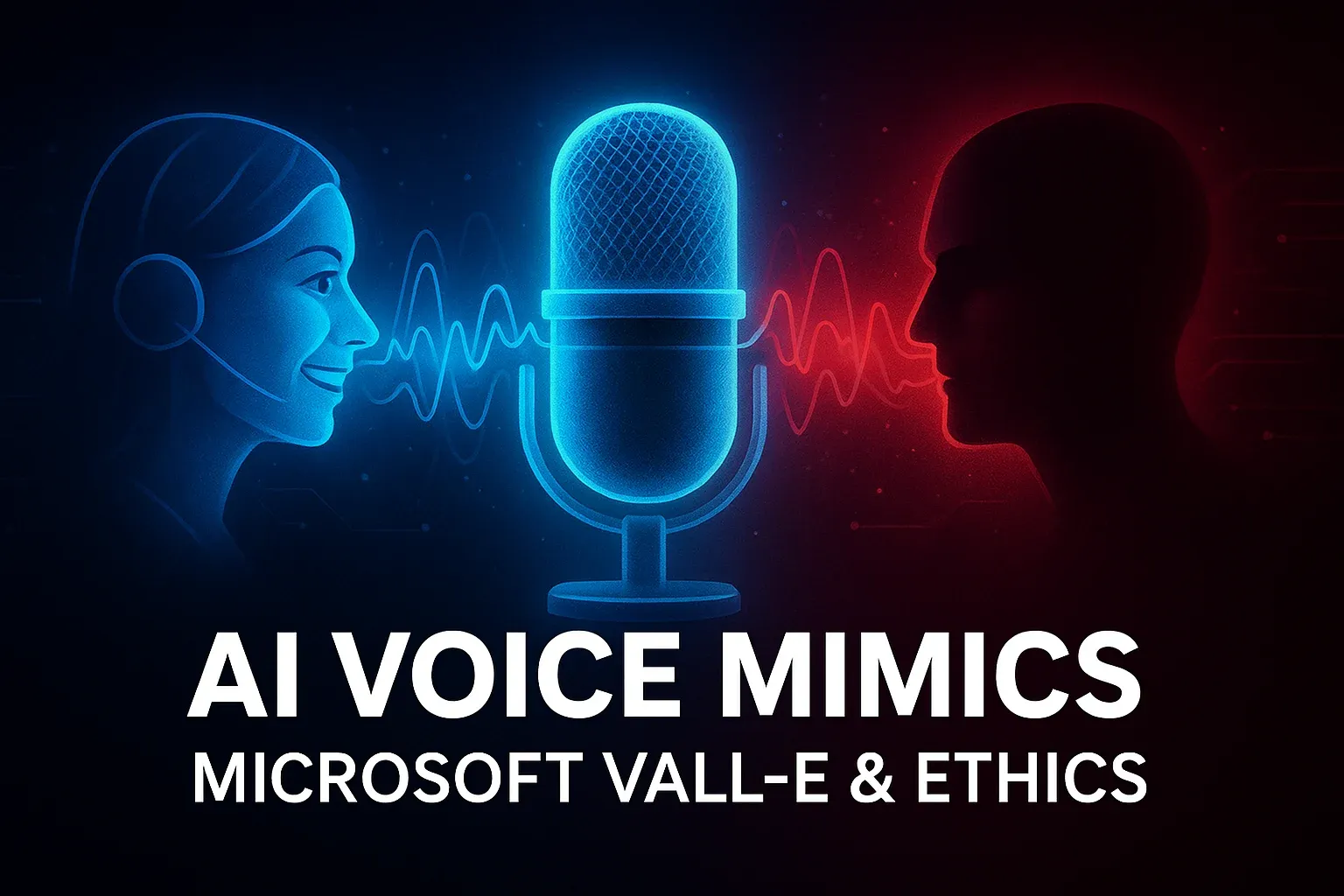
Artificial Intelligence is reshaping how humans interact with technology, and one of the most striking advancements is in synthetic voice generation. With Microsoft’s VALL-E, an AI model capable of mimicking voices with stunning accuracy after just a few seconds of audio, the world is facing both groundbreaking possibilities and serious ethical dilemmas.
Voice is one of the most personal identifiers we possess. Unlike a password, it is not something we can change easily. That’s why the arrival of VALL-E has sparked debates on accessibility, creativity, fraud, and privacy.
In this blog, we’ll explore what VALL-E is, how it works, its potential applications, and the ethical challenges it raises as synthetic voices move from research labs into everyday life.
What is Microsoft’s VALL-E?
Microsoft’s VALL-E is a neural codec language model designed for text-to-speech synthesis. Unlike traditional text-to-speech tools that require hours of training data to sound natural, VALL-E can replicate a person’s voice using just a three-second audio sample.
Some key breakthroughs include:
- Zero-shot voice cloning: It doesn’t need prior training on a specific person’s voice.
- Contextual accuracy: Captures nuances like tone, emotion, and intonation.
- Scalability: Can theoretically mimic thousands of voices with minimal data.
In simple terms, VALL-E represents the next leap in voice AI, bridging the gap between robotic speech and near-human vocal expression.
Applications of Synthetic Voices
While VALL-E’s capabilities raise red flags, there are also many beneficial applications.
1. Accessibility
For people with speech impairments, AI-generated voices can restore communication. Imagine someone with ALS being able to “preserve” their natural voice for future conversations.
2. Entertainment and Media
From dubbing films into multiple languages to creating realistic NPCs (non-playable characters) in video games, synthetic voices can save time and expand creative possibilities.
3. Personal Assistants & Customer Support
Voice assistants like Siri, Alexa, or Cortana could sound more natural and human, improving user experience and reducing “machine fatigue.”
4. Personalized Experiences
Brands could offer tailored voice interactions. Imagine a favorite celebrity narrating your audiobook, generated ethically with permission.
These uses show how AI voice tech can improve lives, but only if managed responsibly.
The Ethical Concerns
Where innovation thrives, risks often follow. Microsoft’s VALL-E has triggered serious ethical concerns across tech, law, and society.
1. Voice Impersonation & Fraud
The biggest danger is fraudulent use. Scammers could use cloned voices to impersonate loved ones or executives to trick people into transferring money. Such incidents are already happening with less advanced tools.
2. Deepfake Audio in Politics and Media
Audio is often seen as credible proof. With VALL-E, fake recordings could be used to spread misinformation, influence elections, or damage reputations.
3. Consent & Ownership of Voices
If a voice can be cloned from just a few seconds of audio, who owns the rights to that digital voice? Does the speaker, the company, or the AI model itself?
4. Psychological Impact
Hearing a deceased loved one’s cloned voice could be comforting for some, but emotionally distressing for others. Ethical lines blur when synthetic voices enter sensitive contexts.
VALL-E vs Other AI Voice Tools
VALL-E isn’t the only player in synthetic voice tech. Here’s how it compares:
- OpenAI’s Whisper: Focuses on transcription and speech-to-text, not voice cloning.
- Google’s Tacotron & WaveNet: Impressive naturalness, but require larger datasets.
- ElevenLabs: Popular for its realistic voice cloning, but already facing misuse concerns.
What sets VALL-E apart is its efficiency—it can generate convincing voices with minimal audio input, making it both powerful and potentially dangerous.
Legal & Policy Challenges
Synthetic voice technology is moving faster than regulations. Current laws often fail to address AI-generated voices directly.
Key Legal Questions:
- Voice Rights: Should individuals hold legal ownership over their digital voiceprints?
- AI Labeling: Should synthetic audio be clearly marked as AI-generated?
- Accountability: If someone misuses VALL-E, is Microsoft responsible, or only the user?
Some regions are considering “deepfake disclosure laws”, requiring labels on AI-generated content. But enforcement remains a major challenge.
The Future of AI Voice Tech
Synthetic voices are not going away. The real challenge lies in balancing innovation with ethics.
Safeguards to Expect:
- Watermarking: Embedding detectable signals into AI-generated voices.
- Voice Authentication: Improved security to distinguish real from synthetic voices.
- Regulation & Transparency: Industry standards on consent and disclosure.
In the future, synthetic voices may be as common as photo filters are today. The difference will be whether society sets strong ethical boundaries before misuse becomes uncontrollable.
Conclusion
Microsoft’s VALL-E is both a technological marvel and an ethical puzzle. On one hand, it offers incredible opportunities in accessibility, creativity, and personalized digital experiences. On the other, it risks opening doors to fraud, misinformation, and identity theft.
The key lies in responsible AI development. Companies like Microsoft must prioritize safeguards, policymakers need to establish clear rules, and users should stay vigilant.
Voice is one of the most intimate aspects of human identity. As AI advances, the world must ensure that synthetic voices amplify human potential without erasing trust in reality.
🙋 FAQs
1. What is Microsoft’s VALL-E?
It’s an AI voice model that can mimic human voices using just a few seconds of audio.
2. What makes VALL-E different from other AI voice tools?
It requires minimal training data while capturing tone, emotion, and intonation more naturally.
3. Can AI voice technology be misused?
Yes, risks include fraud, impersonation, misinformation, and deepfake audio.
4. Are there benefits to synthetic voices?
Absolutely—accessibility, entertainment, customer support, and personalized digital experiences.
5. Will synthetic voices be regulated?
Governments are beginning to draft laws, but clear global standards don’t yet exist.


Ready to Elevate Your Brand?
Start Your Project Today