March 26, 2026
Say Goodbye to Spreadsheet Chaos: 5 Ways Odoo Unifies Your Business Operations
Milaaj Editorial / Research Insights
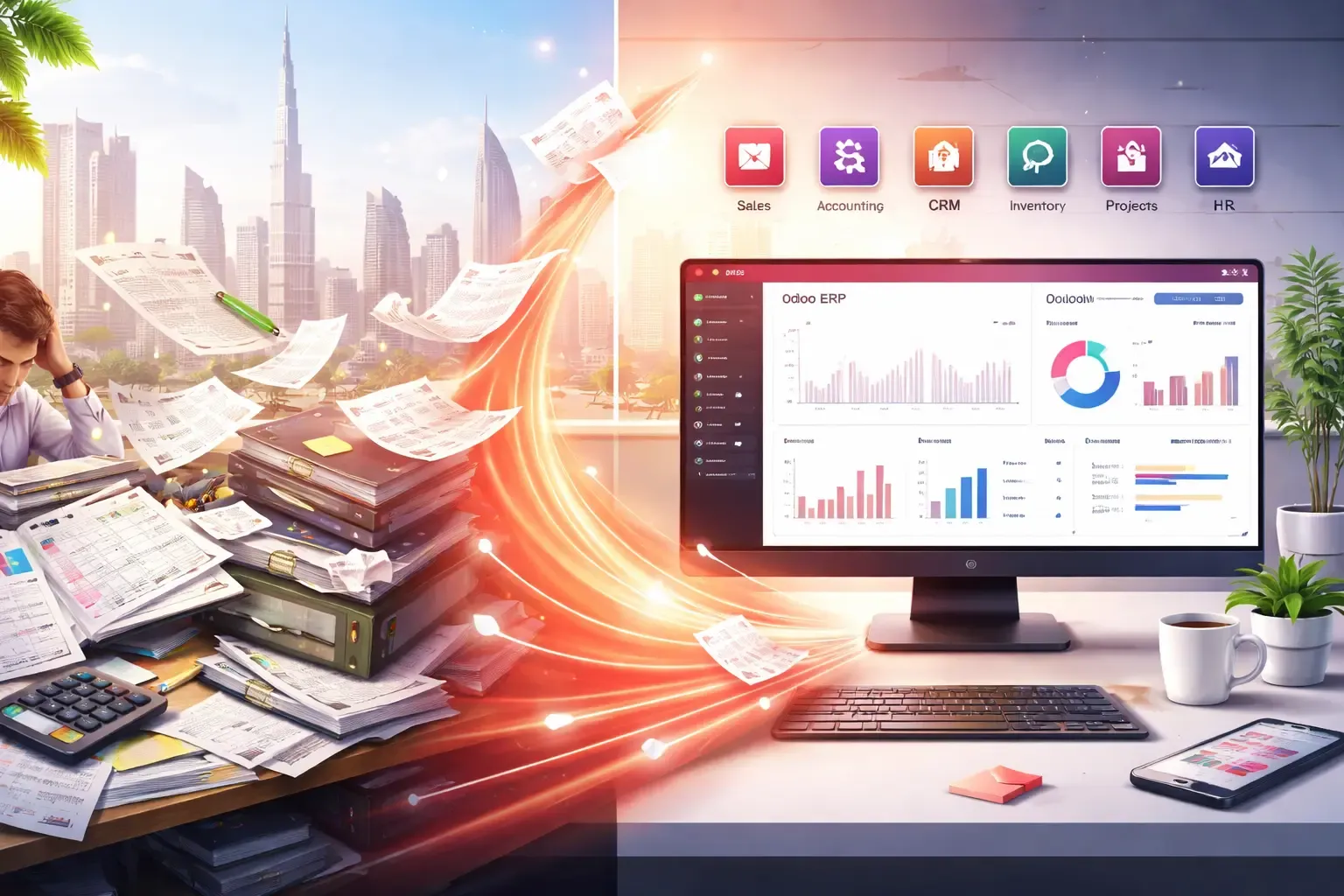
Spreadsheets have long been the default tool for managing business data. From tracking sales and managing inventory to handling finances, many companies rely heavily on Excel to run daily operations.
However, as businesses grow, spreadsheets quickly become a source of confusion rather than clarity.
Multiple versions, manual data entry, broken formulas, and lack of real-time visibility create inefficiencies that slow down operations and increase the risk of costly errors.
This is where ERP systems like Odoo provide a better solution.
By replacing disconnected spreadsheets with a unified platform, businesses can streamline workflows, automate processes, and gain complete control over their operations.
In this article, we explore five powerful ways Odoo eliminates spreadsheet chaos and transforms how businesses operate.
Why Spreadsheets Become a Problem as You Scale
Spreadsheets work well for small tasks, but they are not designed for managing complex business operations.
Common issues include:
Data Duplication
Different departments maintain separate spreadsheets, leading to duplicated and inconsistent data.
Human Errors
Manual entry increases the risk of mistakes that can impact financial reporting and decision-making.
Lack of Real-Time Data
Spreadsheets do not update automatically across teams, resulting in outdated information.
Limited Collaboration
Multiple users editing the same file can cause conflicts and confusion.
No Automation
Repetitive tasks must be handled manually, reducing productivity.
To overcome these challenges, businesses need a centralized system that connects all operations.
What Makes Odoo Different from Spreadsheets
Odoo is a fully integrated ERP system designed to manage business processes in real time.
Instead of using multiple spreadsheets, Odoo provides a single platform where all departments work together.
Core capabilities include:
- CRM and sales management
- inventory and supply chain tracking
- accounting and financial reporting
- project and task management
- marketing automation
This unified structure ensures that data flows seamlessly across the organization.
5 Ways Odoo Unifies Your Business Operations
1. Centralized Data Management
Odoo eliminates the need for multiple spreadsheets by storing all business data in one system.
This ensures:
- a single source of truth
- consistent and accurate data
- easy access for all teams
Employees no longer need to search through files or worry about outdated information.
2. Real-Time Reporting and Insights
Unlike spreadsheets, Odoo provides real-time dashboards and analytics.
Businesses can monitor:
- sales performance
- financial health
- inventory levels
- operational efficiency
This allows decision-makers to respond quickly to changing conditions.
3. Automated Workflows
Odoo automates repetitive tasks that are typically handled manually in spreadsheets.
Examples include:
- lead assignment in CRM
- invoice generation
- order processing
- inventory updates
Automation reduces errors and improves productivity.
4. Seamless Integration Across Departments
With spreadsheets, departments often operate in silos.
Odoo connects all functions within a single system:
- marketing feeds leads into CRM
- sales converts leads into orders
- accounting generates invoices
- operations manage delivery
This integration ensures smooth workflows and better collaboration.
5. Scalability for Growing Businesses
Spreadsheets become increasingly difficult to manage as data grows.
Odoo is designed to scale with your business.
Companies can:
- add new modules as needed
- support more users
- handle larger data volumes
- expand operations without system limitations
This makes Odoo a long-term solution for growth.
Real-World Example: From Excel Chaos to ERP Efficiency
Consider a Dubai-based trading company managing operations through spreadsheets.
Before Odoo:
- Sales data stored in Excel
- Inventory tracked separately
- Invoices created manually
- Reports compiled at the end of each month
After implementing Odoo:
- All data is centralized
- inventory updates automatically
- invoices are generated instantly
- real-time reports are available
This transformation reduces manual work and improves accuracy.
Industries That Benefit Most from Moving Beyond Spreadsheets
Many industries in the UAE rely on spreadsheets but benefit greatly from ERP adoption.
Retail and Ecommerce
Businesses need real-time inventory and sales tracking.
Manufacturing
Production planning and supply chain management require automation.
Real Estate
Managing properties, leads, and transactions is easier with a centralized system.
Professional Services
Project management, billing, and client tracking become more efficient.
Best Practices for Transitioning from Spreadsheets to Odoo
Audit Your Current Processes
Identify which operations rely heavily on spreadsheets.
Prioritize Key Functions
Start with critical areas such as CRM, sales, or accounting.
Clean and Migrate Data
Ensure that existing data is accurate before moving to Odoo.
Train Your Team
Provide proper training to ensure smooth adoption.
Businesses planning this transition often work with experts offering Odoo ERP Development in Dubai to build scalable systems that replace spreadsheet-based workflows.
Conclusion
Spreadsheets may work in the early stages of a business, but they quickly become a bottleneck as operations grow more complex.
By adopting Odoo, companies can replace manual processes with automated workflows, unify their operations, and gain real-time visibility into their business.
This transformation not only improves efficiency but also supports long-term scalability and growth.
Organizations looking to modernize their operations frequently partner with providers offering Odoo Workflow Automation in Dubai to implement ERP solutions that eliminate spreadsheet chaos and create a fully integrated business environment. Milaaj Brandset helps businesses build these systems so they can operate smarter, faster, and with complete confidence in their data.
FAQs
Can Odoo completely replace spreadsheets?
Yes. Odoo replaces spreadsheets by providing a centralized system for managing CRM, sales, accounting, inventory, and reporting in real time.
Is Odoo better than Excel for business operations?
Yes. Odoo offers automation, integration, and real-time data, while Excel is limited to manual data management and lacks scalability.
How long does it take to move from spreadsheets to Odoo?
It typically takes a few weeks depending on business size, data complexity, and customization requirements.
Is Odoo suitable for small businesses?
Yes. Odoo is highly scalable and allows small businesses to start with basic modules and expand as they grow.
Does Odoo reduce human errors?
Yes. Automation and centralized data significantly reduce manual entry errors and improve accuracy.
Do I need technical expertise to use Odoo?
Basic use does not require technical skills, but customization and advanced workflows may need professional support.



Ready to Elevate Your Brand?
Start Your Project Today