November 11, 2025
On-Page vs. Off-Page SEO: What Matters Most for Your Website
Milaaj Editorial / Research Insights
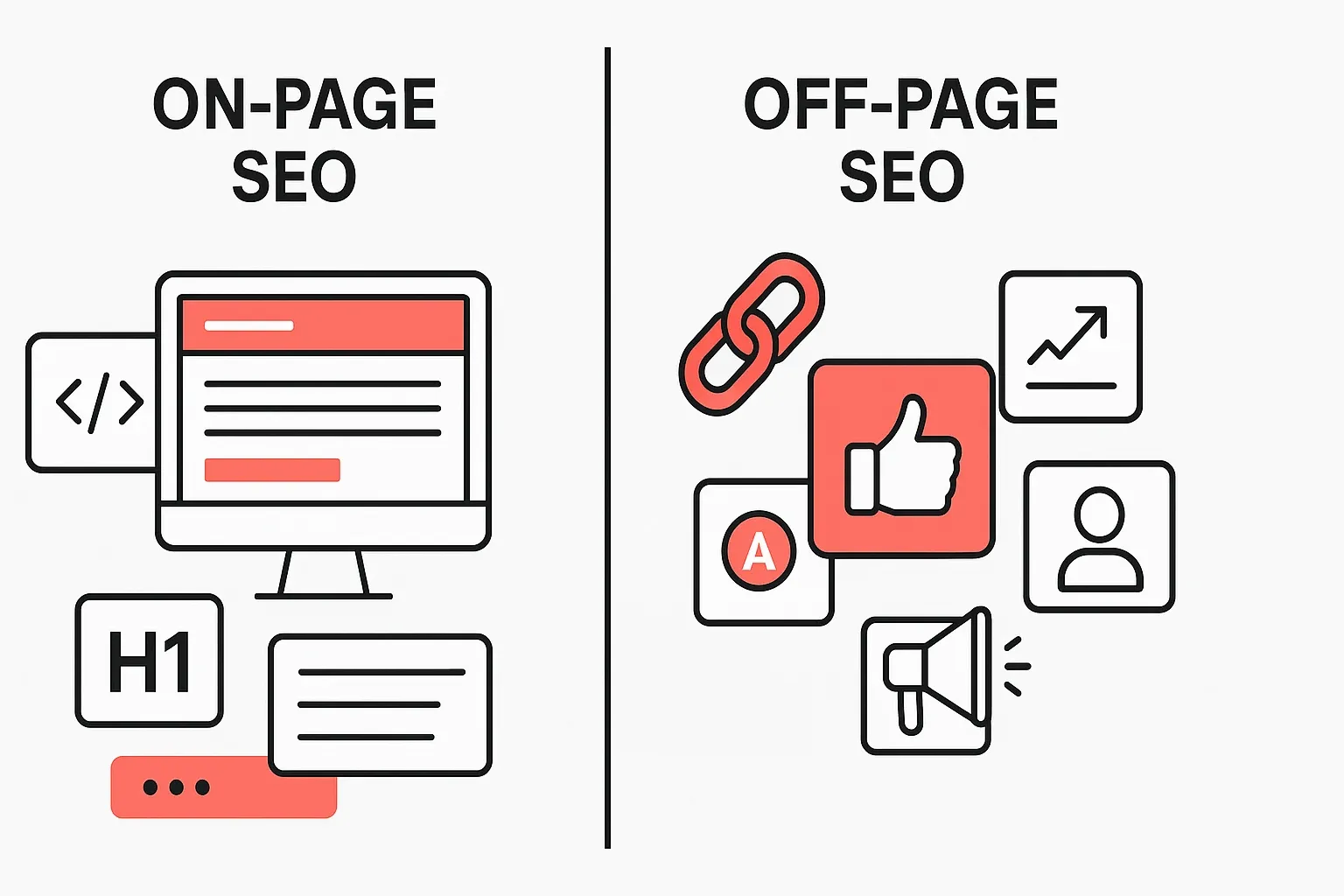
If you’ve ever tried to grow your website’s visibility, you’ve probably heard the terms On-Page SEO and Off-Page SEO thrown around. These are the twin engines of search visibility — one focuses on what happens on your site, and the other on what happens outside of it.
But which one really matters more? The short answer: both. On-Page SEO gives your website structure, clarity, and purpose, while Off-Page SEO builds your authority and trust in the eyes of search engines. Together, they form the foundation of every successful digital marketing strategy.
Let’s explore what each means, how they differ, and how you can balance them to boost your rankings and grow your brand.
What Is On-Page SEO?
On-Page SEO is everything you do within your website to make it easier for search engines and users to understand what your content is about. It’s the digital version of making a first impression — if your page isn’t organized, readable, or valuable, people (and Google) will simply move on.
Key Elements of On-Page SEO
1. Keyword Optimization
Keywords are the bridge between what people search for and the content you create. The key is not to stuff them but to integrate them naturally in your headings, meta titles, and throughout your copy.
2. Meta Tags and Descriptions
Your title tag and meta description are what appear on Google search results. Make them compelling, short, and descriptive. A strong title attracts clicks; a good meta description convinces users to visit your page.
3. Header Structure and Readability
Organize your content with headers (H1, H2, H3). This improves readability and helps search engines scan your page effectively.
4. Internal Linking
Internal links guide users to other valuable parts of your website. They also help Google discover and rank your pages better.
5. Image Optimization
Use relevant images that enhance your message. Compress them to improve load speed, and always include descriptive alt text — it helps with accessibility and SEO.
6. Content Quality
Great SEO depends on great writing. Your content should be clear, useful, and created for humans first. Google’s algorithm rewards pages that satisfy user intent — not those stuffed with repetitive keywords.
7. Mobile Optimization and Speed
With most traffic now coming from mobile, Google prioritizes mobile-friendly sites. A slow or cluttered design hurts rankings and user experience alike.
On-Page SEO ensures your content speaks directly to both people and algorithms. It’s your website’s way of saying, “Here’s what I do, and here’s why it matters.”
What Is Off-Page SEO?
If On-Page SEO is about presentation, Off-Page SEO is about reputation. It includes everything that happens outside your website but still affects how it ranks. Think of it as the word-of-mouth factor for your brand in the digital world.
Core Components of Off-Page SEO
1. Backlinks
Backlinks are links from other websites pointing to yours — essentially, digital endorsements. Quality matters far more than quantity. A few backlinks from trusted, relevant sources can elevate your rankings faster than dozens from weak sites.
2. Social Media Engagement
Active participation on platforms like Instagram, LinkedIn, and X (Twitter) helps boost visibility. While social signals aren’t direct ranking factors, they build brand awareness, attract traffic, and can lead to organic backlinks.
3. Brand Mentions and Citations
Even if someone mentions your brand name without linking to your website, it still contributes to brand authority. Consistent mentions across trusted directories and websites signal reliability to search engines.
4. Guest Blogging and Collaborations
Writing guest posts for high-authority websites is one of the most powerful Off-Page SEO tactics. It positions you as an expert, builds backlinks, and exposes your brand to new audiences.
5. Reviews and Online Reputation
Positive reviews on platforms like Google Business Profile or industry directories influence how search engines and customers view your business. Reputation management is a crucial part of modern SEO.
On-Page SEO vs. Off-Page SEO: The Real Difference
The easiest way to think about the difference is this:
- On-Page SEO focuses on optimizing what you control — your website’s content, structure, and user experience.
- Off-Page SEO focuses on how others perceive your brand — the trust, credibility, and authority you earn from external sites and mentions.
While On-Page SEO helps your site be found, Off-Page SEO helps it be trusted. One cannot thrive without the other. A well-optimized page without backlinks may not rank, and backlinks without strong on-page content won’t convert.
Why You Need Both
Think of SEO as a partnership between your website and the internet.
On-Page SEO builds your foundation — the clean design, optimized content, and solid technical setup that attract users and search engines. Off-Page SEO adds the layer of validation — signals from other websites and people that confirm your brand’s authority.
Together, they create a complete ecosystem. You need On-Page SEO to appear in search results and Off-Page SEO to stay there.
How to Balance On-Page and Off-Page SEO
1. Start With the Basics
Before investing in backlinks, ensure your site loads fast, looks great, and offers useful content. On-Page SEO sets the groundwork for every successful Off-Page effort.
2. Create Link-Worthy Content
Instead of chasing links, focus on creating resources people want to link to — such as guides, infographics, case studies, and blogs.
3. Leverage Social Media
Share your content across your social channels to drive engagement and earn natural backlinks. A well-shared post can amplify reach and attract partners or media attention.
4. Build Genuine Relationships
Collaborate with other brands, write guest posts, and participate in online communities. SEO is not just technical — it’s about people and networks.
5. Monitor, Analyze, and Improve
Regularly track your rankings, backlinks, and keyword performance using Google Search Console, Ahrefs, or SEMrush. Data helps refine your SEO strategy continuously.
Common SEO Mistakes to Avoid
- Overloading your page with keywords
- Buying spammy backlinks
- Ignoring site speed or mobile responsiveness
- Forgetting to add meta descriptions and image alt text
- Publishing thin or repetitive content
Remember, SEO is about long-term trust, not short-term tricks.
Conclusion
On-Page and Off-Page SEO are like two sides of the same coin. One builds the structure; the other builds the reputation. When you invest in both, your website gains visibility, credibility, and authority — the three pillars of sustainable digital growth.
If you want to boost your website’s search rankings and digital reputation, explore Search Engine Optimization Services and Digital Marketing Solutions that combine strategic On-Page optimization with powerful Off-Page outreach. A balanced SEO strategy is what turns clicks into customers.
FAQs
Q1: Which is more important — On-Page or Off-Page SEO?
Both are equally important. On-Page SEO helps search engines understand your content, while Off-Page SEO builds authority through backlinks and mentions.
Q2: Can you rank with only On-Page SEO?
You can rank for low-competition keywords, but long-term visibility requires Off-Page authority signals.
Q3: How can I get quality backlinks?
Create shareable content, contribute guest posts, and build relationships within your industry.
Q4: How often should I update my SEO strategy?
At least once every few months to stay aligned with Google’s algorithm updates and user trends.


Ready to Elevate Your Brand?
Start Your Project Today