December 25, 2025
Performance Marketing vs. Brand Marketing: Finding the Balance
Milaaj Editorial / Research Insights
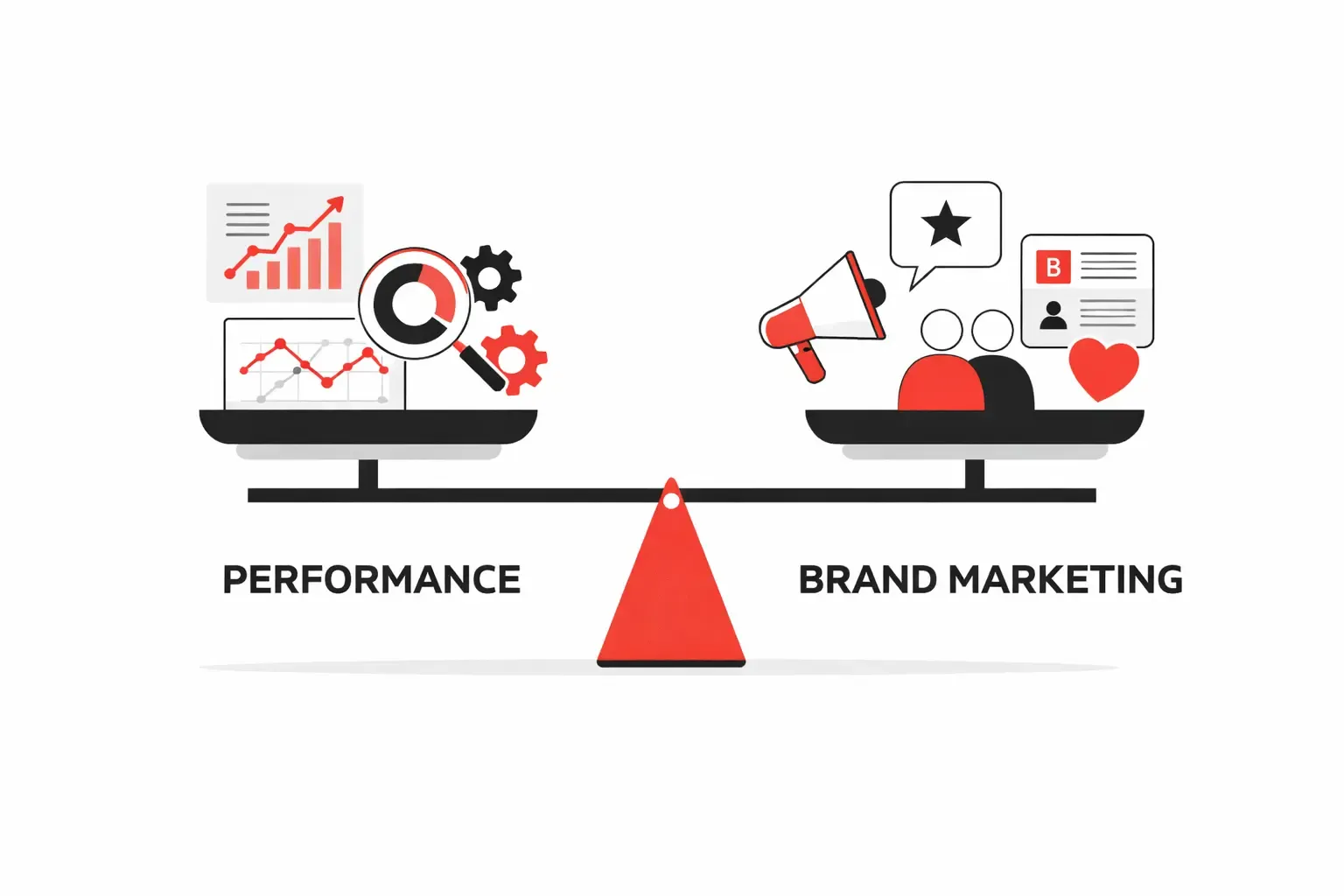
Marketing today often feels divided into two opposing goals. One side focuses on immediate results like clicks, leads, and sales. The other focuses on long-term impact like trust, recognition, and loyalty.
This divide is commonly described as performance marketing versus brand marketing. While they are often treated as separate strategies, the most successful businesses understand that growth happens when both work together.
Finding the right balance between performance and brand marketing is not about choosing one over the other. It is about knowing when and how to use each to support sustainable growth.
What Performance Marketing Really Is
Performance marketing is designed to generate measurable actions. Every campaign is tracked, optimized, and evaluated based on clear outcomes.
Common performance goals include:
- Lead generation
- Online sales
- App installs
- Website conversions
Channels often used for performance marketing include paid search, paid social, display advertising, and affiliate marketing.
The strength of performance marketing lies in its accountability. You can see what works and adjust quickly.
What Brand Marketing Focuses On
Brand marketing is about shaping perception over time. It builds familiarity, trust, and emotional connection with an audience.
Brand marketing typically focuses on:
- Brand awareness
- Brand positioning
- Consistent messaging
- Emotional resonance
It may not deliver instant conversions, but it influences how people feel when they are ready to buy.
Why Performance Marketing Alone Is Not Enough
Performance marketing works best when people already recognize and trust a brand. Without that foundation, performance campaigns often become more expensive and less effective.
Relying only on performance marketing can lead to:
- Rising acquisition costs
- Lower trust and credibility
- Short-term growth without loyalty
When users do not recognize a brand, they hesitate, even if the offer is strong.
Why Brand Marketing Needs Performance Support
Brand marketing builds long-term value, but without performance insights, it can lack direction.
Performance data helps brand marketing:
- Understand audience behavior
- Measure message effectiveness
- Refine creative decisions
Performance metrics add clarity to brand efforts and help justify investment.
How Brand Marketing Improves Performance Results
Strong branding improves performance marketing outcomes in measurable ways.
Benefits include:
- Higher click-through rates
- Better conversion rates
- Lower cost per acquisition
- Increased customer lifetime value
When users trust a brand, they are more likely to act.
Understanding User Intent Across the Funnel
Different stages of the customer journey require different approaches.
Early-stage users respond better to brand storytelling and value-driven content. Mid-stage users look for credibility, proof, and relevance. Late-stage users respond to clear offers and performance-focused messaging.
Balancing both strategies ensures no stage is neglected.
The Role of Consistency in Balancing Both Approaches
Consistency connects performance and brand marketing.
When visuals, tone, and messaging align across campaigns:
- Brand recall improves
- Performance ads feel more trustworthy
- User experience feels cohesive
Consistency turns short-term actions into long-term relationships.
Using Performance Data to Strengthen Brand Strategy
Performance metrics reveal what resonates with audiences.
Insights from performance campaigns can inform:
- Brand messaging
- Content themes
- Visual direction
- Audience positioning
Data-driven branding reduces guesswork and improves relevance.
Avoiding the Common Imbalance
Many brands lean too far in one direction.
Too much performance focus leads to transactional relationships. Too much brand focus without measurement leads to unclear ROI.
The goal is alignment, not separation.
How to Create a Balanced Marketing Strategy
A balanced approach includes:
- Clear brand positioning
- Performance-driven testing
- Shared goals across teams
- Long-term and short-term KPIs
When both strategies support each other, growth becomes more stable.
Why Balance Leads to Sustainable Growth
Brands that balance performance and brand marketing grow more predictably.
They:
- Acquire customers more efficiently
- Retain customers longer
- Build resilience against market changes
Balance reduces dependency on any single channel or tactic.
The Future of Marketing Is Integrated
Modern marketing is moving toward integration, not silos.
Future-ready brands will:
- Align creative and performance teams
- Use data to guide storytelling
- Build trust while driving results
Performance and brand marketing are no longer opposites. They are partners.
Conclusion
Performance marketing drives action. Brand marketing builds belief. Sustainable growth happens when both work together.
Short-term wins matter, but long-term trust determines how far a brand can grow.
If you are building a marketing strategy that delivers measurable results while strengthening brand presence, professional support in digital marketing strategy and brand growth solutions can help align performance with purpose.
The strongest brands are not built by choosing between performance and brand marketing. They are built by balancing both.
Frequently Asked Questions
What is the difference between performance and brand marketing
Performance marketing focuses on measurable actions, while brand marketing focuses on long-term perception and trust.
Can performance marketing work without branding
It can, but it becomes more expensive and less effective over time without brand trust.
How does branding improve conversion rates
Brand familiarity reduces hesitation and increases confidence during decision-making.
Should small businesses invest in brand marketing
Yes. Even modest brand efforts improve performance marketing efficiency.
How do you measure brand marketing success
Through metrics like brand awareness, recall, engagement, and long-term conversion trends.
Is performance marketing replacing brand marketing
No. The future of marketing depends on integrating both approaches.


Ready to Elevate Your Brand?
Start Your Project Today