January 12, 2026
PWA vs Native Apps: Which Mobile Strategy Wins in 2026
Milaaj Editorial / Research Insights
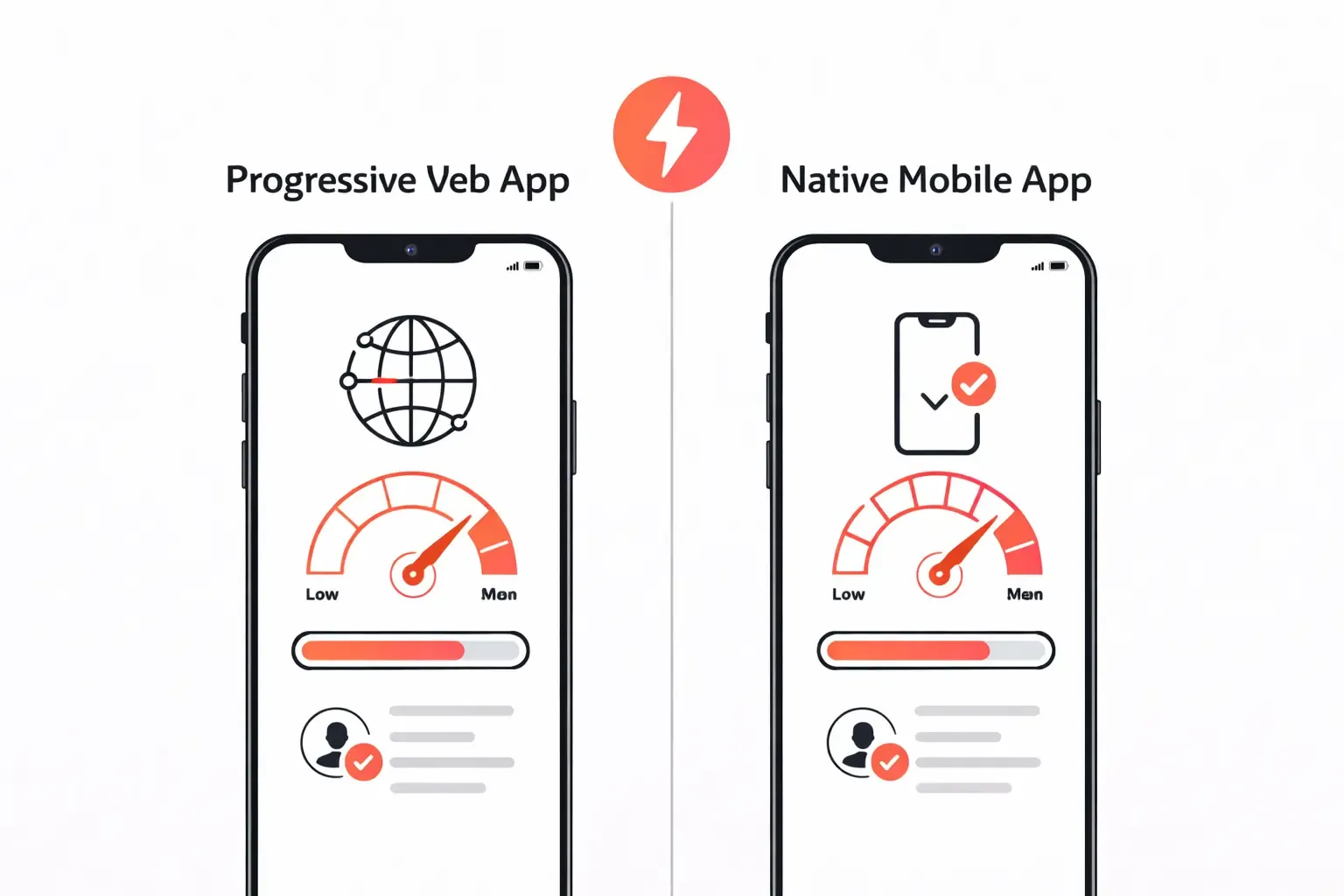
Mobile users in 2026 expect instant speed, zero friction, and seamless experiences across devices. Businesses now face a crucial decision when building mobile platforms: should they invest in Progressive Web Apps or develop native mobile applications?
This decision is no longer technical only. It affects customer acquisition, retention, branding, SEO visibility, and long term scalability. Choosing the wrong approach can cost you users, conversions, and market share.
This guide breaks down PWA vs native apps in a real world business context so you can choose the strategy that actually wins in 2026.
What is a Progressive Web App
A Progressive Web App is a website that behaves like a mobile app.
PWAs run in the browser but can:
- Be installed on a device
- Work offline
- Send push notifications
- Load instantly
- Use device hardware
Users do not download them from app stores. They open them through a link and save them to their home screen.
This makes PWAs powerful for marketing driven growth.
What is a Native Mobile App
Native apps are built specifically for iOS and Android using platform specific technologies.
They are downloaded from the App Store or Google Play and have full access to device hardware, animations, sensors, and system features.
Native apps still dominate industries where performance and deep system integration matter.
Why This Choice Matters More in 2026
The mobile ecosystem has changed dramatically.
In 2026:
- App store competition is extreme
- User attention spans are shorter
- Google and AI search prioritize fast web experiences
- Businesses want lower acquisition costs
- Privacy regulations make tracking harder
Your mobile strategy must support SEO, AI search visibility, conversions, and user trust.
That is why PWA vs native is now a growth decision.
Performance and Speed Comparison
PWAs load instantly because they use browser caching and service workers.
Native apps require installation, updates, and storage space before users can even try them.
For:
- Content sites
- Ecommerce
- SaaS dashboards
- Marketing funnels
PWAs often feel faster and more frictionless.
Native apps still win in:
- Gaming
- AR and VR
- High performance graphics
- Heavy offline computation
User Experience in 2026
Modern PWAs support:
- App like animations
- Offline browsing
- Home screen icons
- Push notifications
- Full screen modes
Most users cannot tell the difference between a PWA and a native app.
Native apps still have smoother gestures and deeper OS level features, but for most businesses the UX gap has closed.
SEO and Discoverability
This is where PWAs dominate.
PWAs are indexed by:
- Google
- AI search engines
- Voice assistants
- Visual search tools
Native apps are locked inside app stores.
A PWA can:
- Rank in search
- Appear in AI answers
- Be shared by URL
- Drive organic traffic
Native apps cannot do any of this.
For any business that relies on digital marketing, PWAs give massive visibility advantages.
Conversion and User Acquisition
PWAs remove friction.
Users can:
- Click
- Open
- Browse
- Buy
All without installing anything.
Native apps require:
- App store visit
- Download
- Permission approvals
- Storage space
In 2026, this friction kills conversions.
PWAs consistently outperform native apps for:
- Ecommerce
- Lead generation
- SaaS trials
- Content subscriptions
Cost and Development Speed
PWAs are:
- One codebase
- One deployment
- No app store approval
- Faster updates
- Lower maintenance
Native apps require:
- Separate iOS and Android teams
- App store compliance
- Update cycles
- Higher QA costs
For startups and growing brands, PWAs deliver faster ROI.
Push Notifications and Engagement
Both PWAs and native apps support push notifications.
The difference is adoption.
PWA notifications work without forcing users into an app store funnel.
This makes re engagement easier and cheaper.
Security and Privacy
PWAs run over HTTPS and follow web security standards.
They also avoid many app store data tracking issues.
With rising privacy laws in 2026, this makes PWAs safer and easier to comply with.
When Native Apps Still Win
Native apps are still better for:
- High end gaming
- Financial trading platforms
- AR and VR apps
- Deep OS integration
- Hardware intensive experiences
If your product depends on performance or sensors, native still matters.
When PWAs Win in 2026
PWAs dominate for:
- Ecommerce
- Digital services
- Content platforms
- Online marketplaces
- SaaS tools
- Brand websites
These industries depend on search, discoverability, speed, and conversions.
The Future is Hybrid
The smartest brands in 2026 use:
- PWAs for growth, SEO, and discovery
- Native apps for loyal power users
This creates a full funnel mobile ecosystem.
Conclusion
The winner of PWA vs native apps in 2026 depends on your growth strategy.
If you want visibility, SEO, AI search reach, and fast conversions, Progressive Web Apps offer unbeatable advantages. They align perfectly with modern website design, strong SEO strategy, and scalable digital branding.
Native apps still matter for specialized experiences, but PWAs are now the foundation of modern mobile growth.
Frequently Asked Questions
Are PWAs replacing native apps
PWAs are replacing native apps for most business and ecommerce use cases, but not for high performance or gaming applications.
Do PWAs work on iPhone
Yes. iOS fully supports Progressive Web Apps including offline mode and push notifications.
Are PWAs secure
Yes. PWAs use HTTPS and modern web security standards.
Can PWAs appear in Google search
Yes. This is one of their biggest advantages over native apps.
Do PWAs support payments
Yes. PWAs support all modern web payment systems.



Ready to Elevate Your Brand?
Start Your Project Today