October 8, 2025
Responsive Design 3.0: Adapting to Wearables, AR, and Beyond
Milaaj Editorial / Research Insights
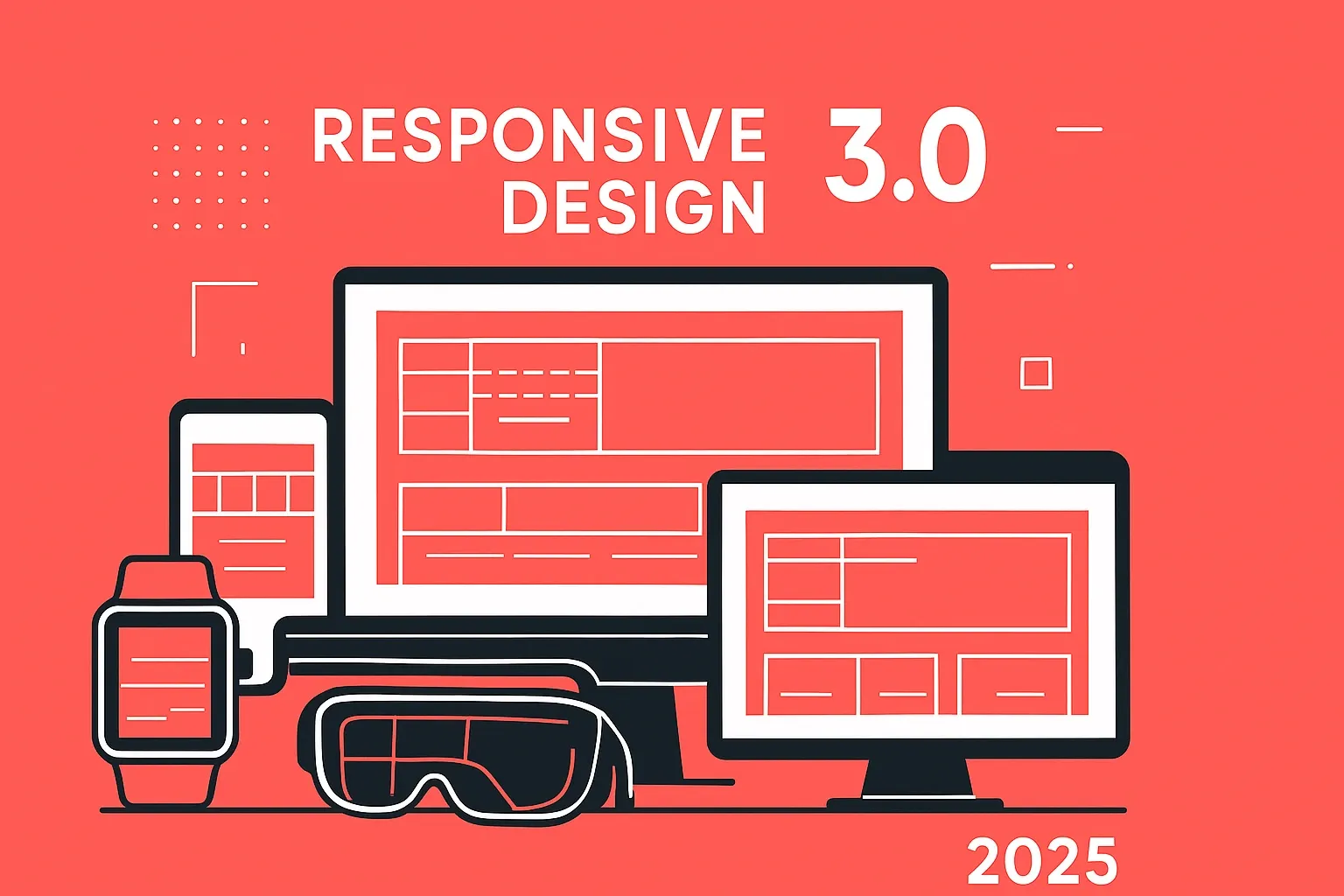
In the early days of web design, “responsive” meant making sure your website looked good on phones, tablets, and desktops. But as we move deeper into 2026, the digital landscape has expanded far beyond those screens. From smartwatches and AR glasses to voice assistants and car dashboards, the way users interact with brands is changing rapidly.
Welcome to Responsive Design 3.0 an era where websites and apps must adapt not just to screen sizes, but to entirely new types of experiences. Whether it’s a smartwatch notification or an AR-based shopping demo, design today must be fluid, intelligent, and above all, human-centered.
For forward-thinking businesses and creative agencies like Milaaj BrandSet, this evolution represents the next big shift where technology meets empathy to create seamless, multi-dimensional user experiences.
What Responsive Design 3.0 Really Means
Responsive Design 3.0 is not just about flexible layouts. It’s about adaptive intelligence — interfaces that adjust to users’ needs, environments, and devices in real time.
Earlier versions of responsive design focused on scaling visuals across devices. Today, it’s about delivering context-aware experiences that change how users interact depending on whether they’re using a smartwatch, an AR headset, or a voice-controlled display.
Instead of asking, “Will this look good on mobile?” designers now ask, “Will this feel right on any device or even without a screen at all?”
Designing for Wearables: The Power of Small Interfaces
Wearables like smartwatches and AR glasses bring both opportunity and constraint. Their screens are tiny, but their impact is huge.
In this micro-screen world, minimalism is key. Every interaction must be quick, clear, and purposeful. Users don’t browse or scroll they glance, speak, or gesture.
To design effectively for wearables:
- Keep content ultra-focused and glanceable.
- Use strong visuals and icons instead of long text.
- Incorporate voice commands and haptic feedback.
- Ensure smooth transitions for notifications and alerts.
At Milaaj BrandSet, these micro-interactions are treated as an extension of brand storytelling making sure every tap, vibration, or gesture reinforces a consistent brand identity.
The Role of Augmented Reality (AR) in Responsive Design
Augmented Reality has transformed how people experience digital content. From virtual try-ons in fashion to interactive product visualizations in retail, AR is now a major player in user engagement.
But AR also demands a new kind of responsive thinking. Interfaces must adapt to lighting conditions, angles, depth, and user movement. A digital label viewed through AR glasses in daylight, for instance, should look just as clear as one seen indoors at night.
This requires responsive layouts that understand physical environments a challenge that sits at the heart of Responsive Design 3.0.
Brands that master this can offer truly immersive experiences, and that’s why Milaaj BrandSet’s design and development teams focus heavily on AR-ready UI frameworks that blend digital precision with real-world adaptability.
Beyond Screens: Voice, Gesture, and Emotion
In 2026, design isn’t limited to what users see. It’s about how they interact. Voice assistants, gesture-controlled apps, and even emotionally aware interfaces are becoming standard.
Imagine your digital assistant changing its tone based on your mood, or your smartwatch sensing stress and dimming notifications accordingly. That’s where Responsive Design 3.0 truly shines — by creating experiences that are intuitive and emotionally intelligent.
Modern responsive design must therefore consider:
- Voice-first interfaces that adapt without visuals.
- Gesture-based navigation in AR and VR.
- Emotion-driven adjustments for personalization.
It’s a move from static responsiveness to empathetic responsiveness where design meets human psychology.
The AI Revolution Behind Responsive 3.0
Artificial Intelligence is the silent architect behind this evolution. AI analyzes user behavior, time, location, and device context to automatically modify how an interface behaves.
Think of a travel website that switches to dark mode when your smartwatch detects nighttime. Or a retail app that adjusts layout and content based on whether you’re walking or sitting.
These smart, dynamic adjustments create an experience that feels personal and effortless.
At Milaaj BrandSet, AI is used to enhance every layer of design from predictive content layouts to intelligent navigation flows that respond to user intent in real time.
Designing for Continuity Across Devices
The modern user journey is fluid. A person might start reading an article on their phone, check updates on their smartwatch, and complete a purchase on their laptop or AR headset all within minutes.
Responsive Design 3.0 ensures that this journey feels continuous and connected. Every device becomes a chapter in the same story, not a separate experience.
To achieve this, designers rely on:
- Progressive web apps (PWAs) for unified user sessions.
- Cloud-synced data for seamless transitions.
- Modular content systems that adapt to any format.
The goal is to make brand interactions so smooth that users barely notice the shift between devices only the story being told.
Accessibility as a Design Priority
Accessibility has always been a part of good design, but in Responsive 3.0, it becomes central. With voice controls, AR overlays, and wearable displays, inclusivity takes on new meaning.
Modern accessibility means:
- Voice-based navigation for hands-free use.
- Adaptive text and color contrast for AR visibility.
- Haptic cues for those with limited sight or hearing.
- Cognitive-friendly layouts that adjust to user comfort.
Inclusive design is not just ethical it’s strategic. When everyone can interact seamlessly with your brand, you build loyalty that no algorithm can buy.
E-Commerce in the Age of AR and Responsiveness
E-commerce is perhaps the biggest beneficiary of Responsive Design 3.0.
Imagine browsing a virtual store through AR glasses, previewing a product in your space, and completing a purchase using a voice command. The entire journey is personalized, responsive, and immersive.
This isn’t a future vision it’s already happening.
Leading brands are building AR-ready storefronts where digital responsiveness meets physical interaction.
At Milaaj BrandSet, our custom e-commerce solutions are designed exactly for this experiences that adapt to the user’s environment, not just their device.
The Importance of Motion and Micro-Interactions
Animation is no longer just decorative. Subtle motion, transitions, and feedback loops now guide users naturally through interfaces.
Micro-animations confirm actions, convey emotion, and add depth to interaction. In Responsive Design 3.0, these animations become adaptive, adjusting speed and behavior depending on device performance and context.
For example:
- Haptic vibrations confirm selections on wearables.
- Smooth transitions respond to head movement in AR.
- Fluid animations adjust frame rates for low-power devices.
These details create experiences that feel alive, intuitive, and emotionally engaging.
Challenges in Adopting Responsive Design 3.0
This new wave of responsive design isn’t without challenges. Designers and developers face:
- Complex device ecosystems with varying input methods.
- Performance issues on low-power devices.
- The need for rigorous testing across virtual and physical interfaces.
- Ethical questions around personalization and data use.
However, with careful planning, AI-powered frameworks, and a human-first mindset, these challenges become opportunities for innovation.
The Designer’s Role in the Future
As design becomes more intelligent, the designer’s job evolves. Instead of manually controlling every pixel, designers now define systems that allow the interface to adapt on its own.
This shift turns the designer into a curator of adaptive experiences, blending creativity with strategy, psychology, and data science.
The future of design isn’t about mastering tools it’s about mastering human understanding.
Looking Ahead: The Infinite Context of Design
By the end of this decade, responsive design may not even revolve around screens. AR contact lenses, holographic projections, and AI assistants will redefine what “interface” means.
In that world, responsiveness won’t be about device size it’ll be about context. Your surroundings, habits, and emotions will shape how you experience digital content.
The brands that prepare for this shift today those embracing Responsive Design 3.0 will lead tomorrow’s digital frontier.
Conclusion
Responsive Design 3.0 represents a powerful intersection of technology, empathy, and adaptability. It’s a design philosophy that focuses not on pixels, but on people creating digital experiences that move fluidly across devices, realities, and emotions.
Whether it’s through AI-driven interfaces, AR-enhanced storytelling, or wearable-ready design systems, the message is clear: the future belongs to brands that design for life, not just screens.
If you’re ready to evolve your brand’s digital experience into this next frontier, partner with Milaaj BrandSet where innovation, strategy, and creativity converge to build tomorrow’s responsive experiences today.



Ready to Elevate Your Brand?
Start Your Project Today