October 3, 2025
The Shift from Big Data to Smart Data in Modern Marketing
Milaaj Editorial / Research Insights
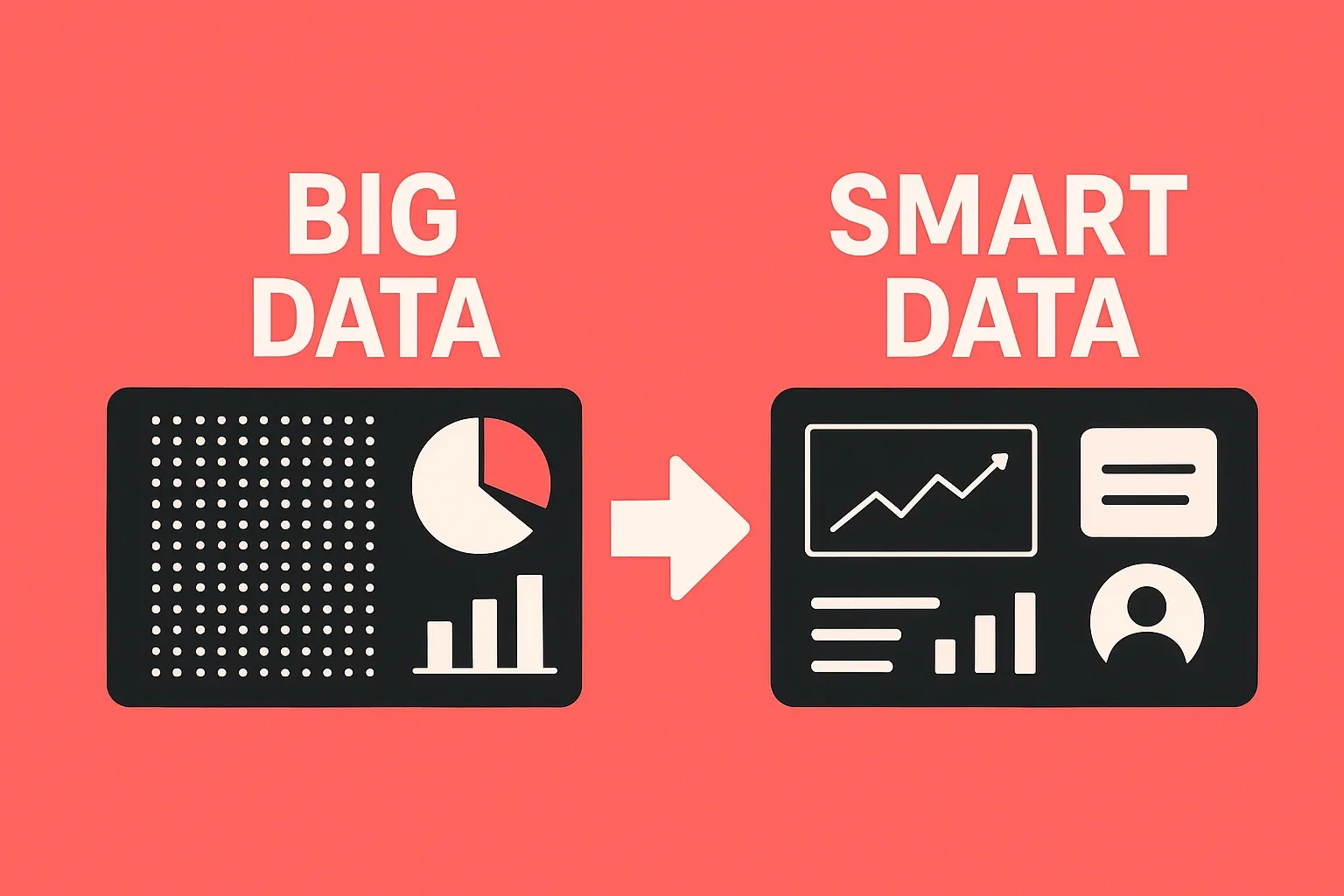
For years, Big Data has been the buzzword in digital marketing. Brands rushed to collect as much information as possible clicks, searches, purchases, and interactions believing that more data automatically meant better insights. But by 2026, businesses are realizing a hard truth: data volume isn’t the same as data value.
Enter Smart Data a more refined, intelligent approach that prioritizes quality, relevance, and actionable insights over sheer scale. In a world where personalization, ethical data use, and agility matter most, Smart Data is the new engine driving modern marketing.
This article explores the evolution from Big Data to Smart Data, why it matters, and how brands can leverage it to stay competitive.
What is Big Data in Marketing?
Big Data refers to massive, complex data sets collected from online and offline customer interactions. Examples include:
- Website analytics
- Social media interactions
- E-commerce transactions
- Customer support records
- Geolocation data
The promise of Big Data was to give marketers a “360-degree view” of their customers. But while the data was abundant, it was often unorganized, overwhelming, and difficult to translate into real business action.
Why Big Data Is No Longer Enough
Despite its potential, Big Data has limits:
- Information Overload – Too much unfiltered data makes it harder to extract what truly matters.
- High Costs – Collecting, storing, and managing huge data sets is expensive.
- Slow Decision-Making – Sifting through terabytes of information often delays marketing agility.
- Privacy Concerns – Consumers and regulators (GDPR, CCPA) demand ethical, minimal data use.
This is where Smart Data steps in.
Defining Smart Data
Smart Data is data that is:
- Filtered & Contextualized – Only what’s relevant to business goals.
- Actionable – Offers clear insights for campaigns and strategies.
- Ethical & Secure – Collected transparently and with user consent.
- Timely – Delivered at the right moment to support quick decisions.
Rather than hoarding massive datasets, Smart Data empowers brands to focus on what drives real customer engagement and conversion.
Smart Data in Action: Key Marketing Applications
- Personalization
Smart Data helps deliver hyper-personalized experiences from tailored product recommendations to individualized email campaigns. - Customer Journey Mapping
Instead of tracking every possible data point, Smart Data identifies the critical touchpoints that lead to conversions. - Predictive Analytics
By focusing on the most relevant signals, Smart Data makes predictions more accurate and useful. - Ad Targeting
With Smart Data, businesses spend less and achieve more by targeting the right audience segments instead of broad, unfocused groups. - Voice & Visual Search Optimization
Smart Data helps brands adapt content for new search behaviors, such as voice commands and image-based queries.
The Role of AI in Smart Data
Artificial Intelligence is the driving force behind Smart Data.
- Machine Learning Algorithms filter out noise and highlight patterns.
- Natural Language Processing (NLP) makes sense of customer feedback and sentiment.
- Automation ensures insights are available in real time, not months later.
For example, AI-powered tools within digital marketing strategies now help businesses segment audiences with precision, predict buying behavior, and adjust campaigns instantly.
Big Data vs. Smart Data: A Comparison
- Big Data = Volume, variety, velocity (lots of raw information).
- Smart Data = Relevance, quality, actionability (insightful, usable info).
The difference lies in value extraction. Big Data is the ocean; Smart Data is the purified water you actually drink.
Why Smart Data Builds Better Branding
Smart Data plays a crucial role in digital branding by ensuring that customer interactions feel personal, relevant, and trustworthy.
- Improved UI/UX: Smart Data guides UI/UX design by highlighting how users interact with websites and apps.
- Content Relevance: Instead of generic campaigns, Smart Data enables video ad production and blogs that resonate with specific audience needs.
- Authentic Messaging: By tracking real preferences, Smart Data supports brand identity development rooted in customer truth.
Challenges of Adopting Smart Data
Shifting from Big to Smart Data isn’t without hurdles:
- Integration Issues – Many companies still operate with siloed systems.
- Skills Gap – Smart Data requires skilled analysts and AI-driven tools.
- Privacy Regulations – Businesses must ensure compliance while maintaining personalization.
- Initial Costs – Setting up Smart Data infrastructure can be resource-intensive.
But the long-term ROI better targeting, stronger trust, higher conversions—makes the transition worth it.
How Businesses Can Embrace Smart Data
Here are practical steps to transition:
- Audit Your Current Data – Identify what’s useful, and discard the noise.
- Invest in AI Tools – Leverage machine learning for smarter insights.
- Adopt Ethical Data Practices – Build customer trust by being transparent.
- Integrate Across Platforms – Connect Smart Data with e-commerce solutions, CRM, and social media.
- Measure What Matters – Focus on conversions, engagement, and loyalty rather than vanity metrics.
Future Outlook: Smart Data Beyond 2026
The role of Smart Data will only grow stronger. Expect:
- Real-Time Adaptive Ads through paid media campaigns.
- Deeper Personalization across AR, VR, and the Metaverse.
- Ethical AI Systems that balance personalization with privacy.
- Answer Engine Optimization (AEO) powered by Smart Data insights.
In essence, Smart Data is not just the future it is the only sustainable way forward for marketers.
Conclusion
The age of Big Data was about collecting everything. The age of Smart Data is about using the right data wisely. For marketers in 2026, success is no longer about how much information you hold, but how intelligently you apply it to create value for your customers.
👉 Ready to shift from Big Data to Smart Data? Partner with Milaaj BrandSet and unlock smarter, data-driven strategies for your business growth.
Ready to Elevate Your Brand?
Start Your Project Today