January 19, 2026
The Difference Between Traffic and Revenue Focused Marketing
Milaaj Editorial / Research Insights
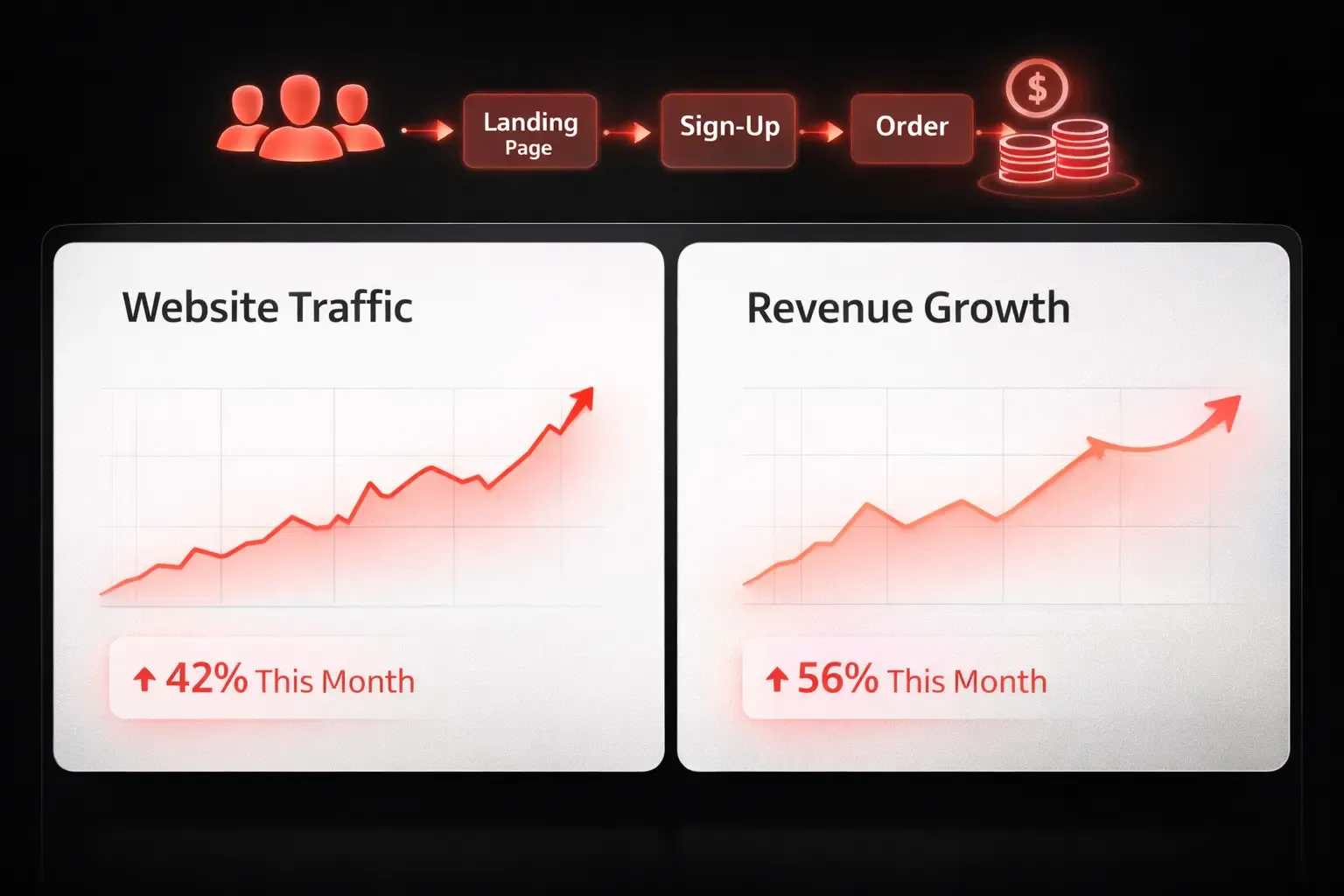
Many brands celebrate rising website traffic as a sign of success. Analytics dashboards look impressive, numbers go up, and reports feel positive. Yet, despite growing traffic, revenue often remains flat.
This gap exists because traffic and revenue focused marketing are not the same thing.
Understanding the difference between these two approaches is essential for brands that want sustainable growth instead of vanity metrics.
What Traffic Focused Marketing Looks Like
Traffic focused marketing prioritizes bringing as many visitors as possible to a website.
The main goals are:
- Increasing page views
- Growing impressions
- Boosting follower counts
- Ranking for high-volume keywords
While traffic is important, it does not automatically translate into business results.
Traffic focused strategies often include:
- Broad keyword targeting
- Viral content with low intent
- Click driven headlines
- Social content optimized only for reach
This approach can inflate numbers without improving profitability.
Why Traffic Alone Does Not Generate Revenue
Not all traffic is equal.
Visitors who are curious, entertained, or browsing casually rarely convert. If the audience does not match buying intent, even massive traffic volumes fail to produce leads or sales.
Common symptoms of traffic focused marketing include:
- High bounce rates
- Low time on page
- Poor conversion rates
- Minimal repeat visits
These signals indicate that visitors are not finding what they actually need.
What Revenue Focused Marketing Really Means
Revenue focused marketing starts with one question. How does this activity drive business growth?
Instead of chasing clicks, it prioritizes:
- Qualified traffic
- Conversion paths
- User intent
- Customer journeys
- Lifetime value
Every campaign, page, and piece of content is designed to move users closer to a decision.
This approach connects marketing directly to revenue outcomes.
Understanding User Intent Is the Key Difference
Traffic focused marketing targets attention. Revenue focused marketing targets intent.
User intent can be grouped into:
- Informational intent
- Navigational intent
- Transactional intent
Revenue focused strategies prioritize users who are researching solutions, comparing options, or ready to act.
By aligning content with intent, brands attract fewer visitors but generate more revenue.
How Content Strategy Changes When Revenue Comes First
When revenue is the goal, content serves a purpose beyond ranking.
Revenue driven content:
- Answers buying questions
- Reduces uncertainty
- Builds trust
- Guides decision making
This includes:
- Comparison guides
- Use case explanations
- Solution focused blogs
- Case driven content
- Clear calls to action
The content feels helpful, not promotional.
Website Experience Plays a Major Role
Traffic focused marketing often sends users to generic pages.
Revenue focused marketing carefully designs landing pages to convert.
This includes:
- Clear value propositions
- Logical page flow
- Strong trust signals
- Fast load times
- Mobile optimization
A well designed website turns interest into action.
Measuring the Right Metrics
Traffic focused marketers track:
- Sessions
- Page views
- Impressions
Revenue focused marketers track:
- Conversion rate
- Cost per lead
- Customer acquisition cost
- Revenue per visitor
- Customer lifetime value
These metrics reveal whether marketing is actually profitable.
Why SEO Needs a Revenue Mindset
SEO is often misunderstood as a traffic tool.
In reality, revenue focused SEO targets keywords that signal intent, not just volume.
This means:
- Optimizing for problem-aware searches
- Creating solution focused pages
- Building topical authority
- Improving user engagement
Revenue driven SEO compounds over time and reduces dependency on ads.
Paid Marketing With a Revenue Lens
Paid advertising works best when aligned with revenue goals.
Instead of optimizing only for clicks, revenue focused campaigns optimize for:
- Leads
- Purchases
- Return on ad spend
This requires better targeting, messaging, and landing page alignment.
Why Brands Get Stuck in Traffic Mode
Traffic feels measurable and immediate. Revenue takes more effort and patience.
Brands often chase traffic because:
- It looks good in reports
- It shows quick wins
- It feels safe
But long term growth comes from focusing on outcomes, not activity.
Making the Shift From Traffic to Revenue
To move toward revenue focused marketing, brands should:
- Redefine success metrics
- Align content with intent
- Improve conversion paths
- Use data to optimize decisions
- Invest in long term authority
This shift changes marketing from a cost center into a growth engine.
Conclusion
Traffic creates visibility, but revenue creates sustainability.
Brands that move beyond vanity metrics and invest in search engine optimization services combined with a performance driven digital marketing strategy gain a competitive advantage that compounds over time.
The difference between traffic and revenue focused marketing is not volume. It is intention, execution, and outcome.
Frequently Asked Questions
Is traffic important for marketing success
Yes, but only when it attracts the right audience with relevant intent.
Why does high traffic not convert
Because the audience may not be ready to buy or the experience does not guide them toward action.
How can I make my marketing revenue focused
By aligning content, SEO, ads, and UX around conversion goals instead of clicks.
Does revenue focused marketing reduce traffic
Sometimes traffic becomes more targeted, but conversions and ROI increase.
Is revenue focused marketing better for long term growth
Yes. It builds sustainable visibility, trust, and profitability.
Ready to Elevate Your Brand?
Start Your Project Today