February 17, 2026
Scale from 10 to 100 Employees: The 2026 Roadmap for UAE Business Expansion
Milaaj Editorial / Research Insights
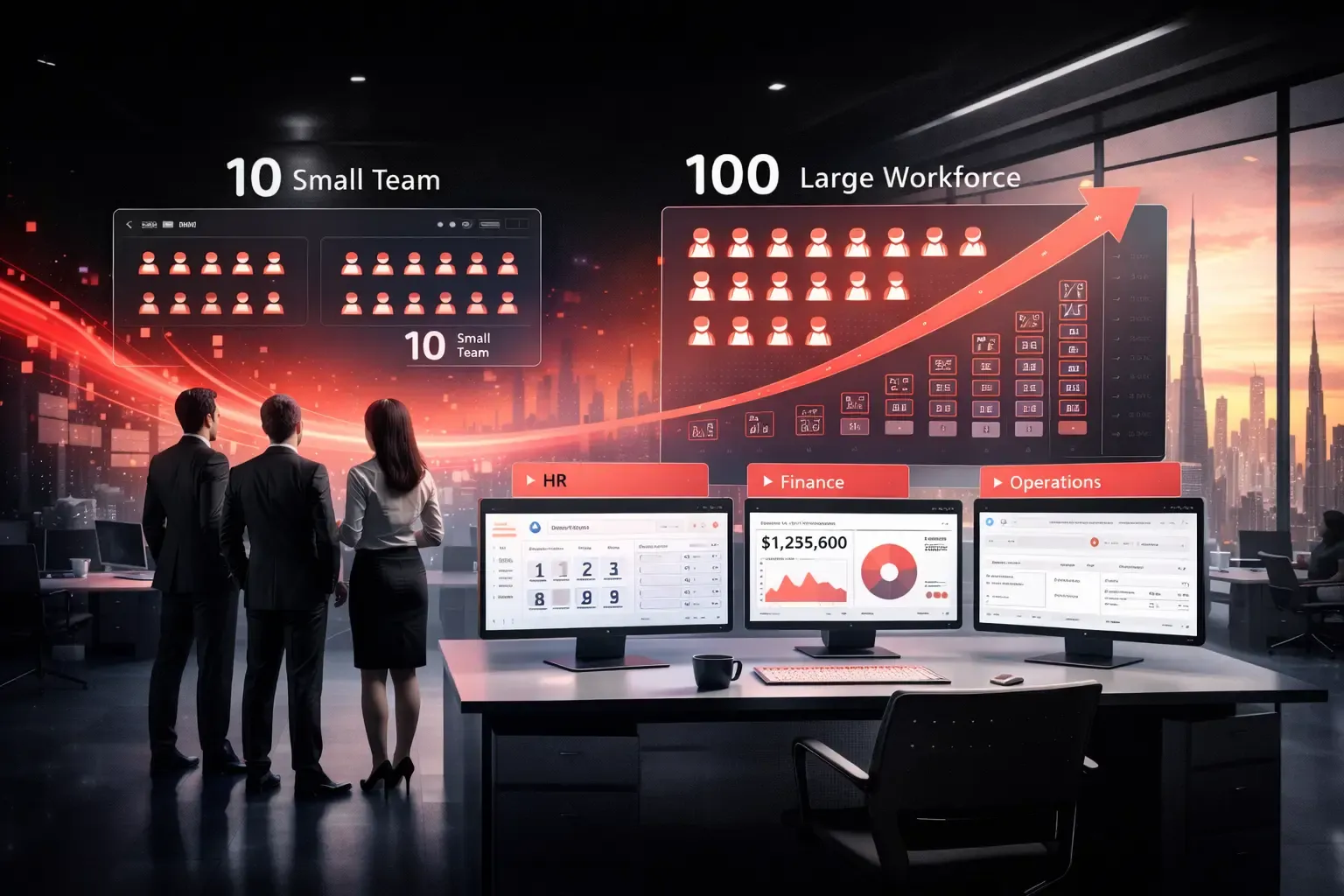
Scaling a company in the UAE from 10 to 100 employees is not just about hiring more staff.
It requires operational maturity, systemized workflows, real-time reporting, financial visibility, and automated processes that grow alongside your workforce. Many companies begin expansion with spreadsheets, standalone SaaS tools, or disconnected business applications, only to realize later that these systems cannot support sustainable growth.
The UAE business expansion roadmap 2026 focuses on building scalable infrastructure before rapid hiring begins. Without this preparation, workforce growth often increases inefficiencies instead of productivity.
This article outlines the key operational milestones that help UAE businesses expand successfully without losing control of performance or profitability.
Why Workforce Growth Requires System Readiness
Hiring quickly without upgrading internal systems creates:
- Reporting delays
- Payroll inconsistencies
- Inventory mismanagement
- Customer communication gaps
- Financial forecasting errors
- Approval bottlenecks
- Manual administrative work
As employee count rises, these inefficiencies multiply.
A structured UAE business expansion roadmap 2026 ensures that internal processes scale alongside headcount, preventing operational breakdown.
Phase 1: Stabilize Core Operations Before Hiring
Before moving from 10 to 25 employees, leadership must ensure that:
- Accounting workflows are automated
- Inventory tracking is accurate
- Procurement approvals are structured
- Sales processes are standardized
- Customer data is centralized
- Reporting dashboards are accessible
Manual processes may function in small teams, but they become unmanageable beyond early growth stages.
ERP systems provide centralized visibility across departments, ensuring consistent performance as workforce expands.
Phase 2: Automate Administrative Tasks
Administrative overhead increases rapidly during expansion.
Common time-consuming tasks include:
- Manual invoice generation
- Expense tracking
- Leave management
- Recruitment tracking
- Supplier approvals
- Stock reordering
- Customer follow-ups
Automation tools within ERP platforms reduce dependency on manual work.
Businesses following the UAE business expansion roadmap 2026 typically automate:
- Payroll processing
- Employee onboarding
- CRM pipeline updates
- Purchase approvals
- Financial reporting
- Inventory alerts
Automation frees leadership teams to focus on strategic growth.
Phase 3: Centralize Data Across Departments
As companies approach 40 to 60 employees, siloed information becomes a critical risk.
Disconnected systems often result in:
- Duplicate customer records
- Conflicting inventory reports
- Inconsistent revenue forecasts
- Delayed decision making
- Cross-department miscommunication
ERP platforms unify data from:
- HR
- Accounting
- CRM
- Inventory
- Procurement
- Project management
Centralization enables real-time performance insights.
Phase 4: Strengthen Financial Visibility
Growth requires capital planning.
Without accurate financial data, expanding businesses risk:
- Overhiring
- Cash flow shortages
- VAT reporting errors
- Procurement overspending
- Revenue miscalculations
Financial modules within ERP systems allow:
- Profitability tracking
- Budget forecasting
- Expense monitoring
- Real-time VAT compliance
- Revenue projections
Organizations using the UAE business expansion roadmap 2026 prioritize financial clarity before workforce expansion beyond 60 employees.
Phase 5: Build a Scalable HR Infrastructure
Managing 10 employees differs greatly from managing 100.
Scaling teams require:
- Attendance tracking
- Payroll automation
- Performance evaluation
- Leave approvals
- Recruitment pipelines
- Employee onboarding workflows
ERP-based HR modules ensure standardized policies across departments.
This consistency supports productivity and compliance during growth.
Phase 6: Improve Inventory and Procurement Planning
For trading, retail, manufacturing, and logistics companies, workforce expansion often coincides with operational complexity.
ERP systems help businesses:
- Forecast stock demand
- Manage supplier relationships
- Automate purchase orders
- Track warehouse movements
- Reduce inventory shrinkage
Inventory synchronization ensures that sales growth aligns with fulfillment capacity.
Phase 7: Enable Leadership Dashboards
As employee count rises, leadership must rely on real-time insights instead of manual reports.
ERP dashboards provide visibility into:
- Sales performance
- Cash flow
- Inventory turnover
- Workforce productivity
- Project timelines
- Procurement cycles
Companies following the UAE business expansion roadmap 2026 often implement executive dashboards before scaling beyond 75 employees.
Phase 8: Integrate Digital Channels
Expansion usually introduces:
- E-commerce platforms
- CRM systems
- Marketing tools
- Payment gateways
- Customer service software
ERP integration ensures that data from these channels flows into one centralized system.
Unified reporting improves decision making.
Signs Your Business Is Ready to Scale
You may be prepared for workforce growth if:
- Monthly reporting is accurate
- Customer data is centralized
- Payroll workflows are automated
- Inventory reports are consistent
- Procurement approvals are structured
- Leadership has dashboard visibility
- SaaS tools are integrated
Following the UAE business expansion roadmap 2026 reduces the risk of operational disruption.
Benefits of a Structured Expansion Strategy
Businesses that scale strategically experience:
- Faster onboarding
- Reduced administrative workload
- Improved customer service
- Accurate financial planning
- Real-time reporting
- Better workforce productivity
- Consistent procurement processes
System readiness directly influences expansion success.
Final Thoughts: Growth Requires Infrastructure
Scaling from 10 to 100 employees in the UAE demands more than recruitment.
A structured UAE business expansion roadmap 2026 ensures that operational systems evolve alongside workforce growth. By prioritizing automation, centralized data, financial visibility, and HR infrastructure, companies maintain stability during expansion.
Organizations exploring professional Odoo implementation services in Dubai often begin by understanding how ERP platforms support scalable workforce growth while maintaining operational continuity.
If your company plans significant hiring in 2026, investing in scalable infrastructure today can make expansion smoother and more sustainable.


Ready to Elevate Your Brand?
Start Your Project Today