January 20, 2026
Common Website Design Mistakes That Kill Conversions
Milaaj Editorial / Research Insights
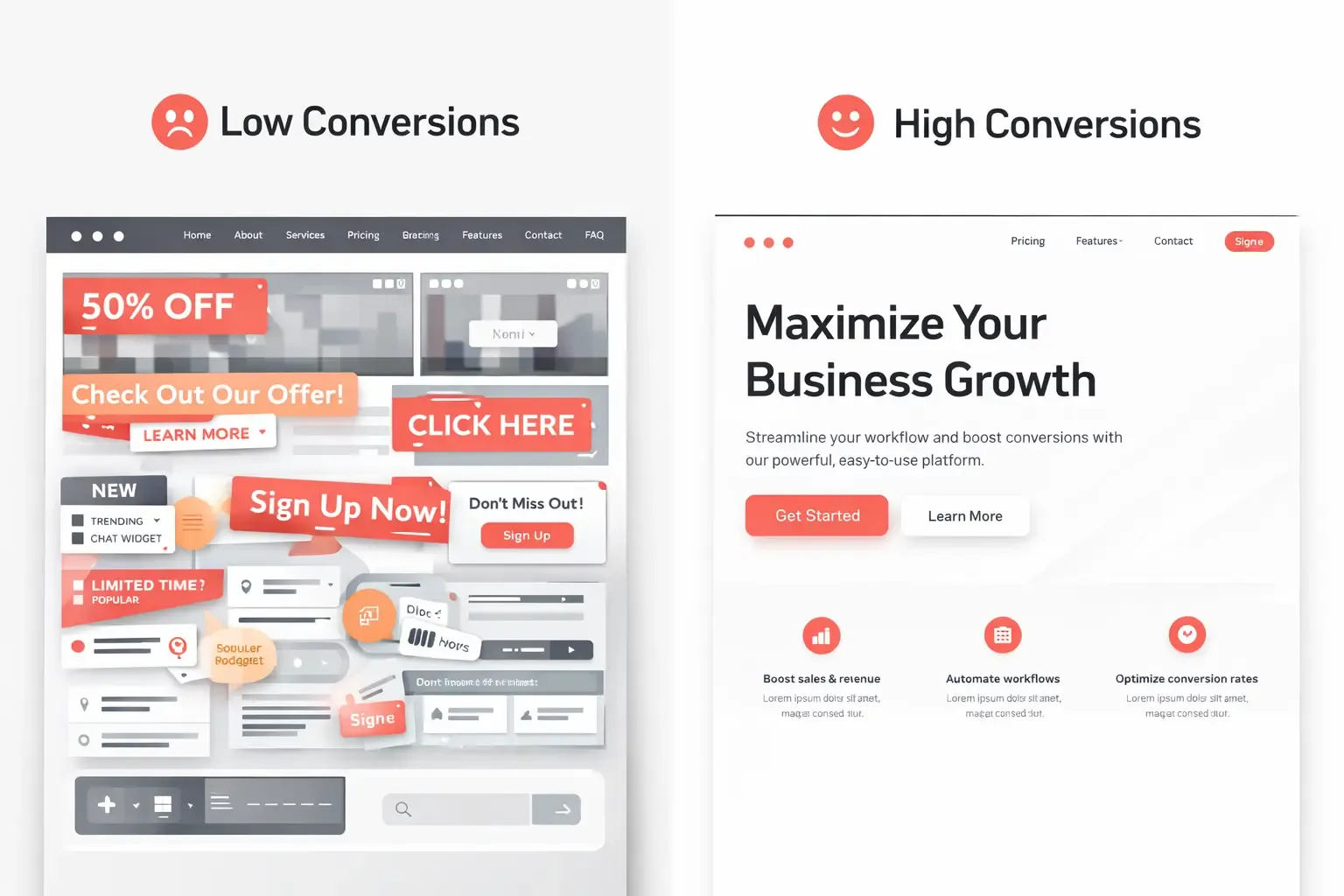
Your website might look beautiful, modern, and visually impressive, yet still fail to convert visitors into leads or customers.
This happens because design is not about aesthetics alone. It is about clarity, usability, trust, and guiding users toward action.
Many businesses unknowingly make design mistakes that silently kill conversions, increase bounce rates, and waste marketing budgets.
This guide breaks down the most common website design mistakes and explains how they directly impact user behavior and revenue.
Why Website Design Directly Impacts Conversions
Website design influences:
- First impressions
- Trust perception
- User confidence
- Decision speed
Visitors form an opinion about your website within seconds. If the experience feels confusing, slow, or untrustworthy, they leave before reading a single word.
Design is not decoration. It is a conversion tool.
Mistake 1: Unclear Value Proposition Above the Fold
If users cannot understand what you offer within the first few seconds, conversions drop immediately.
Common issues include:
- Generic headlines
- Vague messaging
- Buzzwords without meaning
- No clear benefit
Users should instantly know:
- Who the website is for
- What problem it solves
- Why they should care
Clarity always beats creativity when it comes to conversions.
Mistake 2: Weak or Hidden Call-to-Action
Many websites fail simply because they do not tell users what to do next.
Conversion killing CTA mistakes include:
- Too many CTAs competing for attention
- CTAs hidden below long content
- Generic button text like “Submit”
- Poor contrast or visibility
A strong CTA is clear, action-oriented, and placed strategically throughout the page.
Mistake 3: Overloaded Layouts and Visual Clutter
Trying to say everything at once results in users understanding nothing.
Design clutter includes:
- Too many fonts
- Excessive animations
- Dense text blocks
- Competing colors
- Multiple messages per section
Clean, focused layouts guide attention and reduce cognitive load, which directly improves conversion rates.
Mistake 4: Slow Loading Speed
Speed is not just a technical issue. It is a conversion issue.
Slow websites:
- Increase bounce rates
- Reduce trust
- Lower SEO rankings
- Kill mobile conversions
Even a one-second delay can significantly impact form submissions and sales.
Optimized images, clean code, and performance-first design are essential.
Mistake 5: Poor Mobile Experience
More than half of users visit websites on mobile devices. Yet many designs still prioritize desktop only.
Mobile conversion killers include:
- Tiny text
- Hard-to-click buttons
- Broken layouts
- Long, unoptimized forms
A mobile-first design ensures usability, readability, and ease of action across all devices.
Mistake 6: Lack of Trust Signals
Users hesitate to convert if they do not trust your brand.
Missing trust elements often include:
- Testimonials
- Reviews
- Client logos
- Certifications
- Clear contact information
Trust reduces friction. Without it, users hesitate even if they like your offer.
Mistake 7: Confusing Navigation Structure
If users cannot find information quickly, they leave.
Navigation mistakes include:
- Too many menu items
- Unclear labels
- Deep page hierarchies
- No logical flow
A simple, intuitive navigation structure improves engagement and keeps users moving toward conversion points.
Mistake 8: Forms That Ask for Too Much Information
Long forms scare users away.
Common form mistakes:
- Too many required fields
- Asking unnecessary details
- Poor spacing and readability
- No explanation of what happens next
Short, focused forms with clear intent convert far better than complex ones.
Mistake 9: No Visual Hierarchy
When everything looks important, nothing feels important.
Visual hierarchy guides users by:
- Using size to indicate importance
- Applying contrast strategically
- Grouping related elements
- Creating clear reading paths
Without hierarchy, users feel overwhelmed and disengage.
Mistake 10: Ignoring User Intent
Design that looks good but ignores intent fails.
For example:
- Informational visitors need clarity and education
- Comparison visitors need proof and differentiation
- Ready-to-buy users need confidence and ease
Design should support the user journey, not distract from it.
How Conversion-Focused Design Changes Everything
When design is built around conversions, websites:
- Attract the right audience
- Communicate value clearly
- Reduce friction
- Increase leads and sales
Conversion-focused design is strategic, data-driven, and user-centric.
Conclusion
A visually appealing website is not enough.
To grow revenue, brands must combine website design services with a strong conversion rate optimization strategy that prioritizes clarity, trust, speed, and user intent.
Design should guide users, not confuse them. When done right, it turns traffic into measurable business growth.
Frequently Asked Questions
What is the biggest website design mistake for conversions
An unclear value proposition that fails to communicate what the business offers and why it matters.
How does website speed affect conversions
Slow loading websites increase bounce rates and reduce trust, leading to fewer leads and sales.
Why is mobile design critical for conversions
Most users browse on mobile devices, and poor mobile experiences significantly reduce conversion rates.
Do visuals really impact user decisions
Yes. Visual hierarchy, spacing, and layout strongly influence how users process information and take action.
How can I improve conversions without redesigning everything
Start by improving CTAs, simplifying forms, adding trust signals, and clarifying messaging.
Ready to Elevate Your Brand?
Start Your Project Today