June 20, 2026
Conversion-Focused Website Design Strategies
Milaaj Editorial / Research Insights
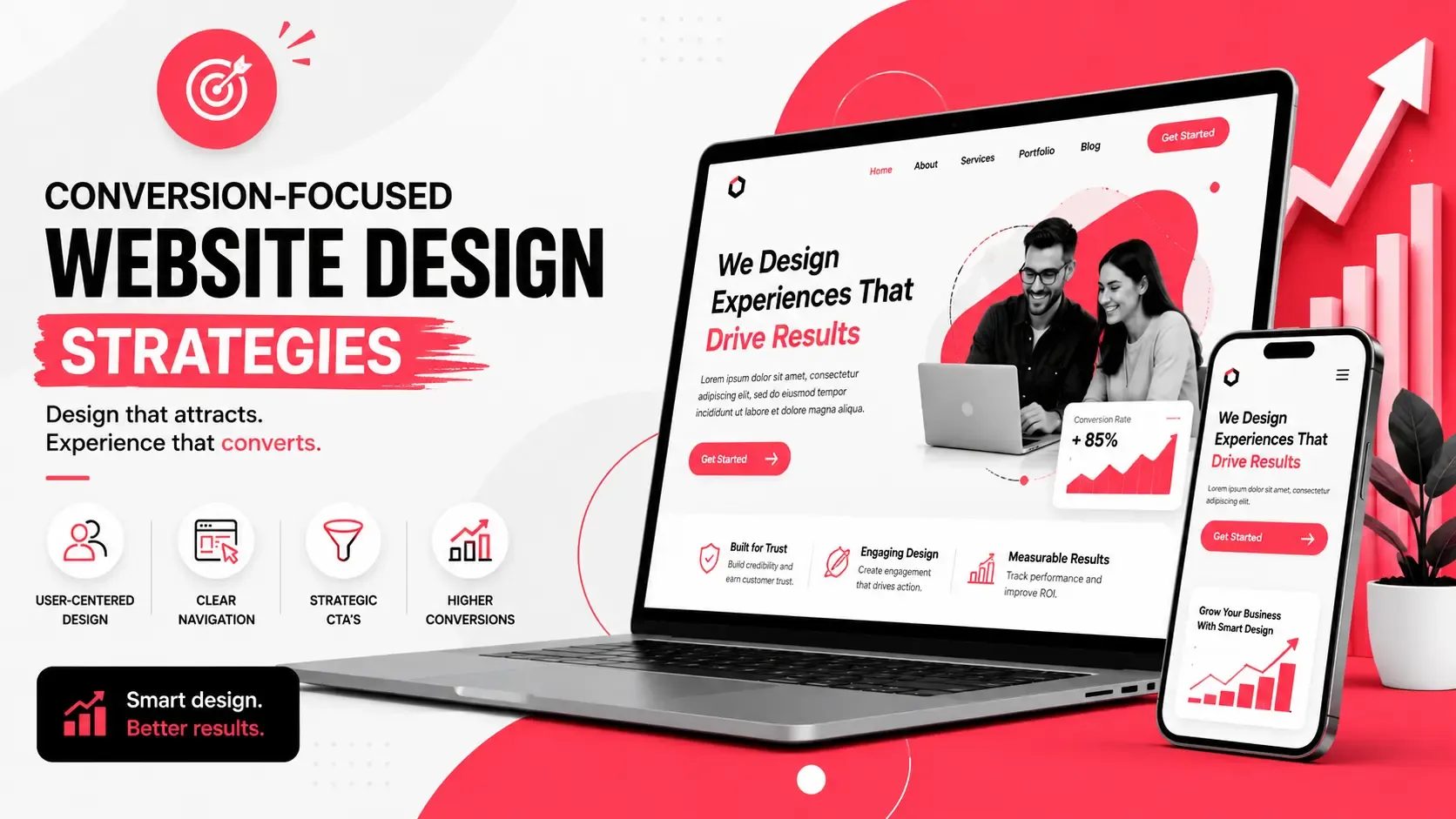
A visually attractive website is important, but design alone does not generate leads, inquiries, bookings, or sales.
Many businesses invest heavily in creating beautiful websites only to discover that visitors leave without taking action. The problem is often not traffic. It is conversion optimization.
A conversion-focused website is designed with a clear purpose: guiding visitors toward specific actions that support business goals.
Whether the objective is generating leads, booking consultations, selling products, or increasing inquiries, every design decision should help move users closer to conversion.
This guide explores the most effective conversion-focused website design strategies businesses can implement to improve performance, user experience, and revenue.
Quick Answer
Conversion-focused website design combines user experience, clear messaging, strategic calls-to-action, trust-building elements, and performance optimization to encourage visitors to take action.
Key strategies include:
- Creating clear value propositions
- Improving website navigation
- Optimizing calls-to-action
- Building trust with social proof
- Simplifying forms
- Enhancing mobile usability
- Increasing page speed
- Designing effective landing pages
The goal is to remove friction and make it as easy as possible for visitors to convert.
What Is Conversion-Focused Website Design?
Conversion-focused web design is the process of creating websites that actively encourage users to complete desired actions.
These actions may include:
- Requesting a quote
- Contacting a business
- Booking a consultation
- Signing up for a newsletter
- Downloading a resource
- Making a purchase
Unlike traditional design approaches that focus primarily on aesthetics, conversion-focused design prioritizes business outcomes and user behavior.
Every page should answer a simple question:
What action do we want visitors to take next?
Start With a Clear Value Proposition
Visitors form first impressions within seconds.
If they cannot quickly understand:
- What your business does
- Who it helps
- Why it is different
they are likely to leave.
A strong value proposition should immediately communicate:
- The problem you solve
- The audience you serve
- The benefit customers receive
Weak Example
"We provide innovative business solutions."
Strong Example
"We help Dubai businesses generate more leads through SEO-driven websites and digital marketing strategies."
Specific messaging typically converts better than generic claims.
Design for User Intent
Different visitors arrive with different goals.
Some are researching.
Some are comparing options.
Others are ready to buy.
A conversion-focused website aligns content and design with these stages of the customer journey.
Typical User Intent Stages
Stage | User Goal |
|---|---|
Awareness | Learn about a problem |
Consideration | Compare solutions |
Decision | Choose a provider |
Action | Contact or purchase |
Understanding intent helps create pages that guide visitors naturally toward conversion.
Prioritize Simple and Intuitive Navigation
Visitors should never struggle to find information.
Complicated navigation creates frustration and increases abandonment rates.
Effective navigation should:
- Be easy to understand
- Highlight key pages
- Maintain consistency
- Reduce unnecessary clicks
The easier it is for users to move through the website, the more likely they are to convert.
Businesses looking to improve site structure and usability can also explore Web Development Services Dubai to build user-friendly websites that support both SEO and conversions.
Use Strategic Calls-to-Action (CTAs)
Calls-to-action are among the most important conversion elements on a website.
They tell users what to do next.
Examples include:
- Request a Quote
- Book a Consultation
- Get Started Today
- Schedule a Demo
- Contact Our Team
Strong CTAs are:
- Clear
- Visible
- Action-oriented
- Relevant to user intent
Avoid vague phrases such as "Click Here" or "Learn More" when a stronger action can be provided.
Reduce Friction Throughout the User Journey
Every obstacle reduces conversion potential.
Common friction points include:
- Complex navigation
- Slow loading pages
- Long forms
- Unclear messaging
- Excessive distractions
The highest-converting websites remove unnecessary steps and simplify decision-making.
A useful exercise is reviewing every conversion path and asking:
What could prevent a visitor from completing this action?
Build Trust Before Asking for Action
Trust is a major factor in conversion decisions.
Visitors rarely contact a business or make a purchase without first evaluating credibility.
Effective trust signals include:
- Customer reviews
- Testimonials
- Case studies
- Industry certifications
- Awards
- Client logos
- Success metrics
Trust-building elements should appear naturally throughout the website rather than being isolated on a single page.
Optimize Forms for Higher Completion Rates
Forms are often the final step before conversion.
Unfortunately, many websites make them unnecessarily complicated.
Best practices include:
- Asking only for essential information
- Using clear field labels
- Reducing form length
- Optimizing for mobile devices
- Providing confirmation messages
In many cases, reducing form fields can significantly increase submissions.
Improve Mobile User Experience
Mobile traffic now accounts for a large percentage of website visits across most industries.
A website that performs poorly on mobile devices can lose a significant number of potential customers.
Mobile optimization should focus on:
- Responsive layouts
- Fast loading times
- Touch-friendly buttons
- Readable text
- Mobile-friendly forms
A seamless mobile experience often has a direct impact on lead generation and sales.
Increase Website Speed
Users expect websites to load quickly.
Even small delays can reduce engagement and conversions.
Website speed influences:
- User satisfaction
- Bounce rates
- Search rankings
- Conversion rates
Areas to optimize include:
- Images
- Code
- Hosting
- Scripts
- Caching
Faster websites generally create better user experiences and stronger business results.
Businesses interested in improving website performance can also read our Website Speed Optimization Guide for practical strategies that improve both user experience and conversion rates.
Create Focused Landing Pages
Many businesses direct paid advertising traffic to generic website pages.
This often reduces conversion performance.
Dedicated landing pages should be designed around a single objective.
Key elements include:
- Clear headline
- Strong value proposition
- Trust signals
- Focused CTA
- Minimal distractions
The more focused the page, the easier it is for users to make decisions.
Use Visual Hierarchy to Guide Attention
Visual hierarchy influences how visitors consume information.
Users naturally focus on:
- Headlines
- Buttons
- Images
- Key messages
Design should direct attention toward the most important elements.
This can be achieved through:
- Typography
- Spacing
- Contrast
- Layout structure
A strong visual hierarchy improves both usability and conversions.
Leverage Social Proof Strategically
People trust other customers.
Social proof helps reduce uncertainty and supports purchasing decisions.
Effective examples include:
- Customer testimonials
- Star ratings
- Case studies
- Before-and-after results
- Client success stories
The most effective social proof is specific and measurable.
For example:
"Generated 250 qualified leads in six months"
is more persuasive than:
"Delivered excellent results."
Continuously Test and Improve
Conversion optimization is not a one-time project.
User behavior changes.
Competitors evolve.
Market expectations shift.
Businesses should regularly review:
- Conversion rates
- User journeys
- Heatmaps
- Analytics
- Form submissions
- Landing page performance
Continuous improvement often produces significant long-term gains.
Common Conversion-Killing Website Mistakes
Some of the most common issues include:
- Weak value propositions
- Hidden CTAs
- Slow website speed
- Poor mobile experiences
- Overly complex forms
- Cluttered layouts
- Lack of trust signals
- Confusing navigation
Addressing these issues often produces noticeable improvements without increasing traffic.
Key Takeaways
- Conversion-focused design prioritizes business goals and user behavior.
- Strong value propositions improve engagement.
- Navigation should support user journeys.
- Strategic CTAs guide visitors toward action.
- Trust signals increase credibility.
- Mobile optimization is essential.
- Website speed directly affects conversions.
- Continuous testing helps maximize performance.
Turning Website Traffic Into Business Growth
Driving traffic to a website is only half of the equation. Real business results occur when visitors take meaningful actions.
A conversion-focused website combines strong messaging, intuitive navigation, fast performance, trust-building elements, and user-centered design to create a seamless path toward conversion.
Businesses that consistently optimize these areas often achieve higher lead generation, stronger engagement, and better returns from their marketing efforts without necessarily increasing traffic.
Milaaj Brandset helps businesses create conversion-focused digital experiences that align user needs with business objectives, supporting long-term growth through strategic web design and performance-driven optimization.
FAQs
What is conversion-focused website design?
Conversion-focused website design is the practice of designing websites to encourage visitors to complete specific actions such as inquiries, purchases, or bookings.
Why is website design important for conversions?
Website design influences usability, trust, engagement, and decision-making, all of which affect conversion rates.
How can I improve website conversion rates?
Focus on improving user experience, page speed, CTAs, trust signals, navigation, and landing page design.
What is a good website conversion rate?
Conversion rates vary by industry, traffic source, and business model, but continuous optimization can improve performance regardless of benchmarks.
Does website speed affect conversions?
Yes. Faster websites typically experience lower bounce rates and higher conversion rates.
Why are CTAs important?
Calls-to-action guide users toward desired actions and help move visitors through the conversion funnel.
How does mobile optimization improve conversions?
A better mobile experience reduces friction and makes it easier for users to complete actions on smartphones and tablets.
How often should website conversions be reviewed?
Conversion performance should be monitored regularly using analytics, user behavior tools, and testing to identify improvement opportunities.
Ready to Elevate Your Brand?
Start Your Project Today