March 6, 2026
Why Your Dubai Web Design Project Needs an Odoo Backend to Truly Succeed
Milaaj Editorial / Research Insights
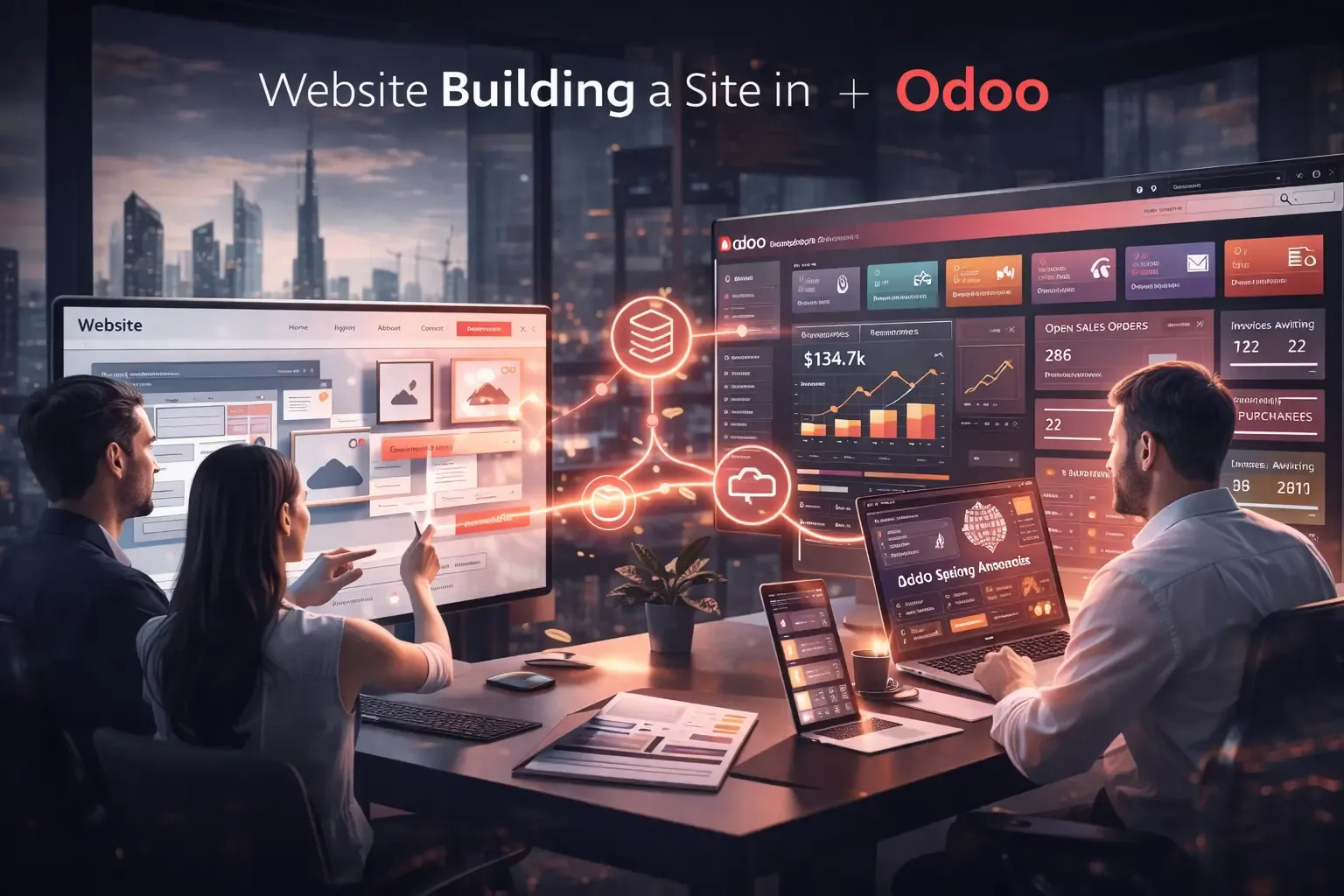
Launching a website in Dubai today is no longer just about beautiful layouts and fast-loading pages. Businesses across the UAE are realizing that web design alone does not drive operational success. Behind every high-performing website is a powerful backend system that connects sales, inventory, customer data, and operations.
This is where Dubai web design with Odoo backend becomes a strategic advantage. Instead of building a website that only displays information, companies can create a fully integrated digital platform that automates workflows, manages customer relationships, and supports real-time business operations.
In this guide, we explore why modern Dubai websites need an ERP-powered backend, how Odoo transforms website functionality, and why businesses that integrate their web design with Odoo achieve stronger long-term growth.
The Problem with Traditional Web Design Projects
Many Dubai companies still approach web design as a standalone project. A designer builds a visually appealing website, the marketing team manages leads manually, and internal teams handle orders using separate software.
While this approach may work temporarily, it quickly creates operational bottlenecks.
Common issues include:
- Leads from the website are manually transferred to CRM tools
- Orders must be entered into accounting or inventory software manually
- Customer information is scattered across different systems
- Marketing teams lack real-time data on conversions and revenue
- Business owners struggle to track performance across departments
These disconnected systems create data silos, which slow down operations and increase the risk of costly errors.
A modern website should not operate independently from the business. Instead, it should act as the front door of a unified business platform.
What is an Odoo Backend?
An Odoo backend connects your website directly to a powerful ERP platform that manages core business processes.
Odoo integrates multiple modules into one system, including:
- CRM for lead and customer management
- Accounting and invoicing
- Inventory and product management
- Sales automation
- E-commerce operations
- HR and employee management
- Marketing automation
When businesses implement Dubai web design with Odoo backend, the website becomes directly connected to these modules. Every action taken by a visitor can trigger automated workflows inside the business system.
Instead of manually transferring information between tools, data flows automatically across departments.
Why Dubai Businesses Need ERP-Powered Websites
Dubai’s competitive business environment demands efficiency and scalability. Companies that rely on disconnected software systems often struggle to keep up with rapid growth.
An ERP-powered website solves several key challenges.
Real-Time Data Synchronization
When a customer submits a form or places an order on your website, the information is automatically stored in the ERP system.
This allows businesses to:
- Track leads instantly in the CRM
- Generate invoices automatically
- Update inventory levels in real time
- Trigger follow-up communications
Real-time data visibility improves decision-making and eliminates manual reporting delays.
Automated Lead Management
Many websites generate leads but fail to convert them effectively.
An Odoo backend allows companies to automate the entire lead management process.
For example:
- Website forms automatically create CRM leads
- Leads are assigned to sales representatives
- Automated follow-up emails are triggered
- Sales pipelines track progress toward conversion
This automation ensures that no potential customer is forgotten.
Integrated E-Commerce Operations
For Dubai businesses running online stores, integration between the website and backend systems is critical.
Odoo allows companies to connect their e-commerce platform with:
- Inventory management
- Payment processing
- Shipping systems
- Accounting software
- Customer databases
Instead of managing these functions separately, the ERP platform keeps everything synchronized.
This dramatically improves operational efficiency for e-commerce businesses.
Key Benefits of Dubai Web Design with Odoo Backend
Integrating Odoo with your website offers several advantages that traditional web development cannot provide.
1. A Unified Business Platform
One of the biggest benefits of Odoo is that it consolidates multiple tools into a single ecosystem.
Instead of using separate systems for CRM, accounting, and inventory, businesses manage everything from one dashboard.
This unified structure eliminates data duplication and improves collaboration between departments.
2. Stronger Customer Relationship Management
Customer experience plays a crucial role in business success.
An Odoo-powered website enables companies to:
- Track customer interactions across channels
- Maintain centralized customer profiles
- Automate follow-up communication
- Analyze customer purchasing behavior
With better insights into customer data, businesses can create more personalized marketing strategies.
3. Reduced Operational Costs
Many companies rely on multiple SaaS tools to run their operations. These subscriptions can quickly become expensive.
By integrating the website with Odoo, businesses can replace several software tools with one unified system.
This consolidation reduces annual technology costs while improving operational efficiency.
4. Scalable Business Infrastructure
Dubai businesses often experience rapid growth. A website built without a scalable backend may struggle to handle increased traffic, orders, and customer data.
Odoo’s modular architecture allows companies to expand their system gradually by adding new modules when needed.
For example, businesses can start with CRM and website integration, then later add accounting, inventory, or HR modules.
This scalability makes Odoo ideal for growing companies.
5. Improved Marketing Insights
Marketing teams rely on data to optimize campaigns and increase conversions.
With an Odoo backend, businesses gain access to powerful analytics tools that track:
- Website traffic and lead sources
- Conversion rates
- Customer lifetime value
- Sales performance
These insights help businesses make smarter marketing decisions and improve ROI.
How Odoo Transforms the Website Experience
The difference between a traditional website and an ERP-integrated website becomes clear when examining real-world workflows.
Example 1: Lead Generation
Without ERP integration:
- A visitor fills out a contact form
- The message is sent to an email inbox
- Staff manually enter the lead into a CRM system
With Odoo integration:
- The visitor fills out a form
- A CRM lead is created automatically
- Sales teams receive instant notifications
- Follow-up emails are triggered automatically
This automated process improves response time and increases conversion rates.
Example 2: E-Commerce Order Processing
Without integration:
- Customers place orders on the website
- Staff manually update inventory
- Accounting teams generate invoices separately
With Odoo integration:
- Orders are recorded automatically
- Inventory updates instantly
- Invoices are generated automatically
- Sales reports update in real time
The result is a smoother customer experience and fewer operational errors.
Why Dubai Companies Are Adopting ERP-Integrated Websites
Across the UAE, companies are investing heavily in digital transformation. Businesses are no longer satisfied with simple websites that only display information.
Instead, they want platforms that support full business operations.
ERP-integrated websites provide several strategic advantages:
- Faster operational workflows
- Reduced manual work
- Improved customer experience
- Better data visibility
- Lower software costs
These benefits explain why Dubai web design with Odoo backend is becoming a popular choice among modern businesses.
Industries That Benefit Most from Odoo Website Integration
Several industries in Dubai gain significant value from integrating their websites with Odoo.
Retail and E-Commerce
Retailers benefit from automated order processing, real-time inventory updates, and integrated customer databases.
Real Estate
Property companies can manage listings, capture leads from website inquiries, and track client interactions within a unified CRM system.
Service-Based Businesses
Consultancies, agencies, and professional services firms can automate appointment scheduling, client communication, and invoicing through their websites.
Manufacturing and Distribution
Businesses that manage complex supply chains benefit from real-time inventory visibility and automated order workflows.
Steps to Implement an Odoo-Powered Website
Businesses planning to integrate their website with Odoo should follow a structured implementation process.
1. Define Business Goals
Identify the primary objectives of the website, such as lead generation, e-commerce sales, or customer service automation.
2. Map Business Workflows
Document how data should move between the website and backend systems.
3. Choose the Right Odoo Modules
Select modules that support key business functions, including CRM, accounting, inventory, and marketing.
4. Integrate the Website
Develop the website with direct connections to the ERP platform so data flows automatically.
5. Train Internal Teams
Ensure staff understand how to use the system to manage leads, orders, and customer interactions effectively.
The Future of Web Design in Dubai
As businesses across the UAE continue to digitize operations, websites will play a larger role in business management.
Future websites will not just serve as marketing tools. They will become fully integrated digital business hubs that connect customers, employees, and operational systems.
ERP platforms like Odoo are at the center of this transformation.
Companies that adopt ERP-powered websites today will gain a significant advantage in efficiency, scalability, and customer experience.
Conclusion
A successful website today requires more than strong design and compelling content. Businesses need a system that connects their website with the core processes that drive growth.
By adopting Dubai web design with Odoo backend, companies can transform their websites into powerful operational platforms that automate workflows, centralize data, and support long-term scalability.
For businesses exploring this approach, working with experts who provide Odoo implementation services in Dubai can help ensure smooth integration and long-term success. Milaaj Brandset helps organizations connect their web platforms with Odoo to create scalable digital ecosystems that support modern business growth.

Ready to Elevate Your Brand?
Start Your Project Today