March 4, 2026
The 2026 ERP Showdown: Why Odoo is Beating Microsoft Dynamics in the Middle East
Milaaj Editorial / Research Insights
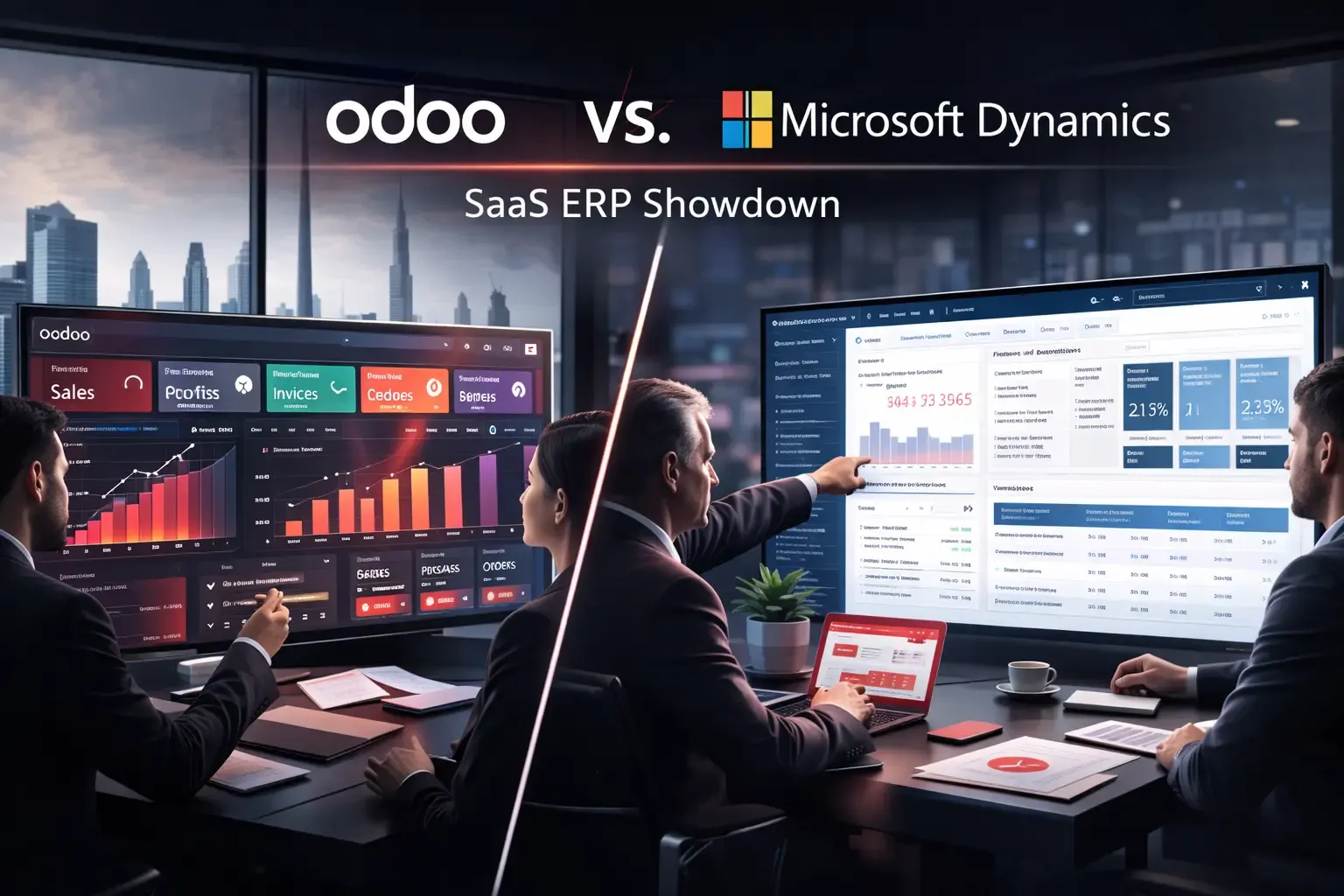
In 2026, Dubai and the broader Middle East ERP market are witnessing a significant shift. Businesses of all sizes, particularly SMEs and mid-market companies, are re-evaluating their enterprise resource planning platforms. Among the top contenders, Odoo is increasingly outperforming Microsoft Dynamics in terms of flexibility, deployment speed, and ROI.
This guide explores why Odoo is gaining traction, compares key features, and highlights why Middle Eastern businesses are reconsidering legacy ERP systems.
Why the Middle East ERP Market is Changing
Dubai and UAE businesses are growing rapidly, with sectors such as retail, real estate, logistics, and services expanding at an unprecedented pace. Companies now need ERP solutions that can:
- Integrate multiple functions from accounting to CRM seamlessly
- Scale quickly without extensive redevelopment
- Reduce operational costs while improving compliance
- Support cloud-based and hybrid deployment
- Enable real-time decision-making with dashboards and analytics
Traditional platforms like Microsoft Dynamics often struggle to meet these requirements for mid-market companies due to rigid architectures and lengthy customization cycles.
Key Comparison: Odoo vs Microsoft Dynamics
When comparing Odoo vs Microsoft Dynamics Middle East, businesses often evaluate these critical factors:
1. Deployment Speed and Flexibility
- Microsoft Dynamics: Requires longer setup times, complex licensing, and often extensive consulting.
- Odoo 2026: Modular architecture allows quick deployment of core apps, letting businesses start operations faster while scaling modules over time.
2. Cost Efficiency
- Microsoft Dynamics: Higher upfront licensing costs and ongoing maintenance fees.
- Odoo: Modular licensing and pay-as-you-grow model reduce TCO, especially for SMEs and growing mid-market firms.
3. Customization and Scalability
- Microsoft Dynamics: Customizations require coding expertise and can increase implementation time.
- Odoo: Flexible configuration allows businesses to tailor workflows, add apps, and automate processes without heavy development.
4. Integration Capabilities
- Microsoft Dynamics: Integration often relies on third-party connectors, which can introduce data inconsistencies.
- Odoo: Built-in integrations for accounting, inventory, CRM, e-commerce, and HR provide a unified platform with minimal data silos.
5. Reporting and Analytics
- Microsoft Dynamics: Requires advanced setups or third-party BI tools for real-time insights.
- Odoo: Provides dashboards and real-time reports across modules, enabling faster, data-driven decision-making.
Industry Use Cases in the Middle East
Retail and E-Commerce
Odoo helps retailers:
- Automate stock and inventory updates
- Integrate POS with online channels
- Streamline invoicing and payment tracking
- Monitor sales performance in real-time
Microsoft Dynamics can handle these too, but setup and customization take longer and cost more.
Real Estate and Property Management
- Track property listings, client leads, contracts, and payments in one platform
- Automate financial reporting for developers and brokers
- Ensure compliance with UAE VAT and corporate regulations
Odoo’s flexibility allows Dubai real estate firms to adopt ERP without disrupting existing processes.
Logistics and Manufacturing
- Manage supply chains, production schedules, and inventory efficiently
- Reduce manual reconciliation and errors
- Enable multi-warehouse operations and cross-emirate scalability
Odoo’s modular apps allow phased rollout, whereas Dynamics often requires full-scale implementation upfront.
Why Odoo is Winning in the Middle East
Faster ROI
Dubai and regional companies prioritize ERP solutions that deliver value quickly. Odoo’s short deployment cycle means faster operational improvements and quicker ROI compared to Microsoft Dynamics.
Cost-Effective Growth
Modular pricing allows businesses to scale their ERP according to need. No need to pay for unused features or modules, a common issue with Dynamics licensing.
Unified Platform
Odoo eliminates data silos by integrating accounting, CRM, inventory, HR, and project management into one system. Businesses can reduce dependency on multiple tools, streamline processes, and improve compliance.
Local Market Adaptation
Odoo’s UAE-specific modules, including VAT and corporate tax compliance, make it suitable for regional business requirements, giving it a competitive edge over generic Dynamics implementations.
Key Considerations for Dubai Businesses
Before choosing between Odoo and Microsoft Dynamics, companies should evaluate:
- Business size and growth plans
- Current software stack and legacy systems
- Required modules and customization complexity
- Budget and expected ROI
- Timeline for implementation
- Regulatory compliance needs (VAT, corporate tax)
Odoo is often the preferred choice for mid-market and SMEs due to its combination of affordability, flexibility, and fast deployment.
Implementation Tips for Middle East Companies
- Map Current Processes: Document workflows across accounting, sales, inventory, and HR.
- Choose Essential Modules First: Implement critical functionality first to accelerate go-live.
- Data Migration: Consolidate data from spreadsheets, Tally, or legacy ERP systems before migration.
- Staff Training: Provide hands-on training to ensure adoption and minimize errors.
- Monitor KPIs: Use Odoo dashboards to track operational performance and compliance.
Following these steps ensures a smooth transition and maximizes the benefits of Odoo ERP.
Final Thoughts: Odoo is Leading the Middle East ERP Race
In 2026, the comparison between Odoo and Microsoft Dynamics highlights a clear trend in the Middle East: flexibility, scalability, and cost-effectiveness are winning over legacy rigidity.
Dubai and regional businesses seeking rapid deployment, modular growth, and unified reporting increasingly prefer Odoo. While Microsoft Dynamics remains a strong enterprise tool, Odoo’s adaptability, cloud-first architecture, and regional compliance modules make it ideal for SMEs and mid-market firms in the UAE.
Companies exploring ERP upgrades or migration often start by reviewing professional Odoo implementation services in Dubai from Milaaj Brandset. By consolidating accounting, CRM, inventory, and reporting in one platform, businesses can modernize operations and scale confidently.
For UAE businesses serious about efficiency, compliance, and growth, Odoo ERP emerges as the smarter, faster, and more flexible choice in 2026.


Ready to Elevate Your Brand?
Start Your Project Today