March 5, 2026
Step-by-Step Guide to Launching a Food Delivery App in the Middle East
Milaaj Editorial / Research Insights
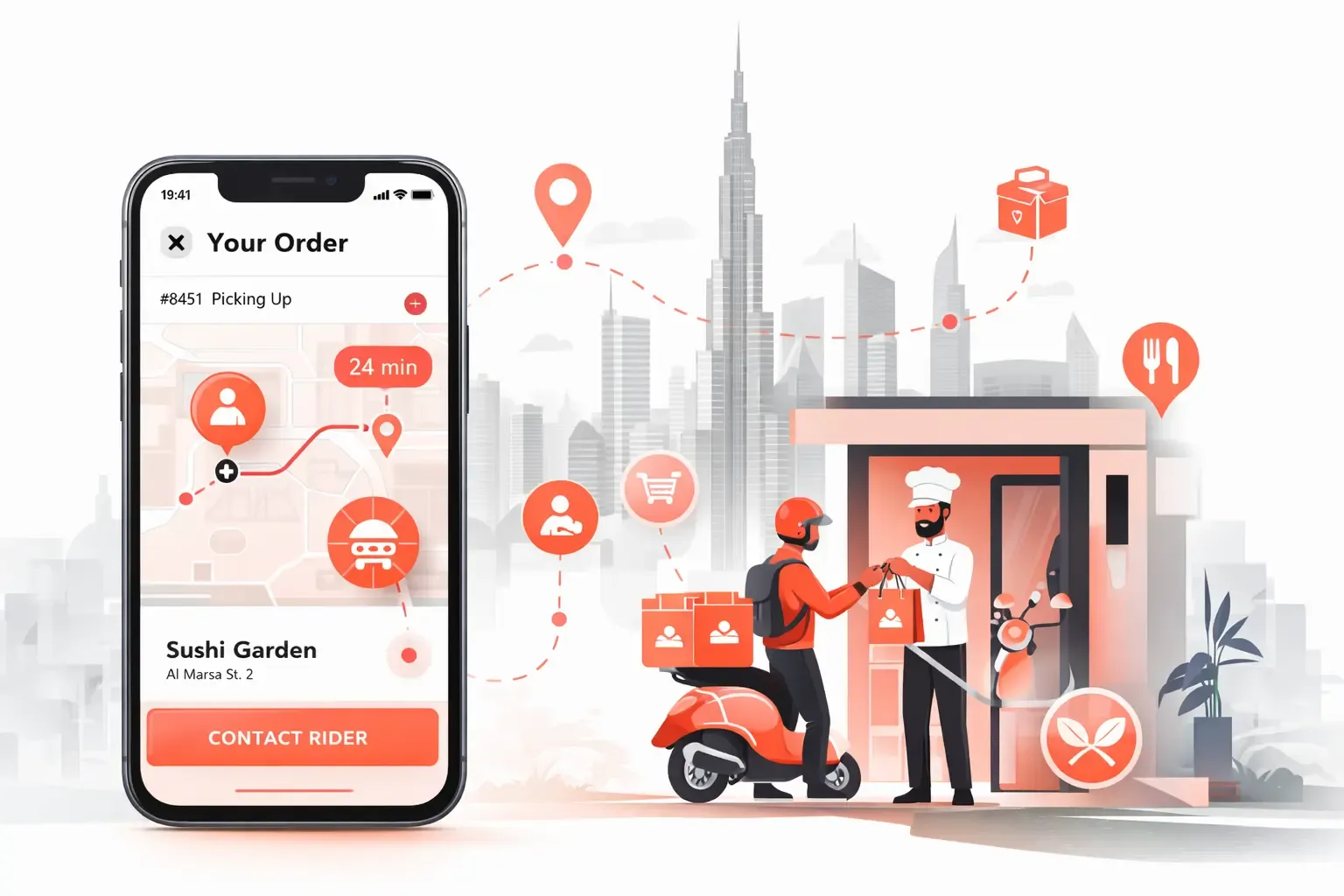
The demand for online food delivery across the Middle East has grown rapidly over the last decade. With consumers relying heavily on mobile apps for convenience, launching a food delivery app in the Middle East has become a profitable opportunity for startups and established businesses alike. However, success in this competitive market requires more than just building an app. Businesses need strong market research, reliable technology, legal compliance, and effective digital marketing strategies.
This step-by-step guide explains how entrepreneurs can plan, build, and scale a successful food delivery platform while meeting the expectations of modern customers.
Understanding the Food Delivery Market in the Middle East
Before developing a food delivery application, it is essential to understand the regional market dynamics. Countries such as the UAE, Saudi Arabia, and Qatar have seen significant growth in on-demand services due to high smartphone penetration and fast-paced urban lifestyles.
Several factors contribute to the growth of food delivery platforms:
- Increasing demand for convenience and online ordering
- Busy urban professionals preferring home delivery
- Rapid adoption of mobile payment solutions
- Expansion of cloud kitchens and delivery-only restaurants
Successful food delivery apps solve real problems for both customers and restaurants by simplifying ordering, tracking, and delivery management.
Step 1: Conduct Market Research
Launching a food delivery app without proper research can lead to expensive mistakes. Entrepreneurs should first analyze customer behavior, competitor strategies, and local regulations.
Key research areas include:
- Popular food delivery apps operating in the region
- Customer preferences and ordering habits
- Restaurant partnership opportunities
- Delivery infrastructure and logistics challenges
Market research helps define the unique value proposition of the app and ensures it addresses actual user needs rather than assumptions.
Step 2: Define Your Business Model
Food delivery platforms can operate using different models depending on logistics and restaurant relationships.
Common models include:
Aggregator Model
The platform connects restaurants and customers while restaurants manage their own deliveries.
Logistics Model
The platform handles delivery operations through its own drivers or partners.
Cloud Kitchen Model
The business owns or operates delivery-only kitchens and sells food directly through the app.
Choosing the right business model determines the technology requirements, operational complexity, and cost structure.
Step 3: Plan Essential Features for the App
User experience plays a critical role in the success of any on-demand platform. Customers expect a fast, intuitive, and reliable ordering process.
A successful food delivery app typically includes:
Customer Features
- Restaurant search and filtering
- Menu browsing with images and prices
- Secure online payments
- Real-time order tracking
- Ratings and reviews
Restaurant Dashboard
- Order management system
- Menu updates and pricing control
- Sales analytics and reporting
- Order notifications
Delivery Partner App
- Order pickup notifications
- Route optimization and navigation
- Earnings dashboard
- Delivery status updates
A well-designed interface ensures that customers can place orders quickly without confusion or delays.
Step 4: Build a Scalable Technology Infrastructure
Food delivery apps must handle high traffic, secure transactions, and real-time location tracking. Choosing the right technology stack is essential for performance and scalability.
Important technical considerations include:
- Cloud-based server infrastructure
- Mobile app development for Android and iOS
- Real-time GPS tracking systems
- Secure payment gateway integration
- Push notification systems
Businesses that invest in professional custom web development and mobile technology ensure the platform remains stable as the number of users grows.
Step 5: Handle Legal and Regulatory Requirements
Each Middle Eastern country has its own business regulations and licensing requirements for digital platforms.
Key compliance areas include:
- Business registration and trade licenses
- Data protection regulations
- Online payment compliance
- Delivery and logistics permits
Entrepreneurs should consult local authorities or legal advisors to ensure their business operates within the law.
Step 6: Partner With Restaurants and Vendors
Restaurants are the backbone of any food delivery platform. Building strong partnerships ensures a diverse menu selection and reliable service quality.
When onboarding restaurant partners, focus on:
- Competitive commission structures
- Easy onboarding process
- Marketing support for partner restaurants
- Reliable order management tools
Offering value to restaurant partners encourages long-term collaboration and platform growth.
Step 7: Set Up Delivery Operations
Efficient delivery logistics determine customer satisfaction. Delays or inaccurate orders can damage brand reputation quickly.
Delivery operations should focus on:
- Hiring reliable delivery drivers
- Route optimization technology
- Real-time tracking systems
- Customer support for delivery issues
Some startups partner with third-party delivery networks during early stages before building their own fleet.
Step 8: Design a Customer Acquisition Strategy
Even the best food delivery apps fail without proper marketing. Launching a strong digital marketing campaign helps attract early users and build brand recognition.
Effective customer acquisition strategies include:
- Search engine visibility for local food delivery queries
- Social media promotions and influencer partnerships
- Referral programs and loyalty rewards
- Paid advertising campaigns targeting urban users
Investing in structured digital marketing campaigns helps new platforms compete with established players in the region.
Step 9: Focus on User Experience and Retention
Acquiring users is only the first step. Long-term growth depends on keeping customers engaged and satisfied.
Businesses can improve retention by:
- Offering personalized recommendations
- Providing loyalty rewards for repeat orders
- Ensuring fast delivery times
- Maintaining responsive customer support
Positive user experiences encourage customers to return regularly and recommend the app to others.
Step 10: Scale and Expand the Platform
Once the platform gains traction in one city or region, businesses can expand operations and introduce new features.
Possible growth strategies include:
- Expanding to additional cities or countries
- Partnering with grocery stores or convenience shops
- Adding subscription-based delivery plans
- Integrating AI-powered order recommendations
Scaling gradually ensures operational efficiency while maintaining service quality.
Common Challenges When Launching a Food Delivery App
Entrepreneurs entering the food delivery industry often face several challenges.
Typical obstacles include:
- High competition from established platforms
- Logistics and delivery management complexity
- Customer acquisition costs
- Maintaining consistent food quality across partners
However, businesses that combine strong technology with strategic marketing can successfully compete in the market.
Conclusion
Launching a food delivery app in the Middle East requires careful planning, reliable technology, and strong partnerships with restaurants and delivery providers. Entrepreneurs must focus on building a seamless user experience while implementing scalable infrastructure that supports long-term growth.
From market research and business model selection to technology development and marketing execution, each step plays a crucial role in creating a successful on-demand platform.
Businesses looking to build a professional digital platform can benefit from investing in expert custom ecommerce development to create scalable technology and combining it with a results-driven digital marketing strategy to attract users and grow the platform sustainably.
FAQs
What is required to launch a food delivery app in the Middle East?
Launching a food delivery app requires market research, legal registration, technology development, restaurant partnerships, and a marketing strategy.
How much does it cost to develop a food delivery app?
Costs depend on app complexity, features, development team, and infrastructure, but building a professional platform usually requires significant investment.
Which countries in the Middle East have the biggest food delivery markets?
The UAE, Saudi Arabia, and Qatar have some of the fastest-growing online food delivery markets in the region.
What features are essential for a food delivery app?
Core features include restaurant listings, secure payments, real-time order tracking, delivery management, and customer reviews.
How do food delivery apps make money?
Revenue typically comes from restaurant commissions, delivery fees, advertising placements, and premium subscription services.
How long does it take to launch a food delivery platform?
Depending on complexity, development and launch can take several months including testing and partner onboarding.
How can a new food delivery app compete with established platforms?
By focusing on niche markets, offering better user experience, competitive pricing, and strong marketing strategies.
Is digital marketing important for food delivery apps?
Yes, digital marketing helps platforms attract users, build brand awareness, and compete in highly competitive urban markets.



Ready to Elevate Your Brand?
Start Your Project Today