August 7, 2026
Ecommerce Personalization Strategies That Work
Milaaj Editorial / Research Insights
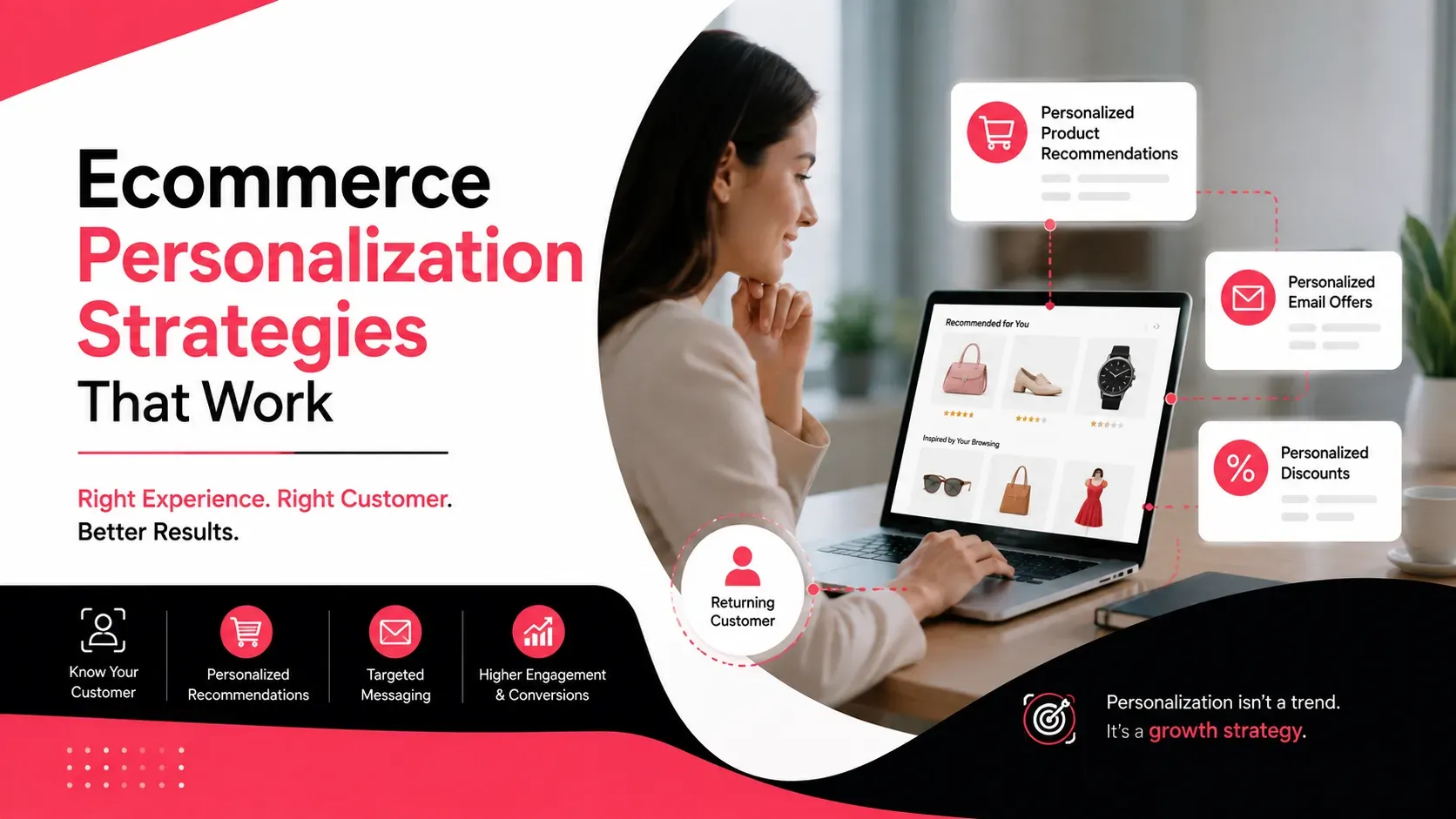
Modern ecommerce is no longer about offering the widest product selection alone. Customers expect online stores to understand their preferences, recommend relevant products, remember previous interactions, and provide a shopping experience that feels tailored to their needs. Businesses that continue delivering the same generic experience to every visitor risk losing sales to competitors that make shopping more relevant and convenient.
Ecommerce personalization has become one of the most effective ways to improve customer engagement, increase conversion rates, and encourage repeat purchases. Rather than showing identical products and promotions to everyone, personalization uses customer data, shopping behavior, and preferences to present content that is more likely to match individual interests.
Recent industry trends show that first-party and zero-party data are becoming increasingly important as businesses move away from third-party cookies. Information collected directly from customers, such as browsing history, purchase history, wish lists, loyalty programs, and voluntarily shared preferences. allows businesses to deliver relevant experiences while maintaining greater control over data privacy.
This guide explores practical ecommerce personalization strategies that businesses can implement today to create better shopping experiences while supporting sustainable business growth.
Quick Answer
Ecommerce personalization involves tailoring products, content, offers, and shopping experiences based on customer behavior, preferences, purchase history, and first-party data. Effective personalization increases relevance throughout the customer journey, leading to higher engagement, improved conversion rates, larger average order values, and stronger customer loyalty.
Why Personalization Matters in Ecommerce
Customers are exposed to thousands of products every day.
Helping them quickly discover products that match their interests improves both user experience and purchasing confidence.
Effective personalization can contribute to:
- Higher conversion rates
- Better customer engagement
- Increased average order value
- Improved customer satisfaction
- More repeat purchases
- Stronger customer loyalty
- Reduced cart abandonment
Instead of overwhelming shoppers with every available option, personalization helps surface the products most relevant to each visitor.
Build a Strong Foundation With Customer Data
Successful personalization begins with high-quality customer data.
Rather than collecting excessive information, businesses should focus on meaningful insights that improve customer experiences.
Useful data sources include:
First-Party Data
Collected directly through customer interactions.
Examples include:
- Purchase history
- Browsing behavior
- Search history
- Wishlist activity
- Loyalty program activity
- Email engagement
- Customer accounts
Zero-Party Data
Information customers intentionally share.
Examples include:
- Product preferences
- Size selections
- Style preferences
- Favorite brands
- Shopping goals
- Product quizzes
- Preference centers
Because customers voluntarily provide this information, it often supports more accurate personalization while maintaining transparency and trust.
Businesses investing in Digital Marketing strategies increasingly prioritize first-party customer data to build personalized campaigns that remain effective in today's privacy-focused digital landscape.
Segment Customers Instead of Treating Everyone the Same
Not every visitor has the same needs.
Customer segmentation allows businesses to deliver more relevant experiences to different groups.
Common segmentation methods include:
- New visitors
- Returning customers
- High-value customers
- Repeat buyers
- Seasonal shoppers
- Cart abandoners
- Location-based audiences
- Product category interests
For example, a returning customer who frequently purchases fitness equipment should see different homepage content than someone visiting the website for the first time.
Personalize the Homepage
The homepage is often the first impression customers have of your business.
Instead of displaying identical banners for every visitor, consider dynamic homepage elements such as:
- Recently viewed products
- Recommended collections
- Personalized offers
- Seasonal promotions
- Localized content
- Trending products based on browsing history
Even small changes can make the shopping experience feel significantly more relevant.
Recommend Products Intelligently
Product recommendations remain one of the most effective forms of ecommerce personalization.
Useful recommendation types include:
- Frequently bought together
- Customers also purchased
- Recently viewed items
- Similar products
- Complementary accessories
- New arrivals matching previous purchases
- Personalized best sellers
The goal isn't to display more products—it's to display better products.
Modern recommendation engines increasingly combine customer behavior with AI models to improve recommendation quality over time.
Improve Search Results
Customers often know exactly what they're looking for.
Personalized search can improve the shopping experience by prioritizing products based on:
- Previous purchases
- Browsing behavior
- Preferred brands
- Product popularity
- Customer interests
- Local availability
More relevant search results reduce friction while helping customers find products faster.
Personalize Product Pages
Product pages provide another opportunity to create more relevant shopping experiences.
Consider adding:
- Personalized product recommendations
- Dynamic bundles
- Location-based delivery estimates
- Recently viewed products
- Accessories matching browsing history
- Personalized discounts for loyal customers
These enhancements help customers discover additional products without interrupting their buying journey.
Businesses implementing advanced E-commerce solutions often combine personalization with optimized product pages to improve customer experience while increasing average order value.
Use Personalized Email Marketing
Email remains one of the highest-performing personalization channels.
Instead of sending identical campaigns to every subscriber, tailor messages using customer behavior.
Examples include:
- Welcome email sequences
- Abandoned cart reminders
- Product replenishment reminders
- Birthday offers
- Recently viewed products
- Product recommendations
- Loyalty rewards
- Re-engagement campaigns
Behavior-triggered emails generally provide greater relevance than broad promotional campaigns.
For a deeper look at how artificial intelligence is transforming customer experiences, read our guide on AI Hyper-Personalization in Ecommerce, where we explore predictive recommendations, machine learning, and next-generation personalization strategies.
Personalize the Shopping Cart
Personalization doesn't stop once customers add products to their cart.
Effective cart personalization may include:
- Frequently purchased add-ons
- Free shipping progress indicators
- Relevant bundle suggestions
- Personalized discount offers
- Loyalty reward reminders
- Delivery recommendations
These subtle improvements help increase basket value while supporting a smoother checkout experience.
Create Personalized Loyalty Experiences
Loyalty programs become far more effective when rewards reflect individual customer preferences instead of offering identical incentives to everyone.
Examples include:
- Exclusive offers based on previous purchases
- Early access to new product launches
- Personalized reward recommendations
- Category-specific discounts
- Birthday rewards
- VIP benefits for loyal customers
Customers are more likely to return when they feel recognized rather than treated as anonymous shoppers.
Balance Personalization With Privacy
Personalization should enhance customer trust, not undermine it.
Businesses should be transparent about:
- What data is collected
- Why it is collected
- How it improves the customer experience
- How customers can manage their preferences
Providing clear consent options and preference centers allows shoppers to control their data while helping businesses build stronger long-term relationships. As privacy regulations continue to evolve, trust has become just as important as personalization itself.
Common Personalization Mistakes
Even well-intentioned personalization can reduce customer confidence if implemented poorly.
Mistake | Better Approach |
|---|---|
Showing identical recommendations repeatedly | Refresh recommendations using recent browsing and purchase behaviour. |
Collecting unnecessary customer data | Focus only on information that improves the shopping experience. |
Ignoring first-time visitors | Provide helpful recommendations without requiring previous purchase history. |
Over-personalizing every page | Balance personalization with simple, intuitive navigation. |
Using outdated customer preferences | Continuously update customer profiles based on recent activity. |
Forgetting mobile users | Ensure personalized experiences work consistently across all devices. |
Successful personalization should feel helpful, not intrusive.
Measure Personalization Success
The effectiveness of personalization should be evaluated using measurable business outcomes rather than assumptions.
Monitor metrics such as:
Metric | Why It Matters |
|---|---|
Conversion Rate | Indicates whether personalization encourages more purchases. |
Average Order Value (AOV) | Measures the impact of recommendations and product bundles. |
Customer Lifetime Value (CLV) | Shows long-term revenue generated from each customer. |
Repeat Purchase Rate | Evaluates customer loyalty and retention. |
Click-Through Rate (CTR) | Measures engagement with personalized content and emails. |
Revenue Per Visitor | Combines traffic quality with conversion performance. |
Regular analysis helps identify which personalization strategies generate meaningful business value and which require refinement.
The Future of Ecommerce Personalization
Personalization continues to evolve beyond simple product recommendations.
Emerging trends include:
- AI-powered merchandising
- Predictive product recommendations
- Dynamic pricing strategies
- Personalized search experiences
- Conversational shopping assistants
- Visual search personalization
- Omnichannel customer profiles
- Real-time behavioral personalization
While artificial intelligence is making personalization more sophisticated, the most successful businesses still focus on understanding customer needs rather than relying solely on technology.
Key Takeaways
- Personalization improves customer experience by making shopping more relevant and convenient.
- First-party and zero-party data provide a reliable foundation for personalized marketing in a privacy-focused environment.
- Customer segmentation, personalized recommendations, and behavior-triggered communications deliver stronger engagement than generic campaigns.
- Personalization should extend across the entire customer journey, including the homepage, product pages, emails, shopping cart, and loyalty programs.
- Success should be measured using conversion rate, average order value, customer lifetime value, and repeat purchase metrics.
- Transparency and responsible data practices help build trust while supporting long-term customer relationships.
Make Personalization a Long-Term Competitive Advantage
Ecommerce personalization is most effective when it solves real customer problems rather than simply showcasing technology. Businesses that understand customer preferences, present relevant products, and create consistent experiences across every touchpoint are better positioned to increase conversions, strengthen loyalty, and encourage repeat purchases.
The goal is not to personalize everything. it is to personalize the moments that genuinely help customers make informed buying decisions. As customer expectations continue to rise, thoughtful personalization will remain an essential part of building sustainable ecommerce growth.
Milaaj Brandset helps businesses create customer-focused ecommerce experiences through data-driven digital strategies, conversion optimization, and scalable solutions that support long-term online success.
FAQs
What is ecommerce personalization?
Ecommerce personalization is the practice of tailoring products, content, promotions, and shopping experiences based on customer behavior, preferences, purchase history, and other first-party or zero-party data.
Why is personalization important for online stores?
Personalization helps customers find relevant products more quickly, improves engagement, increases conversion rates, raises average order value, and encourages repeat purchases.
What's the difference between first-party and zero-party data?
First-party data is collected through customer interactions, such as browsing and purchase history. Zero-party data is information customers intentionally share, including preferences, product interests, or responses to quizzes.
Does personalization require artificial intelligence?
No. Many effective personalization strategies, such as customer segmentation, personalized email campaigns, and product recommendations, can be implemented without advanced AI. AI enhances personalization but is not a requirement.
How can businesses measure personalization success?
Key metrics include conversion rate, average order value, customer lifetime value, repeat purchase rate, click-through rate, and revenue per visitor.
Can too much personalization be harmful?
Yes. Excessive or inaccurate personalization may feel intrusive or irrelevant. The best approach is to provide useful, transparent, and customer-focused experiences while respecting privacy preferences.
Ready to Elevate Your Brand?
Start Your Project Today