March 7, 2026
Flutter vs. React Native: Which Is Better for UAE Startups in 2026?
Milaaj Editorial / Research Insights
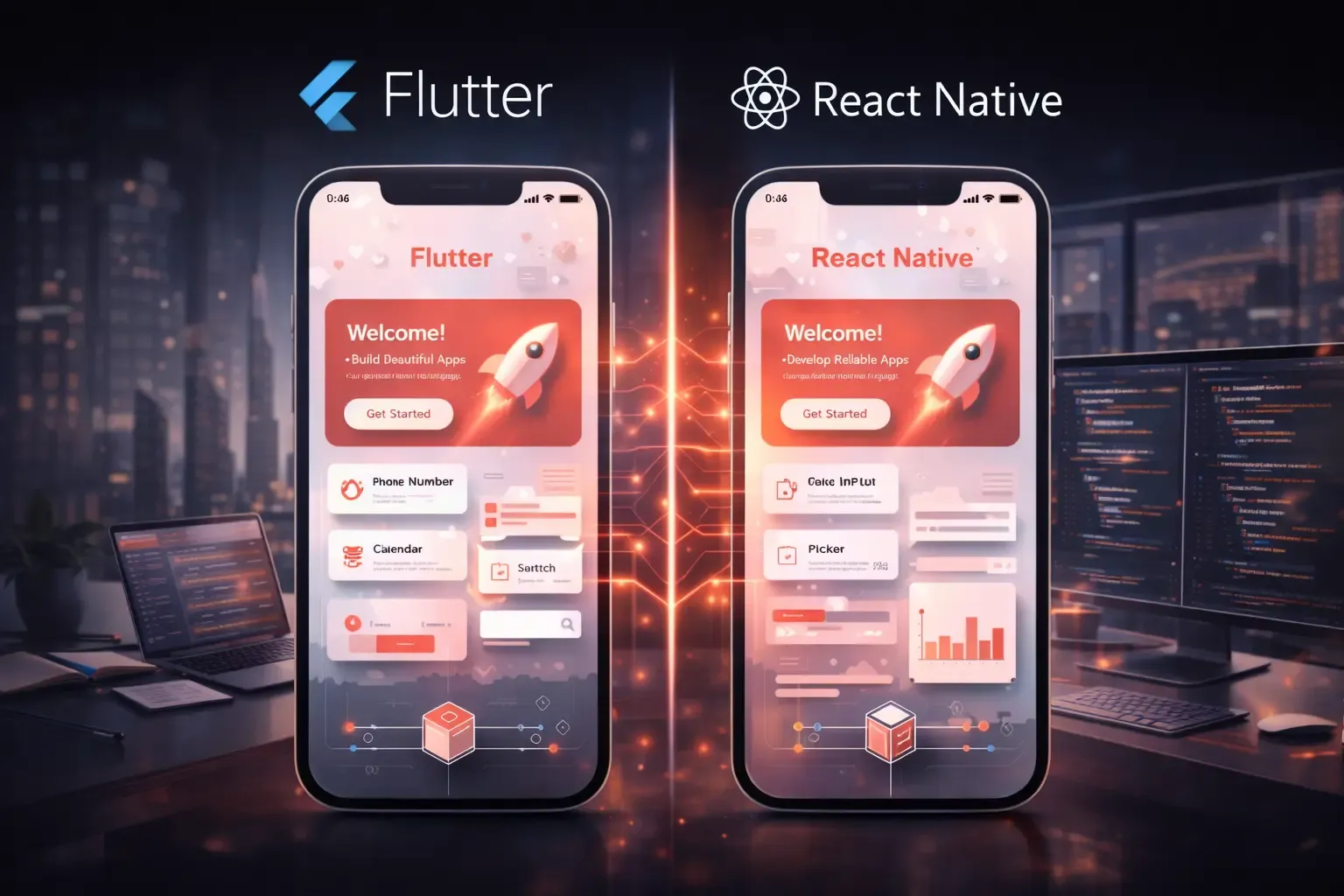
For startups in the UAE planning to build a mobile application, choosing the right development framework is one of the most critical technology decisions. Flutter and React Native dominate the cross-platform development space, enabling businesses to launch apps for both iOS and Android from a single codebase.
In 2026, the competition between these two frameworks has become closer than ever. Both provide high performance, faster development cycles, and lower costs compared to building separate native apps. However, the best choice for a startup depends on factors such as developer expertise, app complexity, scalability needs, and time-to-market goals.
This guide explains the differences between Flutter and React Native and helps UAE startups choose the right framework for their product.
Why Cross-Platform Development Is Ideal for Startups
Most startups cannot afford the time and cost of developing two separate native applications. Cross-platform frameworks allow companies to build one codebase that runs on multiple platforms.
Benefits include:
- Faster development and launch timelines
- Reduced development and maintenance costs
- Easier updates and feature rollouts
- Simultaneous Android and iOS releases
Because of these advantages, frameworks like Flutter and React Native are widely used for startup MVPs and scalable mobile products.
What Is Flutter?
Flutter is an open-source framework developed by Google that allows developers to build mobile apps using the Dart programming language.
Unlike many frameworks that rely on native UI components, Flutter uses its own rendering engine to draw every interface element. This allows developers to create highly customized user interfaces with consistent behavior across platforms.
Key characteristics of Flutter include:
- Dart programming language
- Custom rendering engine (Impeller / Skia)
- High-performance UI rendering
- Rich widget-based architecture
Flutter has become increasingly popular because it allows startups to create visually polished applications quickly.
What Is React Native?
React Native is a cross-platform mobile development framework created by Meta. It allows developers to build mobile applications using JavaScript and React.
Instead of rendering UI from scratch, React Native uses native components from the underlying platform. This means apps feel more “native” on each device while still sharing most of the codebase.
Core characteristics include:
- JavaScript or TypeScript development
- Native UI components
- Large ecosystem of libraries
- Strong community support
React Native is especially popular among startups with existing web development teams.
Performance Comparison in 2026
Performance was once a major difference between the two frameworks, but recent improvements have narrowed the gap significantly.
Modern versions of React Native introduced the Fabric renderer and TurboModules, improving performance and reducing overhead. Flutter also improved performance through its Impeller rendering engine, enabling smoother graphics and animations.
Flutter Performance Strengths
Flutter excels in graphics-heavy applications and complex animations.
Advantages include:
- Consistent 60–120 FPS rendering
- Direct compilation to native code
- Smooth UI animations and transitions
- Strong performance in complex UI environments
Benchmarks show Flutter often performs slightly better in startup speed and rendering efficiency.
React Native Performance Strengths
React Native performs well in standard application scenarios and benefits from native UI components.
Key strengths include:
- Smaller app size
- Native platform behavior
- Strong integration with device APIs
- Improved performance with the new architecture
For typical business applications, most users will not notice a significant difference between the two frameworks.
Development Speed and Time-to-Market
For startups, launching quickly is often more important than technical perfection.
Both Flutter and React Native support hot reload, allowing developers to see changes instantly without rebuilding the entire app.
However, Flutter often provides faster UI development due to its extensive widget library and built-in components.
React Native development may be faster if:
- The team already knows React
- The startup has web developers using JavaScript
- Existing web components can be reused
The choice here depends heavily on the skills of the development team.
Learning Curve for Development Teams
The ease of learning a framework plays a significant role in development speed.
React Native Learning Curve
React Native is easier to learn for developers already familiar with JavaScript and React.
Advantages include:
- Large JavaScript ecosystem
- Huge library availability
- Many tutorials and resources
Because JavaScript is widely used, startups often find it easier to hire React Native developers.
Flutter Learning Curve
Flutter uses the Dart programming language, which may be unfamiliar to some developers.
However, many developers find Flutter easier to maintain due to:
- Strong documentation
- Consistent framework architecture
- Unified development tools
While the initial learning curve may be higher, Flutter projects often become easier to manage long-term.
Ecosystem and Community Support
Community support influences the availability of plugins, tutorials, and developers.
React Native benefits from the massive JavaScript ecosystem, which includes millions of open-source packages and integrations.
Flutter’s ecosystem is smaller but growing quickly, with thousands of dedicated packages and strong backing from Google.
Both frameworks support common features such as:
- Authentication systems
- Push notifications
- Payment integrations
- Map and location services
In practical terms, startups can build most app features using either framework.
UI Design and Customization
User interface design can impact customer experience significantly.
Flutter gives developers full control over UI rendering. This allows designers to create consistent layouts and unique interfaces across devices.
Advantages include:
- Pixel-perfect UI control
- Consistent cross-platform visuals
- Strong animation support
React Native, on the other hand, uses native UI components. This means apps automatically match the platform’s design patterns.
Benefits include:
- Native look and feel
- Platform-specific UI behaviors
- Better alignment with iOS and Android design standards
Choosing between the two depends on whether the startup values customization or native design consistency.
Cost of Mobile App Development
For startups in the UAE, development cost is a major consideration.
Cross-platform frameworks significantly reduce expenses because developers maintain a single codebase.
Typical cost advantages include:
- 30–50% lower development costs compared to native apps
- Faster updates and maintenance
- Smaller development teams required
Flutter often enables slightly faster development cycles because of its built-in UI tools and integrated development environment.
Scalability for Startup Growth
Startups must also consider long-term scalability.
Flutter is often preferred for complex applications such as:
- fintech platforms
- real-time dashboards
- visually rich applications
- high-performance interfaces
React Native works well for:
- marketplaces
- social media apps
- content-driven platforms
- standard business apps
Both frameworks can scale effectively when built with proper architecture and backend systems.
Which Framework Should UAE Startups Choose?
There is no universal answer because the best framework depends on the startup’s priorities.
Choose Flutter if your startup needs:
- visually complex UI
- strong animation performance
- consistent cross-platform design
- fast MVP development
Choose React Native if your startup needs:
- easier hiring of developers
- integration with existing React web apps
- strong ecosystem support
- native platform feel
For many startups, the decision comes down to the development team’s expertise and the product roadmap.
Conclusion
Flutter and React Native are both powerful frameworks for cross-platform mobile app development. In 2026, the performance gap between them has narrowed significantly, making both viable choices for startups.
Flutter offers exceptional UI performance and consistency, while React Native benefits from a massive JavaScript ecosystem and easier developer hiring. The right choice depends on the startup’s technical resources, product requirements, and long-term growth strategy.
Startups building scalable mobile platforms often combine strong mobile architecture with professional custom web development for backend systems and user dashboards. Pairing this with a strategic digital marketing approach helps ensure the application gains visibility, attracts users, and grows sustainably.
FAQs
Is Flutter better than React Native for startups?
Flutter often provides faster UI development and better performance for complex applications, but React Native may be easier for teams familiar with JavaScript.
Which framework is cheaper to build a mobile app?
Both frameworks reduce costs compared to native development, but Flutter can sometimes shorten development time.
Do UAE startups prefer Flutter or React Native?
Both frameworks are used widely, depending on the development team’s expertise and the product requirements.
Which framework performs better in 2026?
Flutter still has a slight advantage in animation performance and rendering speed, although React Native has improved significantly.
Can Flutter apps scale for large businesses?
Yes, Flutter supports scalable applications and is used by major global companies.
Is React Native good for MVP development?
Yes, React Native is widely used for startup MVPs due to fast development and strong community support.
Which framework is easier to hire developers for?
React Native developers are generally easier to find because of the large JavaScript ecosystem.
Should startups build native apps instead?
Most startups prefer cross-platform frameworks because they reduce development cost and speed up launch timelines.



Ready to Elevate Your Brand?
Start Your Project Today