July 29, 2026
How to Build an Effective Email Funnel That Converts Leads into Customers
Milaaj Editorial / Research Insights
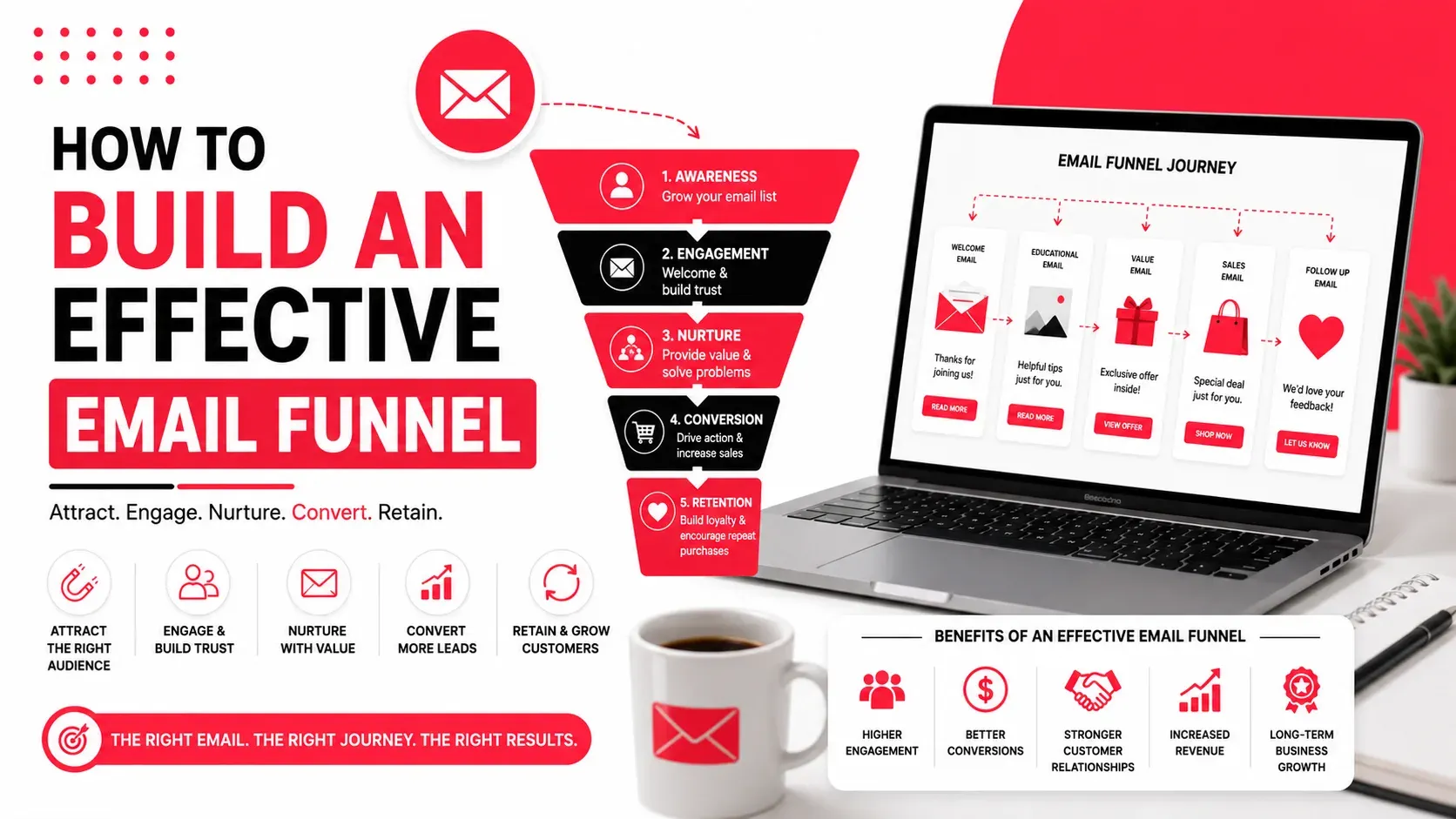
Building an email list is an important first step in digital marketing, but subscribers rarely become customers after receiving just one email. Most people need multiple interactions before they trust a business enough to make a purchase. An effective email funnel guides subscribers through each stage of the customer journey by delivering relevant information, addressing questions, and encouraging meaningful actions over time.
Unlike one-off email campaigns, an email funnel uses automation, personalization, and behavioural triggers to send the right message at the right moment. Whether your goal is generating leads, increasing sales, or improving customer retention, a structured email funnel helps move prospects from initial interest to long-term loyalty.
This guide explains how to build an effective email funnel that nurtures leads, improves engagement, and increases conversions.
Quick Answer
An effective email funnel captures qualified leads, segments subscribers based on their interests and behaviour, delivers valuable automated email sequences, and guides prospects toward conversion through personalized communication. Continuous testing and optimization ensure the funnel remains relevant and effective over time.
What Is an Email Funnel?
An email funnel is a series of strategically planned emails that guide subscribers through different stages of the buying journey.
Rather than sending identical emails to everyone, businesses deliver content based on where each subscriber is in the decision-making process.
An email funnel typically helps businesses:
- Build trust
- Educate prospects
- Address common questions
- Encourage purchases
- Strengthen customer relationships
- Increase repeat business
The objective is to gradually move subscribers from awareness to action while providing value throughout the journey.
Understand the Stages of an Email Funnel
Every successful email funnel supports different stages of the customer lifecycle.
Funnel Stage | Primary Objective |
|---|---|
Awareness | Attract and capture new leads |
Interest | Build credibility and educate subscribers |
Consideration | Demonstrate value and address objections |
Conversion | Encourage purchases or enquiries |
Retention | Strengthen long-term customer relationships |
Advocacy | Encourage referrals and repeat engagement |
Each stage requires different messaging and calls to action.
Start With a Valuable Lead Magnet
People are more likely to share their email address when they receive something useful in return.
Effective lead magnets include:
- Industry guides
- Checklists
- Templates
- Free consultations
- Product demonstrations
- Webinars
- Email courses
- Resource libraries
Your lead magnet should solve a specific problem for your target audience rather than offering generic information.
The more relevant the resource, the higher the quality of leads entering your email funnel.
Create a High-Converting Landing Page
A lead magnet performs best when paired with a dedicated landing page.
Your landing page should include:
- A clear headline
- A concise explanation of the offer
- Key benefits
- A simple sign-up form
- Social proof where appropriate
- One clear call to action
Reducing distractions helps visitors focus on subscribing rather than navigating elsewhere.
Businesses offering digital marketing services often improve lead generation by creating dedicated landing pages for individual campaigns instead of sending traffic to a generic homepage.
Segment Subscribers From the Beginning
Every subscriber has different interests, goals, and purchase intentions.
Segmenting subscribers early allows businesses to deliver more relevant communication.
Common segmentation methods include:
- Industry
- Location
- Products viewed
- Downloaded resources
- Purchase history
- Website behaviour
- Customer lifecycle stage
Relevant communication generally produces higher engagement than sending identical emails to every contact.
Build a Welcome Email Sequence
The welcome sequence introduces new subscribers to your business and establishes expectations for future communication.
A simple welcome funnel might include:
Email One
Welcome the subscriber and deliver the promised resource immediately.
Email Two
Introduce your business, mission, and expertise.
Email Three
Share valuable educational content related to the subscriber's interests.
Email Four
Highlight customer success stories or testimonials.
Email Five
Encourage the subscriber to schedule a consultation, request a quote, or explore your products or services.
A structured welcome sequence helps build familiarity before asking subscribers to make a purchasing decision.
Focus on Education Before Promotion
One of the biggest mistakes businesses make is attempting to sell too quickly.
Instead, nurture leads by providing valuable content that helps subscribers make informed decisions.
Educational emails may include:
- Industry insights
- Practical tips
- Case studies
- Frequently asked questions
- Product comparisons
- Expert advice
- Success stories
Building trust through education creates a stronger foundation for future conversions.
Use Behavioral Triggers
Behavioural automation allows emails to respond to subscriber actions rather than following a rigid schedule.
Examples include:
- Downloading a guide
- Visiting a pricing page
- Viewing a product multiple times
- Starting a free trial
- Abandoning a shopping cart
- Completing a purchase
These triggers ensure subscribers receive communication that reflects their current interests and behaviour.
Automate the Customer Journey
Marketing automation keeps your email funnel running consistently while delivering timely, personalized experiences.
Common automated workflows include:
- Welcome sequences
- Lead nurturing campaigns
- Event reminders
- Product recommendations
- Abandoned cart recovery
- Post-purchase follow-ups
- Customer feedback requests
- Re-engagement campaigns
Automation improves efficiency while allowing businesses to scale communication without sacrificing relevance.
Guide Subscribers Toward Conversion
As subscribers progress through the funnel, your emails should gradually encourage them to take meaningful actions.
Depending on your business goals, conversion emails may invite subscribers to:
- Schedule a consultation
- Request a quotation
- Start a free trial
- Purchase a product
- Book a demonstration
- Register for an event
Rather than using aggressive sales language, focus on explaining how your product or service solves the subscriber's problem.
Strengthen Customer Relationships After Conversion
An effective email funnel continues after the initial conversion.
Post-purchase emails help customers gain more value while increasing long-term engagement.
Useful post-purchase emails include:
- Order confirmations
- Onboarding guides
- Product tutorials
- Helpful usage tips
- Customer support resources
- Review requests
- Cross-selling recommendations
- Loyalty program invitations
Maintaining communication after the sale encourages repeat business and builds stronger customer relationships.
Re-Engage Inactive Subscribers
Some subscribers eventually stop opening emails or interacting with your content.
Instead of removing them immediately, launch a re-engagement sequence.
Examples include:
- Sharing new educational resources
- Asking subscribers to update their preferences
- Offering exclusive content
- Highlighting recent product improvements
- Sending a "We Miss You" campaign
If subscribers remain inactive after multiple attempts, consider removing them from your active list to maintain a healthy sender reputation.
Monitor Funnel Performance
Tracking performance helps identify where subscribers drop out of the funnel.
Important metrics include:
Metric | Why It Matters |
|---|---|
Landing Page Conversion Rate | Measures lead capture effectiveness |
Email Open Rate | Indicates subject line performance |
Click-Through Rate (CTR) | Shows engagement with email content |
Conversion Rate | Measures completed business goals |
Unsubscribe Rate | Indicates subscriber satisfaction |
Bounce Rate | Helps monitor email deliverability |
Customer Retention Rate | Evaluates long-term relationship building |
Reviewing these metrics regularly helps improve every stage of the email funnel.
Continuously Test and Improve
An email funnel should evolve as customer behaviour changes.
Test different elements such as:
- Subject lines
- Email frequency
- Calls to action
- Landing pages
- Email layouts
- Personalization strategies
- Automation timing
- Lead magnets
Small improvements across multiple stages often produce significant gains in overall conversion rates.
Common Email Funnel Mistakes
Many businesses reduce funnel performance by making avoidable mistakes.
Mistake | Better Approach |
|---|---|
Offering weak lead magnets | Create resources that solve specific customer problems |
Sending identical emails to every subscriber | Segment audiences based on behaviour and interests |
Selling too early | Build trust through educational content first |
Ignoring automation | Use behavioural triggers and automated workflows |
No follow-up after purchase | Continue nurturing customers with post-purchase emails |
Never reviewing performance | Optimize the funnel using analytics and testing |
Avoiding these mistakes helps create a smoother customer journey while improving conversion opportunities.
Integrate Your Email Funnel With Other Marketing Channels
Email marketing performs best when supported by other digital marketing activities.
For example:
- SEO attracts long-term organic visitors.
- Content marketing educates potential customers.
- Paid advertising generates qualified leads.
- Social media increases brand awareness.
- Email marketing nurtures leads until they are ready to convert.
An integrated strategy creates consistent messaging across every customer touchpoint and strengthens the overall marketing funnel.
To learn how valuable content supports every stage of your customer journey, explore our blog on Content Marketing Funnel Strategy for UAE Brands, where we explain how educational content helps attract, nurture, and convert qualified leads.
Key Takeaways
- An email funnel guides subscribers from awareness to long-term customer relationships.
- High-value lead magnets attract more qualified subscribers.
- Landing pages should focus on one clear conversion goal.
- Audience segmentation improves personalization and engagement.
- Welcome sequences build trust before promotional emails.
- Behavioural automation delivers relevant messages at the right time.
- Continuous testing and performance analysis improve funnel effectiveness over time.
Build an Email Funnel That Grows With Your Business
An effective email funnel is more than a sequence of automated messages—it is a structured customer journey designed to educate, build trust, and encourage meaningful action at every stage. By combining valuable lead magnets, audience segmentation, behavioural automation, personalized communication, and continuous optimization, businesses can create email experiences that generate qualified leads and strengthen long-term customer relationships.
As customer expectations continue to evolve, businesses that focus on delivering timely, relevant, and helpful communication will be better positioned to improve engagement, increase conversions, and encourage lasting loyalty.
Milaaj Brandset helps businesses develop data-driven email marketing funnels that combine strategic automation, compelling content, and performance optimization to turn prospects into loyal customers while supporting sustainable business growth.
FAQs
What is an email funnel?
An email funnel is a series of automated and strategically planned emails that guide subscribers through different stages of the customer journey, from initial awareness to conversion and long-term retention.
How many emails should an email funnel include?
There is no fixed number. The ideal length depends on your goals, audience, and sales cycle. Many businesses begin with a welcome sequence of three to five emails and expand the funnel based on customer behaviour.
Why is segmentation important in an email funnel?
Segmentation allows businesses to send more relevant emails based on subscriber interests, behaviour, or lifecycle stage, which often improves engagement and conversion rates.
What should happen after a customer makes a purchase?
The funnel should continue with post-purchase communication such as onboarding emails, product tips, review requests, customer support resources, and cross-selling recommendations to strengthen long-term relationships.
How often should an email funnel be optimized?
Email funnels should be reviewed regularly. Monitoring performance metrics and A/B testing different elements helps businesses improve engagement and conversions over time.
Which metrics are most important?
Key metrics include landing page conversion rate, email open rate, click-through rate, conversion rate, unsubscribe rate, bounce rate, and customer retention rate.
Ready to Elevate Your Brand?
Start Your Project Today