May 12, 2026
How to Increase E-commerce Conversion Rates in 2026
Milaaj Editorial / Research Insights
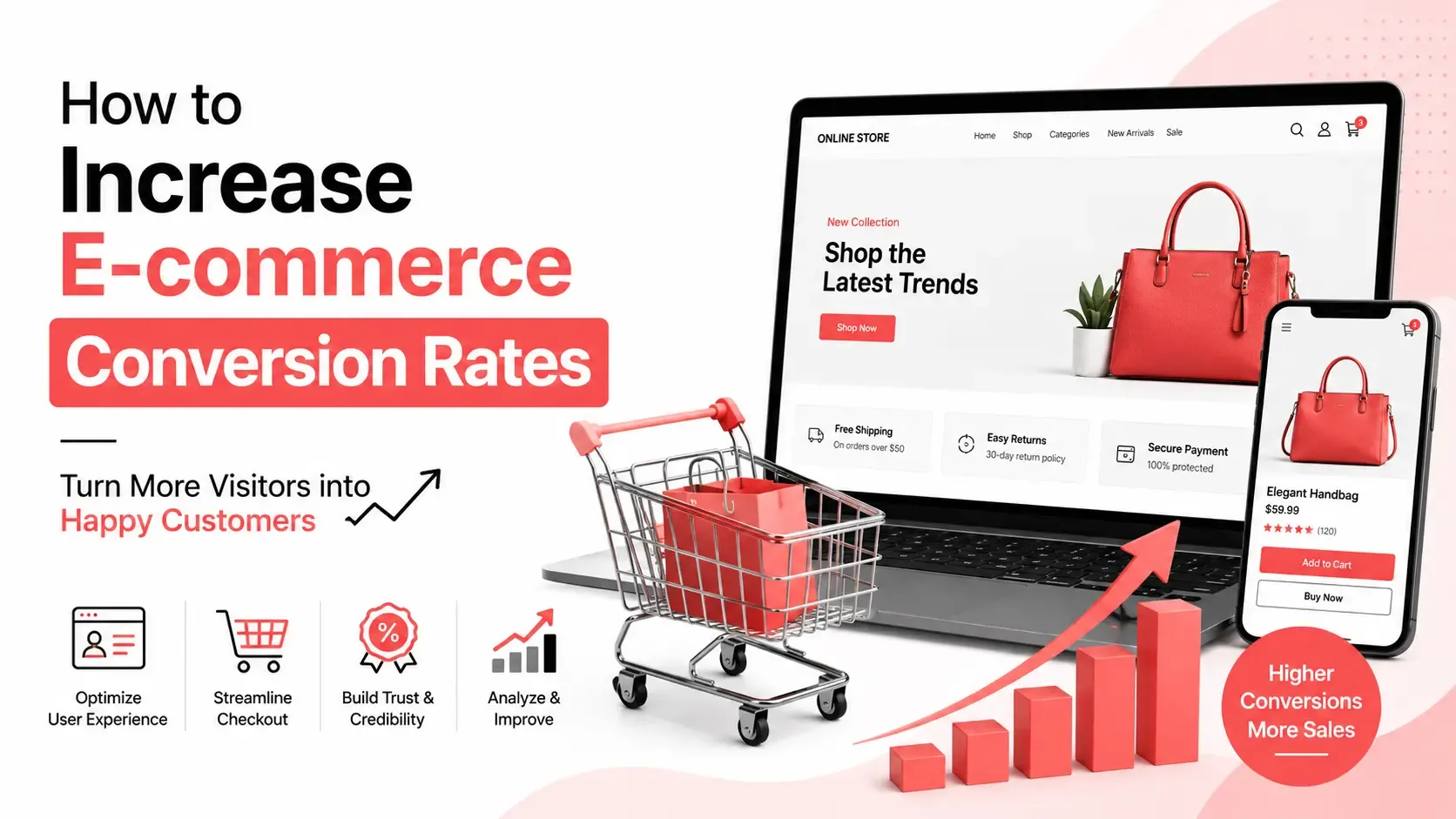
Getting traffic to your ecommerce website is only half the challenge.
The real question is:
Are visitors actually converting into customers?
Many ecommerce businesses invest heavily in SEO, ads, and social media marketing but still struggle with low conversion rates. In most cases, the issue is not traffic volume. It is the shopping experience itself.
A slow website, confusing navigation, weak product pages, or complicated checkout flow can quietly reduce conversions even when traffic numbers look strong.
Modern ecommerce conversion optimization is no longer about small button color changes or random tactics. In 2026, conversion growth depends on how well your website combines:
- user experience
- mobile usability
- trust signals
- website speed
- simplified buying journeys
This guide explains practical strategies businesses can use to improve ecommerce conversion rates and create smoother, higher-performing online shopping experiences.
What is Ecommerce Conversion Rate Optimization?
Ecommerce conversion rate optimization, often called CRO, is the process of improving your website so more visitors complete actions such as:
- purchasing products
- submitting inquiries
- adding items to cart
- signing up for offers
The goal is not simply getting more traffic.
It is converting existing traffic more effectively.
Even small conversion improvements can significantly increase revenue over time.
Why Conversion Rates Matter More Than Traffic Alone
Many ecommerce stores focus heavily on increasing visitors.
But more traffic does not automatically mean more sales.
Example
A store with:
- 10,000 visitors and 1% conversion rate
may generate fewer sales than: - 5,000 visitors with a 4% conversion rate
That is why improving conversion rate is often more cost-effective than endlessly increasing traffic.
1. Improve Website Speed
Website speed directly affects conversions.
Users expect ecommerce websites to load quickly, especially on mobile devices.
Even slight delays increase frustration and abandonment.
Slow Websites Usually Cause
- higher bounce rates
- lower trust
- abandoned carts
- reduced engagement
Key Areas to Optimize
- image compression
- script reduction
- caching
- mobile performance
If your website feels slow, conversion rates usually suffer first.
For businesses focused on improving both UX and performance, our website speed optimization guide explains how speed directly impacts ecommerce behavior and SEO.
2. Simplify the Checkout Process
Checkout friction is one of the biggest reasons users abandon purchases.
The more complicated the checkout process becomes, the lower your conversions tend to be.
High-Converting Checkout Experiences Include
- fewer form fields
- guest checkout options
- clear pricing
- multiple payment methods
- mobile-friendly forms
Users should move from product page to payment with minimal effort.
3. Optimize Mobile Ecommerce Experience
Most ecommerce users in the UAE now shop primarily on mobile devices.
That means mobile UX directly affects sales performance.
Important Mobile Optimization Areas
- fast-loading pages
- thumb-friendly navigation
- simplified product browsing
- mobile checkout optimization
A website that works well on desktop but struggles on mobile will lose significant revenue opportunities.
4. Build Trust Immediately
Trust is one of the biggest conversion factors in ecommerce.
Users hesitate when websites feel unprofessional, outdated, or unclear.
Trust Signals That Improve Conversions
- secure payment badges
- customer reviews
- clear return policies
- professional design
- transparent contact information
Small trust improvements often create noticeable conversion increases.
5. Improve Product Page Experience
Product pages are where buying decisions happen.
Weak product pages reduce conversions even if traffic quality is strong.
High-Converting Product Pages Include
- high-quality images
- clear descriptions
- pricing transparency
- delivery information
- social proof
The goal is reducing uncertainty before purchase.
6. Use Better Call-to-Actions (CTAs)
Your CTA guides users toward action.
Weak or unclear CTAs reduce engagement.
Better Ecommerce CTAs
- Add to Cart
- Buy Now
- Get Yours Today
- Secure Checkout
CTAs should feel visible, clear, and easy to understand.
7. Reduce Cart Abandonment
Cart abandonment remains one of the biggest ecommerce challenges.
Common Reasons Users Leave
- unexpected costs
- forced account creation
- complicated checkout
- slow performance
- payment concerns
Reducing friction at checkout can significantly improve completed purchases.
8. Improve Ecommerce UX and Navigation
Confusing navigation creates frustration.
Users should always know:
- where they are
- where to go next
- how to find products quickly
UX Improvements That Help Conversions
- clear navigation menus
- smart product filtering
- organized categories
- fast search functionality
Good UX reduces cognitive effort and increases purchasing confidence.
9. Optimize for Faster Decision-Making
Modern ecommerce users make decisions quickly.
Your website should support fast decision-making instead of creating delays.
Helpful Conversion Elements
- quick product summaries
- visible pricing
- stock indicators
- simplified comparisons
Clarity improves conversion momentum.
10. Use High-Quality Product Images and Visuals
Users cannot physically inspect products online.
Visual presentation becomes extremely important.
Strong Visual Content Includes
- multiple product angles
- zoom functionality
- lifestyle imagery
- clean product displays
Better visuals reduce hesitation and improve trust.
11. Improve Site Search Functionality
Users using search often have high buying intent.
Poor search experience creates frustration.
Effective Ecommerce Search Includes
- autocomplete suggestions
- typo tolerance
- relevant product results
- category filtering
Good search UX helps users find products faster.
12. Create a Distraction-Free Buying Journey
Too many popups, banners, or interruptions reduce focus.
Keep the Buying Journey Clean
- minimize distractions
- prioritize key actions
- simplify layouts
The easier the process feels, the higher the conversion potential.
What Actually Works in 2026
The highest-converting ecommerce websites today usually share similar characteristics:
- fast mobile performance
- simplified UX
- strong trust signals
- frictionless checkout
- clear product presentation
Modern users value convenience more than complexity.
The brands growing fastest are often the easiest to buy from.
Common Ecommerce Conversion Mistakes
Many businesses unknowingly reduce conversions because of avoidable issues.
Common Problems
- slow mobile performance
- confusing navigation
- too many checkout steps
- unclear product information
- weak trust signals
Fixing even a few of these can improve revenue significantly.
Why UX, Speed, and SEO All Connect
Conversion optimization is not isolated from SEO or website performance.
Everything works together.
Better UX Leads To
- longer engagement
- reduced bounce rate
- improved trust
- stronger conversions
And those same improvements often support SEO performance as well.
That is why successful ecommerce websites treat UX, performance, and SEO as one connected strategy.
Bringing It All Together
Learning how to increase ecommerce conversion rates is ultimately about creating a smoother, faster, and more trustworthy shopping experience.
Users should be able to:
- find products easily
- trust your brand quickly
- complete purchases without friction
From mobile optimization and faster checkout to stronger UX and trust-building design, every improvement contributes to better ecommerce performance.
If you are planning to improve your online store, our E-commerce Website Development in Dubai Guide explains how UX, performance optimization, mobile-first design, and SEO work together to build higher-converting ecommerce websites.
Businesses looking to improve online store performance often benefit from custom ecommerce development focused on speed, usability, and scalable conversion optimization strategies.
Milaaj Brandset helps businesses create ecommerce websites optimized for conversions, performance, user experience, and long-term growth.
FAQs
What is a good ecommerce conversion rate?
Conversion rates vary by industry, but many ecommerce stores aim for 2% to 4% or higher.
Why are ecommerce conversion rates low?
Common reasons include slow speed, poor UX, weak trust signals, and complicated checkout processes.
How can mobile optimization improve conversions?
Most ecommerce users browse on mobile devices, so better mobile UX improves engagement and completed purchases.
Does website speed affect ecommerce sales?
Yes. Slow websites increase bounce rates and reduce completed transactions.
Why is checkout optimization important?
Checkout friction is one of the main causes of cart abandonment.
How do trust signals improve conversions?
They reduce uncertainty and help users feel more comfortable purchasing.
What role does UX play in ecommerce conversions?
Better UX makes navigation, browsing, and purchasing easier for users.
Can SEO improvements increase conversions?
Yes. SEO often improves user experience, page speed, and content clarity, which can positively affect conversions.
Ready to Elevate Your Brand?
Start Your Project Today