August 25, 2026
Internal Linking Strategies for Better SEO
Milaaj Editorial / Research Insights
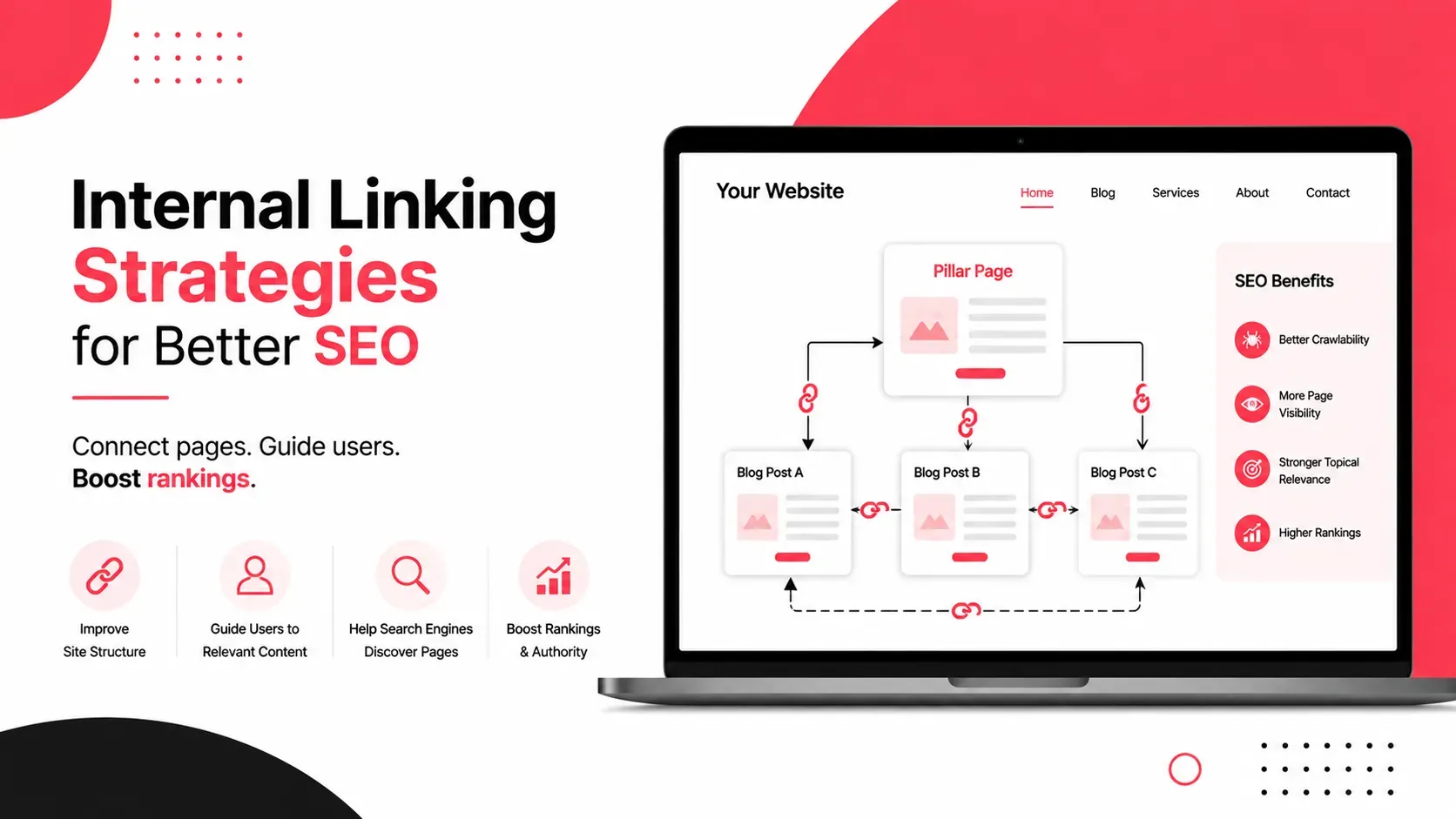
Internal linking is one of the simplest SEO techniques businesses can implement, yet it is often overlooked.
While many website owners focus on backlinks, keywords, and publishing new content, the links connecting pages within their own website can have a major role in helping users navigate content and helping search engines discover and understand page relationships.
A well-planned internal linking strategy can connect related content, strengthen website architecture, guide visitors toward important pages, and create clearer topical relationships.
However, effective internal linking isn't about adding as many links as possible.
The goal is to create useful, relevant connections between pages that make sense for both users and search engines.
Quick Answer
Internal linking is the practice of linking one page on your website to another page on the same website.
Effective internal linking strategies include:
- Adding relevant contextual links within content
- Using descriptive and natural anchor text
- Connecting related articles and service pages
- Building pillar pages and topic clusters
- Linking to important pages strategically
- Finding and fixing orphan pages
- Maintaining a logical website hierarchy
- Using navigation and breadcrumb links appropriately
- Updating older content with relevant new links
- Removing or fixing broken internal links
- Auditing internal links regularly
Internal links don't guarantee higher rankings, but they can improve content discovery, website navigation, crawlability, and the way pages are connected within your site's architecture.
What Is Internal Linking and Why Does It Matter for SEO?
An internal link connects one page on your website to another page on the same domain.
For example, a blog post about technical SEO might naturally link to a detailed article about URL structure.
This creates a relationship between the two pages.
Internal links can help visitors:
- Discover related information
- Navigate between topics
- Find deeper resources
- Move toward relevant services
- Continue through the customer journey
They can also help search engines discover pages and understand how different parts of a website relate to each other.
How Internal Links Help Search Engines Discover Content
Search engines use links to discover and navigate webpages.
A page that is properly connected to other relevant pages is generally easier to discover than a page that has no internal links pointing toward it.
This is particularly important for larger websites with hundreds or thousands of URLs.
Internal links can provide pathways between:
Homepage → Category → Subcategory → Service/Product → Supporting Content
A strong structure gives search engines clearer paths through the website.
Internal Links and Website Navigation
Internal linking isn't exclusively an SEO technique.
It is also a user-experience strategy.
Imagine reading an article about SEO-friendly URLs and seeing a natural link to a more detailed guide about technical SEO.
Instead of searching for that information independently, the visitor can continue directly to the relevant resource.
This creates a smoother experience and encourages visitors to explore more of the website.
Best Internal Linking Strategies for Better SEO
The most effective internal linking strategies are based on relevance, context, hierarchy, and user intent.
Use Contextual Internal Links
Contextual links are links placed naturally within the main content of a page.
For example, an article about website architecture might mention URL organization and link to a relevant guide on SEO-friendly URL structure.
The link makes sense because the destination expands on a concept already being discussed.
Contextual links can be particularly valuable because visitors understand why they are being offered.
Instead of adding links simply because they exist, ask:
Would this page genuinely help someone who is reading this section?
If the answer is yes, the link is likely relevant.
Optimize Internal Link Anchor Text
Anchor text is the clickable text used for a link.
Compare:
Read more
with:
SEO-friendly URL structure
The second option provides much more context.
Good anchor text should:
- Describe the destination
- Sound natural within the sentence
- Give users a reason to click
- Reflect the topic of the linked page
Avoid repeating the exact same keyword excessively across dozens of links.
Internal linking should feel natural rather than engineered around keyword density.
Build Topic Clusters and Pillar Pages
Topic clusters are a useful way to organize related content.
A pillar page provides comprehensive coverage of a broad subject.
Supporting articles then cover narrower topics and link back to the pillar page where appropriate.
For example:
Pillar: SEO for Business Websites
Supporting content:
- SEO-friendly URL structure
- Internal linking strategies
- Technical SEO
- Website speed optimization
- On-page SEO
- Local SEO
These pages can link to one another where the connections are genuinely useful.
This creates a stronger topical structure and makes it easier for visitors to move between related resources.
Link to Important and Underperforming Pages
Don't automatically send most internal links to your homepage.
Important pages may include:
- Core service pages
- Product pages
- Category pages
- High-value resources
- Conversion pages
- Important supporting articles
You can also use internal linking to give more visibility to useful pages that aren't receiving enough internal references.
For example, if an older service page is highly relevant to several newer articles, those articles may provide natural opportunities to link back to it.
Find and Fix Orphan Pages
An orphan page is a page that has no internal links pointing to it from other relevant pages on the website.
These pages can be difficult for users and search engines to discover.
Orphan pages may occur when:
- New content is published without adding links
- Old pages are removed from navigation
- Website structures change
- Content is migrated
- Products or services become disconnected
During an internal linking audit, identify important orphan pages and look for relevant places where they can be linked.
Not every page necessarily needs to be prominent, but valuable indexable content shouldn't accidentally become isolated.
How to Build an SEO-Friendly Internal Linking Structure
Internal linking works best when it reflects the overall architecture of the website.
Create a Logical Page Hierarchy
Your website should have a structure that makes sense.
For example:
Homepage
→ Services
→ SEO Services
→ Local SEO
→ Technical SEO
And:
Blog
→ SEO
→ Technical SEO
→ Content Marketing
This doesn't mean every URL needs multiple folder levels.
The important part is creating logical relationships between pages.
A well-planned website design structure can make navigation and content relationships clearer for both users and search engines.
Connect Related Content
Look for opportunities where one piece of content naturally supports another.
For example:
A blog about ecommerce SEO could link to:
- Ecommerce website design
- Product page optimization
- Technical SEO
- Internal linking
- Website speed
The relationship should be based on topic relevance rather than an arbitrary number of links per article.
Use Navigation and Breadcrumb Links
Not every internal link needs to appear inside an article.
Navigation menus can connect important sections of a website.
Breadcrumbs can also help users understand where a page sits within the website hierarchy.
For example:
Home → Blog → SEO → Internal Linking
These elements can complement contextual links.
However, navigation should remain focused.
A menu containing dozens of links can become difficult to use and can dilute visual hierarchy.
Common Internal Linking Mistakes to Avoid
Internal linking becomes less effective when links are added without considering relevance or usability.
Overusing Internal Links
Adding a link to every other sentence doesn't create a better SEO strategy.
Too many links can:
- Distract readers
- Reduce readability
- Make content look promotional
- Make important links less noticeable
Prioritize quality and relevance.
Using Irrelevant or Generic Anchors
A link saying "click here" provides little context.
Likewise, linking unrelated pages simply because you want to create more internal links can weaken the user experience.
Anchor text should accurately represent the destination.
Linking Only to the Homepage
The homepage is important, but it shouldn't receive every internal link.
A healthy internal linking structure distributes connections throughout relevant sections of the website.
Ignoring Broken Internal Links
Broken links create poor user experiences and can interfere with efficient website navigation.
Regularly check for links pointing to:
- Deleted pages
- Incorrect URLs
- Redirect chains
- Moved content
When a relevant page has permanently moved, update internal links to point directly to the current URL instead of relying unnecessarily on redirects.
Ignoring Older Content
Older articles can become valuable internal-linking assets.
When publishing a new article, search your existing content for relevant pages that could naturally link to the new resource.
Likewise, revisit older articles and add links to useful newer content where appropriate.
How to Audit and Improve Your Internal Links
An internal linking audit doesn't have to be complicated.
Start by creating an inventory of important pages.
Identify:
- Main service pages
- Important product pages
- Category pages
- High-performing articles
- Pages receiving organic traffic
- Valuable but underlinked pages
- Orphan pages
Then review the relationships between them.
Ask:
Does every important page have relevant internal links pointing toward it?
Are related articles connected?
Are anchor texts descriptive?
Are there broken internal links?
Are some pages receiving excessive internal links while others receive almost none?
Can older content naturally link to newer pages?
The goal isn't to reach a specific number of links.
It is to create a structure where valuable pages are discoverable, connected, and useful to visitors.
For businesses that want to combine internal linking with broader technical and on-page optimization, SEO services in Dubai can address internal architecture as part of a wider SEO strategy.
Key Takeaways
- Internal linking connects pages within the same website.
- Good internal links improve content discovery and navigation.
- Contextual links are valuable when they genuinely expand on the topic being discussed.
- Descriptive anchor text gives users and search engines more context.
- Topic clusters can connect pillar pages with supporting content.
- Important service, product, and content pages should be strategically connected.
- Orphan pages should be identified and reviewed.
- Navigation and breadcrumbs can support the broader internal linking structure.
- Avoid excessive, irrelevant, or repetitive links.
- Regularly update older content with relevant links to newer resources.
- Fix broken internal links and avoid unnecessary redirect chains.
- Internal linking should support users first while creating a logical website architecture.
Conclusion
Internal linking is one of the most practical ways to improve the structure of a website.
It helps visitors discover related information, gives search engines clearer pathways through your content, and connects individual pages into a more understandable website architecture.
But effective internal linking isn't about chasing a specific number of links.
The strongest strategy is based on relevance and context.
Link pages when the connection is useful. Use descriptive anchor text. Connect related content. Give important pages appropriate visibility. Review older content regularly and remove broken or irrelevant links.
As your website grows, internal linking should evolve with it.
For businesses looking to strengthen their search visibility, SEO services can help integrate internal linking with technical SEO, content strategy, site architecture, and broader organic search optimization. Milaaj Brandset helps businesses build digital strategies that connect individual SEO improvements with wider business objectives.
Ultimately, a good internal linking strategy does more than help search engines.
It helps the right visitor find the right page at the right time.
Frequently Asked Questions
How many internal links should a page have?
There is no universal ideal number. The appropriate number depends on the length and purpose of the page. Add links when they provide genuine value rather than targeting a fixed quantity.
Do internal links help Google discover pages?
Yes. Internal links provide pathways through which search engines can discover and navigate website content. A logical linking structure can make important pages easier to find.
What is the best anchor text for internal links?
Descriptive, natural anchor text that accurately explains the destination is generally preferable to generic phrases such as "click here."
Should every blog post link to a service page?
Not necessarily. A service link should be included when the service is genuinely relevant to the article and useful to the reader. Forced links can make content feel promotional.
What are orphan pages in SEO?
Orphan pages are pages that have no internal links pointing to them from other pages on the website. Important orphan pages should be reviewed and connected where appropriate.
Should internal links open in a new tab?
For most standard internal navigation, opening links in the same tab is generally simpler and more predictable. New tabs may be appropriate in specific situations, but they shouldn't be used automatically for every internal link.
Ready to Elevate Your Brand?
Start Your Project Today