September 8, 2026
How Much Does It Cost to Build a Mobile App in Dubai in 2026-27?
Milaaj Editorial / Research Insights
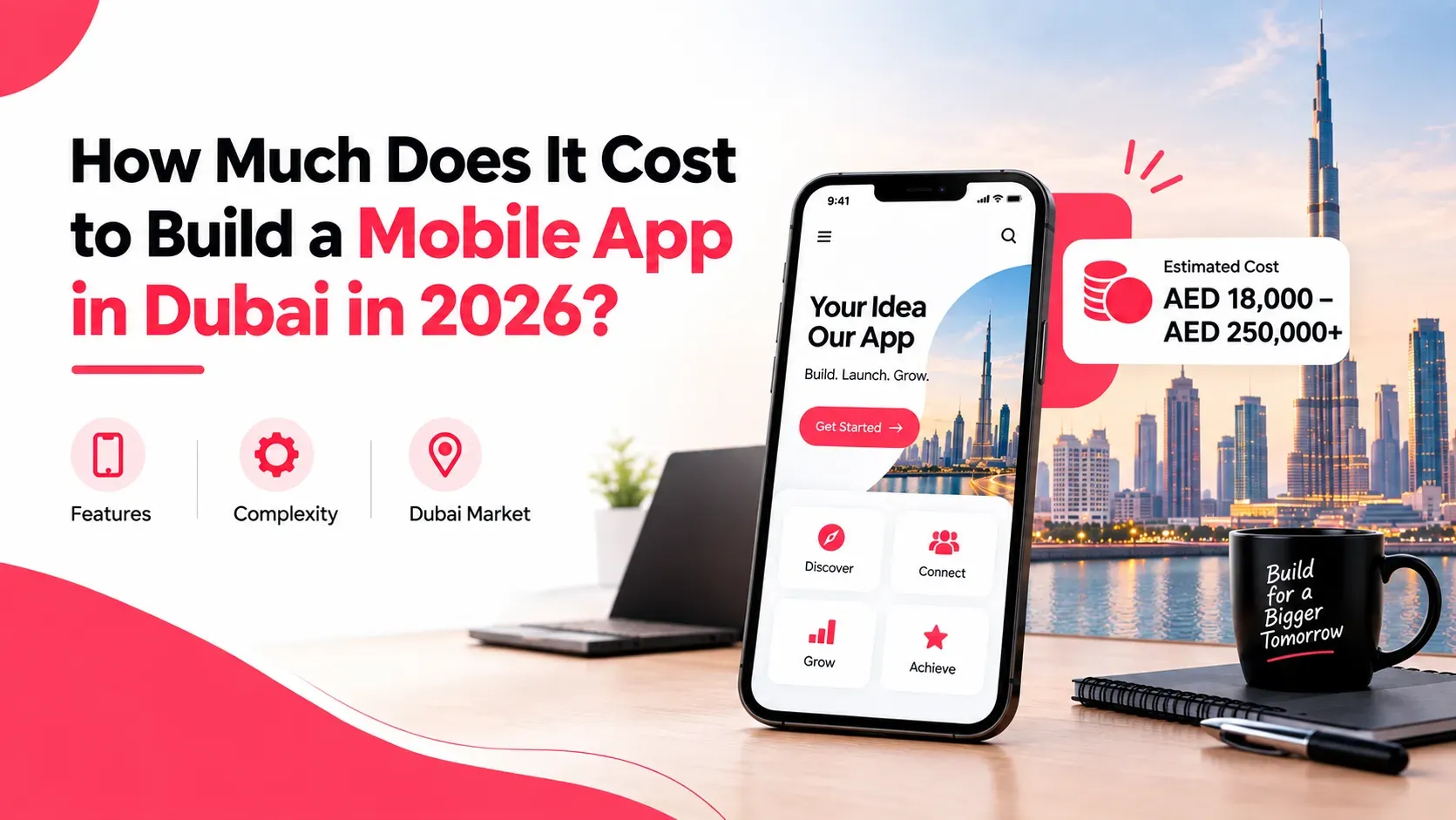
You've got an app idea. Maybe it's for your restaurant, your real estate business, or a service you think Dubai customers would actually use. So you reach out to a few developers, and the quotes come back anywhere from 15,000 AED to 400,000 AED for what sounds like the same app.
That gap isn't a scam. It's usually a sign that each vendor is quoting a completely different level of complexity, even if your brief sounded identical to all of them.
This guide breaks down exactly what drives mobile app costs in Dubai right now, so you can walk into your next vendor conversation knowing what a fair quote actually looks like.
Quick Answer
A simple mobile app in Dubai typically costs between AED 40,000 and 80,000, a mid-complexity app with custom features and a backend runs AED 80,000 to 200,000, and a complex or enterprise-grade app can exceed AED 200,000. The final number depends heavily on features, design complexity, platform choice, and ongoing maintenance needs.
Key Takeaways
- App cost is driven mainly by feature count, design complexity, and backend requirements, not just the platform you choose.
- Building for both iOS and Android using a cross-platform framework like Flutter is usually cheaper than building two separate native apps.
- Most businesses underestimate ongoing costs like app store fees, server hosting, and post-launch maintenance.
- Freelancers often look cheaper upfront but can cost more long-term through slower delivery, limited testing, and less accountability.
- A clear feature list before you request quotes is the single biggest factor in getting accurate, comparable pricing from vendors.
What Determines the Cost of a Mobile App in Dubai?
Every app quote comes down to three core variables. Understanding these before you talk to a developer will help you spot an inflated quote, and just as importantly, spot a quote that's too low to be realistic.
App Complexity and Feature Count
A simple app with a handful of screens and no real backend logic costs far less than an app with real-time messaging, in-app payments, or booking systems. Features that typically push cost up include:
- User accounts with login and profile management
- In-app payments or subscription billing
- Real-time chat or notifications
- Booking, scheduling, or reservation systems
- Multi-language support, especially Arabic and English with right-to-left layouts
- Offline functionality that syncs once the user reconnects to the internet
- Admin dashboards for managing content, orders, or users from the backend
Each of these adds not just build time, but testing time too. A booking system, for example, needs to be tested against double-bookings, time zone edge cases, and cancellation flows, which is why a "simple booking feature" rarely stays simple once development actually starts.
Design and UX Complexity
A template-style interface with standard components is quick to build. A fully custom design with animations, unique navigation patterns, or a heavily branded experience takes considerably more design and development time, and that time shows up directly in your invoice.
Backend, APIs, and Third-Party Integrations
Many apps need to talk to other systems, whether that's a payment gateway, a CRM, a delivery service API, or your existing inventory software. Each integration adds development and testing time, and integrations with less-documented or older systems tend to take longer than expected.
If you're also deciding between native development and a cross-platform framework, our breakdown of Flutter versus React Native for UAE startups covers how that choice affects both cost and long-term flexibility.
Mobile App Development Cost Breakdown by App Type
Here's a general cost range based on app complexity for the Dubai market. These are directional figures meant to help you budget, actual quotes will vary by vendor and exact feature scope.
App Type | Typical Features | Estimated Cost Range (AED) |
|---|---|---|
Simple / MVP | Basic screens, no complex backend, minimal integrations | 40,000 - 80,000 |
Mid-complexity | Custom UI, user accounts, backend, 1-3 integrations | 80,000 - 200,000 |
Complex / Enterprise | Advanced features, multiple integrations, high security, scalability needs | 200,000+ |
iOS App Development Costs in Dubai
iOS development in Dubai tends to sit at a similar cost to Android for comparable features, though a few factors are specific to the platform.
Apple's design guidelines are stricter, which can mean more polish time during development. Testing also needs to account for a narrower range of devices compared to Android's much wider hardware variety, which can actually save some testing time.
One cost that's easy to overlook is the Apple Developer Program annual membership fee, required to publish and maintain any app on the App Store. It's a small recurring cost, but worth budgeting for from day one.
If your business is targeting a higher-income customer base, which iOS users in the UAE often represent, our iOS app development team can help you scope a build that matches both your budget and your audience's expectations.
Android and Cross-Platform Development Costs
Android development in the UAE generally involves testing across more device sizes and Android versions, which can add some quality assurance time compared to iOS. However, Android's larger global user base often makes it the priority platform for consumer apps aiming at broad reach.
For most businesses building for both platforms, a cross-platform framework is the more cost-effective route. Rather than building and maintaining two separate codebases, one codebase runs on both iOS and Android with only minor platform-specific adjustments needed.
Our Android app development team can advise whether native Android, or a cross-platform build covering both operating systems, makes more financial sense for your specific use case.
Hidden Costs Businesses Often Forget
The build cost is usually just the first line of the budget. A few recurring costs catch businesses off guard after launch:
- App store fees: Apple charges an annual developer program fee, while Google Play requires a one-time registration fee to publish apps on the platform
- Server and hosting costs: Ongoing charges that scale with your user base and data usage, and typically grow as your app gains traction
- Third-party API costs: Payment gateways, mapping services, and SMS or notification providers often charge based on usage volume, so costs rise alongside your app's success rather than staying fixed
- Maintenance and updates: Operating system updates from Apple and Google regularly require app updates to stay compatible, and skipping these can eventually get your app removed from the store
- App Store Optimization (ASO) and marketing: Getting downloaded is a separate cost from getting built. A polished app with zero visibility in app store search results won't generate the returns you're expecting
If you've already worked through website cost planning, our website cost guide for Dubai businesses walks through a similar hidden-cost breakdown that applies to most digital projects, not just apps.
In-House Team vs Freelancer vs Agency: Which Costs Less Long-Term?
On paper, a freelancer usually quotes the lowest price. In practice, the total cost of ownership tells a different story:
- Freelancers are often the cheapest upfront, but a single point of failure. If they become unavailable mid-project or after launch, you may need to pay someone else to learn the codebase from scratch before they can even start fixing anything.
- In-house teams offer the most control and are worth it if you're building multiple apps or need constant iteration, but the fixed salary and hiring cost only makes sense at a certain scale.
- Agencies typically cost more than a freelancer per hour, but bring project management, testing, and a team structure that reduces the risk of the project stalling if one person leaves or gets overloaded.
For most SMEs building their first app, an agency tends to offer the best balance of cost predictability and delivery reliability, especially for anything beyond a very simple MVP.
How to Reduce Mobile App Development Costs Without Cutting Quality
You don't have to choose between a good app and an affordable one. A few practical ways to control cost:
- Start with an MVP covering only your core features, then add functionality based on real user feedback
- Choose a cross-platform framework instead of building two native apps from scratch
- Reuse existing backend infrastructure or APIs instead of building everything custom
- Get a detailed, feature-by-feature quote so you can see exactly where the budget is going, rather than a single lump sum
Our Flutter app development service is built around exactly this approach, giving you a single codebase that reaches both iOS and Android users without doubling your development cost.
Is It Worth Investing in a Mobile App for Your Dubai Business in 2026-27?
For businesses with repeat customers, like restaurants, clinics, salons, or service providers, an app can genuinely pay for itself through loyalty features, faster bookings, and direct communication that doesn't rely on social media algorithms.
For businesses with occasional or one-time purchases, a well-built mobile website often delivers the same customer value at a fraction of the cost, at least until your customer base is large enough to justify app maintenance long-term.
If you're weighing whether an app is the right investment for your specific business model, our mobile app development team can help you map out realistic costs against expected returns before you commit budget to a build.
What Different Types of Businesses Typically Spend
Cost varies a lot by industry, mostly because of how much backend complexity each use case genuinely needs.
- Restaurants: Usually fall in the simple to mid-complexity range, covering menu browsing, ordering, and loyalty points. Costs climb if you add live order tracking or delivery driver integration.
- Real estate: Tends to land in mid-complexity to complex, since listings, map integration, saved searches, and agent messaging all add backend requirements.
- Clinics and healthcare: Often mid-complexity due to appointment booking, patient records, and the extra security and data handling care that healthcare data requires.
- Retail and e-commerce: Ranges widely depending on catalog size, payment integrations, and whether you need inventory syncing with an existing system like an ERP.
These are general patterns, not fixed rules. A restaurant app with a full loyalty and rewards engine can easily cost more than a basic real estate listings app, so use your actual feature list as the real cost driver, not just your industry.
Frequently Asked Questions
How much does it cost to build a mobile app in Dubai?
Costs typically range from AED 40,000 for a simple app to AED 200,000 or more for a complex, feature-rich app. The exact number depends on feature count, design complexity, and backend requirements.
What factors affect mobile app development cost?
The biggest factors are the number and complexity of features, the level of custom design, backend and API integrations, and whether you're building for one platform or both iOS and Android.
Is it cheaper to build for iOS or Android first?
Development costs for iOS and Android are usually similar for comparable features. The bigger cost saving comes from using a cross-platform framework to build for both platforms at once, rather than choosing one platform over the other.
How much does app maintenance cost after launch?
Maintenance typically runs 15-20% of the original build cost per year, covering operating system updates, bug fixes, server costs, and minor feature improvements to keep the app running smoothly.
Should I hire a freelancer or an agency for app development in Dubai?
Freelancers can work well for very simple, low-risk projects with a tight budget. For anything with real business impact, an agency generally offers more reliability through project management, structured testing, and a team that isn't a single point of failure.
Final Thoughts
There's no single correct answer to what a mobile app should cost, but there is a correct way to approach the question: start with your actual feature needs, get detailed quotes rather than lump sums, and budget for the ongoing costs that come after launch, not just the initial build.
Once you know what you actually need, comparing vendor quotes becomes a lot less stressful, and a lot harder for anyone to overcharge you on. Whether you're planning a simple MVP or a fully custom platform, the team at Milaaj Brandset can help you scope a realistic budget before you commit to a build.
Ready to Elevate Your Brand?
Start Your Project Today