September 1, 2026
NLP Keywords Explained for SEO Beginners: A Simple Guide
Milaaj Editorial / Research Insights
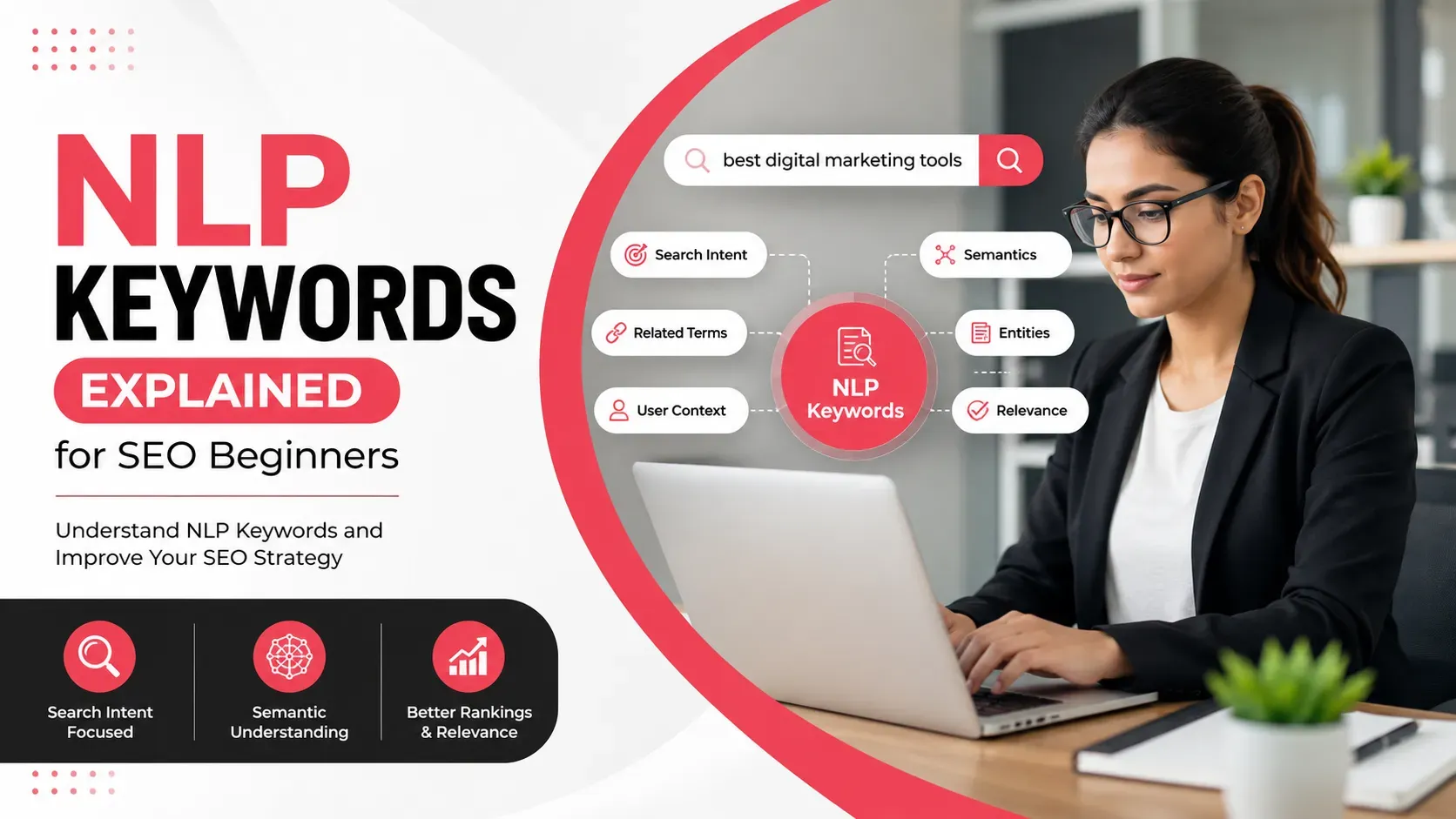
SEO has changed significantly from the days when ranking a webpage meant repeating the same keyword throughout an article.
Modern search engines are much better at understanding language, context, topics, entities, relationships, and user intent. This is where the concept of NLP keywords often enters SEO discussions.
You may have seen SEO tools recommend NLP keywords or related terms and wondered what they actually mean.
The good news is that the concept is simpler than it sounds.
NLP stands for Natural Language Processing, a branch of artificial intelligence that helps computers understand and process human language. In SEO, NLP is relevant because search engines use language-understanding systems to interpret queries and content.
However, there is an important misconception to clear up: NLP keywords are not a secret list of words you need to insert into an article to rank higher.
Instead, they are useful ways of thinking about the words, concepts, entities, and relationships that naturally occur around a topic.
Quick Answer
NLP keywords are words and phrases that provide contextual information about a topic and help describe its meaning.
For example, if your main topic is "SEO," naturally relevant terms might include:
- Search engines
- Keywords
- Search intent
- Organic traffic
- Rankings
- Technical SEO
- Content
- Backlinks
- Search results
These related concepts help create a clearer picture of the subject.
For SEO beginners, the most important rule is:
Don't write content by stuffing NLP keywords into every paragraph.
Instead:
- Understand the main topic.
- Identify the searcher's intent.
- Research related concepts and questions.
- Cover important subtopics naturally.
- Use relevant terminology where it improves clarity.
- Build connections between related pages.
- Prioritize helpful content over keyword density.
What Are NLP Keywords in SEO?
The phrase NLP keywords is commonly used in SEO to describe terms that help provide context around a primary topic.
It comes from Natural Language Processing, which enables computers to process and interpret human language.
Search engines can analyze more than individual words. They can interpret relationships between words and concepts.
For example, consider an article about digital marketing.
It may naturally mention:
- SEO
- Social media
- Paid advertising
- Content marketing
- Email marketing
- Conversion rates
- Analytics
- Customer acquisition
These terms aren't necessarily synonyms for "digital marketing."
They are related concepts.
Together, they provide contextual information about the subject.
What NLP Means
Natural Language Processing combines concepts from artificial intelligence, linguistics, and computer science to help machines work with human language.
Applications of NLP can include:
- Understanding search queries
- Language translation
- Text classification
- Sentiment analysis
- Speech-related systems
- Question answering
- Information extraction
For search engines, language understanding helps determine what a user is asking and which information may be relevant.
Are NLP Keywords a Google Ranking Factor?
It's important not to treat "NLP keywords" as an official Google ranking factor.
Google doesn't provide a ranking requirement saying that webpages need a particular number of NLP keywords.
Instead, search engines use sophisticated systems to understand language and relevance.
This means SEO practitioners should focus on creating content that clearly covers the subject rather than trying to reverse-engineer a specific NLP keyword checklist.
NLP Keywords vs Traditional Keywords
Traditional keyword research often focuses on identifying phrases people search for.
For example:
Primary keyword:
SEO services in Dubai
Related phrases could include:
- SEO agency Dubai
- SEO company Dubai
- search engine optimization Dubai
- SEO consultant Dubai
An NLP-focused perspective goes further by considering the broader concepts associated with the subject:
- Keyword research
- Technical SEO
- On-page optimization
- Local SEO
- Search rankings
- Organic traffic
- Search intent
- Content optimization
Both approaches can be useful.
The difference is that modern content optimization should consider topic relevance and context, not just exact keyword repetition.
How Search Engines Understand Content
Search engines need to determine what a page is about and whether it satisfies a particular search.
Context and Meaning
The same word can have different meanings depending on context.
Consider the word "Apple."
It could refer to:
- A fruit
- A technology company
- A product
- A brand
The surrounding words provide context.
An article discussing iPhones, MacBooks, iOS, and the App Store clearly has a different meaning from an article discussing fruit, nutrition, and recipes.
This illustrates why context is so important.
A webpage should make its subject clear through its overall content rather than relying on repeated keywords.
Entities and Relationships
An entity is a distinct and identifiable thing, such as a person, company, place, product, organization, or concept.
Semantic relationships between entities can provide useful context.
For example:
Google → Search → SEO → Keywords → Content → Rankings
Or:
Dubai → Business → Digital Marketing → SEO → Organic Traffic
The more clearly a page explains relevant relationships, the easier it can be for readers and search systems to understand the subject.
Search Intent
Search intent describes what someone is trying to accomplish with a search.
For example:
"What is NLP in SEO?"
This has informational intent.
The person wants an explanation.
Meanwhile:
"SEO agency Dubai"
has stronger commercial or transactional intent.
The person may be looking for a provider.
This is why simply including related terms isn't enough.
Your content needs to satisfy the purpose behind the search.
For a deeper understanding, see our guide to search intent optimization and how aligning content with user needs can support better search performance.
Natural Language and Semantic Search
People don't always search using exact keywords.
Someone might search:
"How do I get my website to appear higher on Google?"
Another person might search:
"Ways to improve Google rankings."
The wording is different, but the underlying subject can be similar.
Modern search systems are designed to understand these kinds of relationships.
That makes natural, comprehensive writing increasingly important.
How to Find NLP Keywords for SEO
You don't need a special tool that generates a magical list of ranking words.
Instead, approach NLP keyword research as topic and context research.
Start With Your Primary Topic
Begin with the main subject of your page.
For example:
Primary topic: Website maintenance
Then identify important concepts related to it:
- Website security
- Software updates
- Backups
- Website performance
- Broken links
- Mobile usability
- SEO
- Monitoring
These concepts can help you understand the topic more completely.
Analyze Search Results
Search your primary keyword and examine the pages ranking for it.
Look for recurring concepts.
If many high-quality pages discuss similar subtopics, that can indicate what users expect from the subject.
Don't copy competitors.
Instead, ask:
What information appears consistently because it is genuinely useful?
Then determine how you can explain it more clearly or provide additional value.
Use Related Searches and Questions
Search engines can provide related questions and searches that reveal additional user needs.
For example, someone searching for "website maintenance" may also want to know:
- How often should a website be maintained?
- What does website maintenance include?
- Does website maintenance affect SEO?
- How much does website maintenance cost?
These questions can help expand your content outline.
Identify Important Entities and Concepts
Make a list of important entities associated with your topic.
For an article about ecommerce SEO, these might include:
- Product pages
- Category pages
- Search engines
- Google
- Structured data
- Product schema
- Internal links
- Site architecture
- Search intent
You don't need to mention every possible entity.
Only include concepts that genuinely contribute to the topic.
Use Keyword and Content Research Tools
SEO tools can help discover:
- Related keywords
- Search queries
- Questions
- Competitor topics
- Keyword variations
- Content gaps
But treat tool recommendations as research inputs, not mandatory words.
If a tool suggests a term that doesn't make sense in your article, don't force it into the content.
Human relevance should come first.
How to Use NLP Keywords Naturally
Once you've researched related concepts, the next step is using them appropriately.
Write for People First
Your first objective should be helping the reader.
Write sentences that are:
- Clear
- Accurate
- Natural
- Easy to understand
- Relevant to the topic
Don't write awkward sentences simply because you want to include a particular keyword.
For example, this sounds unnatural:
Instead, explain the subject naturally and use terminology where it fits.
Cover Related Subtopics
Comprehensive content naturally includes related terminology.
If you're explaining technical SEO, it may be appropriate to discuss:
- Crawling
- Indexing
- Site speed
- XML sitemaps
- Canonical URLs
- Structured data
- Mobile usability
This isn't keyword stuffing.
You're simply explaining the subject properly.
Use Keywords in Relevant Sections
Place important terminology where it makes sense.
For example:
- Main keyword in the title
- Related concepts in headings
- Relevant terms in body content
- Entities where appropriate
- Descriptive anchor text for internal links
Don't try to distribute every related phrase evenly throughout the article.
Some terms may only need to appear once.
Improve Topical Context
Think about how each section contributes to the overall subject.
If the main topic is content marketing, explaining how content attracts organic traffic, supports customer education, and contributes to lead generation creates useful context.
This is more valuable than repeating "content marketing" in every paragraph.
NLP Keywords, Semantic SEO, AEO, and AI Search
NLP concepts are closely related to the broader shift toward semantic search and AI-powered information retrieval.
How Semantic SEO Connects With NLP
Semantic SEO focuses on meaning and relationships.
NLP helps machines process human language.
Together, these ideas highlight why modern content should go beyond exact-match keywords.
A strong semantic SEO strategy can involve:
- Topic coverage
- Search intent
- Entities
- Related concepts
- Internal linking
- Content relationships
- Natural language
This creates a more complete representation of a subject.
Preparing Content for AI-Powered Search
AI-powered search experiences often need to identify relevant information and understand relationships between concepts.
Content can become easier to interpret when it has:
- Clear headings
- Direct answers
- Well-defined concepts
- Logical structure
- Concise explanations
- Relevant examples
- Trustworthy information
This doesn't mean writing content specifically to "trick" AI systems.
The same characteristics that make information understandable to people can also make it easier for automated systems to process.
Making Information Easy to Understand and Extract
Consider how you answer questions.
Instead of hiding an answer in a long paragraph, provide a direct response followed by supporting details.
For example:
What are NLP keywords?
NLP keywords are contextually relevant words and phrases that help describe a topic and its associated concepts.
Then explain the concept in greater depth.
This structure works well for readers and can also make information easier to identify in answer-focused search experiences.
Common NLP Keyword Mistakes Beginners Should Avoid
Understanding what not to do is just as important.
Treating NLP Keywords as a Checklist
One of the biggest mistakes is believing every suggested term must appear on the page.
They don't.
If a keyword isn't relevant, leave it out.
Overusing Related Terms
Adding the same related phrases repeatedly can make content unnatural.
Search engines don't need you to mention a concept in every paragraph.
Use terminology when it contributes to meaning.
Ignoring Search Intent
You can include hundreds of relevant terms and still create poor content if you don't answer the user's actual question.
Always establish intent before optimization.
Creating Content for Algorithms Instead of Readers
If an article sounds robotic, repetitive, or unnatural, optimization has gone too far.
Readers should be able to understand the content without noticing the SEO strategy behind it.
How to Measure NLP-Focused SEO Content
There isn't a single NLP SEO score that determines whether content will rank.
Instead, monitor meaningful SEO and business metrics.
These can include:
- Organic impressions
- Organic clicks
- Keyword rankings
- Rankings for related queries
- Organic traffic
- Engagement
- Internal link clicks
- Leads
- Conversions
Pay particular attention to whether your page starts appearing for a broader range of relevant searches.
For example, an article may initially target one primary keyword but eventually gain impressions for several related searches.
That can indicate that the page is providing useful topical coverage.
However, ranking for more keywords isn't automatically a success.
The traffic should be relevant to your audience and business objectives.
Key Takeaways
- NLP stands for Natural Language Processing.
- NLP helps computers process and understand human language.
- "NLP keywords" are commonly used to describe contextually relevant terms and concepts surrounding a topic.
- They are not a secret list of words that guarantee Google rankings.
- Search intent is more important than keyword repetition.
- Entities and relationships help provide contextual meaning.
- Related keywords should be used naturally rather than forced into content.
- SERP analysis, related questions, and topic research can help identify useful concepts.
- Semantic SEO focuses on meaning, context, and relationships.
- Clear structure can support AEO and AI-powered search experiences.
- Don't create separate pages or add terms simply because an SEO tool suggests them.
- Measure actual organic visibility, relevant traffic, leads, and conversions.
Conclusion
NLP keywords can sound complicated when you're first learning SEO, but the underlying idea is straightforward.
Search engines are getting better at understanding language and context, so your content should do the same.
Instead of writing an article around one keyword and repeating it throughout the page, start with the topic and understand what your audience actually wants.
Research related questions.
Identify important concepts and entities.
Understand search intent.
Then create useful content that explains the subject naturally.
If you're writing about technical SEO, discuss the concepts that genuinely belong to technical SEO. If you're writing about content marketing, explain the related processes and outcomes that readers need to understand.
You don't need to insert every related keyword suggested by an SEO tool.
In fact, doing so can make content worse.
The better approach is to use NLP concepts as a research framework for understanding how your topic is represented through language and related ideas.
This becomes even more important as search evolves toward semantic understanding, conversational queries, AEO, and AI-powered search.
For businesses that want to turn this approach into a broader organic search strategy, SEO services in Dubai can combine keyword research, content optimization, technical SEO, internal linking, and semantic strategies to improve search visibility.
Milaaj Brandset helps businesses connect these SEO activities with broader digital growth goals.
Ultimately, successful SEO isn't about finding a secret collection of words.
It's about understanding what people are searching for, understanding the topic deeply, and communicating that information clearly.
Frequently Asked Questions
What are NLP keywords?
NLP keywords are commonly described as words and phrases that provide contextual information about a topic. They help represent the concepts and terminology naturally associated with a subject.
Are NLP keywords a Google ranking factor?
"NLP keywords" aren't an official Google ranking factor. Search engines use language understanding and many other systems to determine relevance, but there is no required NLP keyword list that guarantees rankings.
How do I find NLP keywords?
You can identify relevant terms by analyzing search results, related searches, People Also Ask questions, competitor content, keyword research tools, and the concepts naturally associated with your primary topic.
Should I use every NLP keyword suggested by an SEO tool?
No. SEO tools provide suggestions for research. Only use terms that are genuinely relevant and improve the content. Forcing unrelated keywords into an article can make it less useful and natural.
Are NLP keywords the same as LSI keywords?
Not exactly. "LSI keywords" is an outdated and often misused SEO term. NLP is a broader concept involving how computers process language, while related terms and concepts are simply part of creating contextually relevant content.
Does NLP SEO help rankings?
Creating content with strong topical relevance and natural language can support SEO, but NLP keyword usage alone doesn't guarantee rankings. Content quality, search intent, technical SEO, authority, competition, and many other factors also matter.
How does NLP relate to semantic SEO?
NLP helps machines process language, while semantic SEO focuses on meaning, context, entities, and relationships between concepts. They are related ideas that help explain why modern SEO should go beyond exact keyword matching.
Can NLP optimization help with AI search?
Well-structured, context-rich, accurate content can make information easier for search systems and AI-powered experiences to understand. However, there is no guaranteed formula for appearing in AI-generated search answers.
Should I increase keyword density for NLP SEO?
No. Keyword density should not be the primary goal. Focus on naturally explaining the topic, answering search intent, and covering relevant concepts thoroughly.
Is long-form content better for NLP SEO?
Not automatically. Long-form content can provide greater topical coverage when a subject requires it, but unnecessary length doesn't improve content quality. The ideal length is whatever is needed to satisfy the searcher's intent comprehensively.
Ready to Elevate Your Brand?
Start Your Project Today