August 5, 2026
Product Page Optimization Strategies for Ecommerce
Milaaj Editorial / Research Insights
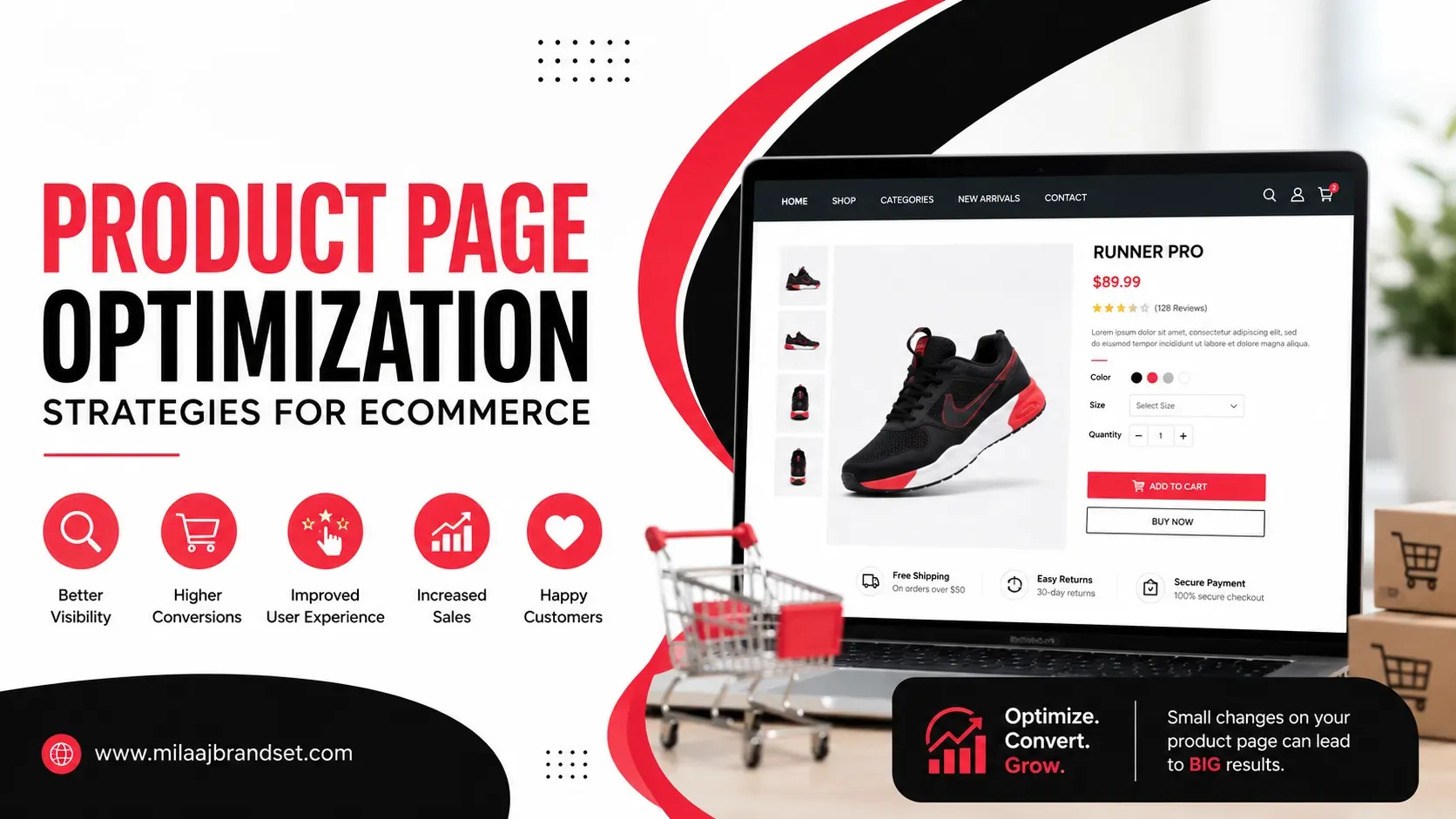
Every ecommerce sale reaches a critical moment on the product page. By the time shoppers arrive there, they've already discovered your brand, explored your catalogue, and shown interest in a specific item. The question is no longer whether they need a product, it's whether your product page provides enough confidence to complete the purchase.
High-converting product pages do far more than display images and prices. They answer customer questions, remove uncertainty, highlight value, and guide shoppers naturally toward the next step. Even seemingly small details such as the placement of the "Add to Cart" button, the quality of product photography, or the clarity of delivery information can influence buying decisions.
Optimizing product pages is therefore one of the highest-impact improvements an ecommerce business can make. Rather than increasing advertising budgets or driving more traffic, businesses often achieve stronger results by helping existing visitors convert more effectively.
This guide explores practical product page optimization strategies that improve customer experience, strengthen trust, and increase ecommerce sales.
Quick Answer
Product page optimization focuses on improving every element that influences a customer's purchasing decision. High-quality visuals, persuasive product descriptions, customer reviews, transparent pricing, trust signals, mobile-friendly layouts, and clear calls to action work together to increase conversions while reducing cart abandonment.
Why Product Pages Influence Buying Decisions
Unlike category pages or homepages, product pages are where customers evaluate whether a product meets their needs.
Before completing a purchase, shoppers typically want answers to questions such as:
- What makes this product different?
- Is it worth the price?
- Can I trust this business?
- Will it solve my problem?
- When will it arrive?
- What happens if I need to return it?
An effective product page anticipates these questions and provides answers without requiring customers to search elsewhere.
Showcase High-Quality Product Images
Online shoppers cannot physically examine products, making visual presentation one of the strongest purchasing influences.
Include:
- Multiple product angles
- Close-up detail images
- Lifestyle photography
- Size comparison images where relevant
- Zoom functionality
- High-resolution images optimized for fast loading
Professional photography reduces uncertainty and helps customers visualize ownership before purchasing.
Use Product Videos to Increase Confidence
Videos often communicate product value more effectively than static images.
Depending on the product, videos can demonstrate:
- Features
- Size and scale
- Product setup
- Real-world usage
- Material quality
- Product comparisons
Short demonstration videos help customers better understand products while increasing engagement.
Write Descriptions That Help Customers Decide
Many product descriptions focus only on specifications.
Instead, explain how the product benefits the customer.
A strong description should include:
- Primary benefits
- Key features
- Materials
- Dimensions
- Compatibility
- Care instructions
- Warranty information where applicable
Rather than overwhelming readers with technical details, organize information using clear headings and bullet points for better readability.
Make Pricing Clear and Transparent
Unclear pricing creates hesitation.
Customers should immediately understand:
- Product price
- Available discounts
- Bundle offers
- Financing options where available
- Taxes (where applicable)
- Shipping costs before checkout
Transparency builds confidence and reduces unexpected surprises later in the purchasing process.
Highlight Trust Signals
Trust is one of the biggest conversion drivers in ecommerce.
Effective trust indicators include:
- Verified customer reviews
- Product ratings
- Secure payment badges
- Money-back guarantees
- Warranty information
- Authenticity guarantees
- Easy return policies
Displaying these elements near purchasing actions helps reduce perceived risk.
Businesses investing in UI/UX Design Services often position trust signals strategically throughout product pages, ensuring customers receive reassurance at key decision points without interrupting the shopping experience.
Use Clear Calls to Action
Every product page should make the next action obvious.
Primary buttons such as:
- Add to Cart
- Buy Now
- Request Availability
should stand out visually while remaining consistent with the overall design.
Avoid competing calls to action that distract shoppers from completing their purchase.
Answer Questions Before They're Asked
Every unanswered question creates another reason for a customer to delay purchasing.
Consider including:
- Frequently asked questions
- Delivery estimates
- Product compatibility
- Installation guidance
- Material information
- Care instructions
- Return policies
Providing complete information reduces uncertainty while improving customer satisfaction.
Optimize Product Pages for Mobile Shopping
Many ecommerce purchases now begin on mobile devices.
Mobile product pages should feature:
- Responsive layouts
- Fast-loading images
- Large touch-friendly buttons
- Readable typography
- Sticky purchase buttons where appropriate
- Simplified navigation
A seamless mobile experience ensures customers can browse and purchase comfortably regardless of device.
Businesses developing modern E-commerce solutions increasingly prioritize mobile-first product pages, responsive catalogues, and optimized shopping experiences that support higher engagement and stronger conversion rates across every device.
Encourage Product Discovery
A single product page can also introduce customers to additional items they may find relevant.
Helpful merchandising features include:
- Related products
- Frequently bought together
- Customers also viewed
- Recently viewed products
- Recommended accessories
These recommendations improve product discovery while increasing average order value.
For a broader look at optimizing your online store beyond individual product pages, read our guide on How to Increase Ecommerce Conversion Rates, where we explore strategies for improving the entire customer journey from product discovery to completed purchase.
Use Customer Reviews as Decision Support
Customer reviews help shoppers evaluate products from the perspective of real buyers. They often answer practical questions that product descriptions cannot.
Encourage customers to leave reviews that include:
- Overall ratings
- Written feedback
- Product photos
- Videos where appropriate
- Fit or sizing information
- Verified purchase badges
Displaying both positive and constructive reviews builds authenticity and demonstrates transparency.
Create a Clear Visual Hierarchy
Visitors typically scan product pages before reading them in detail.
Arrange information so customers naturally see the most important details first.
A logical structure often includes:
- Product images
- Product title
- Price
- Ratings and reviews
- Key benefits
- Primary call-to-action
- Delivery and return information
- Detailed specifications
A clean visual hierarchy helps customers process information quickly and reduces cognitive overload.
Improve Product Page Speed
Product pages often contain high-resolution images, videos, and interactive elements that can affect loading performance.
Maintain speed by:
- Compressing images without sacrificing quality
- Using modern image formats
- Implementing lazy loading
- Reducing unnecessary scripts
- Optimizing third-party apps
- Using browser caching
Fast-loading product pages create a smoother shopping experience and reduce bounce rates.
Personalize the Shopping Experience
Personalization helps customers discover products that match their interests without feeling overwhelmed.
Examples include:
- Recently viewed items
- Personalized recommendations
- Related accessories
- Frequently bought together suggestions
- Seasonal collections
- Returning customer recommendations
Relevant personalization improves product discovery while increasing average order value.
Optimize for Search Engines
Product pages should be optimized for both customers and search engines.
SEO best practices include:
- Unique product titles
- Original product descriptions
- Descriptive image alt text
- Structured product data
- Internal links to related categories
- Clean, descriptive URLs
- Optimized metadata
Well-optimized product pages have a better chance of attracting qualified organic traffic while delivering a stronger user experience.
Common Product Page Mistakes
Many ecommerce businesses unintentionally reduce conversions by overlooking important details.
Mistake | Better Approach |
|---|---|
Using manufacturer descriptions | Write original, customer-focused product content. |
Low-quality or limited product images | Include multiple high-resolution images and product videos. |
Hidden delivery or return information | Display shipping, returns, and warranty details clearly. |
Weak call-to-action buttons | Make primary purchase actions prominent and easy to find. |
Slow-loading pages | Optimize images, scripts, and page performance. |
Information overload | Organize content with headings, bullet points, and clear sections. |
Addressing these issues creates a more confident buying experience and supports higher conversion rates.
Measure Product Page Performance
Continuous optimization depends on understanding how shoppers interact with product pages.
Monitor metrics such as:
Metric | Why It Matters |
|---|---|
Product Page Conversion Rate | Shows how effectively visitors become buyers. |
Add-to-Cart Rate | Measures purchase intent before checkout. |
Bounce Rate | Indicates whether visitors leave without engaging. |
Average Time on Product Page | Reflects how shoppers interact with product information. |
Exit Rate | Helps identify pages where customers abandon their journey. |
Revenue per Product Page View | Connects page performance with business outcomes. |
Analyzing these metrics helps identify opportunities to refine content, layout, and functionality over time.
Key Takeaways
- Product pages play a decisive role in ecommerce purchasing decisions.
- High-quality visuals and compelling product descriptions build confidence.
- Transparent pricing, delivery details, and trust signals reduce purchase hesitation.
- Mobile-friendly layouts and fast page speed improve user experience and conversions.
- Personalized recommendations increase product discovery and average order value.
- Regular performance analysis helps continuously improve product page effectiveness.
Turn Every Product Page Into a Sales Opportunity
Every product page is an opportunity to answer questions, build trust, and help customers make informed purchasing decisions. When visitors can quickly understand a product's value, verify its quality, and complete their purchase without unnecessary obstacles, conversions naturally improve.
Rather than relying solely on additional advertising or increased traffic, businesses can often achieve significant revenue growth by refining the pages where buying decisions are made. Well-optimized product pages strengthen customer confidence, improve shopping experiences, and contribute to sustainable ecommerce success.
Milaaj Brandset helps businesses create high-performing ecommerce experiences through conversion-focused product page design, user experience optimization, and scalable digital commerce solutions that support long-term online growth.
FAQs
What is product page optimization?
Product page optimization is the process of improving product pages to increase customer engagement, build trust, and encourage more visitors to complete purchases.
Why are product pages important for ecommerce?
Product pages provide the information customers need before buying, including product details, pricing, reviews, images, delivery information, and purchase options. They have a direct impact on conversion rates.
How many product images should an ecommerce page include?
Most products benefit from at least 4–8 high-quality images showing multiple angles, close-up details, and real-world usage. Where appropriate, videos and 360-degree views can further improve the shopping experience.
Do customer reviews increase ecommerce conversions?
Yes. Authentic customer reviews and ratings provide social proof, reduce uncertainty, and help shoppers make informed purchasing decisions.
How can I improve mobile product pages?
Optimize page speed, use responsive layouts, provide touch-friendly buttons, keep key information above the fold, and simplify navigation for smaller screens.
How often should product pages be updated?
Review product pages regularly to refresh descriptions, update images, improve SEO, add new customer reviews, and ensure pricing, availability, and shipping information remain accurate.
Ready to Elevate Your Brand?
Start Your Project Today