June 24, 2026
Best Landing Page Practices for Lead Generation
Milaaj Editorial / Research Insights
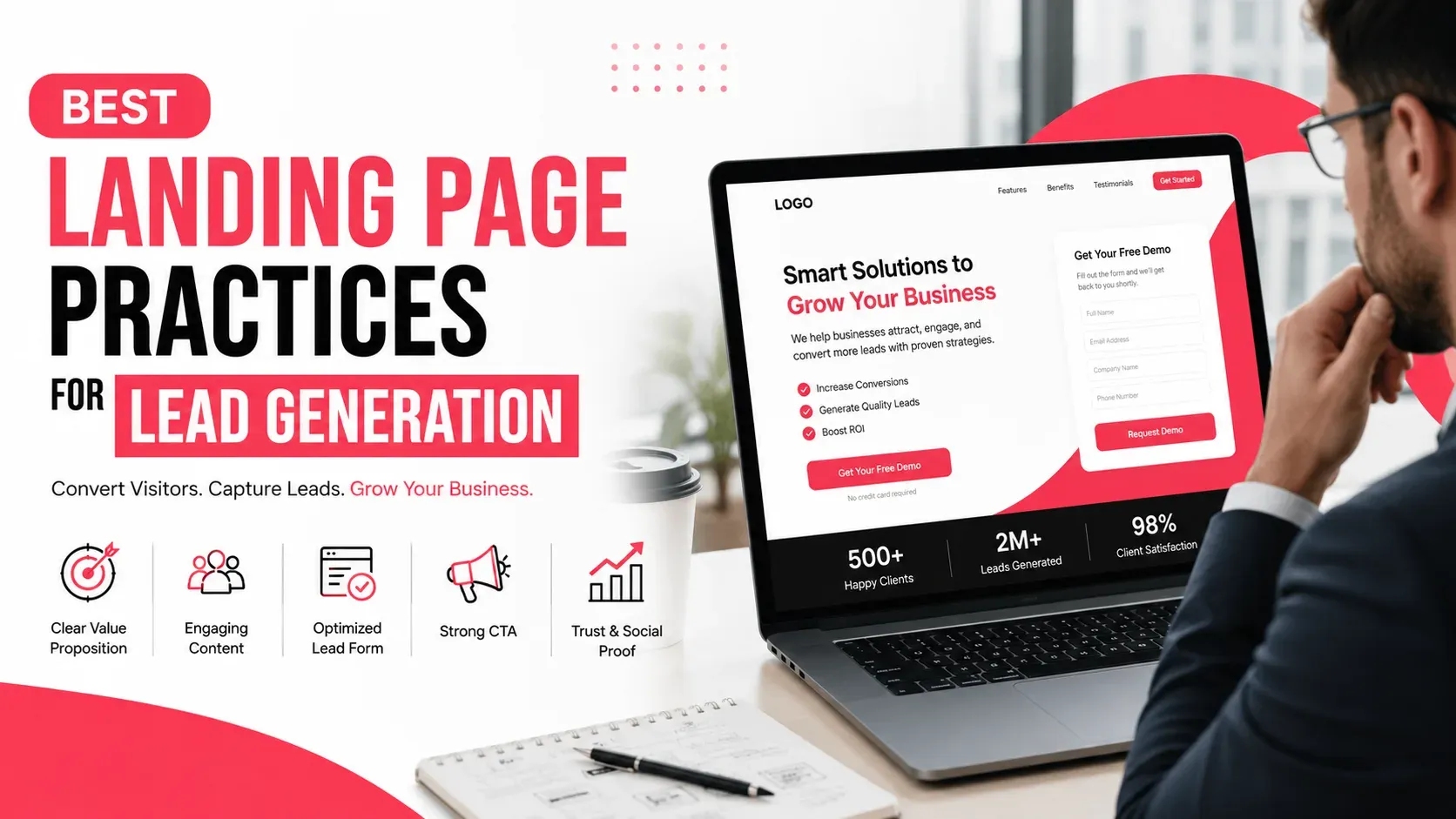
Driving traffic to a website is only half the challenge. The real goal is converting visitors into qualified leads.
Many businesses invest heavily in SEO, Google Ads, social media marketing, and content creation, only to discover that visitors leave without taking action. In most cases, the problem is not the traffic source—it is the landing page experience.
A high-performing landing page acts as a conversion engine. It guides visitors toward a specific action while removing distractions, reducing friction, and building trust.
This guide explores the best landing page practices for lead generation and explains how businesses can improve conversion rates by optimizing every stage of the user journey.
Quick Answer
The best landing page practices for lead generation include:
- Creating a clear value proposition
- Writing compelling headlines
- Using focused calls-to-action
- Minimizing distractions
- Adding trust signals
- Optimizing forms
- Improving page speed
- Designing for mobile users
- Testing and refining page elements
Landing pages that prioritize clarity, relevance, and user intent typically generate higher-quality leads and stronger conversion rates.
What Is a Lead Generation Landing Page?
A lead generation landing page is a standalone page designed to encourage visitors to complete a specific action.
Common objectives include:
- Requesting a quote
- Booking a consultation
- Downloading a guide
- Scheduling a demo
- Submitting an inquiry
- Registering for an event
Unlike traditional website pages, landing pages focus on a single conversion goal.
Every element should support that objective.
Start With a Strong Value Proposition
Visitors should immediately understand:
- What you offer
- Who it is for
- Why it matters
- What benefit they receive
A weak value proposition creates confusion and increases bounce rates.
Weak Example
"We Provide Digital Solutions"
Strong Example
"Generate More Qualified Leads Through Conversion-Focused Digital Marketing Strategies"
Specific messaging often converts better because it clearly communicates value.
Write Headlines That Capture Attention
The headline is usually the first thing visitors notice.
An effective headline should:
- Address a problem
- Highlight a benefit
- Create relevance
- Match user intent
Examples include:
- Get More Qualified Leads Without Increasing Ad Spend
- Improve Your Website Conversion Rate in 30 Days
- Discover Proven SEO Strategies for Sustainable Growth
Strong headlines encourage users to continue reading.
Keep One Primary Goal Per Page
One of the most common landing page mistakes is offering too many options.
Visitors should not have to choose between:
- Contact forms
- Newsletter signups
- Product pages
- Multiple offers
A focused landing page should have a single conversion objective.
Reducing choices often increases conversion rates.
Create Clear and Compelling Calls-to-Action
Calls-to-action guide users toward the desired action.
Effective CTAs are:
- Specific
- Action-oriented
- Easy to find
- Relevant to the offer
Examples include:
- Request a Free Consultation
- Get a Custom Quote
- Schedule a Strategy Call
- Download the Guide
Avoid generic phrases that do not communicate value.
CTA buttons should appear naturally throughout the page, especially after key sections.
Match Landing Pages to User Intent
Visitors arrive with specific expectations.
If someone clicks an advertisement promoting a free audit, the landing page should focus on that offer.
Message consistency improves:
- User experience
- Trust
- Conversion rates
A disconnect between the advertisement and landing page often results in lost opportunities.
Build Trust With Social Proof
Visitors are more likely to convert when they see evidence that others have benefited from your services.
Effective trust signals include:
- Customer testimonials
- Case studies
- Reviews
- Certifications
- Awards
- Client logos
- Industry recognition
Trust elements should support the overall message rather than overwhelm the page.
Simplify Lead Capture Forms
Long forms can create friction and reduce submissions.
Ask only for information that is truly necessary.
Form Optimization Guidelines
Recommended Practice | Benefit |
|---|---|
Fewer Fields | Higher completion rates |
Clear Labels | Better usability |
Mobile-Friendly Design | Improved user experience |
Fast Submission Process | Reduced abandonment |
Confirmation Messages | Better engagement |
For many businesses, reducing form complexity leads to noticeable improvements in conversion rates.
Use Visual Hierarchy to Guide Users
Landing page design should direct attention toward important elements.
Visitors naturally focus on:
- Headlines
- Benefits
- Images
- Testimonials
- CTA buttons
Visual hierarchy can be improved through:
- Typography
- Spacing
- Layout structure
- Contrast
- Content organization
A clear structure makes information easier to consume.
Optimize for Mobile Devices
Mobile traffic continues to grow across nearly every industry.
A landing page that performs poorly on mobile devices may lose a significant percentage of potential leads.
Mobile optimization should include:
- Responsive layouts
- Fast-loading pages
- Touch-friendly buttons
- Readable text
- Easy form completion
Mobile users should experience the same level of usability as desktop visitors.
Improve Landing Page Speed
Even small delays can impact conversion rates.
Slow pages increase:
- Bounce rates
- User frustration
- Abandonment
Fast pages improve:
- User satisfaction
- Engagement
- Lead generation
- Search visibility
Businesses looking to improve website performance can also explore Web Development Services in Dubai to create faster and more conversion-focused digital experiences.
Focus on Benefits Rather Than Features
Many landing pages spend too much time discussing features.
Visitors care more about outcomes.
Feature
Advanced Analytics Dashboard
Benefit
Gain Clear Insights That Help You Make Better Business Decisions
Benefits help prospects visualize results and understand value more quickly.
Use Persuasive Supporting Content
Visitors often need additional information before converting.
Helpful supporting content may include:
- Frequently asked questions
- Service explanations
- Process breakdowns
- Success stories
- Key differentiators
The goal is to address objections before they become barriers.
Remove Unnecessary Navigation
Traditional website navigation can distract visitors from the primary goal.
Many high-converting landing pages:
- Limit menu options
- Remove unnecessary links
- Keep users focused on the offer
Reducing distractions often increases conversion opportunities.
Test Landing Page Elements Continuously
Optimization should be an ongoing process.
Elements worth testing include:
- Headlines
- CTA buttons
- Images
- Forms
- Layouts
- Offers
- Testimonials
Small improvements can significantly increase conversion performance over time.
Successful businesses view landing page optimization as a continuous strategy rather than a one-time project.
Common Landing Page Mistakes
Many landing pages underperform because they:
- Lack a clear value proposition
- Use weak headlines
- Contain multiple conversion goals
- Have lengthy forms
- Load slowly
- Ignore mobile users
- Lack trust signals
- Feature unclear CTAs
Identifying and fixing these issues often produces immediate improvements.
Key Takeaways
- Landing pages should focus on one primary conversion goal.
- Strong value propositions improve engagement.
- Headlines significantly influence user behavior.
- Clear CTAs guide visitors toward action.
- Trust signals increase credibility.
- Simplified forms improve completion rates.
- Mobile optimization is essential.
- Faster pages generally convert better.
- Continuous testing helps maximize results.
Turning More Visitors Into Qualified Leads
Landing pages play a critical role in converting traffic into business opportunities. Even the best marketing campaigns can underperform if visitors encounter confusing messaging, weak calls-to-action, or unnecessary friction.
Businesses that focus on user intent, clear communication, trust-building, and conversion optimization often achieve better lead quality and stronger marketing ROI. Effective landing pages are not just design assets—they are strategic tools that support measurable business growth.
For additional insights into improving conversion performance, read our Conversion-Focused Website Design Strategies guide.
Businesses seeking specialized landing page solutions can also explore Landing Page Design Dubai for conversion-focused design and optimization expertise.
Milaaj Brandset helps businesses create high-performing landing pages that combine user experience, conversion optimization, and strategic messaging to generate more qualified leads and sustainable growth.
FAQs
What is a landing page?
A landing page is a standalone web page designed to encourage visitors to complete a specific action, such as submitting a form or requesting a consultation.
Why are landing pages important for lead generation?
Landing pages provide focused experiences that reduce distractions and improve conversion opportunities.
How many CTAs should a landing page have?
Most landing pages perform best when centered around a single primary call-to-action.
What makes a landing page high-converting?
Strong messaging, clear CTAs, trust signals, fast loading times, and user-friendly design contribute to higher conversion rates.
Should landing pages have navigation menus?
Many conversion-focused landing pages limit navigation options to keep users focused on the intended action.
How important is mobile optimization?
Mobile optimization is essential because a significant portion of website traffic comes from smartphones and tablets.
Why should forms be kept short?
Shorter forms reduce friction and typically increase completion rates.
How often should landing pages be optimized?
Landing pages should be reviewed and tested regularly to identify opportunities for improved performance.
Ready to Elevate Your Brand?
Start Your Project Today