July 30, 2026
Conversion Rate Optimization Guide for Beginners
Milaaj Editorial / Research Insights
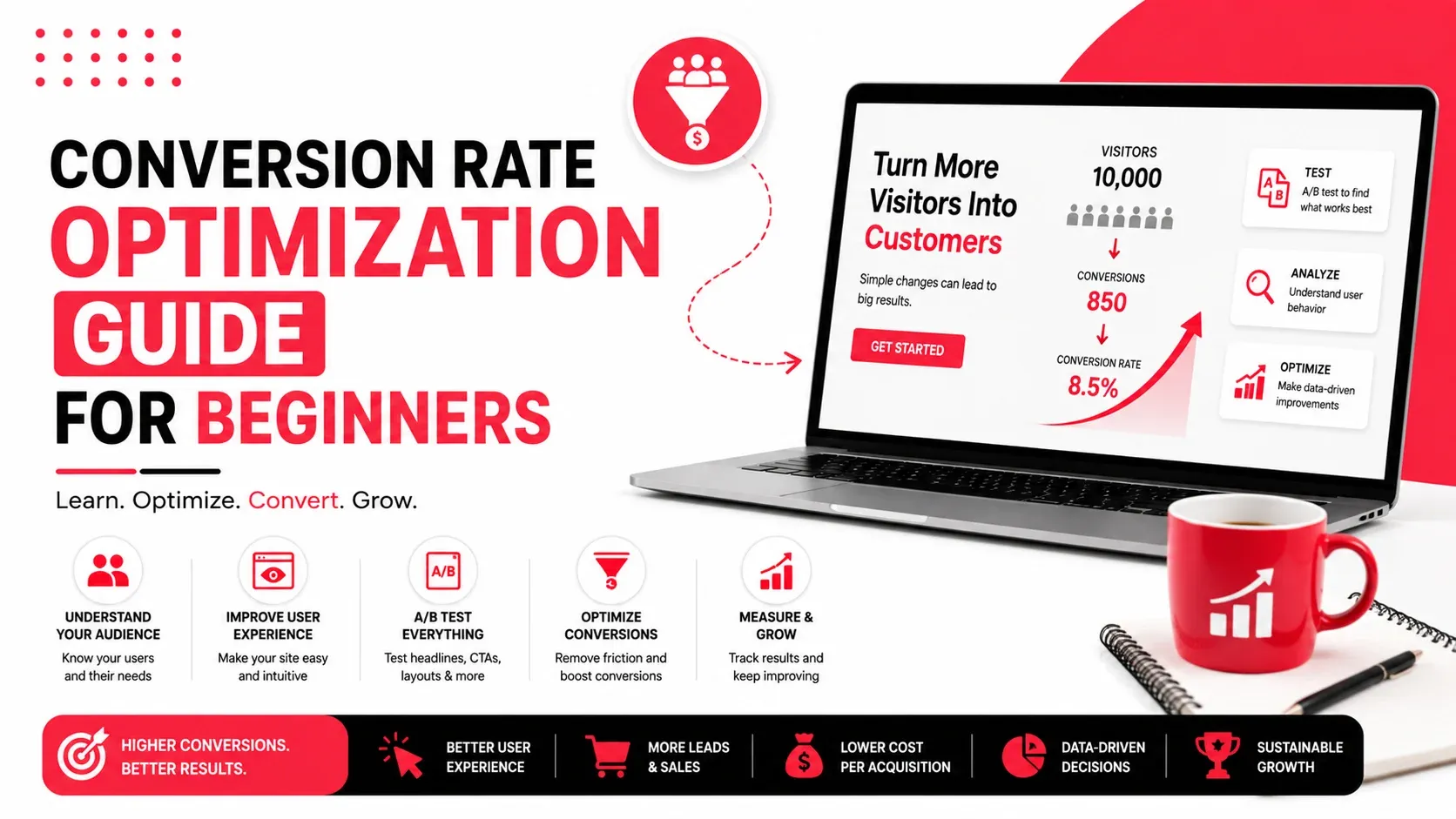
Driving traffic to your website is only half the challenge. If visitors leave without making an enquiry, purchasing a product, or completing another valuable action, your marketing efforts may not deliver the results you expect. This is where Conversion Rate Optimization (CRO) plays a vital role.
Conversion Rate Optimization focuses on improving your website so that more visitors take meaningful actions without necessarily increasing traffic. By understanding user behaviour, removing obstacles, and continuously testing improvements, businesses can generate more leads and sales from their existing audience.
Whether you operate a service-based business, an ecommerce store, or a corporate website, this beginner's guide explains the fundamentals of CRO and the practical steps you can take to improve website performance.
Quick Answer
Conversion Rate Optimization (CRO) is the process of improving a website to increase the percentage of visitors who complete a desired action, such as filling out a contact form, requesting a quote, making a purchase, or subscribing to a newsletter. CRO combines user experience improvements, data analysis, testing, and clear messaging to increase conversions.
What Is Conversion Rate Optimization?
A conversion is any action that contributes to your business goals.
Examples include:
- Submitting a contact form
- Booking a consultation
- Requesting a quotation
- Purchasing a product
- Downloading a resource
- Registering for an event
- Signing up for a newsletter
Conversion Rate Optimization is the ongoing process of making improvements that encourage more visitors to complete these actions.
Rather than guessing what users want, CRO relies on real user behaviour and continuous testing to identify opportunities for improvement.
Why Conversion Rate Optimization Matters
Increasing website traffic often requires additional marketing investment.
CRO helps businesses maximize the value of their existing traffic by improving the user experience and reducing barriers to conversion.
Benefits include:
- Higher lead generation
- Improved sales performance
- Better return on marketing investment
- Lower customer acquisition costs
- Better user experience
- Increased customer satisfaction
- More efficient marketing campaigns
Even small improvements in conversion rates can have a significant impact on overall business growth.
How Is Conversion Rate Calculated?
The conversion rate measures the percentage of visitors who complete your desired action.
It is calculated using the following formula:
Conversion Rate = (Conversions ÷ Total Visitors) × 100
For example, if 2,000 people visit your website in a month and 80 submit an enquiry, your conversion rate is 4%.
Tracking this metric regularly helps businesses measure the effectiveness of website improvements and marketing campaigns.
Common Website Conversion Goals
Different businesses define conversions differently depending on their objectives.
Business Type | Common Conversion Goal |
|---|---|
Service Business | Contact form submission or consultation booking |
Ecommerce Store | Product purchase |
SaaS Company | Free trial registration |
Educational Institution | Course enquiry or application |
Healthcare Provider | Appointment booking |
B2B Company | Demo request or quotation request |
Clearly defining your primary conversion goal is the first step toward building an effective CRO strategy.
What Influences Website Conversions?
Visitors decide within seconds whether they trust your website.
Several factors influence that decision.
Clear Value Proposition
Visitors should immediately understand:
- What you offer
- Who your services are for
- Why they should choose your business
A clear value proposition reduces confusion and encourages visitors to continue exploring your website.
User Experience
A confusing website can discourage visitors from taking action.
Focus on:
- Simple navigation
- Fast-loading pages
- Mobile responsiveness
- Easy-to-read content
- Logical page structure
Businesses investing in UI/UX Design Services often improve conversion rates by simplifying user journeys and reducing unnecessary friction throughout the website.
Trust Signals
Trust plays an important role in online decision-making.
Examples include:
- Customer reviews
- Testimonials
- Case studies
- Certifications
- Awards
- Secure payment indicators
- Privacy assurances
These elements reassure visitors that your business is credible and reliable.
Strong Calls to Action
Every important page should include a clear call to action.
Examples include:
- Request a Quote
- Book a Consultation
- Contact Our Team
- Start Your Free Trial
- Download the Guide
Avoid vague or generic buttons that do not clearly explain the next step.
Beginner-Friendly CRO Strategies
You do not need advanced tools or a large budget to start improving conversions.
Simplify Navigation
Visitors should reach important information with minimal effort.
Reduce unnecessary menu items and organize content logically to help users find what they need quickly.
Improve Page Speed
Slow-loading websites increase bounce rates and reduce conversions.
Regularly optimize:
- Images
- Scripts
- CSS files
- Hosting performance
- Browser caching
A faster website creates a smoother user experience across all devices.
Make Forms Easier to Complete
Long forms often discourage visitors from converting.
Ask only for essential information during the initial enquiry.
For many businesses, requesting a name, email address, phone number, and brief message is sufficient for the first interaction.
Use Clear Headlines
Your headline should communicate the main benefit immediately.
Rather than focusing only on your company, explain how your product or service helps solve the visitor's problem.
Optimize for Mobile Users
Many visitors access websites using smartphones.
Ensure that:
- Buttons are easy to tap.
- Text remains readable.
- Images resize correctly.
- Forms work smoothly on mobile devices.
A poor mobile experience can significantly reduce conversion rates.
Start Testing Small Changes
Effective CRO is based on continuous improvement rather than major redesigns.
Begin by testing:
- Headlines
- Button text
- Call-to-action placement
- Images
- Form length
- Page layouts
Small improvements can produce measurable increases in conversions over time.
If you'd like to learn how user experience improvements directly influence enquiries and customer actions, read our guide on How UX Design Impacts Lead Generation.
Common Conversion Rate Optimization Mistakes
Many beginners focus on increasing website traffic while overlooking the experience visitors have after they arrive.
Avoid these common CRO mistakes:
Mistake | Better Approach |
|---|---|
Focusing only on traffic | Improve the experience for existing visitors before investing in more traffic. |
Having multiple competing CTAs | Keep one primary call to action for each page. |
Writing unclear copy | Explain benefits in simple, customer-focused language. |
Ignoring mobile users | Ensure every page works seamlessly across devices. |
Using lengthy forms | Ask only for the information you truly need. |
Making changes without data | Base improvements on analytics and user behaviour. |
The Importance of A/B Testing
One of the core principles of CRO is testing changes before making permanent decisions.
A/B testing compares two versions of a webpage to determine which performs better.
You can test elements such as:
- Headlines
- CTA button text
- Button colours
- Hero images
- Form length
- Testimonials
- Pricing layouts
- Page structure
Test one element at a time so you can clearly identify what influenced the results.
Use Analytics to Understand User Behaviour
Successful CRO decisions are driven by data rather than assumptions.
Useful insights include:
- Which pages receive the most traffic
- Where visitors leave your website
- Which pages generate the highest conversions
- How users navigate between pages
- Which devices visitors use
- How long users stay on each page
These insights help identify friction points that may be preventing conversions.
Measure the Right CRO Metrics
Monitoring the right metrics allows you to evaluate whether your optimization efforts are delivering meaningful improvements.
Metric | Why It Matters |
|---|---|
Conversion Rate | Measures how effectively visitors complete desired actions |
Bounce Rate | Indicates whether visitors leave without engaging |
Average Session Duration | Shows how long users interact with your content |
Pages Per Session | Measures user engagement across the website |
Form Completion Rate | Evaluates how easily users complete enquiries |
Click-Through Rate (CTR) | Measures engagement with calls to action |
Looking at these metrics together provides a more complete picture than relying on a single performance indicator.
Build a Continuous Optimization Process
Conversion Rate Optimization is not a one-time project.
Customer expectations, technology, and market trends continue to evolve, making ongoing optimization essential.
A simple CRO process includes:
- Identify pages with low conversion rates.
- Review user behaviour and analytics.
- Identify possible barriers.
- Implement one improvement at a time.
- Measure the results.
- Continue testing and refining.
Businesses that regularly review and improve their websites often achieve stronger long-term performance than those making occasional large redesigns.
CRO Best Practices for Beginners
If you're just starting with Conversion Rate Optimization, focus on the fundamentals before investing in advanced tools.
Prioritize:
- Fast-loading pages
- Clear navigation
- Strong value propositions
- Mobile-friendly design
- Trust-building content
- Simple enquiry forms
- Clear calls to action
- Regular testing
These improvements often deliver noticeable results while creating a better overall user experience.
CRO and Digital Marketing Work Together
Conversion Rate Optimization is most effective when integrated with your broader digital marketing strategy.
For example:
- SEO brings qualified organic visitors.
- Paid advertising drives targeted traffic.
- Content marketing educates potential customers.
- Social media builds awareness and engagement.
- CRO ensures more of those visitors become leads or customers.
Without CRO, even successful marketing campaigns may lose potential conversions due to avoidable website friction.
Key Takeaways
- Conversion Rate Optimization helps businesses generate more value from existing website traffic.
- CRO focuses on improving user experience, trust, and usability rather than simply increasing visitor numbers.
- Clearly defined conversion goals provide direction for optimization efforts.
- Small improvements such as simplifying forms, improving page speed, and strengthening calls to action can significantly increase conversions.
- Data analysis and A/B testing help businesses make informed optimization decisions.
- CRO should be viewed as an ongoing process of continuous improvement.
Improve More Than Just Traffic
Generating website visitors is only the beginning of a successful digital marketing strategy. The real opportunity lies in creating an experience that encourages those visitors to take meaningful action. By understanding user behaviour, removing unnecessary friction, and continuously testing improvements, businesses can increase enquiries, sales, and customer satisfaction without relying solely on additional traffic.
Whether you're optimizing a service website or an ecommerce store, adopting a structured CRO process helps transform existing traffic into measurable business growth.
Milaaj Brandset helps businesses improve website performance through user-focused optimization strategies that combine intuitive design, data-driven decisions, and continuous testing to increase conversions and support sustainable growth.
FAQs
What is Conversion Rate Optimization (CRO)?
Conversion Rate Optimization is the process of improving a website so that a higher percentage of visitors complete valuable actions such as making a purchase, submitting a contact form, or booking a consultation.
Is CRO only for ecommerce websites?
No. CRO benefits service businesses, SaaS companies, educational institutions, healthcare providers, and any organization with a website and measurable conversion goals.
How long does it take to see CRO results?
Results vary depending on website traffic and the changes being tested. Small improvements may produce measurable results within weeks, while ongoing optimization delivers greater long-term benefits.
Do I need expensive software to start CRO?
No. Beginners can start by improving page speed, simplifying forms, strengthening calls to action, and using website analytics to identify opportunities before investing in specialized CRO tools.
What should I test first?
Start with high-impact elements such as headlines, call-to-action buttons, forms, page layouts, and landing page messaging. Test one variable at a time to accurately measure its effect.
Why is A/B testing important?
A/B testing helps businesses compare different versions of a webpage or element using real visitor behaviour, allowing decisions to be based on evidence rather than assumptions.
Ready to Elevate Your Brand?
Start Your Project Today