July 17, 2026
How UX Design Impacts Lead Generation: Improve User Experience to Generate More Leads
Milaaj Editorial / Research Insights
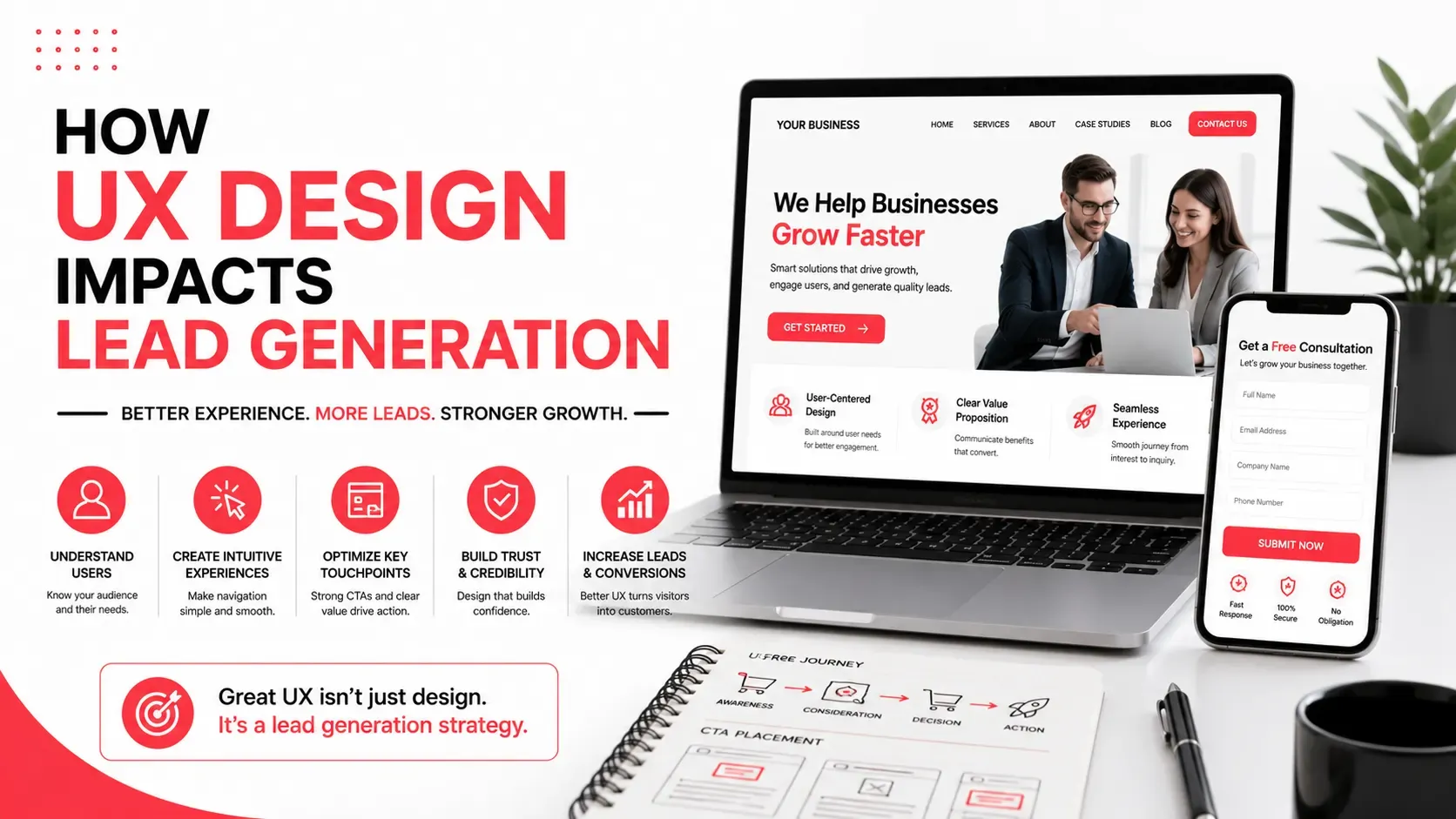
Generating website traffic is only half the challenge. Once visitors arrive, their experience determines whether they stay, engage with your content, or leave without taking action. A website with excellent user experience (UX) makes it easy for visitors to find information, understand your services, and confidently become leads.
UX design goes beyond visual appearance. It focuses on creating intuitive, efficient, and enjoyable interactions that reduce friction throughout the customer journey. From navigation and page speed to forms and calls-to-action, every design decision can influence conversion rates.
This guide explores how UX design affects lead generation and highlights practical improvements that help turn more website visitors into qualified enquiries.
Quick Answer
UX design impacts lead generation by making websites easier to navigate, faster to use, and more trustworthy. A well-designed user experience removes obstacles that prevent visitors from taking action, helping businesses generate more enquiries, form submissions, and customer interactions.
What Is UX Design?
User Experience (UX) design is the process of improving how people interact with a website or digital product.
Rather than focusing only on visual design, UX considers the complete user journey, including:
- Ease of navigation
- Content organization
- Page speed
- Accessibility
- Mobile usability
- Form completion
- Overall satisfaction
The objective is to help users achieve their goals with as little effort as possible.
Why UX Design Matters for Lead Generation
Visitors rarely become leads if they encounter obstacles while using your website.
Common problems include:
- Confusing navigation
- Slow loading pages
- Difficult enquiry forms
- Poor mobile experience
- Unclear calls-to-action
- Inconsistent layouts
Even small usability issues can reduce conversions by creating unnecessary frustration.
A strong UX helps visitors feel confident, making them more likely to continue exploring your website and eventually contact your business.
UX Elements That Influence Lead Generation
Several aspects of UX design have a direct impact on how easily visitors can become leads.
UX Element | Impact on Lead Generation |
|---|---|
Navigation | Helps users find information quickly |
Page Speed | Reduces abandonment before engagement |
Visual Hierarchy | Draws attention to important content |
Trust Signals | Builds confidence before conversion |
Forms | Reduces friction during enquiries |
Mobile Experience | Improves usability across devices |
Improving these areas creates a smoother journey from first visit to enquiry.
Simple Navigation Keeps Visitors Moving
Navigation should help users find information without confusion.
An effective navigation menu is:
- Easy to understand
- Consistent across pages
- Limited to essential options
- Well organized
Visitors shouldn't have to guess where important information is located.
For businesses looking to improve overall website usability, investing in website user experience design creates a stronger foundation for both engagement and lead generation.
Faster Pages Reduce Lost Opportunities
Page speed directly affects user behavior.
If pages load slowly, visitors may leave before reading your content or exploring your services.
Improving performance includes:
- Compressing images
- Reducing unnecessary scripts
- Optimizing code
- Using efficient hosting
- Limiting third-party resources
Fast-loading websites create better first impressions while encouraging visitors to continue browsing.
Visual Hierarchy Guides User Attention
Visitors naturally scan webpages instead of reading every word.
Visual hierarchy helps direct attention toward the most important information by using:
- Clear headings
- Strategic spacing
- Consistent typography
- Visual contrast
- Logical content flow
A strong hierarchy makes important messages and calls-to-action easier to notice without overwhelming the page.
Trust Signals Encourage Action
Before submitting a contact form or requesting a quote, visitors want reassurance that your business is credible.
Common trust signals include:
- Customer testimonials
- Client logos
- Industry certifications
- Awards
- Case studies
- Verified reviews
Displaying these elements near important decision points helps reduce hesitation and encourages more enquiries.
Simplify Lead Generation Forms
Forms are often the final step before a visitor becomes a lead.
Complicated forms with too many required fields can discourage users from completing the process.
A user-friendly form should:
- Request only essential information
- Clearly label every field
- Display helpful validation messages
- Work well on mobile devices
- Be easy to complete within a few minutes
Reducing unnecessary friction often improves form completion rates.
Create a Consistent User Journey
Visitors should experience a logical flow as they move through your website.
For example:
Homepage → Service Page → Contact Form
or
Blog Article → Related Service → Consultation Request
Every page should naturally guide users toward the next relevant step.
When content and navigation work together, visitors are less likely to feel lost or abandon their journey.
Support UX With Helpful Content
Even excellent design cannot compensate for poor content.
Visitors need clear, informative content that answers their questions and explains the benefits of your services.
Well-structured pages with useful information make it easier for users to make informed decisions.
Businesses that invest in SEO copywriting services often create content that's both easy to understand and aligned with user intent, supporting stronger engagement throughout the customer journey.
Prioritize Mobile User Experience
A growing percentage of website visitors browse on smartphones and tablets. If your website is difficult to use on smaller screens, potential leads may leave before taking action.
Review your website to ensure:
- Navigation works smoothly on mobile devices.
- Buttons are easy to tap.
- Text is readable without zooming.
- Images scale correctly.
- Forms are simple to complete.
- Pages load quickly on mobile networks.
A responsive, user-friendly mobile experience helps reduce friction and encourages more enquiries.
Reduce Friction at Every Step
Every extra step between a visitor and your conversion goal creates an opportunity for them to leave.
Look for areas where users may hesitate, such as:
- Long contact forms
- Confusing navigation paths
- Too many required clicks
- Hidden pricing or contact details
- Inconsistent page layouts
Simplifying these interactions creates a smoother experience and makes it easier for visitors to become leads.
Keep Calls-to-Action Visible and Relevant
Calls-to-action (CTAs) should feel like a natural next step rather than an interruption.
Place CTAs where visitors are most likely to make decisions, such as:
- After explaining a service
- Following customer testimonials
- At the end of informative sections
- Beside enquiry forms
Every CTA should clearly communicate what users gain by taking action.
Common UX Mistakes That Reduce Leads
Even visually attractive websites can lose potential customers because of poor usability.
Mistake | Better Approach |
|---|---|
Complicated navigation | Keep menus simple and intuitive |
Slow-loading pages | Optimize website performance |
Overly long forms | Request only essential information |
Weak visual hierarchy | Highlight important content clearly |
Poor mobile usability | Design for all screen sizes |
Inconsistent user journeys | Guide visitors logically from page to page |
Regular usability reviews help identify and fix these issues before they affect conversions.
How to Measure UX Performance
Improving UX should be supported by measurable data.
Useful metrics include:
- Conversion rate
- Form completion rate
- Average engagement time
- Bounce rate
- Pages per session
- Scroll depth
- Heatmap analysis
Monitoring these metrics helps you understand how visitors interact with your website and where improvements are needed.
If your analysis shows visitors leaving before completing important actions, reviewing CTA Optimization Strategies for Better Conversions can help you improve the final step in the conversion journey.
Key Takeaways
- UX design directly influences lead generation by reducing friction and improving usability.
- Clear navigation helps visitors find information quickly.
- Fast-loading pages create better first impressions.
- Strong visual hierarchy guides attention toward important actions.
- Trust signals encourage confidence before enquiries.
- Simple, mobile-friendly forms improve completion rates.
- Regular testing and performance analysis support continuous improvement.
Better User Experiences Lead to Better Business Results
Lead generation isn't driven by individual design elements alone, it's the result of creating a seamless experience from the moment a visitor arrives on your website. Every interaction, from navigation to form submission, should make it easier for users to understand your business and take the next step.
By continuously refining your website based on user behavior and feedback, you can remove unnecessary barriers, improve engagement, and generate more qualified leads over time.
Milaaj Brandset helps businesses create user-focused websites, optimize digital experiences, and develop content strategies that support stronger engagement and sustainable lead generation.
FAQs
What is UX design?
UX (User Experience) design focuses on improving how people interact with a website or digital product by making it easier, more intuitive, and more enjoyable to use.
How does UX affect lead generation?
A positive user experience helps visitors find information quickly, builds trust, reduces friction, and encourages them to complete actions such as submitting a contact form or requesting a quote.
Why is navigation important for UX?
Clear navigation helps users locate relevant information without confusion, reducing frustration and increasing the likelihood that they'll continue exploring your website.
Do faster websites generate more leads?
Fast-loading websites improve the overall user experience and reduce abandonment, which can contribute to higher engagement and better conversion opportunities.
How can I improve my website's UX?
Start by simplifying navigation, improving page speed, optimizing forms, creating mobile-friendly layouts, strengthening trust signals, and regularly testing user behavior.
What's the difference between UX and UI?
UX focuses on the overall user experience and how easily visitors achieve their goals, while UI (User Interface) design focuses on the visual appearance and interactive elements of a website.
Ready to Elevate Your Brand?
Start Your Project Today