July 15, 2026
Customer Journey Mapping for UAE Businesses: A Step-by-Step Guide to Better Customer Experiences
Milaaj Editorial / Research Insights
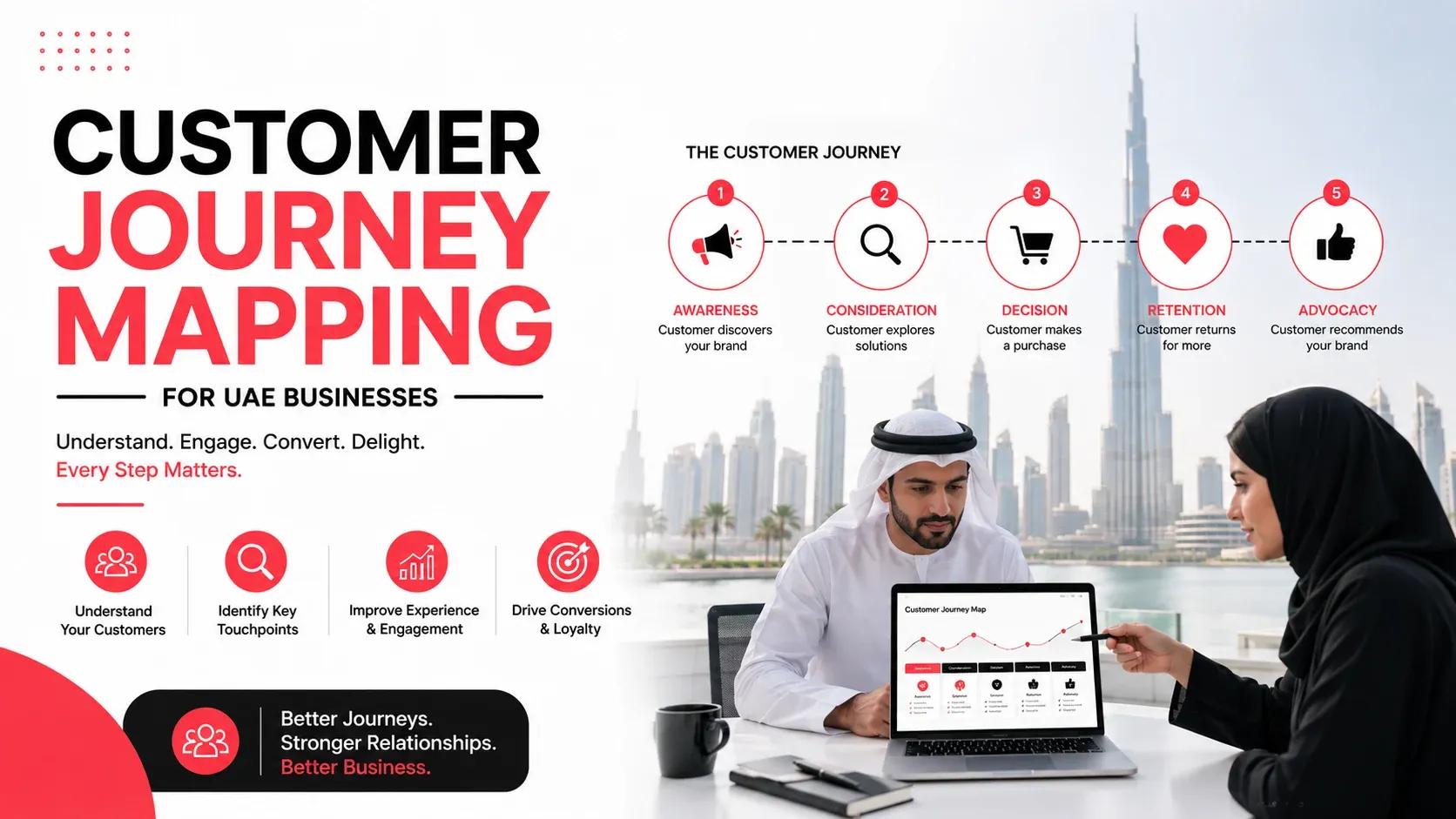
Today's customers interact with businesses through multiple touchpoints before making a purchase. They might discover your brand through Google Search, compare services on your website, read customer reviews, engage with your social media content, and only then decide to contact your team. Understanding this journey is essential for delivering a consistent and engaging customer experience.
Customer journey mapping helps businesses visualize every interaction a customer has with their brand. By identifying customer goals, pain points, and decision-making factors at each stage, businesses can improve marketing, sales, and customer service while increasing conversions.
For businesses in the UAE, where digital competition continues to grow across industries, customer journey mapping provides valuable insights that help create more personalized and effective customer experiences.
Quick Answer
Customer journey mapping is the process of visualizing every stage a customer goes through when interacting with your business, from discovering your brand to becoming a loyal customer. A well-designed journey map helps businesses identify opportunities to improve user experience, increase conversions, and build stronger long-term customer relationships.
What Is Customer Journey Mapping?
A customer journey map is a visual representation of how customers interact with your business across different channels and touchpoints.
Instead of focusing only on the final purchase, journey mapping examines the complete experience, including:
- How customers discover your business
- What information they look for
- Questions they ask before purchasing
- Factors influencing their decisions
- What happens after they become customers
Understanding these interactions helps businesses make informed improvements that benefit both customers and the organization.
Why Customer Journey Mapping Matters
Without understanding the customer journey, businesses often optimize individual marketing activities while overlooking the overall customer experience.
Journey mapping helps organizations:
- Better understand customer behavior
- Identify friction points
- Improve website usability
- Personalize marketing efforts
- Increase customer satisfaction
- Strengthen customer retention
- Support data-driven decision-making
Rather than making assumptions, businesses can use real customer insights to improve every stage of the buying process.
The Five Stages of the Customer Journey
Although every business is different, most customer journeys follow five common stages.
Journey Stage | Customer Goal | Business Opportunity |
|---|---|---|
Awareness | Discover a solution | Build visibility through helpful content |
Consideration | Compare available options | Demonstrate expertise and value |
Decision | Choose a provider | Build trust and simplify the buying process |
Retention | Continue using the service | Deliver excellent customer support |
Advocacy | Recommend the business | Encourage referrals and reviews |
Understanding each stage allows businesses to create experiences that guide customers naturally toward the next step.
Stage 1: Awareness
The journey begins when customers realize they have a problem or opportunity.
At this stage, they are searching for information rather than looking for a specific business.
They may discover your brand through:
- Search engines
- Blog articles
- Social media
- Online advertisements
- Industry recommendations
- Word of mouth
The objective during the awareness stage is to educate rather than sell.
Helpful blog posts, informative videos, and downloadable resources often perform better than promotional content because they build trust early in the journey.
Stage 2: Consideration
Once customers understand their problem, they begin comparing possible solutions.
During this stage, they typically evaluate:
- Service quality
- Experience
- Pricing
- Reviews
- Case studies
- Business credibility
Your website should make it easy for visitors to understand why your business is a suitable choice.
Resources such as detailed service pages, FAQs, comparison guides, and educational content help customers make informed decisions.
Businesses offering content marketing services can use educational content strategically to answer common questions and demonstrate expertise throughout this stage.
Stage 3: Decision
The decision stage is where potential customers choose whether to contact your business or move forward with another provider.
Small details can influence this decision, including:
- Clear pricing information
- Customer testimonials
- Certifications
- Trust signals
- Fast-loading pages
- Easy-to-complete contact forms
Reducing unnecessary friction at this point improves the likelihood of conversion.
A well-designed website also plays an important role in creating confidence. Investing in website design services helps businesses create intuitive user experiences that make taking the next step feel simple and natural.
Stage 4: Retention
The customer journey doesn't end after the first purchase.
Retaining existing customers is often more cost-effective than continuously acquiring new ones.
Retention strategies may include:
- Excellent customer support
- Regular follow-up communication
- Educational resources
- Loyalty programs
- Product updates
- Personalized recommendations
Positive post-purchase experiences encourage repeat business while strengthening long-term relationships.
Stage 5: Advocacy
Satisfied customers often become valuable promoters of your business.
They may:
- Leave positive reviews
- Recommend your business to colleagues
- Share your content
- Refer new customers
- Mention your business on social media
Encouraging advocacy creates a cycle where happy customers help attract future customers through authentic recommendations.
Identify Every Customer Touchpoint
Before creating a journey map, list every interaction customers have with your business.
Typical touchpoints include:
- Search engine results
- Website pages
- Contact forms
- Email communication
- Social media
- Online reviews
- Customer support
- Sales conversations
Mapping these interactions helps reveal where customers experience confusion, delays, or friction.
How to Create a Customer Journey Map
Once you've identified your customer touchpoints, organize them into a structured journey that reflects the customer's experience from beginning to end.
Follow these steps:
Define Your Customer Persona
Start with a clear understanding of who your ideal customer is.
Consider factors such as:
- Goals
- Challenges
- Buying motivations
- Preferred communication channels
- Common questions before making a purchase
A journey map becomes much more valuable when it's built around real customer behavior rather than assumptions.
Document Every Touchpoint
List every interaction a customer may have with your business.
For example:
- Discovering your website through search
- Reading a blog article
- Visiting a service page
- Comparing your business with competitors
- Contacting your team
- Receiving a proposal
- Completing a purchase
- Receiving follow-up support
Seeing the entire journey helps identify opportunities to improve consistency across channels.
Identify Pain Points
Every customer journey contains moments where users may hesitate or leave.
Common pain points include:
- Slow-loading pages
- Difficult website navigation
- Complicated enquiry forms
- Missing information
- Unclear pricing
- Delayed responses
- Inconsistent messaging
Removing these obstacles creates a smoother experience and increases the likelihood of conversion.
Improve Each Stage
After identifying friction points, prioritize improvements based on their potential impact.
Examples include:
- Simplifying navigation
- Improving page speed
- Creating clearer calls-to-action
- Updating outdated content
- Providing stronger trust signals
- Streamlining contact forms
Small improvements across multiple touchpoints often produce better results than focusing on only one stage of the journey.
Common Customer Journey Mapping Mistakes
Many businesses create a journey map once and never update it.
Avoid these common mistakes:
Mistake | Better Approach |
|---|---|
Assuming customer behavior | Use analytics and customer feedback |
Focusing only on the purchase | Map the complete customer lifecycle |
Ignoring post-purchase interactions | Include retention and advocacy stages |
Treating all customers the same | Create journeys for different customer personas |
Never updating the journey map | Review and refine it regularly |
A customer journey should evolve as customer expectations, products, and marketing channels change.
How to Measure Success
Journey mapping should lead to measurable improvements rather than becoming a one-time exercise.
Useful metrics include:
- Conversion rate
- Lead quality
- Customer satisfaction
- Customer retention rate
- Repeat purchases
- Average response time
- Customer lifetime value
Monitoring these metrics helps determine whether improvements are creating a better overall experience.
Key Takeaways
- Customer journey mapping helps businesses understand how customers interact with their brand.
- Most customer journeys include awareness, consideration, decision, retention, and advocacy stages.
- Every touchpoint should make it easier for customers to move to the next stage.
- Identifying pain points helps improve customer experience and conversion rates.
- Journey maps should be updated regularly using customer feedback and performance data.
- Measuring business outcomes ensures your improvements deliver meaningful results.
Build Better Customer Experiences With Journey Mapping
Customer journey mapping provides a clear picture of how people discover, evaluate, and engage with your business. Instead of optimizing individual marketing activities in isolation, it helps you create a connected experience that supports customers at every stage of their decision-making process.
As customer expectations continue to evolve, regularly reviewing and refining your journey map allows your business to deliver more relevant experiences, strengthen customer relationships, and improve long-term growth.
Milaaj Brandset helps businesses develop customer-focused digital strategies, high-performing websites, and content that supports every stage of the customer journey.
FAQs
What is customer journey mapping?
Customer journey mapping is the process of documenting every interaction a customer has with your business, from initial awareness to post-purchase engagement, to better understand and improve their overall experience.
Why is customer journey mapping important?
It helps businesses identify customer pain points, improve user experience, increase conversions, strengthen customer retention, and make more informed marketing and business decisions.
What are the main stages of a customer journey?
Most customer journeys include five stages: awareness, consideration, decision, retention, and advocacy.
How often should a customer journey map be updated?
Review your journey map at least once a year or whenever you introduce new products, services, marketing channels, or significant website changes.
What's the difference between a customer journey and a sales funnel?
A sales funnel focuses primarily on moving prospects toward a purchase, while a customer journey includes the complete experience before, during, and after becoming a customer.
Which tools can help create a customer journey map?
Businesses commonly use customer feedback, Google Analytics 4, CRM platforms, heatmap tools, customer surveys, and visual mapping software to understand and improve customer journeys.
Can small businesses benefit from customer journey mapping?
Yes. Even a simple journey map can help small businesses identify opportunities to improve customer experience, remove friction, and increase conversions without major investments.
Ready to Elevate Your Brand?
Start Your Project Today