July 14, 2026
How to Reduce Website Bounce Rate: Proven Strategies to Keep Visitors Engaged
Milaaj Editorial / Research Insights
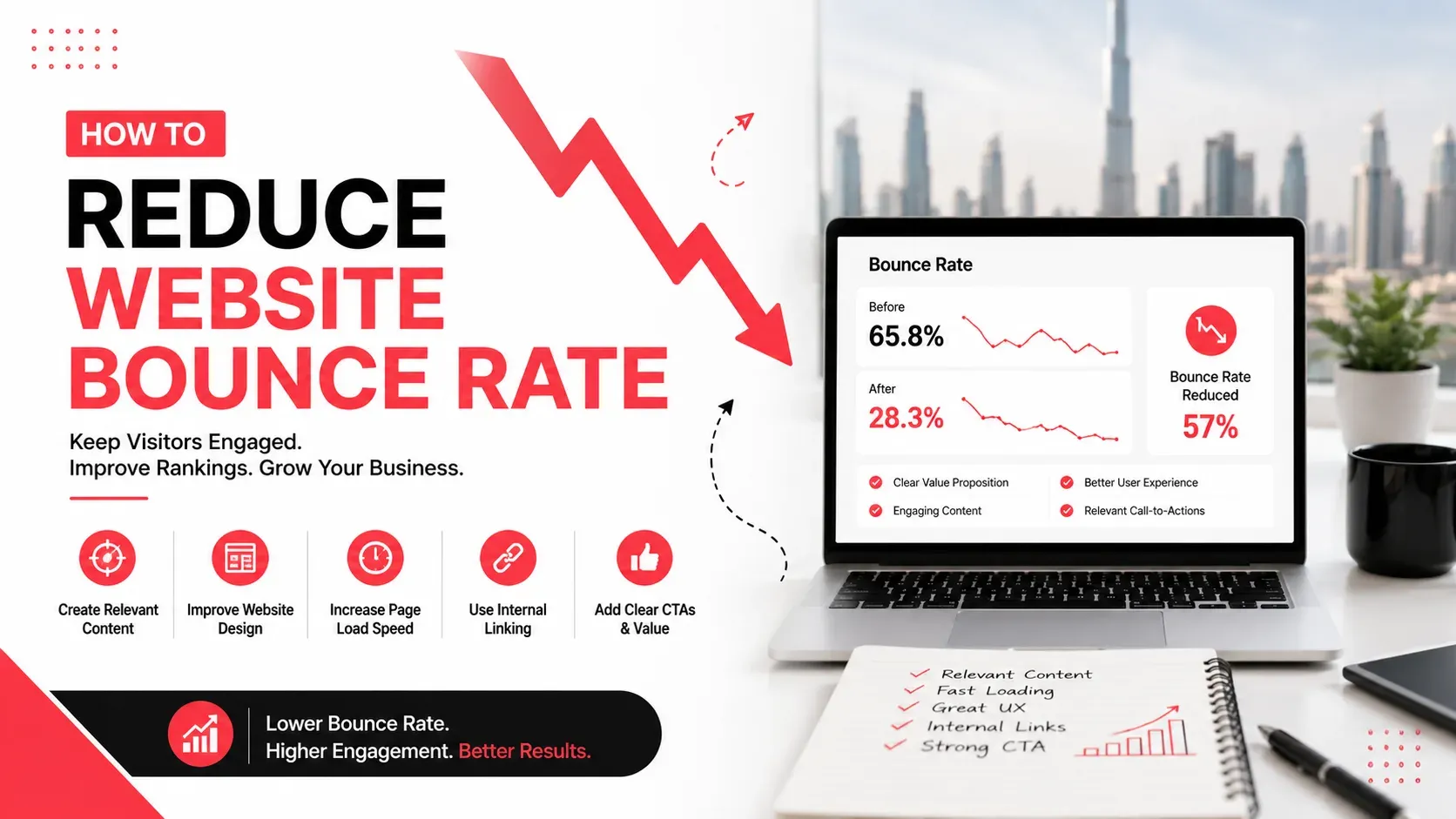
A high bounce rate often signals that visitors aren't finding what they expected when they land on your website. They arrive, view a single page, and leave without exploring further or taking any meaningful action. While not every bounce is a problem, consistently high bounce rates can indicate issues with content relevance, user experience, or page performance.
Reducing your website's bounce rate isn't about keeping visitors on your site longer for the sake of it—it's about helping them quickly find value and guiding them toward the next logical step. From improving page speed to creating stronger introductions and internal links, small changes can have a significant impact.
This guide explains what bounce rate means, why visitors leave, and practical strategies to encourage deeper engagement.
Quick Answer
To reduce website bounce rate, ensure your content matches search intent, improve page speed, create compelling introductions, simplify navigation, add contextual internal links, optimize for mobile devices, and build trust quickly. The goal is to help visitors find relevant information and encourage them to continue exploring your website.
What Is Website Bounce Rate?
Bounce rate is the percentage of visitors who leave your website after viewing only one page without continuing to another page.
Traditionally, bounce rate was widely used in Universal Analytics to measure single-page visits. In Google Analytics 4 (GA4), the focus has shifted toward engagement rate, providing a more complete view of user interaction.
Even so, bounce rate remains a useful indicator when evaluating:
- Landing page effectiveness
- Content relevance
- User experience
- Navigation quality
- Conversion opportunities
A bounce isn't always negative—it depends on whether the visitor's goal was successfully completed.
Is a High Bounce Rate Always Bad?
Not necessarily.
If someone lands on a page, finds the exact information they need, and leaves satisfied, that visit may still count as a bounce even though the page fulfilled its purpose.
Examples include:
- Reading a contact number
- Checking business hours
- Finding a quick answer
- Viewing a single announcement
However, a high bounce rate becomes concerning when visitors leave because:
- The page doesn't match their expectations.
- The website loads slowly.
- The content is difficult to read.
- Navigation is confusing.
- They don't know what to do next.
The goal is to understand why users are leaving—not simply to lower the metric.
Why Visitors Leave Your Website
Before improving bounce rate, it's important to identify the underlying causes.
Content Doesn't Match Search Intent
If visitors expect one thing but find something different, they'll often leave within seconds.
For example, a page titled "Complete SEO Guide" that only contains a brief promotional message is unlikely to satisfy readers.
Always ensure your content delivers what the title and meta description promise.
Slow Page Loading
Users expect websites to load quickly.
Delays caused by:
- Large image files
- Unoptimized scripts
- Excessive plugins
- Poor hosting
can increase abandonment before visitors even begin reading.
Improving website performance benefits both user experience and overall website quality.
Weak First Impressions
Visitors usually decide within a few seconds whether a page is worth reading.
A poor first impression may include:
- Generic introductions
- Cluttered layouts
- Unclear headlines
- Too many pop-ups
- Difficult-to-read text
Your opening section should immediately explain what users will gain from the page.
Confusing Navigation
If visitors can't easily find related information, they're more likely to leave after viewing a single page.
Common navigation problems include:
- Overcrowded menus
- Poor page organization
- Missing internal links
- Hidden contact information
Clear navigation encourages users to continue exploring naturally.
Poor Mobile Experience
Many users browse exclusively on smartphones.
Common mobile issues include:
- Tiny text
- Buttons placed too closely together
- Horizontal scrolling
- Slow loading pages
- Layouts that don't adapt properly
A mobile-friendly experience helps reduce unnecessary exits and supports better overall usability.
Match Search Intent From the Start
One of the most effective ways to reduce bounce rate is to align your content with what visitors are actually searching for.
Before writing or updating a page, ask:
- What question is the user trying to answer?
- What problem are they trying to solve?
- Are they looking for information or ready to make a purchase?
When your content immediately addresses these expectations, visitors are more likely to stay and continue reading.
Improve Above-the-Fold Content
The section visitors see before scrolling has a significant influence on whether they remain on the page.
Strong above-the-fold content typically includes:
- A clear headline
- A concise introduction
- Simple page layout
- Visible navigation
- An obvious value proposition
Avoid filling this space with oversized banners or unnecessary distractions.
Write Strong Introductions
The introduction should quickly reassure visitors that they've landed on the right page.
An effective introduction should:
- Explain the topic clearly
- Address the user's main question
- Set expectations for the rest of the article
- Encourage readers to continue
Avoid lengthy background information before delivering value.
Use Contextual Internal Links
Once visitors finish one section, help them discover another relevant resource.
Rather than inserting links randomly, connect pages that naturally extend the user's journey.
For example:
- A page about reducing bounce rate can direct readers to Best SEO Tools for Businesses in 2026 if they're looking for tools to analyze website performance.
- If readers want to improve landing page effectiveness, linking to landing page optimization can provide the next logical step.
Thoughtful internal linking improves navigation while helping users discover more valuable content.
Improve Content Readability
Visitors are more likely to leave if a page feels overwhelming or difficult to read.
Improve readability by:
- Writing short paragraphs
- Using descriptive headings
- Breaking up content with bullet points
- Explaining technical concepts in simple language
- Highlighting important information where appropriate
Well-structured content helps readers find answers quickly and encourages them to continue scrolling.
Remove Unnecessary Distractions
Some website elements interrupt the user experience instead of improving it.
Common distractions include:
- Full-screen pop-ups that appear immediately
- Auto-playing videos with sound
- Excessive advertisements
- Too many animations
- Cluttered page layouts
Keep the focus on helping visitors accomplish their goal without unnecessary interruptions.
Build Trust Early
Visitors are more likely to continue exploring when they trust your website.
You can build credibility by including:
- Customer testimonials
- Industry certifications
- Case studies
- Client logos
- Accurate contact information
- Recent and well-maintained content
Trust signals are particularly valuable on service pages, pricing pages, and landing pages where users are evaluating your business.
Optimize for Mobile Devices
A poor mobile experience often leads to higher bounce rates because visitors leave before engaging with the content.
Review your website regularly to ensure:
- Pages load quickly on mobile networks.
- Text is easy to read without zooming.
- Buttons are large enough to tap comfortably.
- Navigation remains simple across all screen sizes.
- Forms are easy to complete on smartphones.
Improving mobile usability benefits both user experience and overall website performance.
Monitor Bounce Rate With the Right Metrics
Bounce rate should never be evaluated in isolation.
Combine it with other performance metrics such as:
- Average engagement time
- Scroll depth
- Pages per session
- Conversion rate
- Exit rate
Together, these metrics provide a clearer understanding of how visitors interact with your website.
Common Bounce Rate Mistakes
Many websites unintentionally encourage visitors to leave by making avoidable mistakes.
Mistake | Better Approach |
|---|---|
Misleading page titles | Match page content with user expectations |
Slow loading pages | Optimize images, scripts, and performance |
Weak introductions | Deliver value immediately |
Poor internal linking | Guide visitors to relevant content |
Difficult navigation | Keep menus clear and intuitive |
Excessive pop-ups | Use interruptions sparingly |
Ignoring mobile users | Create a responsive, user-friendly experience |
Key Takeaways
- A high bounce rate isn't always negative, but it can reveal opportunities for improvement.
- Match search intent to visitor expectations from the beginning of each page.
- Improve page speed and mobile usability.
- Create strong introductions that immediately communicate value.
- Use contextual internal links to encourage deeper exploration.
- Remove distractions that interrupt the user experience.
- Evaluate bounce rate alongside other engagement metrics for a complete picture.
Focus on Helping Visitors Take the Next Step
Reducing bounce rate isn't about convincing people to stay on your website longer—it's about making every visit more useful. When visitors quickly find relevant information, navigate your website easily, and know what to do next, they're naturally more likely to continue exploring and eventually convert.
Instead of chasing a lower bounce rate as a standalone goal, focus on creating helpful content, improving usability, and removing friction throughout the user journey. These improvements benefit both your visitors and your long-term website performance.
Milaaj Brandset helps businesses build high-performing websites, create user-focused content, and develop SEO strategies that improve search visibility, user engagement, and conversion opportunities.
FAQs
What is a good website bounce rate?
A good bounce rate depends on the type of website and page. Informational pages may naturally have higher bounce rates than ecommerce or lead generation pages. It's more useful to compare similar pages and monitor trends over time.
Does bounce rate affect SEO?
Bounce rate is not a direct Google ranking factor. However, a high bounce rate may indicate issues with content relevance, page experience, or usability that can indirectly impact your website's overall performance.
How can I reduce bounce rate quickly?
Start by improving page speed, strengthening introductions, matching search intent, simplifying navigation, and adding relevant internal links that encourage visitors to continue their journey.
Should every page have a low bounce rate?
No. Some pages are designed to answer a single question, and users may leave after finding the information they need. In these cases, a higher bounce rate isn't necessarily a sign of poor performance.
What's the difference between bounce rate and exit rate?
Bounce rate measures visitors who leave after viewing only one page, while exit rate measures the percentage of users who leave from a specific page after viewing one or more pages during their session.
Which tools can help measure bounce rate?
Google Analytics 4, Google Search Console, Microsoft Clarity, and other analytics platforms provide valuable insights into user behavior and website performance.
Can internal links reduce bounce rate?
Yes. Contextual internal links help visitors discover related information, increasing the likelihood that they'll continue exploring your website instead of leaving after one page.
Ready to Elevate Your Brand?
Start Your Project Today