August 28, 2026
How to Create SEO Silos for Websites: A Practical Guide
Milaaj Editorial / Research Insights
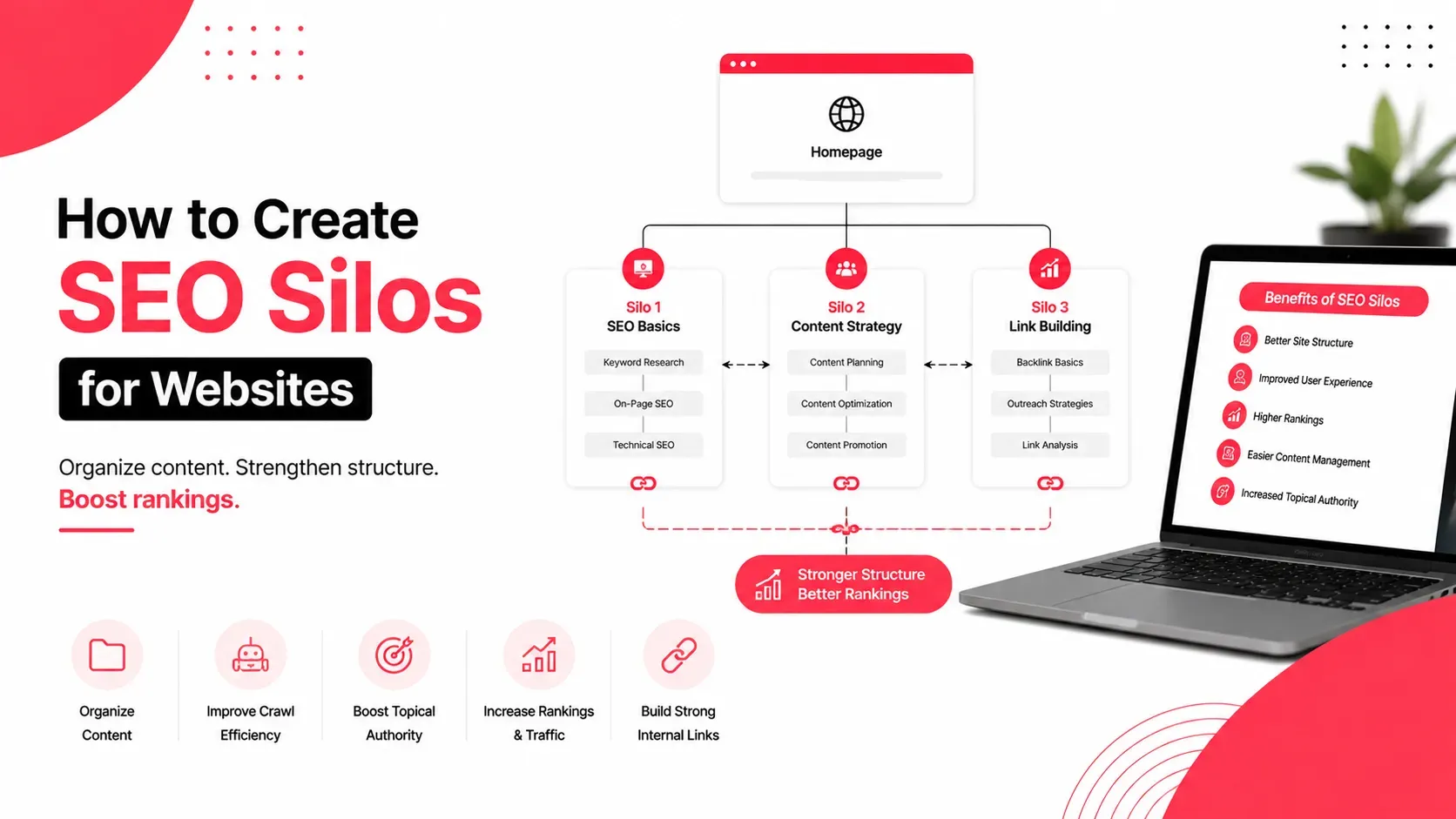
Creating a well-organized website is important for both users and search engines. As websites grow, publishing more pages without a clear structure can make content difficult to navigate, create keyword overlap, and weaken the relationship between related topics.
SEO silos provide a framework for organizing related content into clear topical groups. When combined with strong internal linking, keyword mapping, and logical site architecture, silo structures can make large websites easier to understand and navigate.
However, SEO silos shouldn't mean creating isolated sections where pages never connect. Modern SEO requires a more natural approach that prioritizes topical relevance, user intent, useful content, and logical relationships between pages.
This guide explains how to create SEO silos for websites and how to use them effectively without overcomplicating your site architecture.
Quick Answer
An SEO silo is a way of organizing related website content around major topics and their supporting subtopics.
A basic silo might look like:
SEO
→ Technical SEO
→ Internal Linking
→ URL Structure
→ On-Page SEO
To create an effective SEO silo:
- Identify your website's main topics.
- Create a clear category or pillar page for each major topic.
- Develop supporting content around related subtopics.
- Map keywords and search intent to individual pages.
- Connect relevant pages using contextual internal links.
- Keep navigation and URLs logical.
- Avoid creating overlapping pages targeting the same intent.
- Review and improve the structure as your website grows.
The goal isn't simply to create separate content "boxes." The goal is to create clear topical relationships that help users and search engines understand your website.
What Are SEO Silos and Why Do They Matter?
An SEO silo is a website organization method that groups content around related subjects.
Imagine a digital marketing website with three major areas:
- SEO
- Social Media Marketing
- Web Design
Each major area can contain more specific topics.
For example:
SEO
- Technical SEO
- Local SEO
- Internal Linking
- Keyword Research
Web Design
- UX Design
- Responsive Design
- Typography
- Website Performance
This organization creates a clear topical framework.
How SEO Silos Organize Website Content
A silo starts with a broad subject and becomes more specific as users move deeper into the content.
For example:
SEO
→ Technical SEO
→ SEO-Friendly URLs
→ Internal Linking
This structure can help users understand where each page belongs.
It can also make it easier for search engines to identify relationships between related pages.
A silo can be represented through:
- Categories
- Subcategories
- Pillar pages
- Supporting articles
- Internal links
- Navigation
- Breadcrumbs
- URL structures
However, these elements don't all need to mirror each other perfectly.
The most important objective is creating a logical relationship between pages.
SEO Silos vs Topic Clusters
SEO silos and topic clusters are closely related but aren't always implemented in exactly the same way.
A traditional silo approach tends to emphasize stronger separation between major topical categories.
A topic-cluster approach generally uses a central pillar page connected to several supporting pages through contextual internal links.
For modern websites, a flexible topic-cluster approach is often more practical.
Related pages should be connected when there is genuine value in doing so, even if those pages belong to different but closely related topical areas.
This avoids creating artificial barriers between useful content.
How to Create an SEO Silo Structure
Building SEO silos starts with understanding what your audience searches for and how those topics relate to your business.
Start With Your Main Topics
Begin with the broad subjects that are most important to your business.
For a digital marketing company, these might include:
- SEO
- Web Development
- Branding
- Social Media Marketing
- Paid Advertising
These become your potential top-level silos.
Don't create a silo simply because a keyword has search volume.
A major topic should be:
- Relevant to your business
- Relevant to your audience
- Broad enough to support multiple related topics
- Connected to your products or services
- Useful for building long-term content
This prevents websites from becoming collections of disconnected keyword pages.
Build Supporting Content Around Each Topic
Once you've identified your main topics, identify narrower questions and subtopics.
For example:
SEO
- Technical SEO
- Internal Linking
- URL Structure
- On-Page SEO
- Local SEO
- SEO Audits
Each supporting page should have a distinct purpose.
Avoid publishing multiple articles that answer essentially the same question with slightly different keyword variations.
Instead, determine whether a topic deserves:
- A dedicated page
- A subsection of an existing article
- A supporting blog
- A service page
- A category page
This keeps the site lean and reduces unnecessary content overlap.
Map Keywords to the Right Pages
Keyword mapping is an important part of building an SEO silo.
Each important keyword or search intent should have an appropriate destination.
For example:
Search intent | Potential page |
|---|---|
SEO services | Service page |
What is technical SEO? | Educational article |
SEO audit services | Service page |
How to create SEO silos | Blog article |
SEO-friendly URL structure | Supporting article |
The objective isn't to put every keyword into every page.
Instead, assign each topic to the page that best satisfies the searcher's intent.
This helps reduce keyword cannibalization, where multiple pages compete for essentially the same search intent.
Connect Pages With Internal Links
Internal links are one of the most important elements of an effective silo structure.
A pillar page can link to supporting articles.
Supporting articles can link back to the pillar page.
Related supporting articles can also link to each other when the relationship is genuinely useful.
For example:
SEO Guide
→ Internal Linking
→ SEO-Friendly URL Structure
→ Technical SEO
The article on internal linking might naturally reference the URL structure article, while the URL article could link back to the broader SEO guide.
This creates a connected content ecosystem rather than isolated pages.
A well-planned internal linking strategy can therefore strengthen the relationships between pages within each topical area.
Create a Logical URL and Navigation Structure
URLs can reinforce your website's organization.
For example:
example.com/seo/
example.com/seo/technical-seo/
example.com/seo/internal-linking/
This can be useful when the hierarchy reflects the actual organization of the website.
However, don't force every content relationship into a deep URL structure.
A blog article could simply use:
example.com/blog/how-to-create-seo-silos/
while still belonging to an SEO content cluster through categories, navigation, and internal links.
Your SEO-friendly URL structure should prioritize clarity and long-term maintainability rather than creating unnecessary folder levels.
Best Practices for Building Effective SEO Silos
An SEO silo should make your website easier to understand—not more complicated.
Keep Each Silo Topically Focused
Every silo should have a clear central subject.
For example, an SEO silo could cover:
- SEO fundamentals
- Technical SEO
- On-page SEO
- Internal linking
- Site architecture
A topic about social media advertising probably belongs somewhere else.
This doesn't mean unrelated topics can never be connected.
If two subjects overlap from the user's perspective, linking them can be helpful.
The key is to maintain a clear primary focus for each section.
Strengthen Relationships Between Related Pages
Don't rely exclusively on category pages.
Contextual links within content can create stronger relationships between specific pages.
For example, an article about website architecture might naturally link to a guide explaining internal linking.
This gives the visitor a direct path to a related resource.
Navigation, breadcrumbs, category pages, and contextual links can all work together.
Good website design principles should support this structure by making important content easy to discover without overwhelming visitors.
Avoid Overlapping or Competing Content
One of the biggest problems with poorly planned silos is creating too many pages targeting similar queries.
Consider these articles:
- SEO Silo Structure
- SEO Silo Architecture
- SEO Content Silo Strategy
- Website SEO Silo Structure
If they all answer essentially the same question, they may provide little additional value.
Instead, consider consolidating them into one comprehensive resource.
Then create supporting pages only when there is a meaningful difference in search intent.
Common SEO Silo Mistakes to Avoid
Creating Too Many Silos
More categories don't automatically create better SEO.
A small business might only need three or four major topical areas.
Creating dozens of categories can make navigation confusing and spread content too thinly.
Isolating Pages From Each Other
A common misconception is that an SEO silo requires completely separating one topic from another.
Don't create artificial walls between useful resources.
If a page about technical SEO naturally relates to website speed or UX, linking to those resources can improve the user experience.
Over-Optimizing Keywords and Links
Avoid forcing exact-match keywords into every URL, heading, and anchor text.
For example, repeatedly using the same keyword in every internal link can make content feel unnatural.
Use varied, descriptive anchor text that accurately describes the destination.
Building Silos Without User Intent
A silo should be based on what your audience actually needs.
Don't organize content purely according to keyword tools.
Consider:
- What questions do customers ask?
- What problems are they trying to solve?
- What information do they need before purchasing?
- Which topics naturally relate to your services?
- What content should visitors see next?
SEO structure should support the customer journey as well as search visibility.
How to Maintain and Improve SEO Silos
SEO silos aren't something you create once and never touch again.
Websites change.
New services are introduced. New articles are published. Old pages become outdated. Search behavior changes.
Review your silo structure periodically.
Check whether:
- Important pages have relevant internal links
- Supporting articles connect to their main topic
- Older content links to newer resources
- Duplicate topics should be consolidated
- Orphan pages exist
- Navigation still makes sense
- URLs remain consistent
- Some silos have too much content while others have very little
You can also review organic traffic and engagement to identify content that deserves additional internal links or consolidation.
The objective is continuous improvement.
Key Takeaways
- SEO silos organize related website content around broader topics.
- Start with business-relevant subjects rather than individual keywords.
- Use pillar pages and supporting content to create topical depth.
- Map keywords according to search intent and page purpose.
- Use contextual internal links to connect related pages.
- Don't artificially isolate different but relevant topics.
- Keep URLs and navigation logical without creating unnecessary depth.
- Avoid publishing multiple pages targeting the same search intent.
- Review orphan pages and underlinked content regularly.
- Consolidate overlapping content where appropriate.
- Let user needs guide the structure rather than relying exclusively on keyword data.
- Treat SEO silos as an evolving part of your overall website architecture.
Conclusion
Creating SEO silos is ultimately about giving your website a clear topical structure.
Instead of publishing individual articles that exist independently, organize related content around meaningful subjects and connect those pages through relevant internal links.
Start with your main business topics. Build supporting content around genuine user needs. Map keywords to the pages that best satisfy their search intent. Then connect related resources through contextual links, navigation, and logical architecture.
Don't worry about creating a perfectly rigid silo.
A modern website should be structured enough for search engines and visitors to understand, while remaining flexible enough for genuinely related topics to connect.
For businesses looking to build a stronger search foundation, SEO services can help combine content architecture, keyword strategy, internal linking, technical SEO, and on-page optimization into a broader organic growth strategy. Milaaj Brandset helps businesses build connected digital strategies designed around both search visibility and business objectives.
The best SEO silo isn't the one with the most categories or links.
It's the one that makes your website's expertise easy to understand, easy to navigate, and easy to discover.
Frequently Asked Questions
What is an SEO silo structure?
An SEO silo structure organizes related website pages around broad topics and supporting subtopics. It commonly uses categories, pillar pages, supporting content, internal links, and navigation to establish clear topical relationships.
Are SEO silos still useful for SEO?
Yes, but they should be implemented flexibly. Modern SEO benefits from logical topical organization and relevant internal linking rather than rigidly isolating content into disconnected sections.
How many SEO silos should a website have?
There is no universal number. The number should reflect the business's major topics, services, products, and audience needs. A smaller website may only need a few major topical areas.
What is the difference between an SEO silo and a topic cluster?
Both organize related content around a central subject. Traditional silo structures often emphasize stronger separation between categories, while topic clusters generally emphasize a central pillar page connected to supporting content through contextual links.
Do SEO silos improve rankings?
A well-organized silo structure doesn't guarantee rankings. However, logical site architecture, relevant internal linking, useful content, and clear topical relationships can support crawlability, content discovery, usability, and overall SEO performance.
Should every page within a silo link to every other page?
No. Link pages when the relationship is useful and relevant. Excessive internal linking can make content difficult to read and can reduce the usefulness of individual links.
Can different SEO silos link to each other?
Yes. If two topics are genuinely related and the link helps users understand or explore the subject, cross-linking is appropriate. Modern SEO should prioritize meaningful relationships rather than artificially separating content.
Ready to Elevate Your Brand?
Start Your Project Today