August 1, 2026
How to Track Marketing ROI Effectively
Milaaj Editorial / Research Insights
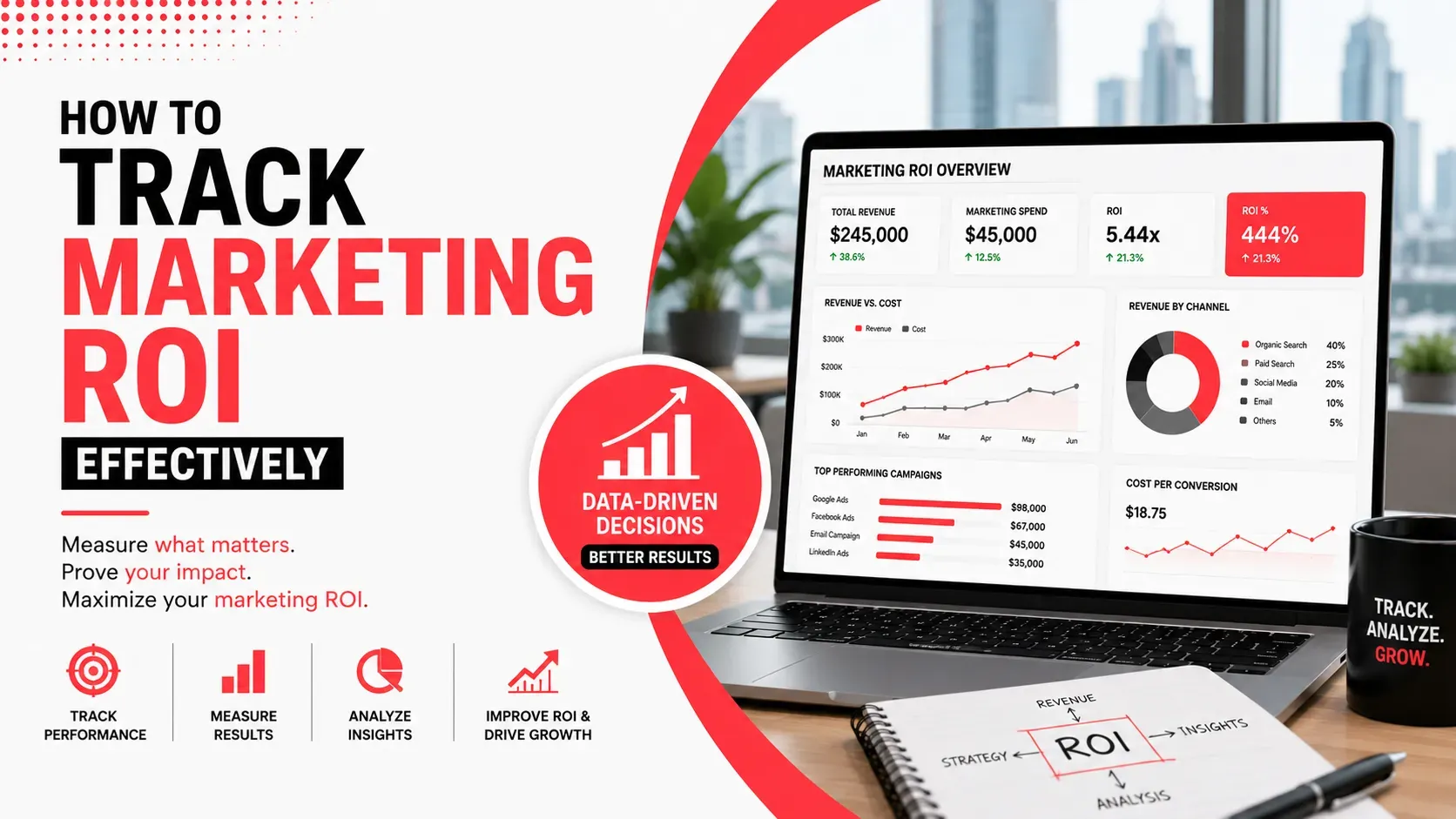
Every business invests time and money into marketing with the expectation of generating measurable results. However, without accurately tracking marketing return on investment (ROI), it becomes difficult to identify which campaigns drive revenue, which channels deserve additional budget, and where improvements are needed.
Modern digital marketing generates vast amounts of data, but collecting data alone isn't enough. Businesses need a structured approach to connect marketing activities with leads, sales, and long-term customer value. Measuring ROI helps organizations move beyond vanity metrics like impressions or likes and focus on outcomes that directly impact business growth.
Whether you invest in SEO, paid advertising, social media, content marketing, or email campaigns, this guide explains how to track marketing ROI effectively and use those insights to make smarter marketing decisions.
Quick Answer
Marketing ROI measures how much revenue your marketing efforts generate compared to the amount invested. Businesses can improve ROI tracking by setting clear objectives, measuring conversions, using analytics platforms, connecting marketing data with sales outcomes, and regularly reviewing campaign performance to optimize future investments.
What Is Marketing ROI?
Marketing ROI (Return on Investment) measures the financial return generated from marketing activities relative to the cost of those activities.
Rather than simply measuring traffic or engagement, ROI answers an important business question:
"Is our marketing investment generating profitable business results?"
Tracking ROI enables businesses to:
- Evaluate campaign profitability
- Compare marketing channels
- Improve budget allocation
- Identify high-performing strategies
- Reduce unnecessary marketing spend
- Support long-term business growth
Without ROI measurement, businesses risk investing in campaigns that appear successful but contribute little to revenue.
Why Tracking Marketing ROI Matters
Marketing budgets should be treated as business investments rather than expenses.
When ROI is measured consistently, businesses can:
Make Better Budget Decisions
Knowing which campaigns produce the strongest returns helps prioritize future investment.
Improve Campaign Performance
Performance data reveals opportunities to optimize campaigns instead of relying on assumptions.
Align Marketing With Business Goals
Marketing should contribute to objectives such as lead generation, sales, customer retention, and revenue growth—not simply increase website traffic.
Increase Accountability
ROI reporting helps marketing teams demonstrate the value of their work using measurable business outcomes.
The Marketing ROI Formula
A common way to calculate marketing ROI is:
Marketing ROI = ((Revenue Generated – Marketing Cost) ÷ Marketing Cost) × 100
For example:
- Marketing investment: AED 20,000
- Revenue generated: AED 80,000
Marketing ROI:
((80,000 − 20,000) ÷ 20,000) × 100 = 300%
While this calculation provides a useful starting point, businesses should also consider customer lifetime value, repeat purchases, and sales cycle length when evaluating long-term ROI.
Define Clear Marketing Objectives
Accurate ROI measurement begins with clearly defined goals.
Examples include:
- Generate qualified leads
- Increase online sales
- Improve consultation bookings
- Grow newsletter subscriptions
- Increase demo requests
- Improve customer retention
Each objective should have measurable performance indicators that can be tracked consistently.
Marketing Channels You Should Measure
Every marketing channel contributes differently to business growth.
Search Engine Optimization (SEO)
Measure:
- Organic traffic
- Keyword rankings
- Lead generation
- Conversion rate
- Revenue from organic visitors
SEO often delivers long-term ROI because well-optimized content continues generating qualified traffic over time.
Paid Advertising
Monitor:
- Cost per click (CPC)
- Cost per acquisition (CPA)
- Return on ad spend (ROAS)
- Conversion rate
- Revenue generated
Paid campaigns provide immediate performance data, making them easier to optimize regularly.
Social Media Marketing
Track:
- Website referrals
- Lead generation
- Engagement quality
- Assisted conversions
- Customer acquisition
Rather than focusing solely on likes or followers, evaluate how social media contributes to business objectives.
Email Marketing
Review:
- Open rate
- Click-through rate
- Conversion rate
- Revenue per campaign
- Customer retention
Email marketing often produces strong ROI because it engages audiences that have already expressed interest in your business.
Essential Metrics That Influence Marketing ROI
ROI depends on more than revenue alone.
Businesses should regularly monitor supporting metrics.
Metric | Why It Matters |
|---|---|
Conversion Rate | Shows how efficiently visitors become leads or customers |
Customer Acquisition Cost (CAC) | Measures the cost of acquiring a customer |
Customer Lifetime Value (CLV) | Indicates long-term customer profitability |
Return on Ad Spend (ROAS) | Evaluates advertising efficiency |
Cost Per Lead (CPL) | Measures lead generation efficiency |
Lead-to-Customer Rate | Indicates the quality of marketing-generated leads |
Reviewing these metrics together provides a more complete understanding of marketing performance.
Use the Right Analytics Tools
Accurate ROI measurement requires reliable reporting tools.
Commonly used platforms include:
- Google Analytics 4 (GA4)
- Google Search Console
- Google Ads
- Meta Ads Manager
- CRM platforms
- Looker Studio dashboards
Using integrated reporting allows businesses to connect website activity, campaign performance, and sales outcomes more effectively.
Businesses investing in Digital Marketing Services often implement integrated analytics systems to accurately measure campaign performance across multiple marketing channels and improve overall return on investment.
Connect Marketing Data With Sales
One of the biggest ROI challenges is measuring what happens after a lead is generated.
Businesses should connect:
- Marketing campaigns
- Website enquiries
- CRM records
- Sales outcomes
- Customer revenue
This creates a complete picture of how marketing activities contribute to actual business growth instead of measuring only initial interactions.
Build Marketing Dashboards That Focus on Business Outcomes
A well-designed dashboard makes it easier to evaluate performance without manually reviewing multiple reports.
Your dashboard should prioritize metrics that support business decisions rather than displaying every available data point.
Include metrics such as:
- Marketing ROI
- Revenue by channel
- Conversion rate
- Cost per acquisition (CPA)
- Customer acquisition cost (CAC)
- Customer lifetime value (CLV)
- Return on ad spend (ROAS)
- Qualified leads generated
A concise dashboard helps business owners and marketing teams identify trends and make faster, data-driven decisions.
Understand Attribution Before Measuring ROI
Customers rarely convert after a single interaction. A prospect may discover your business through organic search, return after seeing a social media post, and finally submit an enquiry after clicking a paid advertisement.
This makes attribution an important part of ROI tracking.
Common attribution approaches include:
Attribution Model | Best Used For |
|---|---|
First Click | Measuring awareness channels that introduce new visitors |
Last Click | Understanding the final interaction before conversion |
Linear | Giving equal value to every touchpoint in the customer journey |
Data-Driven | Evaluating the actual contribution of each marketing interaction using machine learning |
Using an attribution model that reflects your sales process provides a more accurate understanding of marketing performance.
Review ROI Regularly
Marketing ROI should be monitored continuously rather than only at the end of a campaign.
A practical review schedule includes:
- Weekly checks for active campaigns
- Monthly performance reviews
- Quarterly strategic analysis
- Annual marketing performance evaluation
Regular reviews help identify underperforming campaigns early, allowing you to reallocate budgets before unnecessary costs accumulate.
Common Marketing ROI Tracking Mistakes
Many businesses struggle to calculate ROI accurately because they focus on incomplete or misleading data.
Mistake | Better Approach |
|---|---|
Measuring only traffic | Measure leads, sales, and revenue alongside traffic. |
Ignoring customer lifetime value | Include long-term customer value when evaluating ROI. |
Tracking vanity metrics | Focus on KPIs that directly support business objectives. |
Failing to connect CRM and analytics | Combine marketing and sales data for complete reporting. |
Reviewing reports too infrequently | Monitor performance consistently throughout campaigns. |
Using inconsistent reporting periods | Compare data using standardized reporting intervals. |
Avoiding these mistakes improves reporting accuracy and supports more effective decision-making.
Improve Marketing ROI Over Time
Increasing ROI isn't always about increasing budgets. In many cases, improving efficiency delivers better results.
Consider strategies such as:
- Optimizing landing pages
- Improving website speed
- Refining audience targeting
- Strengthening calls to action
- Reducing cost per acquisition
- Improving lead qualification
- Testing different campaign creatives
- Focusing investment on high-performing channels
Small improvements across multiple areas often produce significant long-term gains.
Businesses offering UI/UX Design Services frequently improve marketing ROI by creating user-friendly websites that reduce friction, increase engagement, and convert a higher percentage of visitors into qualified leads.
Marketing ROI Is an Ongoing Process
Marketing performance changes as customer behaviour, competition, and digital platforms evolve.
Businesses should treat ROI measurement as a continuous optimization process by:
- Setting measurable objectives
- Monitoring campaign performance
- Testing improvements
- Refining marketing strategies
- Adjusting budgets based on results
This iterative approach helps businesses maximize returns while minimizing unnecessary marketing expenditure.
Key Takeaways
- Marketing ROI measures the profitability of your marketing investments.
- Clear business objectives make ROI tracking more meaningful.
- Evaluate multiple metrics, including conversion rate, CAC, CLV, CPA, and ROAS.
- Connect marketing data with CRM and sales data for more accurate reporting.
- Attribution models help explain how different marketing channels contribute to conversions.
- Continuous analysis and optimization improve ROI over time.
Make Every Marketing Investment Count
Tracking marketing ROI effectively enables businesses to make smarter decisions, allocate budgets more efficiently, and focus on strategies that deliver measurable business growth. Rather than relying on assumptions or vanity metrics, organizations that consistently measure marketing performance gain a clearer understanding of what drives qualified leads, revenue, and long-term customer value.
By combining reliable analytics, structured reporting, and continuous optimization, businesses can improve the efficiency of every marketing investment and build sustainable growth over time.
Milaaj Brandset helps businesses implement data-driven digital marketing strategies, performance reporting, and conversion-focused optimization that maximize marketing ROI and support long-term business success.
FAQs
What is marketing ROI?
Marketing ROI measures how much revenue your marketing activities generate compared to the amount invested. It helps businesses evaluate the profitability of marketing campaigns and allocate budgets more effectively.
Which metrics are most important for tracking marketing ROI?
Key metrics include conversion rate, customer acquisition cost (CAC), customer lifetime value (CLV), cost per lead (CPL), return on ad spend (ROAS), and revenue generated from each marketing channel.
Why is attribution important when measuring ROI?
Customers often interact with multiple marketing channels before converting. Attribution helps determine how each touchpoint contributes to the final conversion, providing a more accurate picture of campaign performance.
Which tools help measure marketing ROI?
Businesses commonly use Google Analytics 4, Google Search Console, Google Ads, Meta Ads Manager, CRM platforms, and Looker Studio to monitor campaign performance and connect marketing activities with business outcomes.
How often should marketing ROI be reviewed?
Weekly monitoring is recommended for active campaigns, while monthly and quarterly reviews provide a broader view of performance trends and opportunities for improvement.
Can improving website conversions increase marketing ROI?
Yes. Increasing the percentage of visitors who become leads or customers improves the return from existing marketing investments without necessarily increasing advertising spend.
Ready to Elevate Your Brand?
Start Your Project Today