July 25, 2026
How to Improve Google Ads Quality Score for Better Ad Performance
Milaaj Editorial / Research Insights
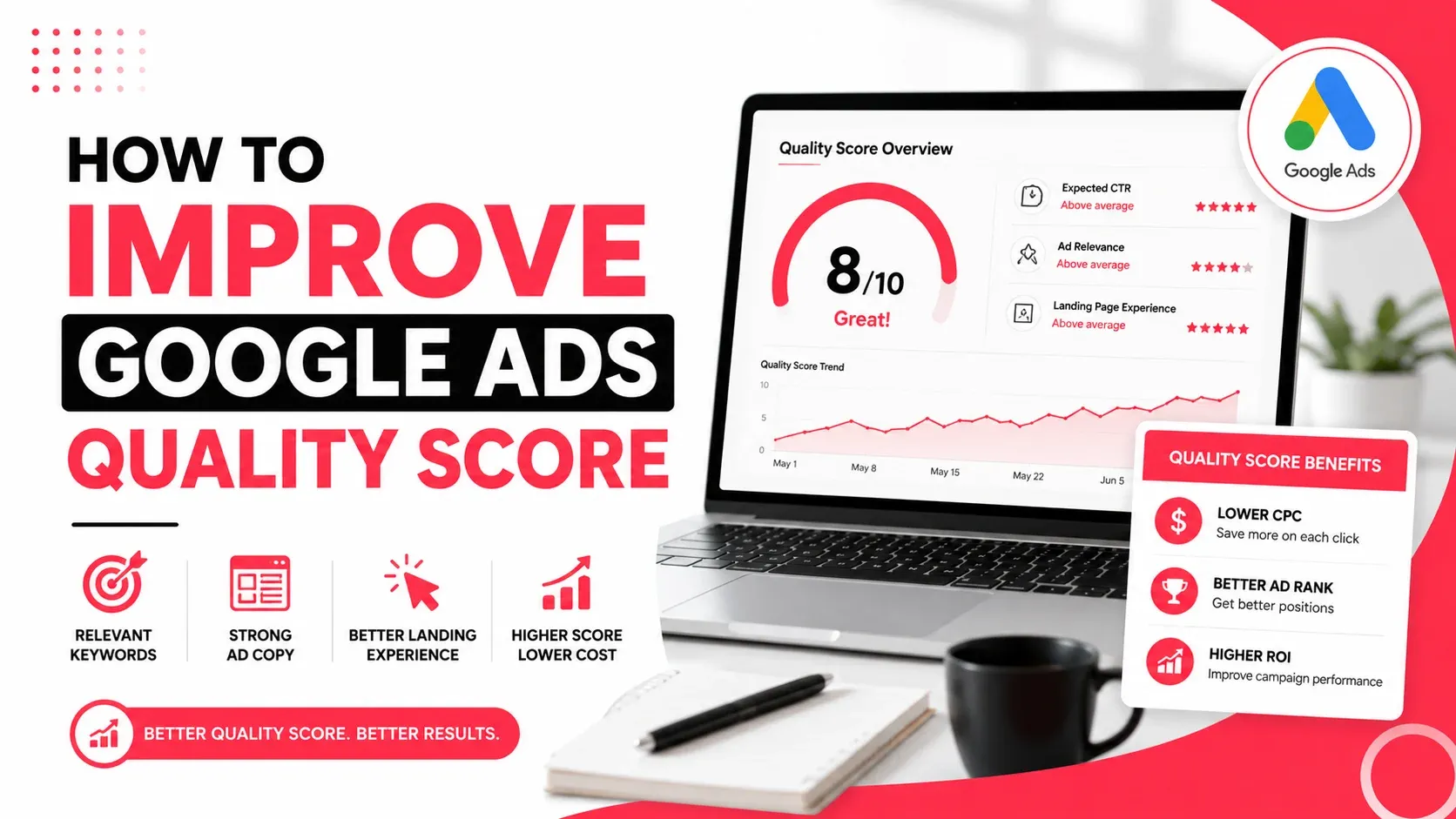
Running successful Google Ads campaigns involves more than choosing the right keywords and setting a budget. Google's advertising system also evaluates the quality and relevance of your ads to determine how effectively they meet users' search intent. This evaluation is reflected in your Quality Score, an important metric that can influence your ad visibility, cost per click, and overall campaign efficiency.
A higher Quality Score doesn't simply improve campaign performance—it indicates that your ads, keywords, and landing pages are working together to provide a better experience for potential customers.
This guide explains what Google Ads Quality Score is, why it matters, and the practical steps businesses can take to improve it over time.
Quick Answer
Google Ads Quality Score is Google's rating of the relevance and quality of your keywords, advertisements, and landing pages. Businesses can improve Quality Score by creating tightly themed keyword groups, writing highly relevant ad copy, optimizing landing page experience, improving expected click-through rates, and continuously testing campaign performance.
What Is Google Ads Quality Score?
Quality Score is Google's estimate of how useful and relevant your ads are to people searching for specific keywords.
Although Quality Score is reported on a scale from 1 to 10, it should be viewed as a diagnostic indicator rather than a direct performance goal.
Google evaluates three primary factors:
- Expected click-through rate (CTR)
- Ad relevance
- Landing page experience
Together, these signals help determine how well your advertisement aligns with user expectations.
Why Quality Score Matters
Improving Quality Score benefits both advertisers and users.
Businesses with higher Quality Scores often experience:
- Lower advertising costs
- Better ad visibility
- Improved campaign efficiency
- Stronger user engagement
- More relevant traffic
Rather than rewarding higher advertising budgets alone, Google also rewards advertisers that provide useful, relevant experiences.
Lower Cost Per Click
A better Quality Score can reduce the amount advertisers pay for individual clicks.
Although bidding strategies remain important, highly relevant campaigns may achieve competitive ad positions without requiring the highest bids.
Improving campaign quality can therefore help businesses use their advertising budgets more efficiently.
Better Ad Positions
Ad Rank determines where advertisements appear in search results.
While bid amount influences Ad Rank, Quality Score also contributes significantly.
Relevant ads with strong user experiences often outperform less relevant competitors even when those competitors bid more aggressively.
Improved Campaign Efficiency
Higher Quality Scores frequently result in:
- Better click-through rates
- Improved conversion opportunities
- More qualified visitors
- Reduced wasted advertising spend
Rather than treating Quality Score as an isolated metric, businesses should view it as part of their overall campaign optimization strategy.
The Three Factors That Influence Quality Score
Understanding Google's evaluation criteria makes optimization much easier.
Expected Click-Through Rate (CTR)
Expected CTR estimates how likely users are to click your advertisement when it appears.
Although past performance contributes to this estimate, businesses can improve expected CTR by:
- Writing compelling headlines
- Highlighting customer benefits
- Matching user intent
- Including strong calls to action
Ads that attract relevant clicks demonstrate greater usefulness to searchers.
Ad Relevance
Google evaluates how closely your advertisement matches the keyword being searched.
Highly relevant advertisements typically include:
- Keywords naturally incorporated into headlines
- Messaging aligned with search intent
- Clear descriptions of products or services
- Consistent language throughout the campaign
Grouping unrelated keywords into the same ad group often reduces ad relevance.
Landing Page Experience
After users click an advertisement, Google evaluates whether the landing page delivers the information promised by the ad.
Important landing page qualities include:
- Relevant content
- Fast loading speeds
- Mobile responsiveness
- Easy navigation
- Clear calls to action
- Helpful user experience
Landing pages should answer users' questions quickly while making it easy to complete the desired action.
Organize Keywords Into Tightly Focused Ad Groups
One of the most effective ways to improve Quality Score is by creating highly focused ad groups.
Instead of placing dozens of unrelated keywords together, organize campaigns into smaller groups built around closely related search intent.
For example, separate campaigns might target:
- Brand-specific searches
- Product categories
- Individual services
- Informational searches
Better keyword organization allows businesses to create more relevant advertisements for every search.
Write Highly Relevant Ad Copy
Every advertisement should closely reflect both the targeted keyword and the user's search intent.
Strong ad copy typically includes:
- Relevant keywords
- Clear value propositions
- Specific benefits
- Compelling calls to action
Businesses using Google Ads management services often improve Quality Score by continuously testing headlines, descriptions, and messaging to identify combinations that generate stronger engagement.
Match User Intent
Not every search represents the same objective.
Before writing advertisements, consider what the searcher wants to accomplish.
For example:
- Informational searches need educational content.
- Commercial searches require product comparisons.
- Transactional searches benefit from clear purchase or enquiry options.
Aligning advertisements with search intent improves both click-through rates and landing page satisfaction.
If you're optimizing the pages your ads direct users to, our guide on How to Build a High-Converting Homepage explains how clear messaging, navigation, and calls to action improve visitor engagement after the click.
Optimize Landing Page Experience
Landing page experience is one of the three core components of Google Ads Quality Score.
When users click your ad, they expect to find content that directly answers their search query.
An effective landing page should:
- Match the advertisement's message
- Clearly explain the product or service
- Load quickly
- Be mobile-friendly
- Provide intuitive navigation
- Include a clear call to action
The closer the landing page aligns with the user's expectations, the stronger the overall experience.
Improve Page Speed
Slow-loading pages can negatively affect both user experience and advertising performance.
Businesses should regularly optimize page speed by:
- Compressing images
- Reducing unnecessary scripts
- Minimizing CSS and JavaScript files
- Enabling browser caching
- Using reliable web hosting
- Optimizing Core Web Vitals
Faster pages encourage users to stay longer and interact with your content, supporting stronger campaign performance.
Use Negative Keywords
Not every search that contains one of your keywords is relevant to your business.
Negative keywords help prevent advertisements from appearing for unrelated searches.
Benefits include:
- Reducing wasted ad spend
- Improving click quality
- Increasing campaign relevance
- Supporting stronger click-through rates
Regularly reviewing search term reports helps identify additional negative keywords that improve campaign efficiency.
Test Multiple Ad Variations
Even small improvements in ad copy can influence click-through rates and Quality Score.
Consider testing different:
- Headlines
- Descriptions
- Calls to action
- Display paths
- Value propositions
Testing one element at a time makes it easier to identify which changes contribute to better performance.
Continuous optimization is more effective than relying on a single version of an advertisement.
Monitor Quality Score Components
Rather than focusing only on the overall Quality Score number, review the status of each component individually.
Monitor whether Google reports:
- Expected CTR as Below Average, Average, or Above Average
- Ad Relevance as Below Average, Average, or Above Average
- Landing Page Experience as Below Average, Average, or Above Average
These indicators help identify which part of the campaign requires the greatest attention.
Businesses investing in PPC campaign optimization often prioritize improving the weakest component first because incremental improvements across multiple areas can have a cumulative effect on overall campaign performance.
Common Quality Score Mistakes
Many advertisers unintentionally reduce their Quality Score through avoidable campaign issues.
Mistake | Better Approach |
|---|---|
Using large ad groups with unrelated keywords | Create tightly themed keyword groups |
Writing generic advertisements | Match ad copy closely to search intent |
Sending traffic to generic landing pages | Use dedicated, highly relevant landing pages |
Ignoring page speed | Optimize loading performance across devices |
Failing to add negative keywords | Regularly review search terms and exclude irrelevant queries |
Rarely updating campaigns | Continuously test and refine ads, keywords, and landing pages |
Avoiding these mistakes helps improve campaign relevance while creating a better experience for potential customers.
Measure Improvement Over Time
Quality Score should be evaluated alongside broader campaign performance rather than treated as an isolated metric.
Useful performance indicators include:
- Click-through rate (CTR)
- Conversion rate
- Cost per click (CPC)
- Cost per conversion
- Impression share
- Landing page engagement
- Return on advertising investment
Tracking these metrics together provides a more complete understanding of campaign success.
To improve post-click performance even further, our blog on How UX Design Impacts Lead Generation explains how user experience influences visitor engagement, conversions, and overall campaign effectiveness.
Key Takeaways
- Google Ads Quality Score measures the relevance of your keywords, advertisements, and landing pages.
- Expected click-through rate, ad relevance, and landing page experience are the three primary Quality Score factors.
- Smaller, well-organized ad groups improve campaign relevance.
- Landing pages should closely match user intent while providing a fast and user-friendly experience.
- Negative keywords help eliminate irrelevant traffic and improve campaign efficiency.
- Continuous testing and optimization support long-term improvements in advertising performance.
Build Better Campaigns Through Relevance
Improving Google Ads Quality Score is not about optimizing a single number—it is about creating a better experience for potential customers. When keywords, advertisements, and landing pages work together to satisfy user intent, campaigns often become more efficient, attract higher-quality traffic, and make better use of advertising budgets.
By continuously refining keyword organization, testing ad copy, improving landing pages, and monitoring campaign performance, businesses can strengthen both Quality Score and overall advertising results over time.
Milaaj Brandset helps businesses develop data-driven Google Ads strategies that combine campaign optimization, user-focused landing pages, and performance analysis to maximize advertising efficiency and sustainable business growth.
FAQs
What is Google Ads Quality Score?
Google Ads Quality Score is Google's rating of the relevance and quality of your keywords, advertisements, and landing pages. It helps estimate how useful your ads are to users searching for specific terms.
Does a higher Quality Score reduce advertising costs?
A higher Quality Score can contribute to lower cost per click (CPC) and improved Ad Rank because Google rewards advertisements that provide a relevant and helpful user experience.
What are the three components of Quality Score?
Google evaluates:
- Expected click-through rate (CTR)
- Ad relevance
- Landing page experience
Improving these areas generally leads to stronger campaign performance.
How often should I optimize my Google Ads campaigns?
Campaigns should be reviewed regularly. Monitoring search terms, testing new ad variations, updating keywords, and improving landing pages help maintain performance as competition and user behavior change.
Do landing pages affect Quality Score?
Yes. Landing page relevance, usability, mobile responsiveness, loading speed, and content quality all contribute to Google's evaluation of landing page experience.
Should I focus only on Quality Score?
No. Quality Score is a useful diagnostic metric, but campaign success should also be measured using click-through rate, conversion rate, cost per conversion, lead quality, and overall return on advertising investment.
Ready to Elevate Your Brand?
Start Your Project Today