July 31, 2026
How to Increase Website Leads Without More Traffic
Milaaj Editorial / Research Insights
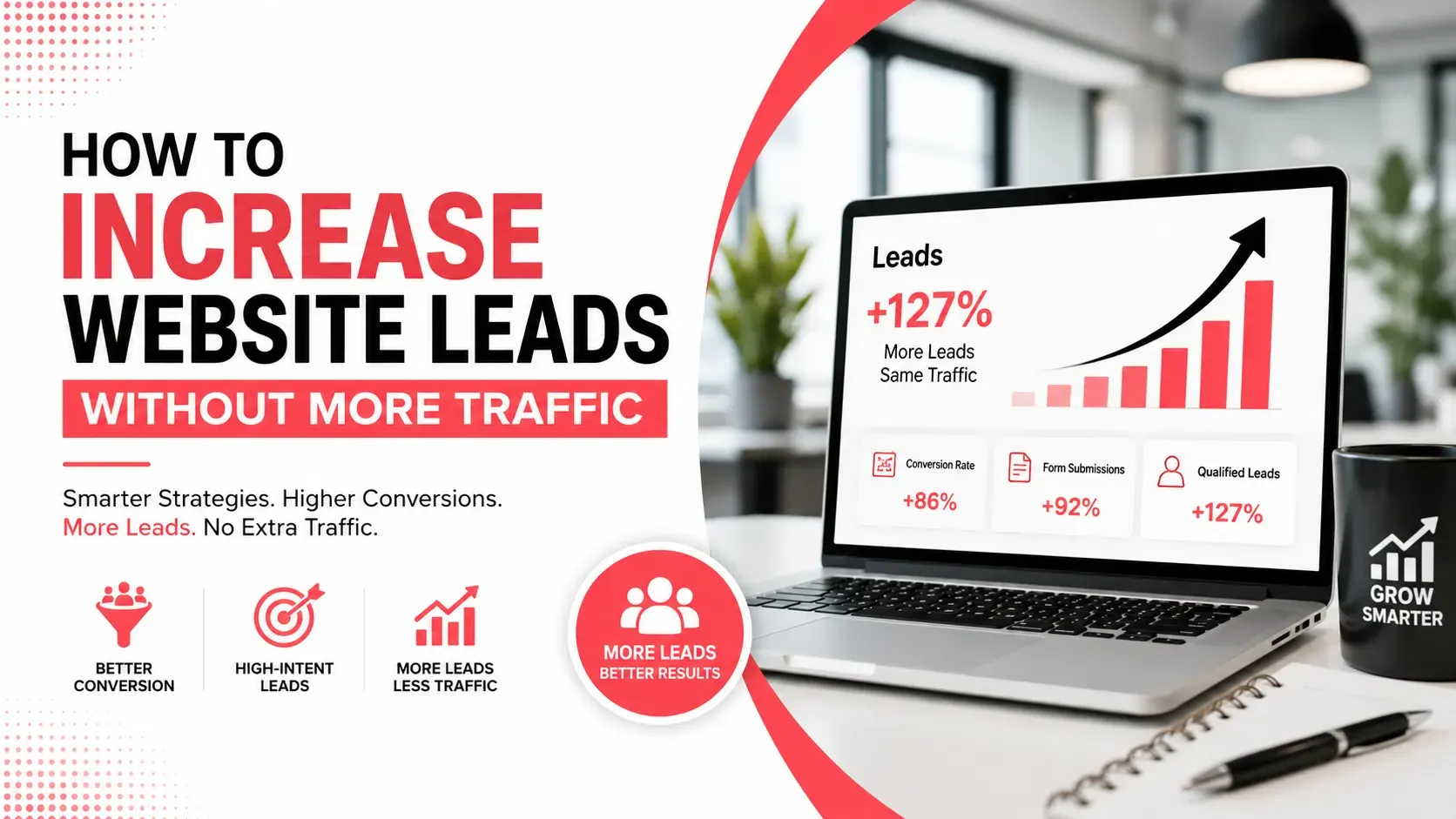
Many businesses believe the only way to generate more leads is to attract more website visitors. While increasing traffic can support growth, it often requires additional investment in SEO, paid advertising, or content marketing. A more cost-effective approach is to improve how well your existing website converts visitors into enquiries, consultations, or customers.
Every website loses potential leads because of issues such as unclear messaging, complicated forms, slow loading speeds, or poor user experience. Addressing these obstacles can significantly increase conversions without spending more on acquiring traffic.
In this guide, you'll learn practical strategies to generate more website leads by optimizing your website, improving user experience, and making it easier for visitors to take action.
Quick Answer
You can increase website leads without adding more traffic by improving your website's conversion rate. Focus on strengthening your value proposition, simplifying lead forms, improving calls to action, building trust, enhancing mobile usability, and continuously testing website improvements to convert more existing visitors into qualified leads.
Why More Traffic Isn't Always the Answer
Increasing traffic is valuable only if your website can convert visitors effectively.
For example:
- A website receiving 5,000 visitors with a 1% conversion rate generates 50 leads.
- Improving the conversion rate to 2% doubles lead generation to 100 leads—without attracting a single additional visitor.
This illustrates why optimizing your website can often produce faster and more cost-effective results than focusing solely on traffic growth.
Identify Where You're Losing Potential Leads
Before making changes, understand where visitors abandon the conversion journey.
Common friction points include:
- High bounce rates
- Low engagement on key pages
- Poor-performing landing pages
- Complicated enquiry forms
- Weak calls to action
- Mobile usability issues
- Slow page loading speeds
Reviewing website analytics and user behaviour helps identify the pages and processes that need attention.
Create a Strong Value Proposition
Visitors should immediately understand:
- What your business offers
- Who your services are for
- What problem you solve
- Why they should choose your business
A clear value proposition reduces confusion and encourages visitors to continue exploring your website.
Instead of focusing only on your company, explain how your services deliver measurable benefits to potential customers.
Improve Your Calls to Action
Many websites lose conversions because visitors are unsure what to do next.
Every important page should include one primary call to action.
Examples include:
- Request a Free Quote
- Book a Consultation
- Schedule a Demo
- Contact Our Team
- Get Started Today
Place calls to action where visitors naturally make decisions, such as after explaining key benefits or addressing common concerns.
Avoid overwhelming users with multiple competing buttons on the same page.
Simplify Your Lead Forms
Lengthy forms create unnecessary friction.
Ask only for information required to begin the conversation.
For most service businesses, the following fields are sufficient:
- Name
- Email address
- Phone number
- Brief message
Reducing the number of required fields often increases form completion rates while still providing enough information for effective follow-up.
Build Trust Before Asking for Enquiries
People are more likely to contact businesses they trust.
Include trust-building elements such as:
- Customer testimonials
- Case studies
- Client logos
- Industry certifications
- Awards
- Verified reviews
- Privacy assurances
These signals help reduce uncertainty and give visitors greater confidence in taking the next step.
Improve User Experience
A confusing website can discourage visitors from converting, regardless of how good your services are.
Focus on creating a user journey that feels intuitive by:
- Simplifying navigation
- Organizing content logically
- Improving readability
- Making buttons easy to find
- Removing unnecessary distractions
Businesses investing in UI/UX Design Services often improve lead generation by reducing friction and making important actions easier for visitors to complete.
Optimize for Mobile Users
A significant share of website visitors now browse and enquire using smartphones.
Your website should:
- Load quickly on mobile devices
- Display readable text without zooming
- Provide tap-friendly buttons
- Use responsive layouts
- Make forms easy to complete
A seamless mobile experience helps prevent potential customers from abandoning your website before converting.
Speed Up Your Website
Page speed has a direct impact on user experience and lead generation.
To improve loading performance:
- Compress large images
- Minify CSS and JavaScript files
- Enable browser caching
- Reduce unnecessary plugins
- Choose reliable hosting
Even small improvements in loading speed can reduce bounce rates and encourage visitors to stay engaged longer.
Use Landing Pages With a Clear Purpose
Trying to make one page accomplish multiple objectives often reduces conversions.
Instead, create dedicated landing pages for specific services, campaigns, or customer needs.
An effective landing page should include:
- A compelling headline
- A clear value proposition
- Relevant supporting content
- Trust signals such as reviews or case studies
- One primary call to action
- A simple enquiry form
Removing unnecessary navigation and distractions helps visitors stay focused on completing the desired action.
Personalize the User Journey
Not every visitor arrives with the same intent.
A first-time visitor may need educational information, while someone returning to your pricing page is often closer to making a decision.
You can create a more relevant experience by:
- Displaying service-specific calls to action
- Using location-based content where appropriate
- Highlighting relevant case studies
- Showing industry-specific solutions
- Recommending related services
Personalization helps visitors find information faster and increases the likelihood of conversion.
Continuously Test and Improve
Conversion optimization is an ongoing process rather than a one-time website update.
Start by testing one change at a time, such as:
- Headlines
- Call-to-action wording
- Button placement
- Form length
- Images
- Page layouts
- Trust badges
Measuring the impact of individual changes helps you understand what genuinely improves lead generation.
Measure the Right Metrics
Tracking meaningful performance indicators allows you to identify opportunities for improvement.
Metric | Why It Matters |
|---|---|
Conversion Rate | Measures how effectively visitors become leads |
Bounce Rate | Indicates whether visitors leave without engaging |
Form Completion Rate | Evaluates the usability of enquiry forms |
Click-Through Rate (CTR) | Measures engagement with calls to action |
Average Session Duration | Shows how long users interact with your content |
Landing Page Conversion Rate | Identifies your highest and lowest performing pages |
Review these metrics regularly to understand how visitors interact with your website and where improvements can have the greatest impact.
Common Mistakes That Reduce Lead Generation
Many businesses unintentionally create obstacles that prevent visitors from becoming customers.
Avoid these common mistakes:
Mistake | Better Approach |
|---|---|
Asking for too much information | Keep forms short and focused |
Using multiple competing CTAs | Give each page one clear conversion goal |
Writing company-focused copy | Emphasize customer problems and solutions |
Ignoring mobile optimization | Ensure a seamless experience across devices |
Overlooking trust signals | Add testimonials, reviews, and certifications |
Making changes without testing | Use analytics and A/B testing to validate improvements |
Removing these barriers often leads to measurable improvements without increasing website traffic.
Support Lead Generation With a Strong Digital Strategy
Website optimization works best when combined with a broader marketing strategy.
For example:
- SEO attracts qualified organic visitors.
- Paid advertising reaches high-intent audiences.
- Content marketing answers customer questions.
- Social media increases brand awareness.
- Website optimization converts more visitors into enquiries.
Businesses offering Digital Marketing Services often combine these channels with ongoing website optimization to create a sustainable lead generation strategy rather than relying on a single marketing tactic.
Key Takeaways
- Increasing website traffic is not the only way to generate more leads.
- Improving your conversion rate helps maximize the value of existing visitors.
- A strong value proposition and clear calls to action encourage more enquiries.
- Simple forms, trust signals, and mobile optimization reduce conversion barriers.
- Landing pages should focus on one specific conversion goal.
- Continuous testing and data-driven improvements lead to sustainable growth.
Turn Existing Traffic Into More Business Opportunities
Generating additional website traffic often requires greater marketing investment, but increasing conversions allows businesses to achieve better results from the audience they already have. By removing friction, improving user experience, strengthening trust, and continuously optimizing key pages, businesses can generate more qualified enquiries without significantly increasing acquisition costs.
The most successful websites are not always the ones with the highest traffic—they are the ones that make it easy for visitors to become customers. Focusing on conversion improvements creates long-term value while supporting every other digital marketing initiative.
Milaaj Brandset helps businesses improve website performance through strategic UX improvements, conversion optimization, and data-driven digital marketing solutions that turn more existing visitors into qualified leads and long-term customers.
FAQs
Can I generate more leads without increasing website traffic?
Yes. Improving your website's conversion rate through better user experience, stronger messaging, optimized forms, and clearer calls to action can significantly increase lead generation without attracting additional visitors.
What is the quickest way to improve website conversions?
Start by reviewing your value proposition, simplifying lead forms, improving calls to action, and adding trust signals such as testimonials and client reviews.
Why are landing pages important for lead generation?
Dedicated landing pages focus visitors on a single goal, reducing distractions and improving the likelihood of completing an enquiry or other conversion action.
How often should I optimize my website?
Website optimization should be an ongoing process. Regularly review analytics, test improvements, and refine pages based on user behaviour and business objectives.
Does mobile optimization affect lead generation?
Yes. A large percentage of visitors browse websites on mobile devices. Fast-loading, responsive, and easy-to-use mobile experiences help reduce abandonment and improve conversion rates.
Which metrics should I monitor?
Track conversion rate, bounce rate, landing page conversion rate, form completion rate, click-through rate, and average session duration to evaluate website performance.
Ready to Elevate Your Brand?
Start Your Project Today