July 3, 2026
Local SEO Checklist for Multi-Location Businesses: Complete Guide to Ranking Every Location
Milaaj Editorial / Research Insights
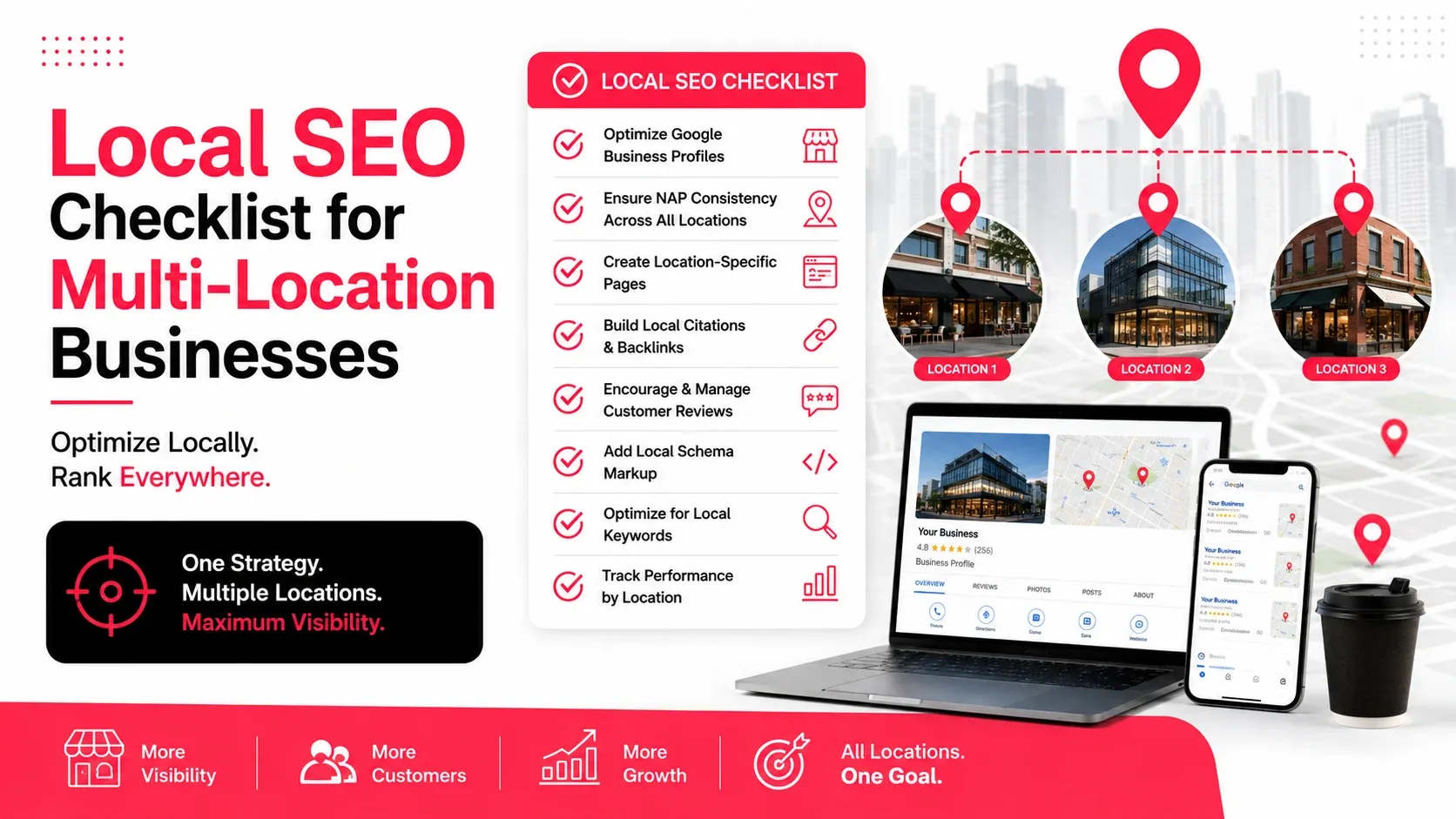
Managing SEO for a business with multiple branches is significantly more challenging than optimizing a single location. Every office, store, clinic, showroom, or franchise competes for visibility in its own local market while still contributing to the authority of the overall brand.
Whether you operate healthcare clinics across Dubai and Abu Dhabi, restaurant chains throughout the UAE, retail stores in multiple emirates, educational institutions, automotive dealerships, or professional service offices, your local SEO strategy should help every location rank independently without competing against one another.
Unfortunately, many businesses make the mistake of creating identical location pages, sharing the same Google Business Profile information, or neglecting local optimization altogether. These issues often result in poor local rankings, duplicate content, inconsistent customer information, and lost business opportunities.
This guide provides a practical local SEO checklist designed specifically for multi-location businesses. By following these best practices, you can improve visibility for every branch, strengthen your overall website authority, and generate more qualified local leads.
Quick Answer
Multi-location SEO requires optimizing every branch individually while maintaining a consistent overall brand presence.
An effective local SEO strategy includes:
- Individual Google Business Profiles
- Dedicated location landing pages
- Consistent NAP information
- Local keyword targeting
- Customer reviews for each location
- Local schema markup
- Internal linking
- High-quality local content
- Ongoing performance monitoring
Rather than treating all branches as one business location, Google expects each physical location to provide unique and valuable information to local customers.
Why Multi-Location SEO Is Different
Businesses with multiple branches face challenges that single-location businesses rarely encounter.
Common issues include:
- Duplicate content across location pages
- Incorrect business information
- Conflicting Google Business Profiles
- Keyword cannibalization
- Inconsistent citations
- Mixed customer reviews
- Poor local relevance
Without a structured SEO strategy, these issues can reduce visibility across every location.
How Google Understands Multi-Location Businesses
Google evaluates each business location independently.
For every branch, Google considers:
- Google Business Profile
- Website location page
- Customer reviews
- Business categories
- Local citations
- Geographic relevance
- Website authority
- Customer engagement
This means every location deserves its own optimization strategy rather than relying on a single homepage.
Why Local SEO Matters for Every Branch
Customers increasingly search using location-based queries such as:
- Dentist near me
- Restaurant in Downtown Dubai
- Car service Abu Dhabi
- Real estate agency Dubai Marina
- Physiotherapy clinic Jumeirah
Google aims to provide the most locally relevant results.
If individual branches are not properly optimized, potential customers may never discover them.
Strong local SEO improves:
- Google Maps visibility
- Organic rankings
- Website traffic
- Phone calls
- Direction requests
- Qualified leads
- Store visits
Step 1: Create a Google Business Profile for Every Location
Every physical branch should have its own verified Google Business Profile.
Each listing should include:
- Accurate business name
- Complete address
- Local phone number
- Business category
- Working hours
- Website URL
- Services
- Photos
- Products (when applicable)
Avoid creating duplicate listings for the same location.
Properly managed Google Business Profiles significantly improve local visibility.
Step 2: Create Individual Location Pages
One of the most important components of multi-location SEO is creating dedicated landing pages for every branch.
Each page should contain unique information instead of duplicated templates.
Include:
- Branch overview
- Services available
- Local team information
- Operating hours
- Contact details
- Embedded Google Map
- Driving directions
- Customer testimonials
- Nearby landmarks
- Frequently asked questions
Businesses looking to improve location page performance can explore web design services in Dubai to build conversion-focused pages optimized for both users and search engines.
Step 3: Maintain Consistent NAP Information
NAP stands for:
- Name
- Address
- Phone Number
Consistency is critical.
Every location should use identical information across:
- Website
- Google Business Profile
- Business directories
- Social media
- Local listings
- Review platforms
Even small inconsistencies such as abbreviations or formatting differences can create confusion for search engines.
Step 4: Perform Local Keyword Research
Every branch serves a different geographic audience.
Keyword targeting should reflect local search behavior.
Examples include:
Business Type | Example Local Keyword |
|---|---|
Dental Clinic | Dentist in Dubai Marina |
Restaurant | Italian Restaurant Downtown Dubai |
Real Estate | Property Consultant Dubai |
Automotive | Car Repair Al Quoz |
Law Firm | Family Lawyer Abu Dhabi |
Retail Store | Electronics Store Sharjah |
Targeting location-specific keywords helps every branch compete within its own market.
Step 5: Optimize Every Location Page for Local SEO
Each page should include localized SEO elements.
Optimize:
- Page title
- Meta description
- URL
- H1 heading
- Image alt text
- Internal links
- Local keywords
- Structured headings
Avoid simply replacing the city name across identical content.
Each page should provide genuinely unique information.
Step 6: Add Unique Local Content
One of the biggest reasons location pages fail is duplicate content.
Every branch should include information relevant to its surrounding community.
Ideas include:
- Nearby landmarks
- Community involvement
- Local events
- Area-specific customer needs
- Branch-specific promotions
- Team introductions
- Local case studies
This strengthens local relevance while providing additional value for visitors.
Step 7: Optimize Google Business Profiles Regularly
Many businesses verify their listings once and never update them again.
Successful businesses continuously maintain their profiles by:
- Uploading new photos
- Publishing updates
- Answering customer questions
- Adding products and services
- Updating business hours
- Monitoring customer interactions
Google rewards active and well-maintained profiles.
Step 8: Encourage Reviews for Every Location
Reviews remain one of the strongest local ranking factors.
Rather than directing every customer to a single profile, encourage reviews for the branch they actually visited.
Positive reviews help improve:
- Customer trust
- Local rankings
- Click-through rates
- Conversion rates
Businesses should also respond professionally to every review, including negative feedback.
Step 9: Build Local Citations
Citations help Google verify business information.
Important citation sources include:
- Local business directories
- Industry directories
- Chamber of Commerce listings
- Local associations
- Review platforms
- Maps platforms
Consistency across these platforms strengthens local authority.
Step 10: Strengthen Internal Linking
Internal links help search engines understand relationships between pages.
A multi-location website should naturally connect:
- Homepage
- Service pages
- Individual location pages
- Blog articles
- Contact page
Businesses seeking comprehensive local optimization can also explore SEO services in Dubai to develop scalable SEO strategies that improve visibility across multiple business locations.
Step 11: Ensure Mobile-Friendly Experiences
A large percentage of local searches happen on smartphones.
Location pages should provide:
- Fast loading speeds
- Click-to-call buttons
- Mobile navigation
- Maps integration
- Easy directions
- Simple contact forms
A poor mobile experience can reduce both rankings and conversions.
Step 12: Optimize Images for Local SEO
Images contribute more to local SEO than many businesses realize.
Use:
- Original branch photos
- Descriptive filenames
- Localized alt text
- Optimized image sizes
- Geo-relevant visuals
Avoid using the same stock images across every location page whenever possible.
Multi-Location SEO Checklist
Use this checklist when optimizing every business location.
Task | Completed |
|---|---|
Create individual Google Business Profiles | ☐ |
Build unique location pages | ☐ |
Maintain consistent NAP information | ☐ |
Research local keywords | ☐ |
Optimize on-page SEO | ☐ |
Publish unique local content | ☐ |
Collect branch-specific reviews | ☐ |
Build local citations | ☐ |
Improve internal linking | ☐ |
Optimize for mobile users | ☐ |
Use original local images | ☐ |
Track local SEO performance | ☐ |
Following this checklist consistently creates a strong foundation for sustainable local search visibility across every business location.
Step 13: Implement Local Business Schema Markup
Structured data helps search engines understand the details of each business location more accurately.
Every location page should include LocalBusiness schema containing:
- Business name
- Address
- Phone number
- Opening hours
- Geographic coordinates
- Website URL
- Business category
- Services offered
Schema markup can improve how your business appears in search results and supports better local visibility.
Step 14: Create Location-Specific Service Pages (When Necessary)
Some businesses offer different services at different branches.
Instead of using identical service pages, create localized versions where appropriate.
Examples include:
- Dental Implants in Dubai Marina
- Physiotherapy in Jumeirah
- Luxury Car Service in Abu Dhabi
- Property Management in Downtown Dubai
Only create these pages when the content can be genuinely unique and valuable.
Avoid producing hundreds of thin location-service combinations solely for SEO.
Step 15: Build Location-Based Backlinks
Backlinks remain an important ranking signal for local SEO.
For multi-location businesses, earning links from local organizations strengthens geographic relevance.
Potential opportunities include:
- Local business associations
- Community organizations
- Chamber of Commerce websites
- Local sponsorships
- Charity partnerships
- Educational institutions
- Industry directories
- Local media publications
Quality always matters more than quantity.
Step 16: Publish Localized Blog Content
Educational content helps reinforce your expertise within specific geographic markets.
Examples include:
- Best Schools in Dubai Marina
- Home Buying Guide for Abu Dhabi Residents
- Restaurant Trends in Downtown Dubai
- Business Setup Guide for Sharjah Entrepreneurs
Localized content attracts nearby customers while supporting the authority of your location pages.
Step 17: Optimize for "Near Me" Searches
Google increasingly understands proximity-based searches.
Businesses should naturally include:
- Nearby landmarks
- Communities served
- Service areas
- Local neighborhoods
- Driving directions
- Parking information
- Public transport access
Avoid keyword stuffing phrases like "near me."
Instead, provide useful local context that helps both customers and search engines understand your service area.
Step 18: Strengthen Website Performance
Technical SEO directly impacts local rankings.
Your website should provide:
- Fast loading speeds
- Secure HTTPS
- Mobile responsiveness
- Clean URL structures
- Crawlable navigation
- Optimized Core Web Vitals
A technically strong website ensures search engines can efficiently discover and rank every location page.
Step 19: Monitor Local Rankings Separately
Each location performs differently.
Instead of tracking one overall keyword ranking, monitor:
- Individual city rankings
- Google Maps positions
- Organic traffic by location
- Phone calls
- Direction requests
- Contact form submissions
- Customer reviews
- Conversion rates
This helps identify underperforming branches that need additional optimization.
Step 20: Continuously Update Location Information
Businesses frequently change:
- Working hours
- Phone numbers
- Services
- Staff
- Photos
- Holiday schedules
Outdated information frustrates customers and can negatively affect local search performance.
Review every location page and Google Business Profile regularly to keep information accurate.
Local SEO Metrics That Matter
Tracking the right KPIs helps determine whether your multi-location SEO strategy is delivering measurable results.
KPI | Why It Matters |
|---|---|
Google Business Profile Views | Measures local visibility |
Google Maps Rankings | Indicates map performance |
Organic Traffic by Location | Shows branch-specific SEO growth |
Calls from Google Business Profile | Tracks customer engagement |
Direction Requests | Reflects local search intent |
Website Conversions | Connects SEO to business outcomes |
Review Volume & Rating | Builds trust and improves rankings |
Local Keyword Rankings | Measures optimization success |
Focus on long-term improvements rather than daily ranking fluctuations.
Common Multi-Location SEO Mistakes
Many businesses unintentionally limit their local visibility by making avoidable mistakes.
Common issues include:
- Using one Google Business Profile for multiple branches
- Creating duplicate location pages
- Publishing identical content across every city
- Inconsistent NAP information
- Ignoring customer reviews
- Poor internal linking
- Using stock photos for every location
- Failing to optimize for mobile users
- Not tracking branch-level SEO performance
- Creating location pages without real value
Correcting these issues often leads to significant improvements in local rankings.
A Practical Multi-Location SEO Roadmap
Businesses can implement local SEO gradually using a structured approach.
Phase | Objective | Actions |
|---|---|---|
Foundation | Establish accurate business information | Verify Google Business Profiles, standardize NAP, create unique location pages |
Optimization | Improve local relevance | Optimize keywords, schema, internal links, and local content |
Authority Building | Increase trust | Collect reviews, earn local backlinks, publish localized blogs |
Performance Monitoring | Measure growth | Track rankings, traffic, calls, conversions, and Maps performance |
Continuous Improvement | Maintain visibility | Update content, refresh profiles, and monitor customer feedback |
Following this roadmap creates sustainable local visibility rather than relying on one-time optimization efforts.
Key Takeaways
- Every physical location should have its own Google Business Profile.
- Create unique landing pages for every branch.
- Maintain consistent NAP information across all platforms.
- Target localized keywords for each market.
- Publish unique local content instead of duplicate pages.
- Collect customer reviews for every location individually.
- Implement LocalBusiness schema markup.
- Build locally relevant backlinks.
- Optimize for mobile users and technical performance.
- Monitor each branch's SEO performance independently.
Building Strong Local Visibility Across Every Business Location
Successful multi-location SEO goes beyond ranking a single homepage. Every branch should function as its own local authority while contributing to the overall strength of your website. By combining optimized Google Business Profiles, unique location pages, consistent business information, high-quality local content, and ongoing performance analysis, businesses can improve visibility in multiple markets without creating internal competition.
As your business expands, your local SEO strategy should evolve alongside it. Regular updates, continuous optimization, and a customer-focused approach ensure that each location remains competitive in local search results and delivers a better experience for potential customers.
For businesses looking to strengthen their presence in Google Maps and local search, our How to Rank on Google Maps in Dubai guide provides additional strategies that complement the recommendations covered in this checklist.
Milaaj Brandset helps businesses develop scalable local SEO strategies through technical optimization, content marketing, web development, and search engine optimization that improve visibility across single and multi-location businesses alike.
FAQs
What is multi-location SEO?
Multi-location SEO is the process of optimizing multiple physical business locations so each branch can rank independently in local search results while supporting the overall authority of the brand.
Should every location have its own Google Business Profile?
Yes. Every legitimate physical location that serves customers should have its own verified Google Business Profile with accurate information.
Do I need a separate webpage for each location?
Yes. Each branch should have a dedicated landing page containing unique, location-specific content, contact details, services, and customer information.
How can I avoid duplicate content?
Create original content for every location page by including branch-specific services, local landmarks, customer testimonials, team information, and FAQs instead of copying the same template.
Are customer reviews important for local SEO?
Yes. Reviews improve customer trust and are one of Google's strongest local ranking signals. Encourage customers to review the branch they visited.
What is NAP consistency?
NAP stands for Name, Address, and Phone Number. Keeping this information consistent across your website, Google Business Profiles, and online directories helps search engines verify your business.
Does schema markup improve local SEO?
Structured data helps search engines better understand your business information and can enhance local search visibility, although it is only one part of a complete SEO strategy.
How often should location pages be updated?
Review them every few months or whenever business information changes. Keeping pages current with accurate services, photos, hours, and contact details supports both user experience and local rankings.
Ready to Elevate Your Brand?
Start Your Project Today