June 27, 2026
Marketing Automation for Business Growth: Strategies to Generate More Leads and Sales
Milaaj Editorial / Research Insights
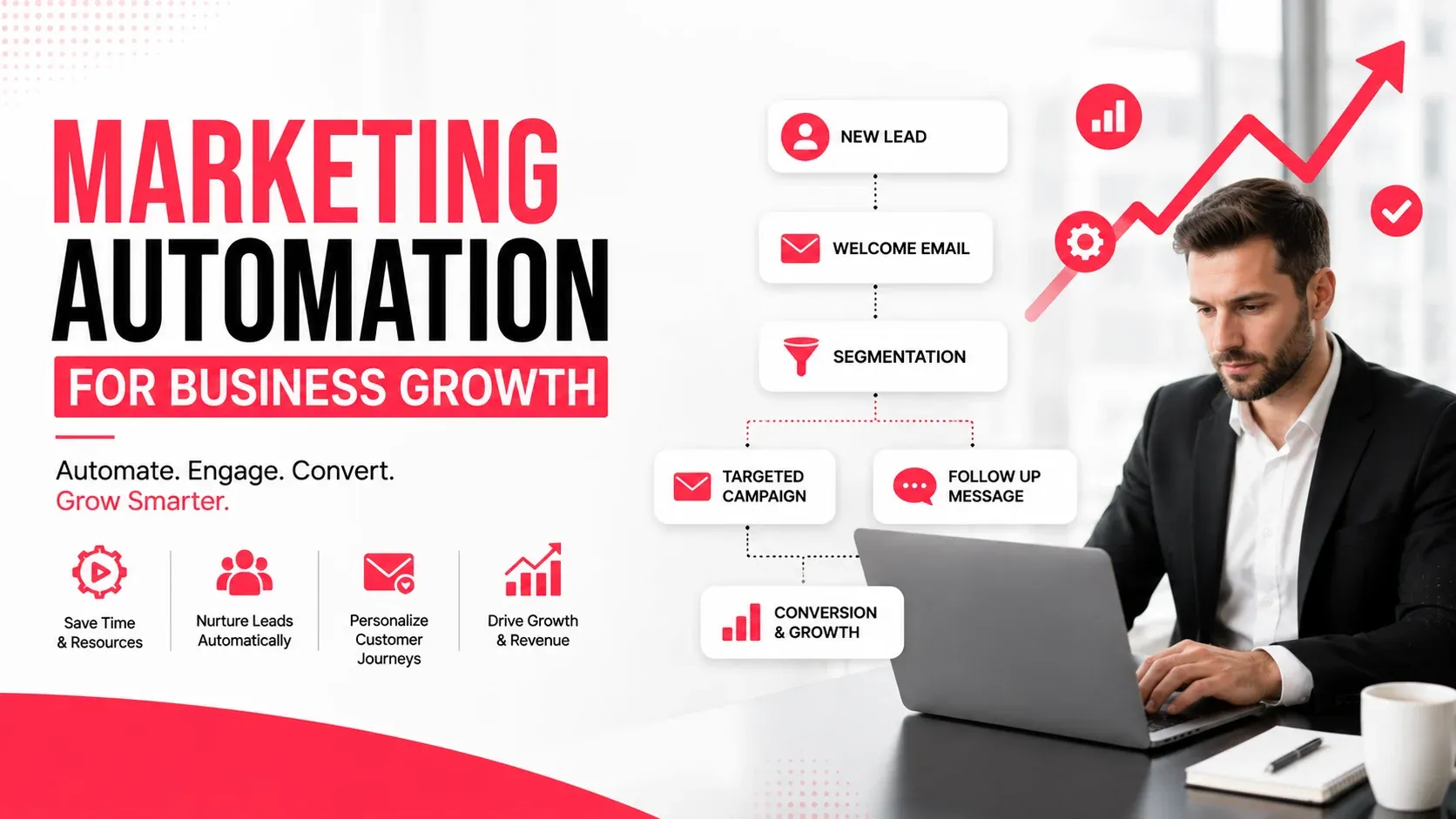
As businesses grow, managing leads, customer interactions, follow-ups, and marketing campaigns manually becomes increasingly difficult.
Many companies lose potential customers not because of poor products or services, but because prospects fall through the cracks. Leads are not followed up on quickly enough, customer journeys become inconsistent, and marketing teams spend valuable time on repetitive tasks instead of strategic growth initiatives.
Marketing automation helps solve these challenges.
By automating key marketing processes, businesses can nurture leads more effectively, improve customer experiences, increase conversions, and scale operations without proportionally increasing workload.
This guide explains how marketing automation supports business growth, which strategies deliver the best results, and how companies can build automation systems that generate more leads and sales.
Quick Answer
Marketing automation helps businesses grow by automating repetitive marketing tasks such as:
- Lead nurturing
- Email campaigns
- Customer segmentation
- Follow-up sequences
- CRM workflows
- Retargeting campaigns
- Customer onboarding
- Lead scoring
When implemented correctly, marketing automation improves efficiency, increases conversion rates, shortens sales cycles, and helps businesses generate more revenue from existing marketing efforts.
What Is Marketing Automation?
Marketing automation refers to the use of software and workflows to automate marketing activities across the customer journey.
Instead of manually sending emails, tracking prospects, or managing repetitive tasks, automation platforms perform these actions based on predefined rules and customer behaviors.
Examples include:
- Sending welcome emails automatically
- Triggering follow-up sequences after form submissions
- Assigning leads to sales teams
- Sending abandoned cart reminders
- Segmenting audiences based on engagement
The goal is not to replace human interaction.
The goal is to improve efficiency while delivering more personalized customer experiences.
Why Marketing Automation Matters for Business Growth
As businesses acquire more leads and customers, maintaining consistent communication becomes more challenging.
Without automation, businesses often experience:
- Missed opportunities
- Delayed follow-ups
- Inconsistent messaging
- Lower conversion rates
- Reduced customer engagement
Marketing automation helps businesses:
- Scale operations efficiently
- Improve lead management
- Increase marketing ROI
- Enhance customer retention
- Support revenue growth
Companies that automate key processes often achieve better results while reducing manual workload.
How Marketing Automation Supports Lead Generation
One of the biggest advantages of automation is its ability to improve lead generation.
Instead of relying solely on manual outreach, businesses can create systems that continuously attract, engage, and nurture prospects.
Examples include:
- Automated lead capture forms
- Lead magnet delivery
- Email sequences
- Consultation booking workflows
- Follow-up reminders
This creates a more consistent and scalable lead generation process.
Businesses looking to strengthen their acquisition strategy can also explore Lead Generation services in Dubai to build sustainable systems for attracting qualified prospects.
Lead Nurturing: Turning Prospects Into Customers
Most leads are not ready to buy immediately.
Research consistently shows that buyers often require multiple interactions before making a decision.
Marketing automation helps businesses stay connected through:
- Educational emails
- Industry insights
- Product updates
- Case studies
- Success stories
- Personalized recommendations
Lead nurturing builds trust and keeps businesses top-of-mind throughout the decision-making process.
Email Marketing Automation
Email remains one of the highest-ROI marketing channels.
Automation improves email effectiveness by delivering messages based on customer behavior rather than fixed schedules.
Common automated email workflows include:
Welcome Sequences
Introduces new subscribers to the business.
Lead Nurturing Campaigns
Educates prospects and builds trust.
Re-Engagement Campaigns
Reconnects with inactive subscribers.
Customer Onboarding
Helps new customers get value quickly.
Upsell and Cross-Sell Campaigns
Encourages additional purchases.
Automated email workflows create consistent engagement while reducing manual effort.
Customer Segmentation Improves Relevance
Not every customer should receive the same message.
Marketing automation allows businesses to segment audiences based on:
- Industry
- Location
- Purchase history
- Engagement level
- Interests
- Customer lifecycle stage
Segmentation improves:
- Open rates
- Click-through rates
- Conversion rates
- Customer satisfaction
The more relevant the communication, the more effective the campaign.
Lead Scoring Helps Prioritize Opportunities
Sales teams often waste time pursuing low-intent prospects.
Lead scoring assigns values to actions based on engagement and purchase intent.
Examples include:
User Action | Lead Score Impact |
|---|---|
Website Visit | Low |
Downloading a Guide | Medium |
Attending a Webinar | High |
Requesting a Consultation | Very High |
Lead scoring helps sales teams focus on prospects most likely to convert.
CRM Automation Enhances Sales Efficiency
Marketing automation becomes even more powerful when connected to a CRM system.
CRM automation can:
- Assign leads automatically
- Track customer interactions
- Update contact records
- Schedule follow-ups
- Trigger sales notifications
This creates a smoother handoff between marketing and sales teams.
Businesses often experience shorter sales cycles and improved conversion rates when CRM and marketing automation systems work together.
Retargeting and Behavioral Automation
Many visitors leave a website without taking action.
Behavioral automation allows businesses to respond based on user activity.
Examples include:
- Website visit follow-ups
- Abandoned cart reminders
- Product recommendation emails
- Retargeting advertisements
These automated touchpoints help recover lost opportunities and improve conversion rates.
Marketing Automation for Customer Retention
Growth is not only about acquiring new customers.
Retaining existing customers is often more cost-effective than acquiring new ones.
Automation can support retention through:
- Loyalty campaigns
- Renewal reminders
- Customer education
- Feedback requests
- Personalized offers
Strong retention strategies improve customer lifetime value and overall profitability.
Common Marketing Automation Workflows
Businesses often begin with these automation workflows:
New Lead Workflow
- Form submission
- Welcome email
- Lead nurturing sequence
- Consultation invitation
Customer Onboarding Workflow
- Purchase confirmation
- Welcome content
- Educational resources
- Follow-up communication
Re-Engagement Workflow
- Inactivity detection
- Personalized outreach
- Special offers
- Reactivation campaigns
These workflows help create consistent customer experiences.
Measuring Marketing Automation Success
Effective measurement is essential.
Key performance indicators include:
Metric | Why It Matters |
|---|---|
Lead Conversion Rate | Measures lead quality |
Email Open Rate | Indicates engagement |
Click-Through Rate | Measures content effectiveness |
Customer Acquisition Cost | Evaluates efficiency |
Customer Lifetime Value | Measures long-term profitability |
Revenue Attribution | Connects automation to growth |
Tracking these metrics helps businesses identify opportunities for optimization.
Common Marketing Automation Mistakes
Many businesses fail to achieve results because they:
- Automate poor processes
- Over-communicate with prospects
- Ignore personalization
- Fail to segment audiences
- Neglect performance tracking
- Create overly complex workflows
Automation should enhance customer experiences, not overwhelm customers.
How AI Is Transforming Marketing Automation
Artificial intelligence is making automation more powerful than ever.
Modern AI-driven systems can:
- Predict customer behavior
- Recommend content
- Personalize messaging
- Score leads automatically
- Optimize campaigns
- Identify conversion opportunities
AI helps businesses make smarter decisions while improving efficiency and scalability.
Organizations interested in leveraging intelligent workflows can explore AI Automation Services in Dubai to implement advanced automation solutions.
Key Takeaways
- Marketing automation improves efficiency and scalability.
- Automated lead nurturing helps convert more prospects into customers.
- Email automation remains one of the highest-performing marketing channels.
- Audience segmentation improves campaign relevance.
- Lead scoring helps prioritize sales opportunities.
- CRM automation enhances collaboration between marketing and sales teams.
- Customer retention can be significantly improved through automation.
- AI is expanding the capabilities of modern marketing automation systems.
- Success depends on strategy, personalization, and continuous optimization.
Building a Scalable Growth Engine With Automation
Marketing automation is no longer a tool reserved for large enterprises. Businesses of all sizes can use automation to improve lead generation, nurture prospects more effectively, enhance customer experiences, and drive sustainable growth.
The most successful companies view automation as part of a broader growth strategy rather than simply a way to save time. When automation supports the customer journey, businesses can create more consistent interactions, improve conversion rates, and generate stronger long-term results.
For a deeper understanding of how prospects move through the buying process, read our B2B Lead Generation Strategies in UAE guide.
Milaaj Brandset helps businesses implement data-driven marketing systems that combine automation, lead generation, customer engagement, and performance optimization to support scalable business growth.
FAQs
What is marketing automation?
Marketing automation uses software and workflows to automate marketing activities such as email campaigns, lead nurturing, segmentation, and customer communication.
How does marketing automation help generate more leads?
Automation improves lead capture, follow-up speed, nurturing, and engagement, helping businesses convert more prospects into customers.
Is marketing automation only for large businesses?
No. Small and medium-sized businesses can benefit significantly from automation by improving efficiency and scalability.
What are the most common marketing automation tools?
Popular solutions include HubSpot, ActiveCampaign, Mailchimp, Salesforce, Marketo, and other CRM-integrated platforms.
How does lead scoring work?
Lead scoring assigns values to prospect actions and behaviors, helping businesses identify high-intent opportunities.
Can marketing automation improve customer retention?
Yes. Automated onboarding, loyalty campaigns, renewal reminders, and personalized communications help improve retention and customer satisfaction.
What role does AI play in marketing automation?
AI enhances automation through predictive analytics, personalization, lead scoring, content recommendations, and campaign optimization.
How long does it take to see results from marketing automation?
Some improvements can be seen within weeks, while more comprehensive automation strategies often deliver significant results over several months.
Ready to Elevate Your Brand?
Start Your Project Today