August 19, 2026
Omnichannel Customer Experience Strategies for UAE Businesses
Milaaj Editorial / Research Insights
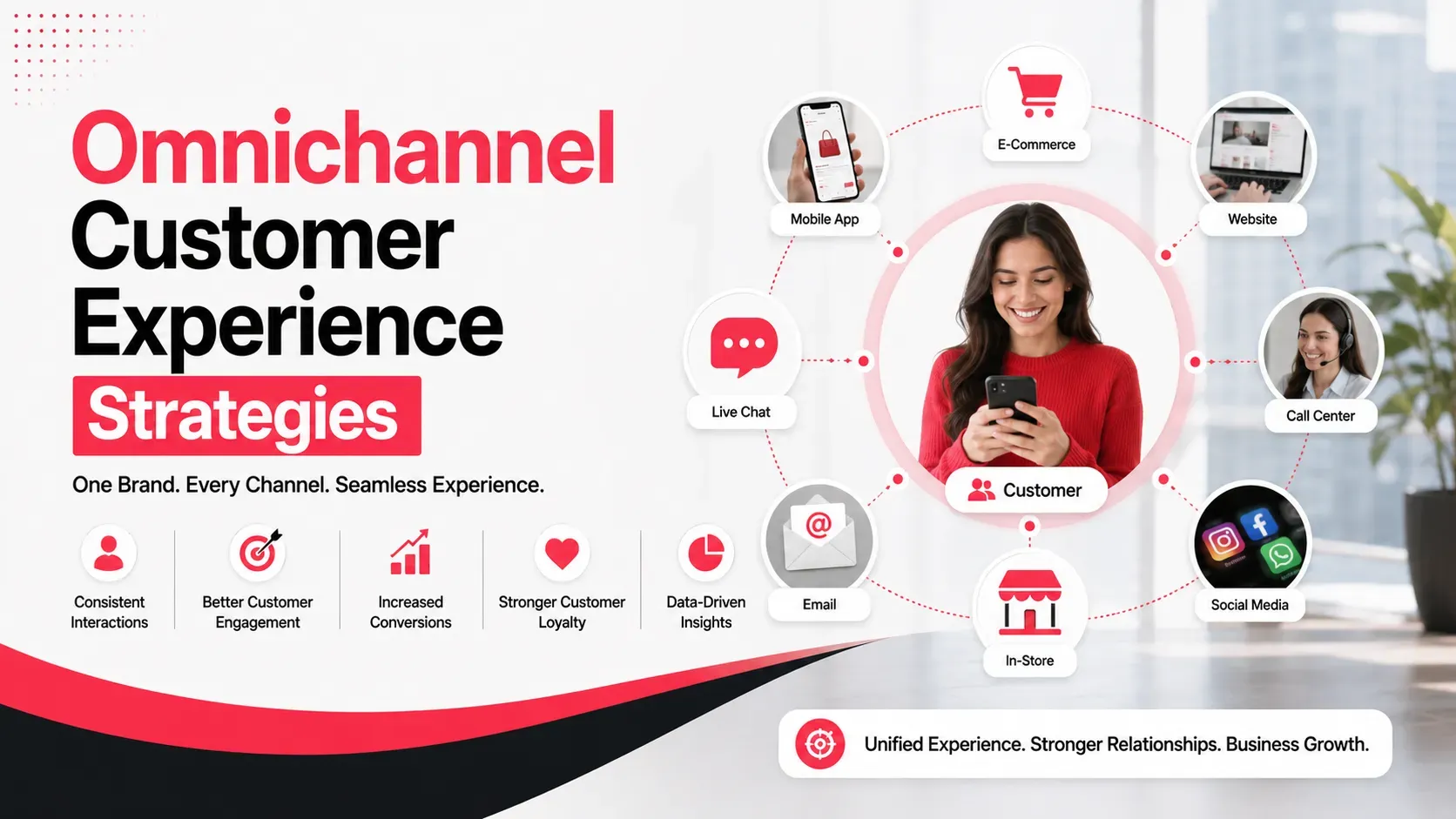
Customers rarely follow a single path before making a purchase. Someone might discover a brand on Instagram, visit its website, ask a question through WhatsApp, compare products on their phone, and finally complete the purchase in a physical store.
If these interactions feel disconnected, the customer notices.
An effective omnichannel customer experience connects these touchpoints so customers can move between channels without feeling like they are starting over each time. For UAE businesses serving digitally active and diverse audiences, this can make the difference between a convenient customer journey and a frustrating one.
Quick Answer
An omnichannel customer experience connects a business's website, social media, messaging platforms, email, mobile experiences, physical locations, sales teams, and customer support into a more unified journey.
The most effective strategies include:
- Mapping the complete customer journey
- Connecting customer data
- Maintaining consistent brand communication
- Personalizing interactions
- Linking online and offline experiences
- Improving mobile and messaging experiences
- Using automation strategically
- Giving customers flexible channel choices
- Measuring cross-channel performance
- Making human support available when needed
The objective isn't to make every channel identical. It's to make the overall customer journey feel connected.
What Is an Omnichannel Customer Experience?
An omnichannel customer experience allows customers to interact with a business through multiple channels while maintaining continuity between those interactions.
Consider a customer searching for a premium product.
They might:
See an Instagram post → visit the website → save a product → ask a question on WhatsApp → visit a store → purchase → receive an email confirmation → contact support later
In a disconnected system, each interaction may exist separately.
In an omnichannel environment, relevant information can move with the customer.
For example, a sales representative may know which product the customer previously viewed or what information they requested through another channel.
That reduces friction.
Why Customers Expect Connected Experiences
Modern customers are comfortable switching between devices and platforms.
They don't necessarily think in terms of a company's internal departments.
They simply expect the business to recognize the relationship.
A customer may reasonably expect:
- Their preferences to be remembered
- Previous conversations to be accessible
- Product information to remain consistent
- Promotions to match their eligibility
- Support representatives to understand their issue
- Online and offline information to align
When this doesn't happen, customers may have to repeat information, search for answers again, or contact multiple departments.
A connected experience eliminates many of these unnecessary steps.
Omnichannel vs Multichannel Customer Experience
Having multiple channels doesn't automatically create an omnichannel experience.
Multichannel
A business may have:
- A website
- Instagram
- WhatsApp
- Email
- Physical stores
But each channel may operate independently.
Omnichannel
The channels work together.
A customer can move from one touchpoint to another while relevant information and context remain connected.
For example:
Website browsing → WhatsApp enquiry → sales follow-up → store visit → purchase
The distinction is simple:
Multichannel gives customers multiple places to interact. Omnichannel connects those interactions.
Businesses looking to align customer journeys with broader marketing activity can also explore an omnichannel marketing strategy that connects channels around common sales and customer objectives.
Map the Complete Customer Journey
Before adding more technology, understand how customers currently interact with the business.
Map the journey from:
Awareness → Research → Consideration → Purchase → Support → Retention
Then identify the channels involved at each stage.
For example:
Customer Stage | Possible Touchpoints |
|---|---|
Awareness | Instagram, Google, YouTube |
Research | Website, reviews, social media |
Consideration | Product pages, WhatsApp, email |
Purchase | Website, app, store |
Support | WhatsApp, phone, email |
Retention | Email, loyalty program, social media |
This exercise often reveals gaps.
Perhaps customers discover the business on social media but can't easily continue the conversation on WhatsApp.
Or perhaps online customers receive better product information than people visiting a physical location.
Journey mapping helps identify where these inconsistencies occur.
Connect Customer Data Across Touchpoints
Customer data is the foundation of a connected experience.
Information may otherwise become scattered across:
- CRM systems
- E-commerce platforms
- Email platforms
- Customer-support software
- Advertising accounts
- Website analytics
- Social platforms
When these systems don't communicate effectively, employees may lack important context.
A customer might explain the same issue to three different representatives simply because their previous conversations aren't visible.
Integrating CRM systems with marketing and customer-service workflows can create a more complete view of customer interactions. For businesses working toward this type of connected operation, CRM integration for marketing teams provides a useful foundation for coordinating customer information and campaigns.
Create Consistent Experiences Without Making Every Channel Identical
Consistency doesn't mean copying the same message everywhere.
A website serves a different purpose from Instagram.
WhatsApp is different from email.
A physical store is different from a mobile application.
Instead, maintain consistency across:
- Brand voice
- Pricing information
- Product information
- Offers
- Visual identity
- Customer promises
- Service policies
The format can change according to the channel.
For example, an Instagram post might introduce a product, while the website provides detailed specifications and WhatsApp helps answer purchase questions.
Different roles, same customer experience.
Personalize Interactions Across Channels
Personalization becomes more powerful when customer information can move across channels.
Imagine a customer who has repeatedly viewed a particular product category.
Instead of receiving unrelated promotional messages, they could receive:
- Relevant recommendations
- Educational content
- Related products
- Appropriate offers
- Helpful follow-up information
However, personalization should provide genuine value.
Using customer data simply to send more promotional messages can quickly become intrusive.
A better approach is to ask:
Does this information make the customer's next interaction easier or more useful?
If the answer is yes, personalization is more likely to improve the experience.
Build a Seamless Mobile, Social, Website and WhatsApp Journey
For many businesses in the UAE, messaging and mobile interactions are important parts of the customer journey.
A customer may discover a product on social media and want an immediate way to ask questions.
Instead of forcing them through multiple steps, businesses can create clear connections between channels.
For example:
Social post → product page → WhatsApp enquiry → personalized assistance → checkout
Each step should make the next one obvious.
The same principle applies to physical businesses.
A customer could discover a service online, book through a mobile interface, receive a reminder, visit the location, and later receive a digital follow-up.
The best omnichannel experiences reduce the number of unnecessary decisions customers have to make.
Use Automation Without Losing the Human Element
Automation can help maintain continuity across a large number of interactions.
Businesses can automate:
- Appointment reminders
- Order notifications
- Follow-up messages
- Lead routing
- Customer segmentation
- Feedback requests
- Basic enquiries
AI and workflow automation can also help connect customer actions with the next appropriate response.
For businesses handling complex customer journeys, AI automation services in Dubai can support workflow automation, CRM integration, AI-powered processes, and other repetitive business operations.
But automation should have limits.
A customer dealing with a complicated complaint should not be forced through a series of automated responses simply because the system is designed that way.
The best approach is:
Automation for convenience + humans for complexity.
Make Channel Switching Easy
A strong omnichannel experience allows customers to change channels without unnecessary repetition.
For example, if a customer starts a conversation through WhatsApp and later calls the company, the support team should ideally have enough context to continue the conversation.
Similarly, a customer who begins shopping online shouldn't necessarily have to start the product-selection process from zero when visiting a physical location.
Useful practices include:
- Shared customer profiles
- Conversation history
- Consistent account information
- Unified order records
- Cross-channel support notes
- Connected inventory data
The easier it is to switch channels, the more flexible the customer journey becomes.
Connect Online and Offline Experiences
Omnichannel strategies aren't limited to digital channels.
Physical businesses can connect stores and digital platforms through features such as:
- Click and collect
- Online appointment booking
- Store inventory visibility
- Digital loyalty programs
- QR-based product information
- Online-to-store promotions
- Digital receipts
For retailers, this can create a stronger relationship between online research and physical purchasing.
A customer may research a product at home, confirm availability online, and visit a store specifically to complete the purchase.
The digital experience supports the physical experience rather than competing with it.
Measure Omnichannel Customer Experience
Businesses need to measure whether their strategy is actually improving the customer journey.
Useful metrics include:
- Customer satisfaction
- Customer effort score
- Conversion rate
- Repeat purchase rate
- Retention rate
- Average response time
- Cross-channel conversion
- Support resolution time
- Cart abandonment
- Customer lifetime value
It's also useful to examine where customers move between channels.
For example:
Instagram → Website → WhatsApp → Purchase
may represent a valuable journey pattern.
Understanding these paths can help businesses invest in the channels that genuinely contribute to customer outcomes.
Common Omnichannel Experience Mistakes
Adding Too Many Channels
Being present everywhere isn't necessarily better.
Choose channels your customers actually use.
Keeping Customer Data in Silos
Disconnected information creates fragmented experiences.
Sending the Same Message Everywhere
Customers expect channel-specific communication.
Ignoring Offline Touchpoints
For many UAE businesses, stores, sales representatives, and physical service locations remain important.
Over-Automating Customer Service
Efficiency shouldn't come at the expense of empathy.
Measuring Channels Separately
Looking only at individual channel performance can hide the actual customer journey.
Forgetting Mobile Users
A customer experience that works well on desktop but poorly on mobile can create significant friction.
Key Takeaways
- Omnichannel means connected experiences, not simply having multiple channels.
- Customer journey mapping helps identify friction between touchpoints.
- Connected customer data is essential for continuity.
- Consistent information matters more than identical content across channels.
- Personalization should make interactions more useful rather than intrusive.
- Websites, social media, WhatsApp, email, apps, and physical locations can work together.
- Automation should handle predictable tasks while humans manage complex interactions.
- Customers should be able to switch channels without repeatedly explaining themselves.
- Online and offline experiences should support each other.
- Businesses should measure the complete journey rather than viewing every channel in isolation.
Conclusion
An effective omnichannel customer experience isn't about being present on every platform. It's about making the customer's movement between platforms feel natural.
When customer information, communication, marketing, sales, and support work together, businesses can remove unnecessary friction from the journey while giving customers more flexibility in how they interact.
The strongest strategy starts with the customer rather than the technology: understand how people discover, evaluate, purchase, and seek support, then connect the systems around those behaviors.
Businesses that need to build more connected digital journeys can use digital marketing services in Dubai alongside the right technology, data, and customer-experience strategy. Milaaj Brandset brings these capabilities together to help businesses strengthen their digital presence and customer relationships.
Frequently Asked Questions
What is an omnichannel customer experience?
An omnichannel customer experience connects multiple customer touchpoints so interactions remain consistent and relevant when customers move between channels.
What is the difference between omnichannel and multichannel?
Multichannel businesses offer several communication channels, but they may operate independently. Omnichannel strategies connect those channels to create a more unified customer journey.
Why is CRM important for omnichannel customer experience?
A CRM can centralize customer information and interaction history, helping sales, marketing, and support teams understand the customer's relationship with the business.
Is WhatsApp useful for omnichannel customer experience?
Yes. WhatsApp can provide a convenient communication layer for enquiries, updates, support, bookings, and follow-ups when it is properly connected to the broader customer journey.
How can businesses measure omnichannel customer experience?
Businesses can track customer satisfaction, response times, retention, conversion rates, customer effort, repeat purchases, and movement between different channels.
Does omnichannel strategy only apply to e-commerce?
No. Retailers, service companies, hospitality businesses, healthcare organizations, B2B companies, and other businesses can use omnichannel strategies to connect digital and physical customer interactions.
Ready to Elevate Your Brand?
Start Your Project Today