August 3, 2026
Benefits of CRM Integration for Marketing Teams
Milaaj Editorial / Research Insights
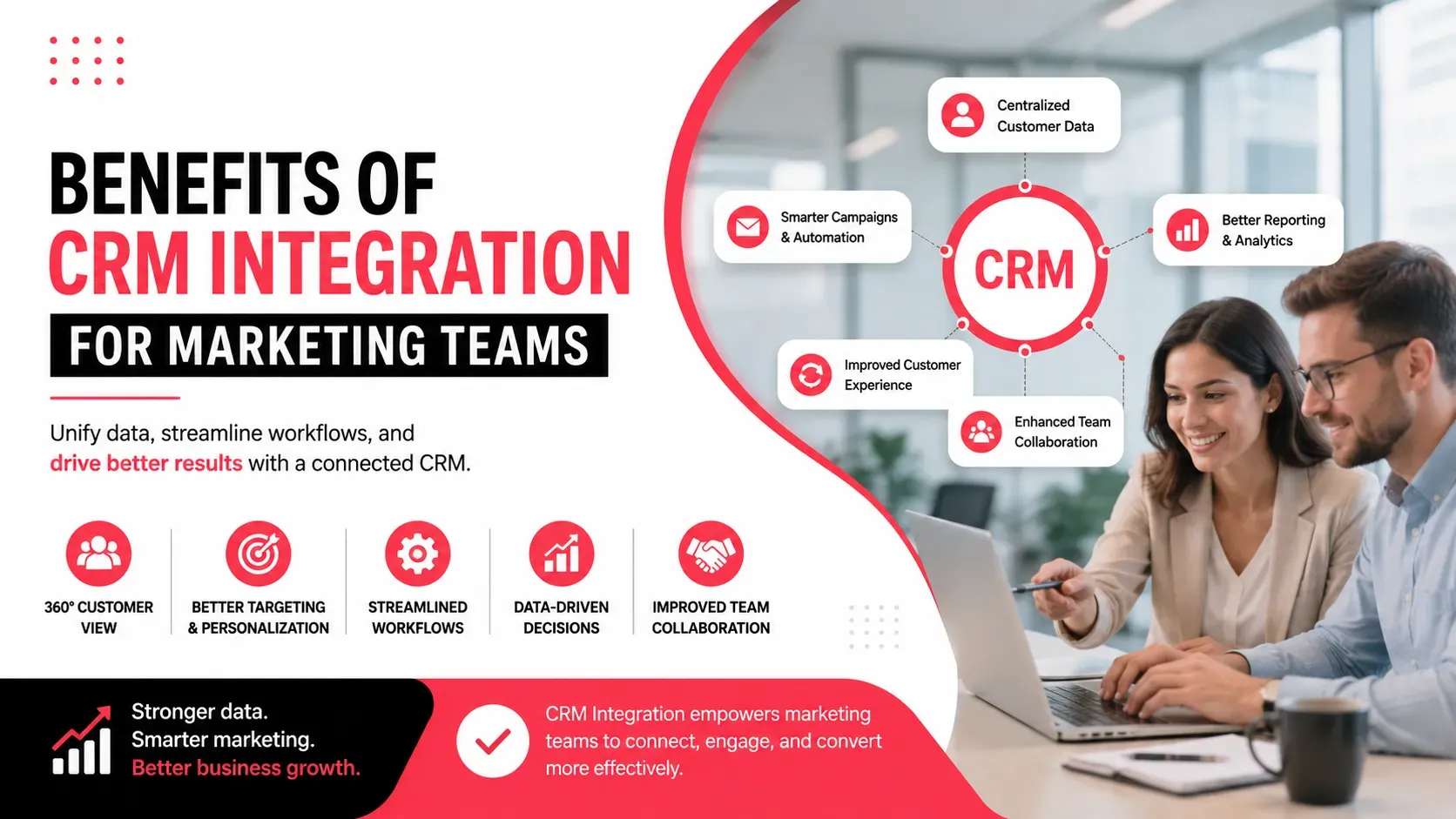
Modern marketing generates leads from multiple channels, including search engines, paid advertising, social media, email campaigns, websites, webinars, and AI-powered chatbots. However, collecting leads is only the first step. Without an efficient system to organize customer information, nurture prospects, and measure campaign performance, valuable opportunities can easily be lost.
Customer Relationship Management (CRM) integration helps marketing teams centralize customer data, automate repetitive tasks, improve collaboration with sales teams, and deliver more personalized customer experiences. Instead of managing disconnected spreadsheets, emails, and marketing platforms, businesses can create a unified system where customer interactions are tracked throughout the entire lifecycle.
Whether you're running a small business or managing enterprise marketing campaigns, CRM integration enables smarter decision-making, stronger customer relationships, and improved marketing efficiency.
Quick Answer
CRM integration connects your customer relationship management platform with marketing tools, websites, forms, analytics platforms, and communication channels. This allows marketing teams to automate lead management, improve customer segmentation, personalize campaigns, track conversions, and align marketing efforts with business goals, ultimately improving lead quality and marketing ROI.
What Is CRM Integration?
CRM integration is the process of connecting a CRM platform with other business and marketing systems to create a centralized customer database.
Rather than storing customer information across multiple disconnected tools, integration allows data to flow automatically between systems.
Common CRM integrations include:
- Business websites
- Contact forms
- Email marketing platforms
- AI chatbots
- Social media advertising
- Google Ads
- Analytics platforms
- Ecommerce systems
- Customer support software
- Appointment booking tools
This connected approach gives marketing teams a complete view of each customer's journey.
Why CRM Integration Matters for Marketing Teams
Marketing campaigns often involve multiple customer touchpoints before a prospect becomes a customer.
For example, someone may:
- Discover your business through Google Search.
- Read several blog articles.
- Download a guide.
- Interact with an AI chatbot.
- Submit a consultation request.
- Receive follow-up emails.
- Become a customer weeks later.
Without CRM integration, these interactions may remain disconnected, making it difficult to understand customer behaviour or evaluate campaign effectiveness.
A centralized CRM provides complete visibility into the customer journey and helps marketing teams deliver more consistent experiences.
Key Benefits of CRM Integration
Centralized Customer Information
One of the biggest advantages of CRM integration is having a single source of truth.
Instead of switching between different platforms, marketing teams can access:
- Contact information
- Communication history
- Lead source
- Campaign interactions
- Website activity
- Purchase history
- Sales status
Having complete customer profiles supports more informed marketing decisions.
Better Lead Management
Not every lead is ready to make a purchase immediately.
CRM systems help organize prospects based on:
- Lead source
- Industry
- Budget
- Customer interest
- Sales stage
- Engagement level
This makes it easier for marketing and sales teams to prioritize high-quality opportunities.
Improved Marketing Personalization
Modern customers expect relevant communication rather than generic marketing messages.
CRM integration allows businesses to personalize campaigns using customer data such as:
- Previous purchases
- Browsing behaviour
- Geographic location
- Service interests
- Customer lifecycle stage
- Engagement history
Personalized marketing often leads to higher engagement and stronger customer relationships.
Better Collaboration Between Marketing and Sales
One of the most common business challenges is poor communication between marketing and sales teams.
CRM integration creates a shared environment where both departments can:
- Track lead progress
- Review customer interactions
- Share notes
- Monitor follow-ups
- Measure campaign performance
This alignment helps reduce duplicated efforts while improving customer experiences.
How CRM Improves Lead Management
Lead management becomes significantly more efficient when marketing tools connect directly with a CRM.
For example, leads generated through:
- Website forms
- Landing pages
- Paid advertisements
- Email campaigns
- AI chatbots
- Social media campaigns
can automatically enter the CRM without manual data entry.
Businesses investing in Custom Web Development often integrate CRM systems directly with their websites, enquiry forms, booking platforms, and APIs to automate lead capture, improve data accuracy, and create a seamless customer journey.
Marketing Automation Becomes More Powerful
CRM integration enables marketing automation by triggering actions based on customer behaviour.
Examples include:
- Sending welcome emails
- Assigning leads to sales representatives
- Scheduling follow-up reminders
- Delivering personalized content
- Updating customer records automatically
- Notifying teams when high-value prospects engage
Automation reduces repetitive work while ensuring prospects receive timely communication.
Better Campaign Performance Tracking
Because customer interactions are stored in one place, CRM systems provide more accurate campaign reporting.
Marketing teams can evaluate:
- Lead generation by channel
- Conversion rates
- Customer acquisition costs
- Revenue generated
- Campaign engagement
- Customer retention
These insights help businesses identify which marketing activities contribute most to business growth.
Organizations using Digital Marketing Services often combine CRM data with analytics platforms to measure campaign performance across SEO, paid advertising, email marketing, and social media, enabling smarter budget allocation and continuous optimization.
Improve Customer Nurturing
Many prospects require multiple interactions before making a purchasing decision.
CRM integration supports lead nurturing by:
- Delivering personalized email sequences
- Scheduling follow-up communications
- Tracking engagement
- Identifying inactive prospects
- Recommending relevant services
Consistent nurturing helps maintain customer interest throughout longer buying cycles.
Improve Customer Segmentation
Sending the same marketing message to every customer rarely delivers the best results.
CRM integration enables marketing teams to segment audiences based on meaningful data such as:
- Industry
- Location
- Products or services viewed
- Previous purchases
- Customer lifecycle stage
- Engagement history
- Purchase frequency
- Lead source
Better segmentation allows businesses to deliver more relevant campaigns that improve engagement and conversion rates.
Strengthen Customer Retention
CRM integration is not only valuable for acquiring new customers, it also helps retain existing ones.
Marketing teams can use CRM data to:
- Send renewal reminders
- Recommend complementary services
- Launch loyalty campaigns
- Re-engage inactive customers
- Celebrate customer milestones
- Deliver personalized follow-up communications
Retaining existing customers is often more cost-effective than continuously acquiring new ones, making customer retention an important component of long-term business growth.
Gain Better Marketing Insights
A connected CRM provides valuable reporting that supports data-driven decision-making.
Marketing teams can analyze:
- Top-performing lead sources
- Campaign conversion rates
- Sales pipeline progression
- Customer acquisition trends
- Average sales cycle length
- Revenue by marketing channel
These insights help identify which strategies generate the highest-quality leads and the strongest business outcomes.
Common CRM Integration Mistakes
Successful CRM implementation requires more than simply connecting software.
Mistake | Better Approach |
|---|---|
Collecting incomplete customer data | Standardize required fields and validate data quality. |
Failing to synchronize systems | Keep CRM, website, and marketing platforms connected automatically. |
Ignoring lead qualification | Define clear lead scoring and qualification criteria. |
Creating duplicate customer records | Use automated deduplication and regular data audits. |
Not training marketing and sales teams | Establish consistent CRM processes across departments. |
Measuring only lead volume | Evaluate lead quality, conversion rates, and revenue alongside lead generation. |
Avoiding these issues helps maintain accurate customer information and improves the effectiveness of marketing activities.
Best Practices for CRM Integration
To maximize the value of CRM integration:
- Define clear business objectives before implementation.
- Standardize customer data collection.
- Automate repetitive marketing workflows.
- Review customer data regularly for accuracy.
- Connect analytics with CRM reporting.
- Maintain compliance with applicable data privacy regulations.
- Continuously refine lead scoring based on sales feedback.
A well-maintained CRM becomes increasingly valuable as customer data grows over time.
The Future of CRM Integration
CRM platforms continue to evolve with advances in artificial intelligence and automation.
Emerging capabilities include:
- AI-assisted lead scoring
- Predictive customer behaviour analysis
- Intelligent sales recommendations
- Automated customer segmentation
- Personalized content recommendations
- Conversational AI integration
- Advanced marketing automation
- Real-time customer journey insights
As businesses increasingly rely on first-party data, CRM systems will play an even greater role in delivering personalized marketing while supporting privacy-focused customer engagement.
Key Takeaways
- CRM integration centralizes customer information across marketing and sales platforms.
- Automated lead capture improves efficiency and reduces manual data entry.
- Customer segmentation enables more personalized marketing campaigns.
- CRM integration strengthens collaboration between marketing and sales teams.
- Connected reporting helps businesses evaluate campaign performance and marketing ROI more accurately.
- AI and automation continue to expand the capabilities of modern CRM platforms.
Build Stronger Customer Relationships With CRM Integration
Successful marketing extends beyond generating leads it depends on building lasting customer relationships. CRM integration enables businesses to organize customer information, automate workflows, personalize communication, and provide marketing and sales teams with the insights needed to make better decisions.
When customer data flows seamlessly between websites, marketing platforms, and sales systems, businesses can respond faster, improve customer experiences, and maximize the value of every marketing interaction throughout the customer lifecycle.
Milaaj Brandset helps businesses implement integrated digital marketing ecosystems that connect CRM platforms, websites, automation tools, and customer data to improve lead management, campaign performance, and long-term business growth.
FAQs
What is CRM integration?
CRM integration connects a customer relationship management platform with websites, marketing tools, analytics platforms, communication systems, and other business applications to create a unified customer database.
Why is CRM integration important for marketing teams?
CRM integration centralizes customer data, automates lead management, improves campaign personalization, enhances reporting, and strengthens collaboration between marketing and sales teams.
Can CRM integration improve lead generation?
Yes. CRM integration automatically captures leads from websites, landing pages, AI chatbots, advertising campaigns, and forms, ensuring prospects are organized and followed up efficiently.
How does CRM integration support marketing automation?
It automates tasks such as lead assignment, email sequences, customer segmentation, follow-up reminders, and campaign tracking, allowing marketing teams to focus on higher-value activities.
Which businesses benefit from CRM integration?
Businesses of all sizes—including service providers, ecommerce stores, healthcare organizations, educational institutions, real estate companies, and B2B organizations can improve customer management and marketing performance through CRM integration.
Does CRM integration help measure marketing ROI?
Yes. By connecting customer interactions, campaign data, sales outcomes, and revenue, CRM integration provides a clearer picture of how marketing activities contribute to business growth.
Ready to Elevate Your Brand?
Start Your Project Today