May 27, 2026
How to Reduce Cost Per Lead in Paid Advertising (2026 Guide)
Milaaj Editorial / Research Insights
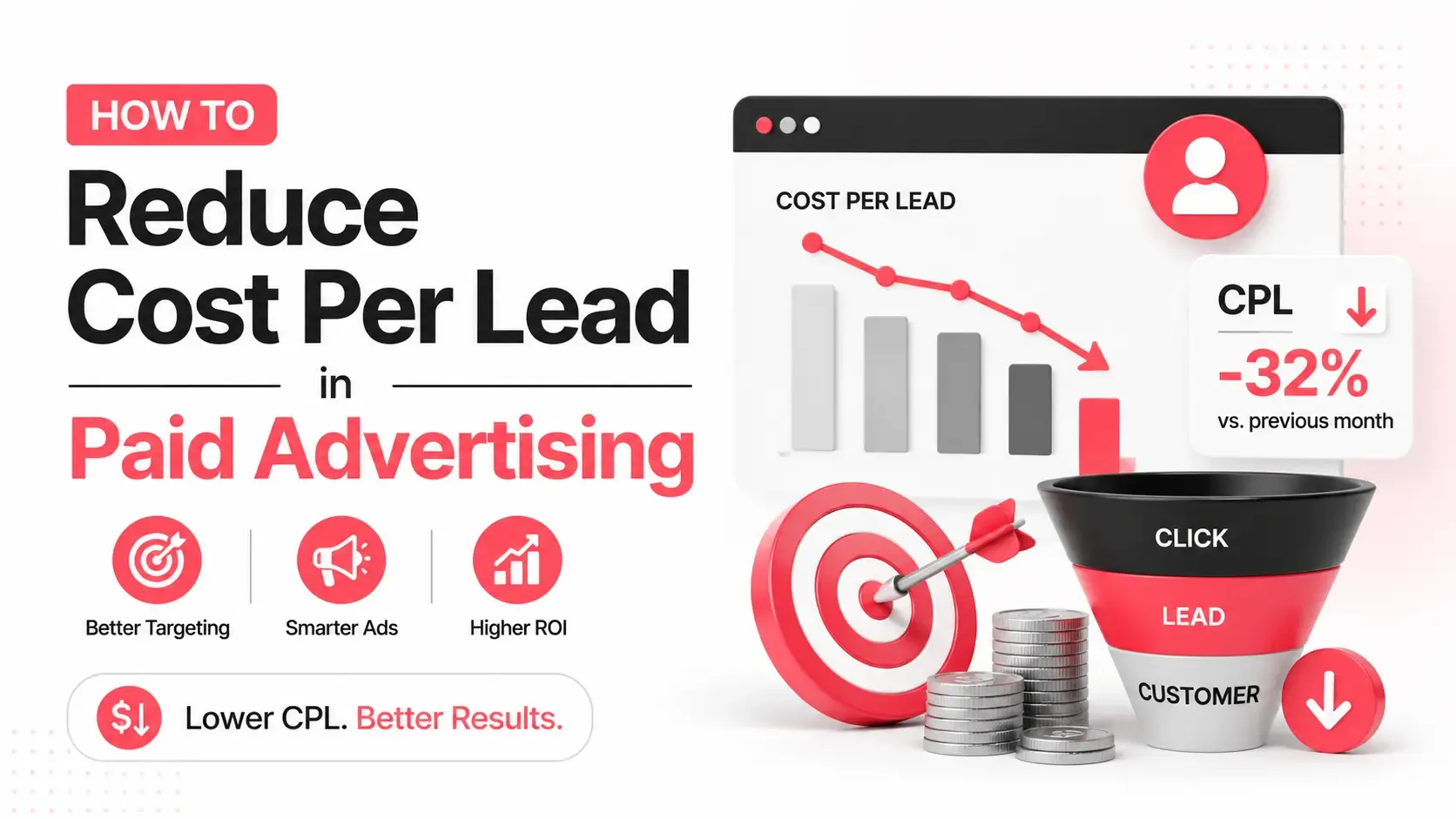
Cost per lead (CPL) is one of the most important performance metrics in digital advertising.
It directly determines how efficiently your business converts marketing spend into real business opportunities.
You might be generating leads, but if your cost per lead is too high, your growth becomes unsustainable.
In competitive markets like Dubai and the UAE, businesses running:
- Google Ads
- Meta Ads
- TikTok Ads
- LinkedIn Ads
often struggle with rising CPL due to increased competition, poor targeting, weak landing pages, and inefficient campaign structure.
Reducing cost per lead is not about spending less.
It is about improving efficiency across the entire marketing system.
This guide explains how to reduce cost per lead in paid advertising using modern performance marketing strategies, conversion optimization, and smarter campaign structuring.
What is Cost Per Lead (CPL)?
Cost per lead is the amount of money you spend to generate one qualified lead.
Formula:
CPL = Total Ad Spend ÷ Number of Leads
For example:
- If you spend 1000 AED and generate 50 leads
- Your CPL is 20 AED
The goal is to reduce CPL while maintaining or improving lead quality.
Why CPL Becomes Expensive in Paid Advertising
Many businesses assume high CPL is caused by ad platforms.
In reality, CPL increases due to inefficiencies in the marketing system.
Common Causes of High CPL:
- poor audience targeting
- weak ad creatives
- irrelevant traffic
- low landing page conversion rates
- lack of tracking and optimization
- broad keyword targeting (Google Ads)
- weak offer positioning
High CPL is usually a strategy problem, not a platform problem.
1. Improve Audience Targeting Precision
One of the fastest ways to reduce CPL is improving targeting accuracy.
If your ads reach the wrong audience, you pay for clicks that never convert.
Better Targeting Strategy Includes:
- location-based targeting (Dubai, UAE, specific areas)
- interest-based segmentation
- behavior-based audiences
- retargeting website visitors
- excluding irrelevant audiences
The more precise your audience, the lower your wasted ad spend.
2. Focus on High-Intent Users
Not all traffic has equal value.
High-intent users are more likely to convert, which reduces CPL significantly.
High-Intent Examples:
- “buy SEO services Dubai”
- “Google Ads agency near me”
- “book consultation digital marketing”
Low-Intent Examples:
- “what is digital marketing”
- “marketing tips”
High-intent targeting improves conversion efficiency immediately.
3. Improve Ad Creative Quality
Your ad is the first conversion point.
If your creative does not capture attention, CPC increases and CPL rises.
High-Performing Ad Creatives Usually:
- use strong hooks
- focus on user pain points
- highlight clear benefits
- include social proof
- use short-form video
Better creatives improve click-through rates, which directly lowers CPL.
4. Optimize Landing Pages for Conversion
Even great ads fail if landing pages do not convert.
Landing pages directly influence CPL.
Conversion Issues That Increase CPL:
- slow page speed
- unclear messaging
- weak CTAs
- long forms
- poor mobile UX
Improving landing page experience increases conversion rate, which automatically reduces CPL.
You can also refer to our Landing Page Optimization Guide to understand how UX and CRO directly impact paid advertising performance.
5. Use Retargeting Campaigns
Most users do not convert on first interaction.
Retargeting helps bring back warm audiences who already showed interest.
Retargeting Targets:
- website visitors
- ad engagers
- video viewers
- abandoned leads
Retargeting usually produces lower CPL compared to cold traffic campaigns.
6. Improve Conversion Rate (Not Just Traffic)
Lower CPL is often achieved by improving conversion rate rather than reducing ad costs.
Conversion Rate Improvements Include:
- better landing page UX
- stronger offer positioning
- simplified forms
- trust-building elements
- clearer messaging
Even a small increase in conversion rate significantly reduces CPL.
7. Use Negative Targeting (Google Ads & Meta Ads)
Wasted clicks increase CPL.
Negative targeting helps eliminate irrelevant traffic.
Examples:
- excluding job seekers
- excluding freebie keywords
- removing irrelevant interests
- filtering low-quality placements
Better filtering improves efficiency and reduces wasted spend.
8. Test and Optimize Ad Creatives Continuously
Paid advertising is not static.
Performance changes based on audience behavior.
You should continuously test:
- headlines
- visuals
- video styles
- CTA variations
- audience segments
Continuous testing improves performance over time and reduces CPL gradually.
9. Improve Quality Score (Google Ads)
In Google Ads, Quality Score directly affects:
- CPC
- ad ranking
- cost efficiency
Higher Quality Score usually leads to lower cost per click and lower CPL.
Improve Quality Score by:
- improving ad relevance
- using better keywords
- optimizing landing pages
- increasing CTR
10. Align Offer With Audience Expectations
If your offer is not compelling, CPL increases even with good traffic.
Strong Offers Include:
- free consultation
- limited-time discounts
- audit reports
- free trials
Clear and valuable offers increase conversion rates significantly.
11. Reduce Friction in Lead Forms
Long or complicated forms reduce conversions.
Better Form Strategy:
- reduce number of fields
- remove unnecessary steps
- simplify user experience
Less friction = higher conversion rate = lower CPL.
12. Use Better Campaign Structure
Poor campaign structure increases inefficiency.
Better Structure Includes:
- separated campaigns by intent
- segmented ad groups
- dedicated landing pages
- clear funnel stages
Well-structured campaigns are easier to optimize and scale.
13. Leverage Lookalike and Similar Audiences
Platforms like Meta Ads allow you to create lookalike audiences.
These audiences behave similarly to your existing customers.
Benefits:
- better targeting accuracy
- higher conversion rates
- lower CPL
Lookalike audiences often outperform cold interest targeting.
14. Improve Speed of Optimization Decisions
Many businesses wait too long to optimize campaigns.
Slow decision-making increases wasted spend.
Better Approach:
- analyze data regularly
- pause poor ads quickly
- scale winning ads faster
Faster optimization improves overall efficiency.
Common Mistakes That Increase CPL
Many businesses unintentionally increase CPL due to avoidable issues.
Common Problems:
- targeting too broad audiences
- ignoring landing page optimization
- not tracking conversions properly
- running low-quality creatives
- lack of retargeting strategy
Most CPL issues are structural, not technical.
Why CPL Optimization is a Growth Strategy
Reducing cost per lead is not just about saving money.
It directly impacts:
- scalability
- profitability
- marketing ROI
- customer acquisition efficiency
Lower CPL means you can scale campaigns faster without increasing budget proportionally.
What Actually Works in 2026
The businesses achieving the lowest CPL today focus on:
- high-intent targeting
- strong landing page conversion rates
- creative testing
- retargeting strategies
- audience segmentation
- offer optimization
Instead of focusing only on traffic volume, they optimize the entire funnel. Explore our lead generation solutions for scalable business growth.
Bringing It All Together
Reducing cost per lead in paid advertising requires a complete system approach, not isolated fixes.
The strongest-performing businesses in 2026 focus on:
- targeting precision
- conversion optimization
- landing page performance
- creative testing
- funnel structure
- retargeting efficiency
When these elements work together, CPL naturally decreases while lead quality improves.
If you want to understand how CPL connects with broader campaign performance, read our Performance Marketing & Lead Generation in Dubai Guide to explore how PPC, conversion optimization, and funnel strategy work together for scalable business growth.
Businesses that continuously optimize CPL achieve stronger long-term ROI and more predictable customer acquisition.
Milaaj Brandset helps businesses reduce CPL through data-driven paid advertising, conversion optimization, and performance marketing strategies designed for scalable growth.
FAQs
What is cost per lead in advertising?
Cost per lead is the amount spent to generate one qualified lead from advertising campaigns.
Why is my CPL so high?
High CPL is usually caused by poor targeting, weak landing pages, or low conversion rates.
How can I reduce CPL quickly?
Improving landing page conversion rates and targeting high-intent users are the fastest ways.
Does better ad creative reduce CPL?
Yes. Strong creatives improve CTR and reduce cost per click, lowering overall CPL.
How does retargeting reduce CPL?
Retargeting focuses on warm audiences, which convert at higher rates and lower costs.
Does landing page optimization affect CPL?
Yes. Higher conversion rates directly reduce cost per lead.
Is CPL more important than traffic?
Yes. High traffic with poor conversion leads to wasted budget. CPL measures efficiency.
Should CPL be optimized continuously?
Yes. CPL optimization is an ongoing process involving testing and performance tracking.
Ready to Elevate Your Brand?
Start Your Project Today