July 28, 2026
Best Retargeting Ad Strategies for Ecommerce Brands
Milaaj Editorial / Research Insights
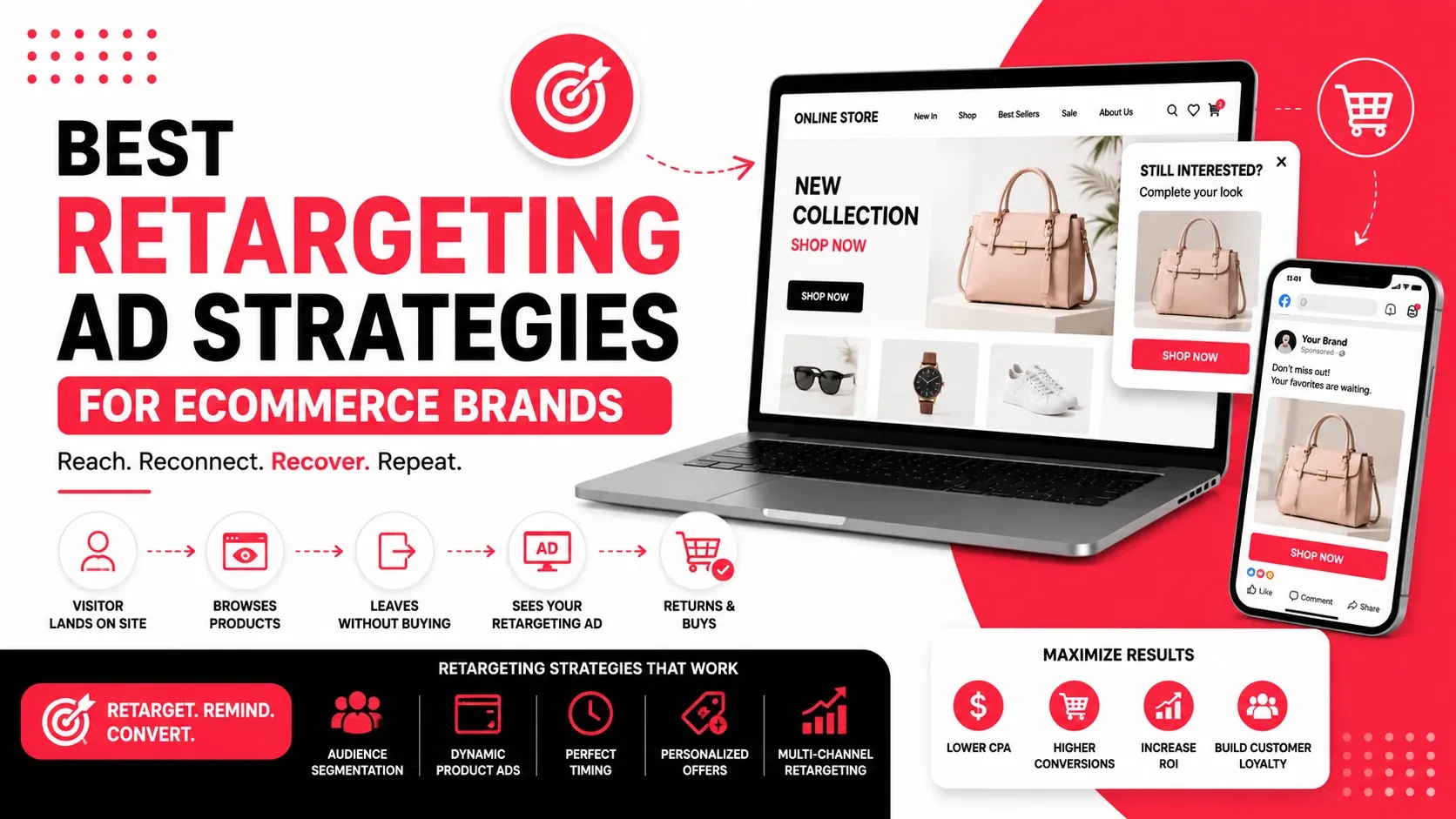
Attracting visitors to an ecommerce store is only the beginning of the buying journey. Most shoppers do not complete a purchase during their first visit. They often compare prices, research products, read reviews, or simply leave before making a decision. Without a strategy to reconnect with these potential customers, ecommerce businesses risk losing valuable sales opportunities.
Retargeting advertising helps brands re-engage visitors who have already interacted with their website or products. By delivering personalized advertisements based on previous behaviour, businesses can stay visible, rebuild interest, and encourage shoppers to return and complete their purchase.
This guide explores the best retargeting ad strategies for ecommerce brands, helping you create personalized campaigns that increase conversions, improve customer retention, and maximize advertising return on investment.
Quick Answer
The most effective ecommerce retargeting strategies use audience segmentation, dynamic product ads, abandoned cart recovery campaigns, sequential messaging, customer retention campaigns, and frequency management. Delivering relevant advertisements based on user behaviour creates more personalized experiences that encourage shoppers to return and complete their purchases.
What Are Retargeting Ads?
Retargeting ads are advertisements shown to users who have previously interacted with your ecommerce business.
Visitors may have:
- Viewed products
- Added items to their cart
- Visited category pages
- Started the checkout process
- Purchased products
- Engaged with your website or app
Instead of advertising to entirely new audiences, retargeting focuses on people who have already demonstrated interest in your products or services.
Major advertising platforms such as Google Ads and Meta Ads allow businesses to create audience segments based on customer behaviour, making retargeting one of the most effective ways to recover lost sales opportunities.
Why Retargeting Matters for Ecommerce
Most ecommerce visitors require multiple interactions before making a purchase.
Retargeting helps businesses:
- Recover abandoned carts
- Increase repeat website visits
- Improve conversion rates
- Strengthen brand recall
- Encourage repeat purchases
- Support customer loyalty
Rather than starting every customer relationship from scratch, retargeting continues the conversation after the first interaction.
Segment Your Audience Before Launching Campaigns
One of the biggest mistakes ecommerce brands make is showing identical advertisements to every previous visitor.
Effective retargeting begins with audience segmentation.
Different customer behaviours require different messaging.
Audience Segment | Recommended Retargeting Strategy |
|---|---|
Homepage visitors | Brand awareness campaigns |
Category page visitors | Product category advertisements |
Product viewers | Dynamic product ads |
Cart abandoners | Cart recovery campaigns |
Previous customers | Cross-selling and repeat purchase campaigns |
Audience segmentation allows businesses to deliver more relevant advertisements that reflect each shopper's stage in the buying journey.
Use Dynamic Product Ads
Dynamic product ads automatically display products that users previously viewed on your website.
Instead of creating individual advertisements for every product, ecommerce platforms integrate product feeds with advertising networks to generate personalized advertisements dynamically.
Benefits include:
- Personalized shopping experiences
- Higher product relevance
- Improved click-through rates
- Better conversion opportunities
- Simplified campaign management
Dynamic retargeting is particularly effective for ecommerce stores with large product catalogues.
Recover Abandoned Shopping Carts
Cart abandonment represents one of the largest missed revenue opportunities for ecommerce businesses.
Retargeting campaigns aimed at cart abandoners remind shoppers about products they nearly purchased.
Effective cart recovery advertisements may include:
- Product images
- Purchase reminders
- Limited-time promotions
- Shipping information
- Customer reviews
- Stock availability
Rather than using aggressive sales language, focus on helping customers continue their purchasing journey.
Create Sequential Retargeting Campaigns
Showing the same advertisement repeatedly often leads to ad fatigue.
Instead, build campaigns that guide customers through a logical sequence.
For example:
Stage One
Remind visitors about the products they viewed.
Stage Two
Highlight product benefits and customer testimonials.
Stage Three
Address common objections such as shipping, pricing, or product quality.
Stage Four
Present a limited-time offer or incentive where appropriate.
Sequential messaging keeps campaigns fresh while supporting informed purchasing decisions.
Personalize Creative for Different Audiences
Retargeting performs best when advertisements reflect individual customer behaviour.
Instead of generic messaging, tailor creative assets based on previous interactions.
Examples include:
First-Time Visitors
- Learn more about our products.
Product Viewers
- Still considering this item?
Cart Abandoners
- Complete your purchase today.
Existing Customers
- Discover products that complement your previous purchase.
Personalized messaging makes advertisements more relevant and increases engagement.
Businesses using PPC advertising services often build multiple creative variations for each audience segment rather than relying on one advertisement for every customer.
Cross-Sell and Upsell Existing Customers
Retargeting should not end after the first sale.
Existing customers often provide valuable opportunities for additional revenue.
Examples include:
- Accessories for previous purchases
- Product upgrades
- Seasonal collections
- Complementary products
- Subscription renewals
- Refill reminders
Customer retention campaigns frequently generate stronger returns than campaigns focused exclusively on acquiring new customers.
Set Appropriate Frequency Limits
Repeated exposure can improve brand recall, but excessive repetition may frustrate potential customers.
Implementing frequency caps helps prevent advertisement fatigue.
Monitor:
- Impressions per user
- Engagement rates
- Click-through rates
- Conversion trends
If performance begins to decline while impression frequency increases, it may be time to refresh creative assets or reduce ad exposure.
Use Multiple Advertising Platforms
Successful ecommerce retargeting rarely relies on a single platform.
Businesses commonly combine:
- Google Display Network
- Google Shopping
- YouTube
- Meta Facebook Ads
- Instagram Ads
Using multiple channels helps maintain consistent brand visibility throughout the customer journey while reaching users across different devices and platforms.
If you're building broader display campaigns alongside your retargeting strategy, read our guide on Display Advertising Strategies for UAE Businesses to understand how audience targeting, creative design, and placement optimization work together to increase campaign effectiveness.
Optimize Landing Pages for Returning Visitors
Retargeting advertisements should direct users to landing pages that match the advertisement they clicked.
For example:
- Product-specific ads should lead to the same product page.
- Cart recovery ads should return users directly to their shopping cart where possible.
- Category campaigns should open the relevant product category.
- Cross-selling campaigns should showcase complementary products.
Maintaining consistency between the advertisement and the landing page reduces friction and makes it easier for customers to complete their purchase.
Businesses offering conversion rate optimization services often improve ecommerce performance by creating dedicated landing pages for different retargeting audiences instead of sending all visitors to the homepage.
Build Trust Before Asking for the Sale
Many returning visitors still have unanswered questions before making a purchase.
Strengthen confidence by highlighting:
- Customer reviews
- Verified ratings
- Product guarantees
- Secure payment options
- Shipping information
- Easy return policies
- Customer support availability
These trust signals help reduce purchase hesitation, particularly for first-time customers.
Refresh Creative Regularly
Showing identical advertisements for several weeks can reduce engagement.
Keep campaigns effective by updating:
- Product images
- Headlines
- Promotional messages
- Seasonal offers
- Calls to action
- Banner layouts
Regular creative updates help prevent banner fatigue while keeping advertisements relevant.
Exclude Converted Customers When Appropriate
Once a customer completes a purchase, continuing to show advertisements for the same product often wastes advertising budget.
Instead:
- Exclude recent purchasers from acquisition campaigns.
- Move customers into cross-selling campaigns.
- Recommend complementary products.
- Promote loyalty programs.
- Introduce new product launches.
This creates a better customer experience while improving advertising efficiency.
Monitor Performance Beyond Clicks
Successful retargeting campaigns are measured by business outcomes rather than traffic alone.
Key metrics include:
Metric | Why It Matters |
|---|---|
Conversion Rate | Measures how effectively visitors complete purchases |
Return on Ad Spend (ROAS) | Evaluates advertising profitability |
Cost Per Acquisition (CPA) | Tracks customer acquisition efficiency |
Average Order Value (AOV) | Measures revenue per purchase |
Repeat Purchase Rate | Indicates customer loyalty |
Cart Recovery Rate | Shows abandoned cart campaign effectiveness |
Customer Lifetime Value (CLV) | Measures long-term customer value |
Reviewing these metrics together provides a clearer picture of campaign success than focusing solely on clicks or impressions.
Test Different Retargeting Strategies
Continuous testing helps identify what resonates with your audience.
Experiment with:
- Headlines
- Product imagery
- Calls to action
- Promotional offers
- Audience segments
- Ad formats
- Landing pages
- Frequency caps
Testing one variable at a time allows businesses to make informed improvements based on real performance data.
Common Retargeting Mistakes
Many ecommerce brands reduce campaign effectiveness through avoidable errors.
Mistake | Better Approach |
|---|---|
Showing the same ad to every visitor | Segment audiences based on customer behaviour |
Displaying identical ads repeatedly | Use sequential messaging and refresh creatives regularly |
Sending traffic to the homepage | Direct users to relevant product or category pages |
Ignoring previous customers | Build retention, cross-selling, and upselling campaigns |
Not excluding converted users | Remove purchasers from acquisition campaigns when appropriate |
Measuring clicks only | Evaluate conversions, ROAS, CPA, and customer lifetime value |
Avoiding these mistakes helps create more personalized customer experiences while improving campaign performance.
Respect User Privacy and Consent
As privacy regulations and browser technologies evolve, ecommerce businesses should ensure their retargeting strategies remain transparent and compliant.
Good practices include:
- Obtaining consent for advertising cookies where required.
- Maintaining a clear privacy policy.
- Explaining how customer data is used.
- Using first-party data responsibly.
- Reviewing advertising platform policies regularly.
Building trust through responsible data practices supports long-term customer relationships.
Integrate Retargeting Into Your Ecommerce Marketing Strategy
Retargeting delivers the strongest results when combined with other digital marketing channels.
For example:
- Search advertising captures users actively looking for products.
- Email marketing recovers abandoned carts and nurtures existing customers.
- Content marketing builds trust during the research phase.
- Social media increases product discovery.
- Organic SEO attracts long-term traffic.
- Retargeting reconnects with visitors who leave before converting.
Together, these channels create a cohesive customer journey that supports both acquisition and retention.
Key Takeaways
- Retargeting helps ecommerce brands reconnect with visitors who have already shown purchase intent.
- Audience segmentation creates more relevant and personalized advertising experiences.
- Dynamic product ads are highly effective for showcasing previously viewed products.
- Cart abandonment campaigns can recover otherwise lost sales.
- Cross-selling and upselling existing customers improve customer lifetime value.
- Regular creative testing and frequency management reduce ad fatigue.
- Success should be measured using conversions, ROAS, CPA, AOV, and repeat purchases rather than clicks alone.
Turn Interested Shoppers Into Loyal Customers
Most ecommerce customers need more than one interaction before making a purchase. A thoughtful retargeting strategy keeps your brand visible throughout the decision-making process while delivering personalized messages that match each shopper's interests and behaviour.
By combining audience segmentation, dynamic product advertising, optimized landing pages, customer retention campaigns, and continuous testing, ecommerce brands can recover abandoned opportunities, strengthen customer relationships, and improve long-term profitability.
Milaaj Brandset helps ecommerce businesses build performance-driven retargeting strategies that combine audience insights, creative optimization, and data-driven campaign management to increase conversions and maximize return on advertising investment.
FAQs
What are retargeting ads?
Retargeting ads are advertisements shown to users who have previously interacted with your ecommerce website, products, or mobile application. They help encourage visitors to return and complete a purchase.
How are retargeting ads different from regular display ads?
Regular display ads primarily target new audiences to build awareness, while retargeting ads focus on users who have already demonstrated interest in your products or services.
What are dynamic product ads?
Dynamic product ads automatically display products that users previously viewed or added to their cart, creating personalized shopping experiences without requiring separate advertisements for every product.
Why are abandoned cart campaigns important?
Abandoned cart campaigns remind shoppers about products they left behind, helping businesses recover potential sales that might otherwise be lost.
How often should I refresh retargeting advertisements?
Creative assets should be reviewed regularly. Updating images, headlines, offers, and calls to action helps reduce ad fatigue and maintain engagement.
Which metrics should ecommerce businesses monitor?
Key performance indicators include conversion rate, return on ad spend (ROAS), cost per acquisition (CPA), average order value (AOV), repeat purchase rate, cart recovery rate, customer lifetime value (CLV), and overall revenue generated.
Ready to Elevate Your Brand?
Start Your Project Today