June 20, 2026
How Website Navigation Affects SEO & UX
Milaaj Editorial / Research Insights
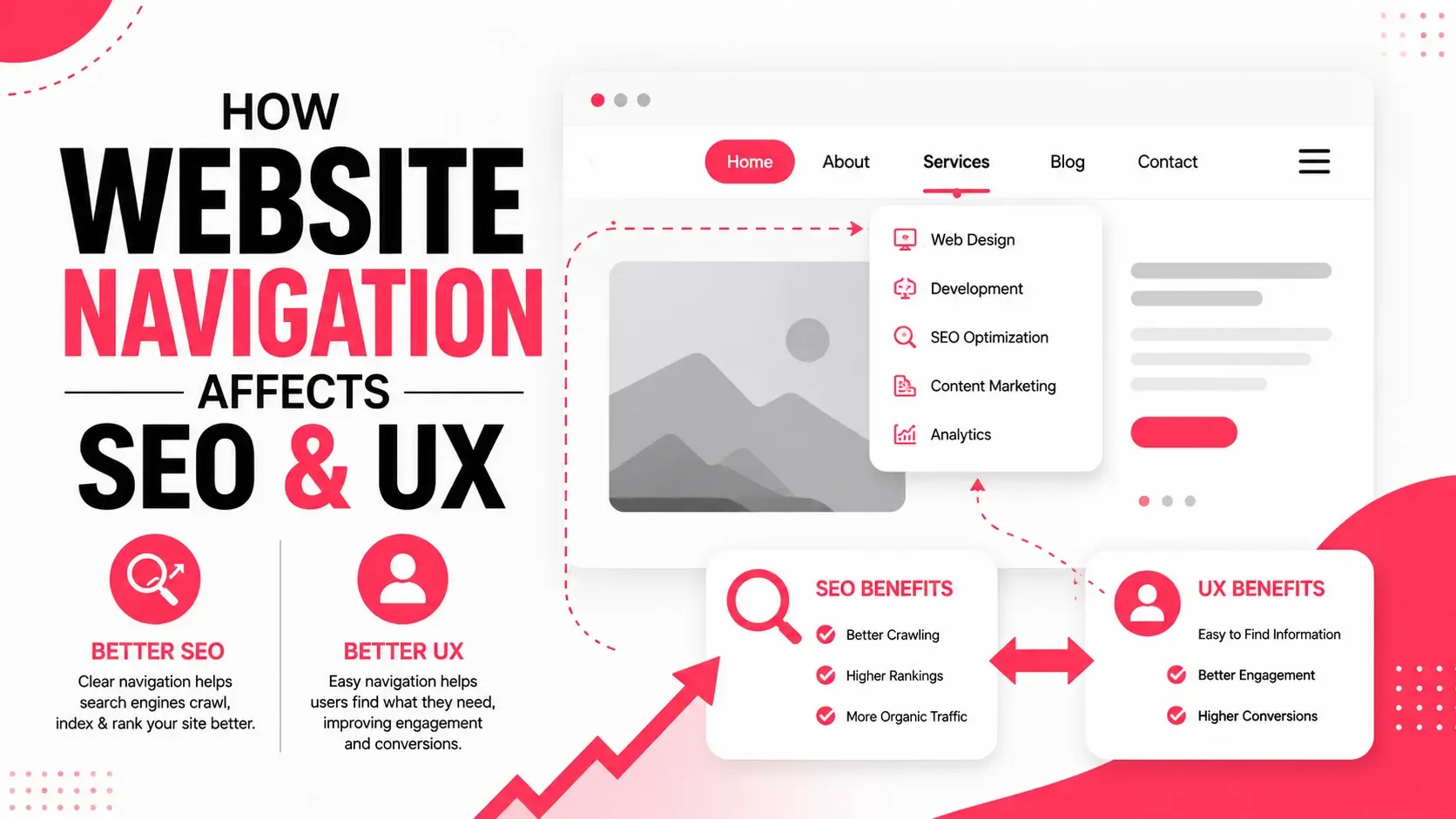
A website's navigation is much more than a menu at the top of a page.
It acts as the roadmap that helps visitors and search engines understand your website. When navigation is well structured, users can quickly find what they need, search engines can efficiently crawl important pages, and businesses benefit from stronger engagement and higher conversions.
When navigation is poorly planned, the opposite happens. Users become frustrated, bounce rates increase, valuable pages remain undiscovered, and SEO performance suffers.
Many businesses invest heavily in design, content, and advertising but underestimate how much their navigation structure influences rankings, usability, and lead generation.
This guide explores the relationship between website navigation, SEO, and user experience and explains how businesses can create navigation systems that support both users and search engines.
Quick Answer
Website navigation directly affects both SEO and UX because it determines how users and search engines move through your website.
Good navigation helps:
- Improve crawlability
- Strengthen internal linking
- Increase user engagement
- Reduce bounce rates
- Improve content discoverability
- Support conversions
- Enhance mobile usability
A clear navigation structure makes it easier for visitors to find information while helping search engines understand the importance and relationship of your pages.
Why Website Navigation Matters
Navigation is one of the first elements visitors interact with after landing on a website.
Users often make immediate judgments based on how easily they can locate information.
If visitors cannot quickly find:
- Services
- Products
- Pricing information
- Contact details
- Important resources
they are likely to leave and explore competitor websites instead.
Navigation directly influences:
- User satisfaction
- Session duration
- Page views
- Conversion rates
- Search engine visibility
For many businesses, navigation is one of the highest-impact areas for improving website performance.
How Navigation Helps Search Engines Understand Your Website
Search engines use links to discover and understand content.
Your navigation menu provides important signals about:
- Website hierarchy
- Content relationships
- Page importance
- Site structure
A well-organized navigation system helps search engines determine which pages are most valuable and how different topics connect together.
For example, if a digital marketing company places its SEO Services page prominently within the primary navigation, search engines receive a stronger signal that the page is important.
This contributes to better crawl efficiency and stronger topical relevance.
Navigation and Crawlability
Crawlability refers to how easily search engines can access pages on a website.
Poor navigation can create barriers that prevent important content from being discovered.
Common crawlability issues include:
- Orphan pages
- Broken links
- Excessive click depth
- Complex menu structures
- Hidden navigation elements
Ideally, users and search engines should be able to reach important pages within a few clicks from the homepage.
A simple structure improves both accessibility and indexing.
The Connection Between Navigation and Internal Linking
Navigation is one of the most powerful forms of internal linking.
Every navigation link helps distribute authority throughout the website.
Strong internal linking can:
- Improve page discovery
- Pass link equity
- Reinforce topical relevance
- Help search engines understand page relationships
For example, a web development company may link from its main services page to specialized services such as web design, ecommerce development, and UX design.
This creates a logical hierarchy that benefits both users and search engines.
Businesses investing in long-term website growth can also explore Web Development Services Dubai to build scalable website architectures that support SEO, usability, and future expansion.
How Navigation Impacts User Experience
Users expect navigation to be intuitive.
They should never need to think too hard about where information is located.
Good navigation helps users:
- Find information quickly
- Understand the website structure
- Explore relevant content
- Complete desired actions
Poor navigation often leads to:
- Frustration
- Abandoned sessions
- Reduced trust
- Lower engagement
The easier a website is to navigate, the more likely visitors are to remain engaged.
Common Navigation Mistakes That Hurt SEO and UX
Overloaded Menus
Many websites attempt to display every page in the main navigation.
This creates clutter and decision fatigue.
Instead, prioritize the most important pages and organize secondary content logically.
Unclear Menu Labels
Navigation labels should be simple and descriptive.
Examples:
Good
- SEO Services
- Web Development
- Contact Us
Poor
- Solutions
- Resources
- Learn More
Users should immediately understand what to expect before clicking.
Excessive Dropdown Menus
Large dropdown menus can overwhelm users and complicate mobile experiences.
Mega menus can be effective on large websites but should remain organized and easy to scan.
Too Many Clicks to Reach Important Pages
Users should not need to navigate through multiple layers to access key information.
Important pages should remain easily accessible.
Inconsistent Navigation
Changing menu structures between pages creates confusion and weakens user experience.
Consistency improves usability and familiarity.
Mobile Navigation Matters More Than Ever
Mobile traffic dominates many industries in the UAE.
Navigation that works perfectly on desktop may perform poorly on smartphones.
Common mobile navigation issues include:
- Tiny touch targets
- Hidden menu options
- Poor spacing
- Slow menu loading
- Difficult scrolling
A responsive mobile navigation system should prioritize simplicity and speed.
Businesses can also read our Why Responsive Web Design Matters in UAE to understand how mobile usability influences rankings, engagement, and conversions.
Breadcrumb Navigation and SEO
Breadcrumbs provide an additional navigation layer that helps users understand their location within a website.
Example:
Home → Services → SEO Services → Local SEO
Benefits include:
- Better user orientation
- Improved crawlability
- Enhanced internal linking
- Additional search result enhancements
For content-rich websites, breadcrumbs often provide measurable usability and SEO benefits.
Website Navigation and Conversion Optimization
Navigation affects more than rankings and usability.
It also influences conversions.
Visitors should always have a clear path toward:
- Contact forms
- Service pages
- Product pages
- Consultation bookings
- Quote requests
When users struggle to find the next step, conversion opportunities are lost.
High-performing websites typically guide users naturally toward key business goals without creating friction.
Signs Your Navigation Needs Improvement
Your website navigation may need attention if you notice:
- High bounce rates
- Low page views per session
- Poor mobile engagement
- Low conversion rates
- Important pages receiving little traffic
- Users repeatedly asking for information already available on the website
Analytics, heatmaps, and user behavior tools can often reveal navigation weaknesses.
Key Takeaways
- Website navigation influences both SEO and user experience.
- Search engines rely on navigation to understand website structure.
- Strong navigation improves crawlability and indexing.
- Internal linking benefits from a logical navigation hierarchy.
- Mobile navigation plays a major role in modern website performance.
- Clear navigation improves engagement and conversions.
- Simple, consistent menu structures typically outperform complex systems.
- Navigation should help users achieve their goals quickly and efficiently.
Creating a Navigation Structure That Supports Growth
Navigation is often one of the most overlooked components of website strategy, yet it influences nearly every aspect of digital performance.
A well-planned navigation system helps search engines understand your content, strengthens internal linking, improves usability, and creates a smoother path toward conversions. It allows visitors to find information quickly while helping search engines crawl and index important pages more efficiently.
Businesses that invest in intuitive navigation typically see improvements in engagement, user satisfaction, lead generation, and overall website performance. Rather than treating navigation as a simple design element, it should be viewed as a core part of website architecture that supports long-term growth.
For organizations evaluating broader website improvements, Website UX Mistakes That Reduce Conversions provides additional insights into how usability issues impact customer engagement and conversion rates.
Milaaj Brandset helps businesses create user-focused websites with clear navigation structures, strong SEO foundations, and seamless digital experiences designed to support sustainable growth.
FAQs
How does website navigation affect SEO?
Website navigation helps search engines discover pages, understand content relationships, distribute authority, and crawl websites more efficiently.
Why is navigation important for user experience?
Good navigation helps users find information quickly and complete actions without frustration.
What is the ideal website navigation structure?
The ideal structure is simple, logical, consistent, and allows users to reach important pages within a few clicks.
Can poor navigation hurt rankings?
Indirectly, yes. Poor navigation can affect crawlability, engagement metrics, and content discoverability, all of which influence SEO performance.
What are breadcrumbs in SEO?
Breadcrumbs are secondary navigation links that show users where they are within a website's hierarchy.
How many menu items should a website have?
There is no fixed number, but most business websites perform best with a focused navigation menu that prioritizes important pages rather than overwhelming visitors.
Does mobile navigation affect SEO?
Yes. Mobile usability is a major ranking consideration because Google uses mobile-first indexing.
How often should website navigation be reviewed?
Navigation should be reviewed periodically, especially after adding new services, content sections, or major website updates.
Ready to Elevate Your Brand?
Start Your Project Today